

创作上传
VIP
收藏下载
登录 | 注册有礼
查看完整案例

收藏

下载

分享
迪拜世博城是一个综合用途的开发项目,延续了 2020 年迪拜世博会的遗产。2020 年迪拜世博会是首次在中东、非洲和南亚地区举办的世界博览会,这一活动在为期六个月的时间内吸引了来自 192 个国家的超过 2400 万名游客。活动结束后,该场地还承办了第 28 届联合国气候变化大会。
Expo City Dubai is a mixed-use development that builds on the legacy of Expo 2020 Dubai, the first World Expo to be held in the Middle East, Africa, and South Asia regions. The event attracted over 24 million visitors from 192 nations over its six-month duration. Following the event, the site also hosted Cop 28.
▼迪拜世博城新总体规划,Expo City Dubai site planning©UNStudio

于近期公布的迪拜世博城总体规划为打造迪拜未来的新中心创造了机遇。这一项目荣获了 LEED 金级认证和 WELL 社区金级认证,是一个以创新为驱动、以人为本的社区,植根于协作能够推动可持续发展的理念之上。迪拜世博城总体规划由 UNStudio(城市设计与建筑设计)与 Buro Happold(工程/可持续性)、SLA(景观与公共空间设计)、Endpoint(导视系统)、Compass(成本顾问)、LDC(照明)、EGIS(备案建筑师)以及 Vedra(项目管理)合作完成。该规划设计的目标是成为可持续城市生活的蓝图,是迪拜 2040 城市总体规划中的五大枢纽之一,同时也是实现 2050 年净零目标计划的一部分。这一规划还支持更广泛的脱碳目标,旨在提升负责任的城市开发的标准。
The recently announced Expo City Dubai Masterplan provides an opportunity to introduce a new centre for the future of Dubai. A development that acquired LEED Gold/Well Community Gold certification and is an innovation-driven, people-centric community, rooted in the belief that collaboration can propel sustainable progress. The Expo City Dubai masterplan, developed by UNStudio (Urban design and Architecture) in collaboration with Buro Happold (Engineering/Sustainability), SLA (Landscape and Public Space Design), Endpoint (Wayfinding), Compass (Cost Consultant) and LDC (lighting), EGIS (AoR) and Vedra (Project management support) is designed as a blueprint for sustainable urban living and is one of five hubs on the Dubai 2040 Urban Master Plan and its roadmap to achieving net zero by 2050, alongside its broader decarbonisation targets that aim to raise the bar on responsible urban development.
▼迪拜世博城新总体规划夜景,Expo City Dubai site planning at night©UNStudio

现有规划的革新 Transformation of the existing plan
UNStudio 的总体规划在整个遗产开发中保留了现有场地的结构和精神,并保留了 2020 年世博会期间建造的 80%以上的基础设施和建筑。该规划还确保迪拜世博城的整体连贯性,同时充分利用为举办 2020 年迪拜世博会而开发的建成环境的价值。
UNStudio’s masterplan maintains the fabric and spirit of the existing site across the entire legacy development and retains more than 80% of the infrastructure and buildings developed for Expo 2020. It also ensures that Expo City Dubai continues to be fully cohesive, while benefitting from the value of the built environment developed for hosting Expo 2020 Dubai.
▼2020 年迪拜世博会原始规划图,Original plan for Dubai Expo 2020©UNStudio

这座城市总占地面积为 3.5 平方公里,将通过分阶段开发以适应不断变化的需求。它将容纳超过 35,000 名居民和 37,000 名专业人士,并将继续每年吸引约 50,000 名游客。
The city will cover a total of 3.5 square kilometers and will undergo a gradual phased development that adapts to evolving requirements. It will be home to more than 35,000 residents and 37,000 professionals. It will continue to attract about 50,000 visitors each year.
▼迪拜世博城规划策略,Planning strategy for Dubai Expo City©UNStudio

基于 2020 年世博会的遗产,这一总体规划被构想为一个经济、社会和文化发展的项目,将引入一个健康、以人为本的环境,在竞争激烈的房地产市场中蓬勃发展。不同于现有主题区的有机布局,新迪拜世博城采用了高效的网格结构,这是一种坚固的城市框架,便于导航、流通和可达性。
Building on the Expo 2020 legacy, the masterplan is conceived as an economic, social, and cultural development that will introduce a healthy, human-centric environment that can thrive in a competitive real estate market. Moving away from the organic nature of the current Thematic Districts, the new Expo City Dubai adopts an efficient grid that is a robust urban structure for navigation, circulation and accessibility.
▼迪拜世博城规划平面,Site Plan for Dubai Expo City©UNStudio

新区 New districts 总体规划分为五个新区,每个区域都包含现有资产和新建项目。世博城中心:一个高密度的综合用途区域,同时也是世博城内最高建筑的所在地。
The masterplan is organised into five new districts, each of which include both existing assets and new builds. Expo Downtown: a high-density mixed-use area that also houses the tallest building at Expo City.
▼世博城中心,Expo Downtown©UNStudio
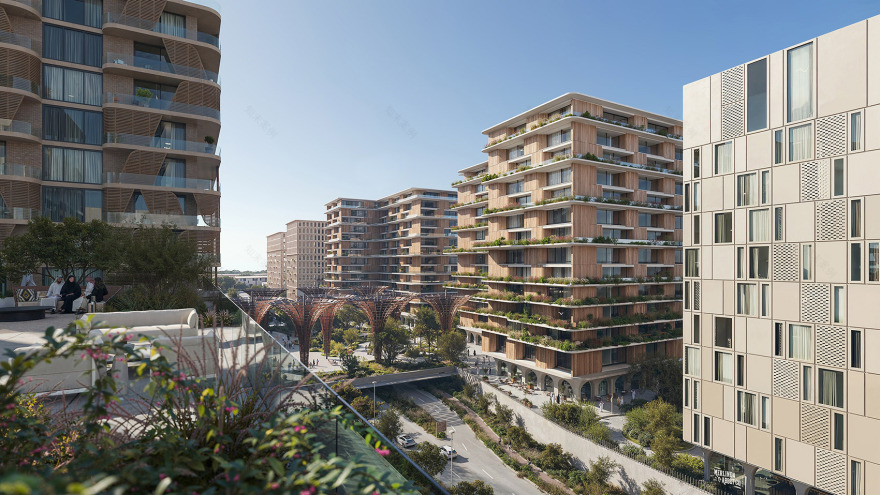
世博场馆区:作为健康生活的典范,该区域将包括运动场、一所学校、住宅、零售店、餐饮场所以及一个用于大型音乐活动的场馆。
Expo Fields: serving as a model for healthy living, the district will include sports fields, a school, homes, retail outlets, F&B venues and an arena for large-scale music events.
▼世博场馆区,Expo Fields©UNStudio


世博山丘区:一个低密度的住宅社区,拥有类似干河谷的开放空间和景观花园,为城市生活提供更安静的体验。
Expo Hills: a low-density residential community with a wadi-like open space and landscaped gardens that offers a quieter experience of urban living.
▼世博山丘区,Expo Hills©UNStudio


世博商务区:一个具有园区氛围的环境,专为创新和创业型企业打造,这些企业与世博城共同致力于可持续发展。
Expo Business: a campus-feel environment for innovative and entrepreneurial businesses that share Expo City’s commitment to sustainability.
▼世博商务区,Expo Business©UNStudio

第五个区域,世博谷,毗邻总体规划用地,由一个低密度的住宅社区组成,计划于 2026 年交付。总体规划的每个区域都提供多种用途和本地化设施,所有住宅单元和办公空间都能便捷地享受到这些配套服务。住宅社区本身将体现创新和环保设计的最佳实践,注重居民的福祉与幸福感。贯穿整个总体规划的是一张绿色与蓝色空间的网络,包括公园、田野、花园以及城市水景等。
A fifth district, Expo Valley, abuts the masterplan site and comprises a low-density residential neighborhood that is due to be delivered in 2026. Each district of the masterplan offers a mix of uses and local amenities in close proximity to all residential units and office spaces. The residential communities themselves will exemplify best practice in innovative, environment-friendly design with a focus on wellbeing and happiness. Permeating the masterplan throughout is a network of green and blue spaces, from parks and fields, to gardens and urban water features.
▼世博谷,Expo Valley©UNStudio

连接邻里
Connecting with the neighbours
将世贸中心的迪拜展览中心迁至该地是一个契机,以吸引新的用户和访客来到迪拜世博城。这将进一步使迪拜世博城成为零售、酒店、办公、仓储和停车等业务的理想场所。
聚焦展览中心与迪拜世博城场地之间的连接界面,以最大化展览中心与该区域的交互,并确保空间的活跃性、生机和吸引力。
将世博谷与迪拜世博城以用户友好的方式连接起来至关重要。一个新的开放式公园将提供休闲和文化活动,并通过微型交通路径连接这两个开发项目。
新设立的本地市场大厅——世博集市,有助于吸引世博谷的居民,在往返家园的途中前来体验。
The relocation of WTC’s Dubai Exhibition Centre to the site is seen as an opportunity to introduce new users and visitors to Expo City Dubai. This will in turn make the Expo City Dubai site a desirable place for business such as retail, hospitality, office and storage and parking space. Special attention is given to the immediate interface between the DEC and the Expo City Dubai site, to maximize cross-over from the DEC to the territory, and ensure the space is active, lively and inviting. Connecting Expo Valley to Expo City Dubai in the most user-friendly way is of paramount importance. A new open park with leisure and cultural activities, supported by micro-mobility paths link between the two developments. The introduction of a new local Market Hall, Expo Market, helps draw in residents from Expo Valley, on their way to and from their homes.
▼空间的活跃性、生机和吸引力,the space is active, lively and inviting©UNStudio

拓展连接的边界 Broader connections
随着阿勒马克图姆机场计划于 2030 年开放,该总体规划为未来的过境旅客以及首次访问迪拜的游客提供了目的地。通过独具特色的当地酒店、主售迪拜制造商品的商店、从农场到餐桌的餐厅以及丰富的文化活动项目,该总体规划为游客提供了一个欢迎来到阿联酋和迪拜的第一站。
With plans for Al Makhtum Airport to open in 2030, the master plan offers destinations for future passengers in transit, as well as for first-time visitors to Dubai. With unique local hotels, made-in-Dubai shops, farm to table restaurants, as well as a rich cultural programme, the masterplan offers a first-stop welcome to the UAE and to Dubai.
▼世博城中心,Expo Downtown©UNStudio

景观与公共空间:基于自然的世博遗产
Landscape and Public Realm: A Nature-Based Expo legacy
在世博城的景观设计中,基于自然的丹麦设计工作室 SLA 根据 2020 年迪拜世博会的三个主题——可持续性、流动性和机遇,构建了景观和公共空间规划。
In the design of Expo City’s landscape, the Danish nature-based design studio SLA has structured the landscape and public realm plan according to the three themes of the Dubai 2020 Expo: Sustainability, Mobility, and Opportunity.
▼基于自然的世博遗产,a nature-based Expo legacy©UNStudio

专注于这三个核心概念,确保迪拜世博城实现基于自然的整体发展,通过一张绿色与蓝色空间的网络——从公园和广场到小巷和城市水景——打造一个郁郁葱葱、生机勃勃的日常公共空间。
Focusing on these three overarching concepts ensures a nature-based and holistic development of Expo City Dubai with a network of green and blue spaces – from parks and plazas, to small sikkas and urban water features – creating a lush and vibrant everyday public realm.
▼郁郁葱葱、生机勃勃的日常公共空间,a lush and vibrant everyday public realm©UNStudio
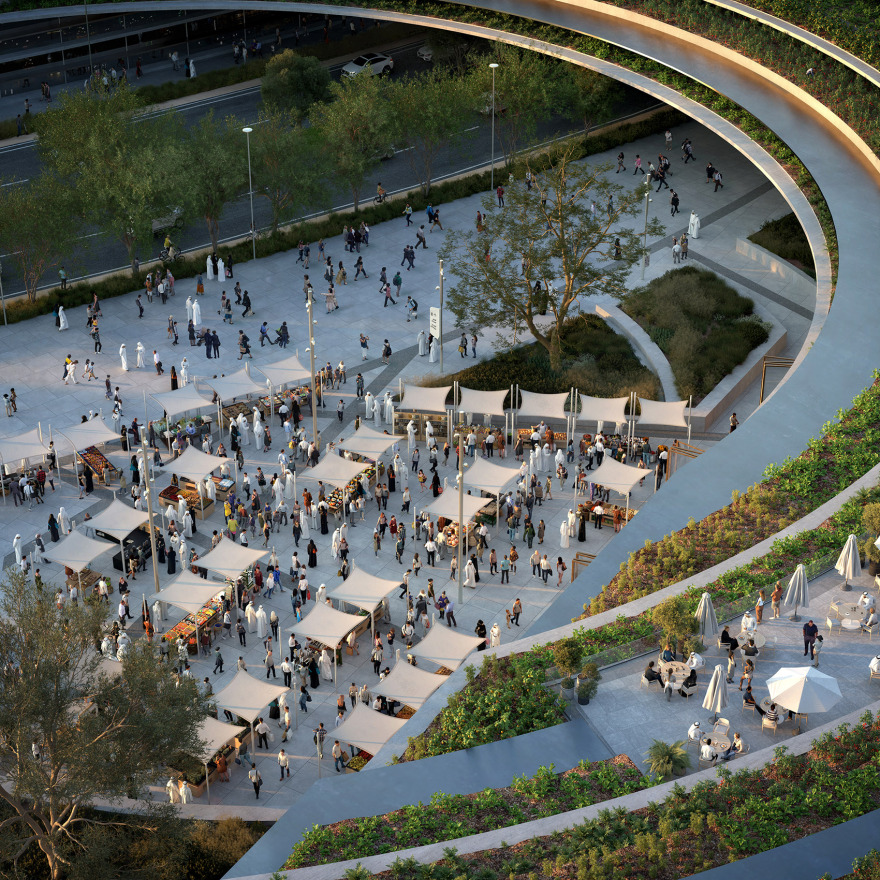
通过将 2020 年迪拜世博会的愿景根植在公共空间的结构中,景观总体规划包括数公里的活跃绿色和蓝色网络、生机勃勃的广场和主街道、高效的气候行动(应对城市热岛效应、空气污染和微气候优化等问题),以及种植超过 30,000 棵当地树木。
By integrating the Dubai 2020 Expo’s ambitions directly into the fabric of the public realm, the landscape masterplan includes multiple kilometres of active, green and blue networks, vibrant plazas and highstreets, high-performing climate action addressing issues such as urban heat islands, air pollution, and microclimate Optimisation, and the planting of more than 30,000 native trees.
▼活跃的绿色网络,active green networks©UNStudio
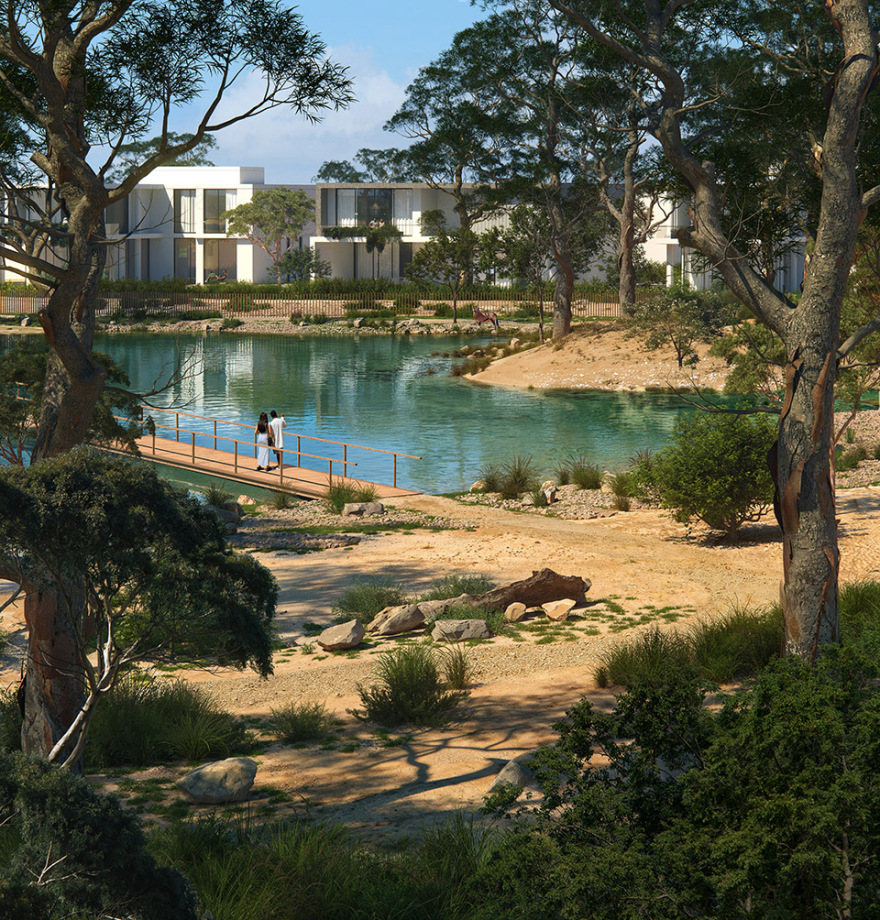
众多新自然元素中包括一个新的城市“世博森林”的设计,该森林与相邻的山谷系统相连,拥有自然起伏的地形、合欢树、本地野生动物,以及从树顶攀爬、观鸟到城市农业等一系列活动,以积极支持和改善本地生物多样性。以打造迪拜最绿色区域为目标,公共空间设计为居民和访客沉浸于阿联酋独特而富有韧性的自然环境中提供机会,从而确保 2020 年迪拜世博会遗产持久保留。
Amongst the many new nature-based features is the design of a new urban ‘Expo Forest’ connecting to the adjacent valley systems with naturally undulating landscapes, ghaf trees, local wildlife, and a host of activities from treetop climbing and birdwatching to Urban Farming to actively support and enhance the local biodiversity. With the stated intent of creating the greenest district in Dubai, the public realm design will immerse residents and visitors in the UAE’s unique and resilient nature – thus ensuring the lasting and sustainable legacy of the Dubai 2020 Expo.
▼“世博森林”,‘Expo Forest’©UNStudio

设定可持续目标
Setting sustainable goals
新的迪拜世博城将在人类需求与环境管理之间实现平衡。总体规划的制定和实施遵循具体目标,例如保护和增加生物多样性、减少能源和水资源消耗、使用清洁能源和替代水源。此外,还将增加可持续公共交通选项的使用,创造鼓励步行、骑行和微型交通的空间,居民将享有人均丰富的绿色空间。总体规划设定了以下目标:所有建筑最低需达到 LEED 金级认证,基础设施和公共空间项目需达到 BREEAM 优秀级认证,并已获得 WELL 社区金级认证,以确保聚焦健康与福祉。
The new Expo City Dubai will balance human needs with environmental stewardship. The masterplan has been developed and will be implemented in line with specific targets, such as protecting and increasing biodiversity, reducing energy and water consumption, use of clean energy and alternative water sources. In addition, there will be increased use of sustainable public transport options, the inclusion of spaces that encourage walking, cycling and micromobility, and residents will enjoy an abundance of green space per person. The masterplan sets the target of LEED Gold as a minimum requirement for all buildings, BREEAM Excellent for infrastructure and public realm projects, and already received WELL Community Gold Certification to ensure a focus on health and wellness.
▼夜景,night view©UNStudio

Client: Expo City Dubai
UNStudio Team: Ben van Berkel, Caroline Bos with Arjan Pit, Dana Behrman, Aurelie Hsiao, Misja Van Veen, Allison Weiler, Michael Labory, Andi Balza, Olga Kotta, Chrysa Triantafyllidou, and Joshua Karategin, Nathan Ngo, Zacharoula Loizou, Yvonne Yuen, Rotem Shenitzer, Jinlai Song, Yimeng Ma, Valentina Amaya, Bart Chompff, Nathan van Nugteren, Lucas Di Gioia, Aleksei Lebedev, Daniel Diez, Juan Manuel Rodriguez, Jose Sanmartin Gonzalez, Carolina Boccella, Mircea Mogan, Hyunjin Park, Andrius Ribikauskas, Luca Fabbri, Alex Kalavech, Caroline Wang, Giovanni Cuguttu, Joe Tu, Luke Kim, Christian Maijstré, Felizitas Dochantschi, Inés Verna, Nawid Piracha, Anna Maria Pisani, Monica Palfy, Shaghayegh Shayan
Advisors:
Buro Happold – Mobility, Sustainability, Accessibility, Environmental Scope, Fire & Life Safety Design, Infrastructure Planning (Wet &Dry), Roads and Highways, Traffic Impact Study, Security, Microclimate, CFD Analysis, Solid Waste Management, SMART City, Acoustics
SLA – Landscape & Public Realm design
Endpoint – Wayfinding Strategy & Concept Design
LDC – Lighting Design
EGIS/WMI – Architect of Record
Vedra Developers FZ LLC – Project Management Support
CPP wind – Wind Engineering
RTC – TIS
AESG – EIA
Compass – Cost Consultant
Mimar Models – Physical Model
Visualisations by: Plomp, HISM and Hansinok
南京喵熊网络科技有限公司 苏ICP备18050492号-4知末 © 2018—2020 . All photos and trademark graphics are copyrighted by their owners.增值电信业务经营许可证(ICP)苏B2-20201444 苏公网安备 32011302321234号
苏公网安备 32011302321234号客服
消息
收藏
下载
最近