

创作上传
VIP
收藏下载
登录 | 注册有礼
查看完整案例

收藏

下载

分享
2019 年,在江西景德镇开展了以“近现代陶瓷工业遗产综合保护开发续建”为题的集群设计。这个集群设计邀请了多位国际与国内的知名建筑师,我们也有幸受邀参加。我们的设计内容是包含艺术公寓、展览展示、创作工坊、配套商业等功能的建筑组团“陶溪川艺术学院”。
In 2019, a cluster design project titled “Comprehensive Conservation, Development, and Expansion of Modern and Contemporary Ceramic Industrial Heritage” was launched in Jingdezhen, Jiangxi. This project invited several renowned international and domestic architects, and we were honored to be among the invited participants. Our design encompasses the functions of art apartments, exhibition spaces, creative workshops, and supporting commercial facilities, collectively known as the “Taoxichuan Art Academy.”
▼夜览鸟瞰,Aerial view © 魏刚

▼学院楼一角,A corner of the building © 魏刚

项目基地坐落于景德镇老城区中部原陶机厂地块内,紧邻陶溪川文创街区一期,场地位于西南端边界,与城市道路紧邻。原厂区保留有大量的单多层厂房等工业遗迹,区内植被保存较好。
▼原始场地情况及分布,site© 天津华汇工程建筑设计有限公司

The project site is located within the former ceramic machinery factory plot in the central part of the old town area of Jingdezhen, next to the first phase of the Taoxichuan Cultural and Creative District. The site is situated at the southwest boundary, close to urban roads. The original factory area retains numerous single and multi-story industrial buildings and other industrial remnants, with well-preserved vegetation.
▼沿街道的主入口,Along the main entrance of the street © 魏刚

▼建筑东北角的交错的观景平台,The sightseeing platforms at the northeast corner of the building © 魏刚

陶溪川艺术学院将服务于在陶溪川创作、研学的艺术家和艺术学生们,并提供交流、创作、生活的空间场所。
The art academy will serve artists and art students involved in creativity and research in Taoxichuan, providing spaces for communication, creation, and living.
▼项目模型,Aerial view © 天津华汇工程建筑设计有限公司


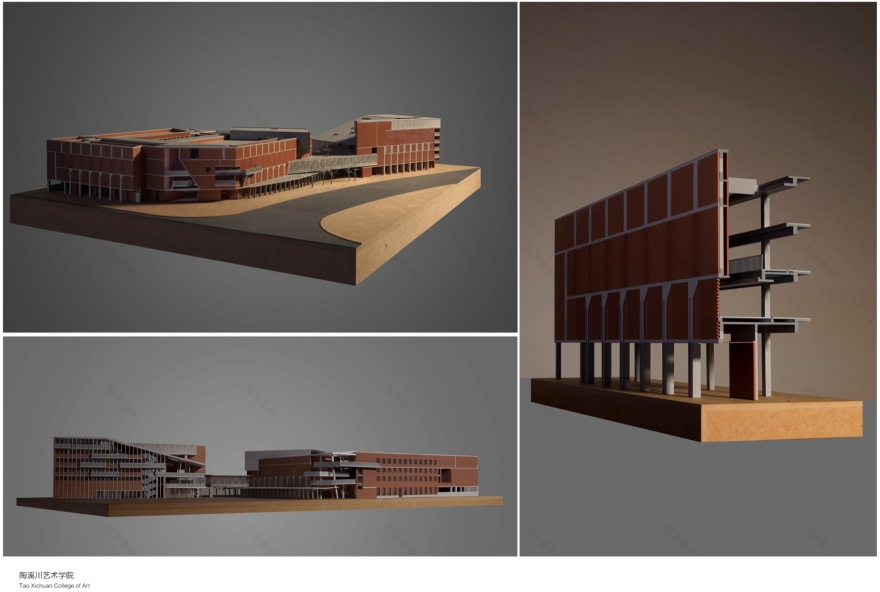
在工业质感和传统意味都兼备的特殊场所中,设计一座新建筑,还是一座服务于“艺术”的建筑,如何呼应城市肌理、重现场所精神,是我们最开始关注的问题。
▼功能流线,functional flow © 天津华汇工程建筑设计有限公司

In a distinctive context where both industrial aesthetics and traditional significance coexist, the initial question we focused on was what kind of art academy we wanted to create. Should we design a new building or one that serves the purpose of “art”? How will the design engage with the urban fabric and reestablish the site’s spirit?
▼架空的主入口通道,The main entrance passage © 魏刚

▼坡顶,Sloped roof© 魏刚

▼出挑的观景窗,Cantilevered window © 魏刚

砖砌的房子、大跨连续结构、瓦屋面坡顶、参天大树都构成了来到陶溪川的最初印象。因此,我们最先确定了建筑材料,选择红砖、混凝土、瓦片、钢板等材料,试图再现传统的朴拙和工业的素雅,再以简洁有力的材料组合和线条碰撞,传递艺术张力。
▼场景剖面图,section© 天津华汇工程建筑设计有限公司
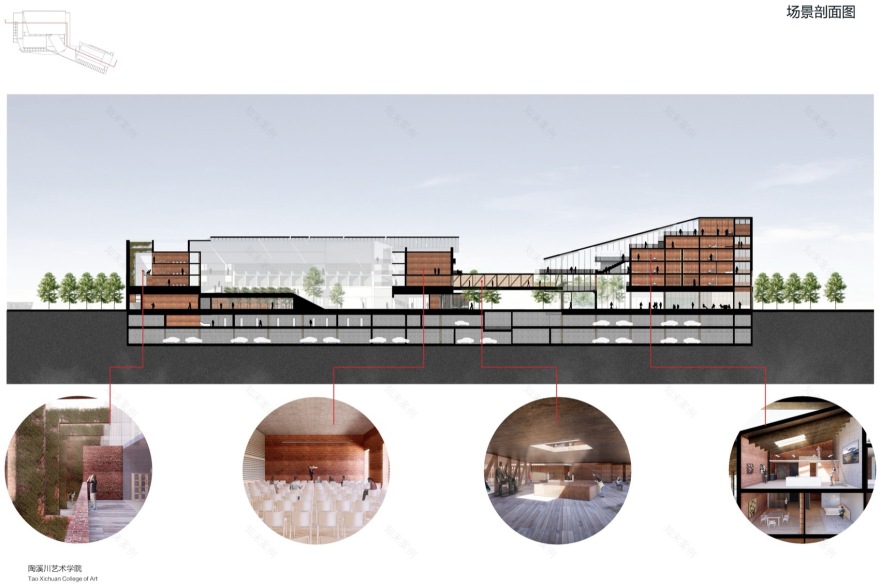
The brick houses, large-span continuous structures, tiled sloped roofs, and towering trees form the initial impression of arriving at Tao Xichuan. Therefore, we first decided on the building materials, choosing red bricks, concrete, tiles, steel plates, and other materials, aiming to recreate the simplicity of tradition and the understated elegance of industry. We then used a combination of clean, powerful materials and intersecting lines to convey artistic tension.
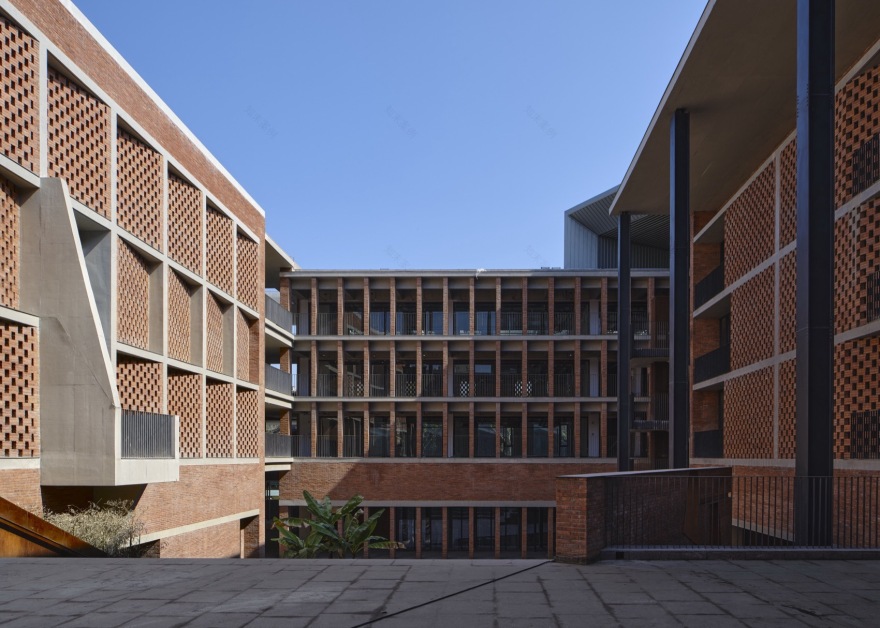
▼建筑内院,Courtyard © 魏刚


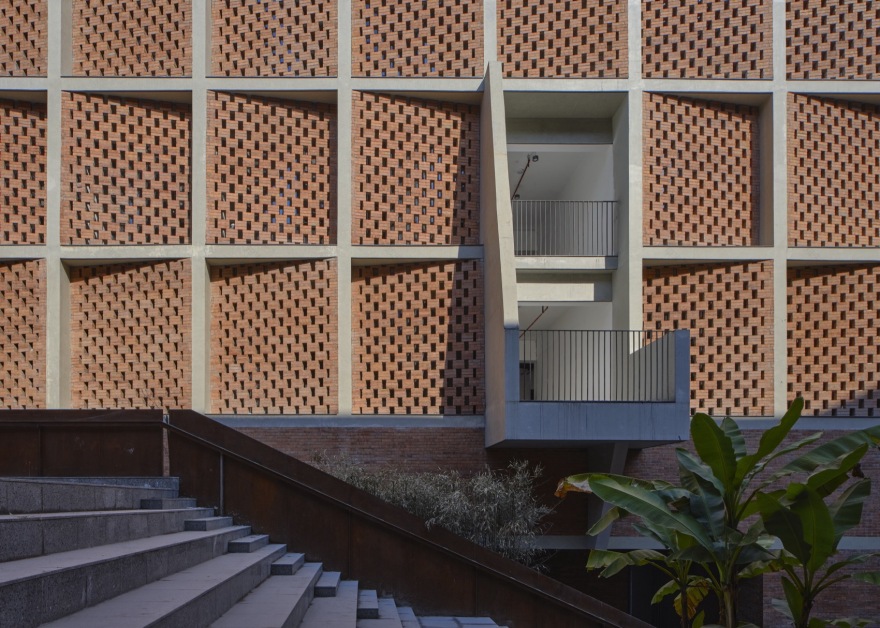
▼建筑内院近景,Close view ofcourtyard © 魏刚
建筑以组群的形式呈现,主要分为两部分,西侧为学院楼,体量较大,是服务于艺术家和艺术院校学生的办公及公寓空间,建筑高度控制与沿街保留厂房协调。东侧为大师楼,体量稍小,是服务于艺术大师的办公及公寓空间,通过逐层的退级和大面坡顶,衔接和过渡其与周边建筑的体量关系。两组建筑通过架空在二层的钢连廊进行连接,既明确了建筑之间的联系,又强调了沿新厂西路的整个片区的入口空间。
▼外檐做法说明,external eaves © 天津华汇工程建筑设计有限公司


The building is divided into two parts. The larger structure on the west side serves as office and apartment spaces for artists and students from art academies. Its height is controlled to coordinate with the preserved factory buildings along the street. The smaller structure on the east side is for the offices and apartments of art masters. It uses a series of stepped setbacks and large sloped roofs to integrate and transition its volume with the surrounding buildings. The two buildings are connected by a steel sky bridge on the second floor, which not only clarifies the relationship between the buildings but also emphasizes the entrance space for the entire area along the new Factory West Road.
▼建筑内院一角,A corner in courtyard © 魏刚

▼建筑内院一角,A corner in courtyard © 魏刚


建筑中设置了一系列天井、骑楼、檐廊、庭院等可以避雨、通风的半室外空间,来应对景德镇夏季炎热多雨的气候。半室外公共空间也可容纳展览、表演、聚会等活动。
The building incorporates a series of courtyards, arcades, eaves corridors, and semi-outdoor spaces designed to provide shelter from rain and allow for ventilation, in response to the hot and rainy climate of Jingdezhen in the summer. These semi-outdoor public spaces can also accommodate exhibitions, performances, gatherings, and other activities.
▼建筑中心的室外庭院,The courtyard at the center of the building © 魏刚

▼砖墙,Brick wall © 魏刚
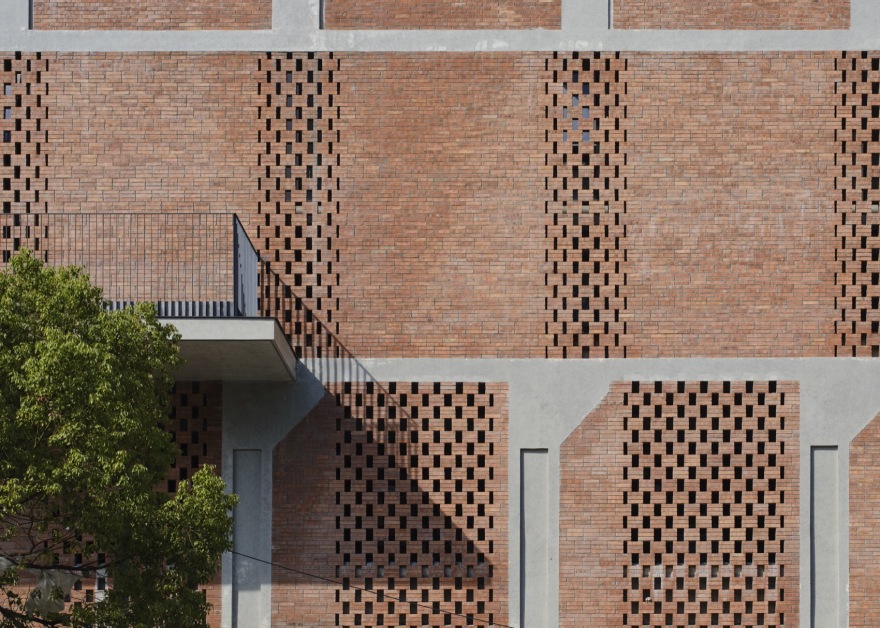
▼红砖、清水混凝土与金属材料的交接 The junction of red brick, exposed concrete, and metal materials © 魏刚

▼柱廊,Colonnade© 魏刚

身处老城区闹市,紧邻道路,相对嘈杂,因此在公寓空间的立面没有采用常规酒店式公寓那种落地大窗的做法,而是取了厂房大跨结构牛腿的形式意象,结合花砖墙体围合的方式,营造出静谧内向的居室环境,传达大隐于市的空间氛围。这种将厂房结构形式的立面外化,也暗合原陶机厂的环境印记;而砖的砌筑给建筑外立面带来的细腻变化,砖块本身的质感与灵活多变的砌筑方式,也为我们创造出丰富变化的建筑肌理与空间体验。
Located in the bustling old town, adjacent to a busy road and relatively noisy surroundings, the apartments do not adopt the conventional hotel-style façade with large floor-to-ceiling windows. Instead, they take inspiration from the factory’s large-span structural knee braces, combined with the enclosing walls made of decorative tiles, creating a quiet and inward-facing living environment. This design conveys a sense of retreat in the midst of the city. By externalizing the factory’s structural form in the façade, the design subtly echoes the environmental imprint of the original ceramic factory. The use of brickwork brings delicate variations to the exterior façade, and the texture of the bricks, along with the flexible and dynamic construction methods, creates a rich and varied architectural texture and spatial experience.
▼从新厂西路对面看建筑,View of the building from across Xinchang West Road © 魏刚

▼从大师楼回望学院楼,Looking back at the College Building from the Master Building © 魏刚

▼从大师楼檐下平台回看连廊与学院楼,Looking back at the corridor and the college building from the platform under the eaves of the Master Building © 魏刚
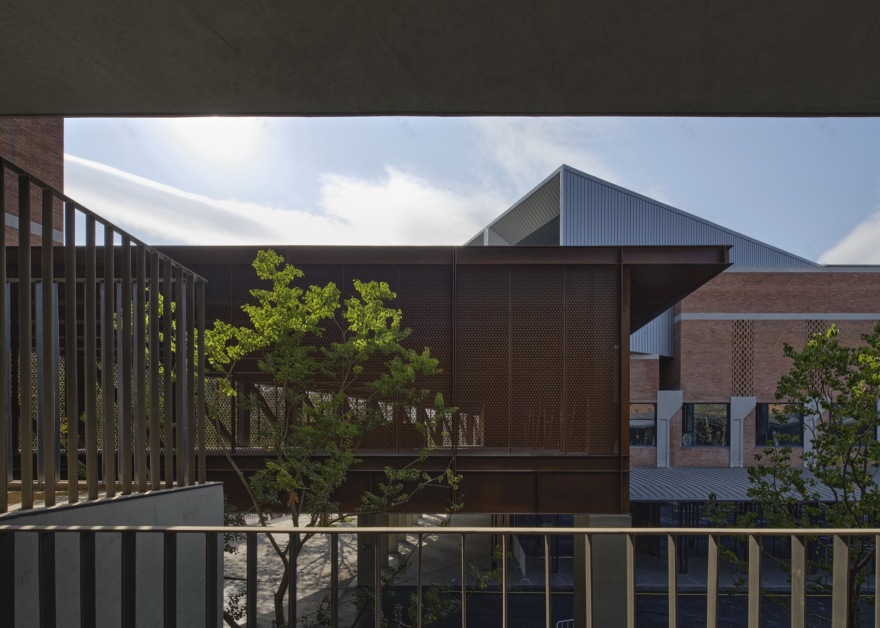
▼连廊的金属网材质,Metal mesh material of the corridor © 魏刚

▼通过架空的底层空间通往内院,The inner courtyard is accessed through the elevated ground floor space © 魏刚

在学院楼的东北侧,设置了一组立体交错的平台。楼梯从园区道路开始向上爬升,连接二、三、四层户外平台,平台又成为一个个被架起的广场,为游人提供多个眺望未来中心广场的场地高点。平台通过各层走廊扩展到其他公共活动区域,这样一来,外部穿越的公共流线与建筑内部流线在互不干扰的同时,也串联起建筑中最具特色的艺术展示和活动交流的场所。
On the northeast side of the art building, a series of interlocking platforms are set up. The stairs begin from the park’s road and ascend, connecting outdoor platforms on the second, third, and fourth floors. These platforms, raised like plazas, provide visitors with multiple vantage points to overlook the future central square. The platforms extend through corridors on each floor, linking to other public activity areas. In this way, the external public circulation flows seamlessly through the building, while remaining unobtrusive to the internal circulation, thereby connecting the most distinctive spaces for art exhibitions and activities in the art academy.
▼区域平面图,site plan© 天津华汇工程建筑设计有限公司

▼总平面图,overall plan© 天津华汇工程建筑设计有限公司

▼-2 平面图,-2F plan© 天津华汇工程建筑设计有限公司

▼-1 平面图,-1F plan
© 天津华汇工程建筑设计有限公司

▼1 平面图,1F plan© 天津华汇工程建筑设计有限公司
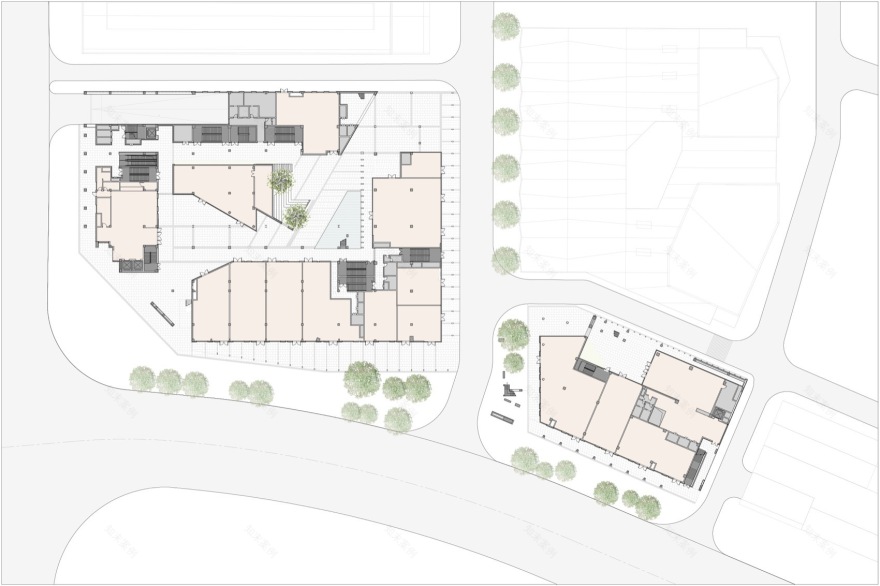
▼2 平面图,2F plan
© 天津华汇工程建筑设计有限公司

▼3 平面图,3F plan© 天津华汇工程建筑设计有限公司
▼4 平面图,4F plan© 天津华汇工程建筑设计有限公司
▼5 平面图,5F plan© 天津华汇工程建筑设计有限公司

▼6 平面图,6F plan© 天津华汇工程建筑设计有限公司

▼南立面图,south elevation© 天津华汇工程建筑设计有限公司

▼北立面图,north elevation© 天津华汇工程建筑设计有限公司

项目类型:公共文化建筑
项目地点:江西省景德镇市
建成状态:建成
设计时间(起迄年月):2019 年 3 月
建成时间(起迄年月):2022 年 10 月
用地面积(平方米):63825.56 平方米(总地块)
建筑面积(平方米):41800 平方米
设计单位:天津华汇工程建筑设计有限公司
主创建筑师:周恺
设计团队完整名单:
建筑:王建平、章昊、谢威、周平、高洪波、杨磊、刘泽宇、庞玉鹍、吴珺、王伟
结构:贾潮、方彬、齐欣
给排水:牛育辉、傅乐辰
暖通:杨琳、李晓
电气:解海、薛鹤飞
材料:红砖、混凝土、瓦片、耐候钢板
业主:景德镇陶邑文化发展有限公司
摄影师:魏刚


南京喵熊网络科技有限公司 苏ICP备18050492号-4知末 © 2018—2020 . All photos and trademark graphics are copyrighted by their owners.增值电信业务经营许可证(ICP)苏B2-20201444 苏公网安备 32011302321234号
苏公网安备 32011302321234号客服
消息
收藏
下载
最近