

创作上传
VIP
收藏下载
登录 | 注册有礼
查看完整案例

收藏

下载

分享
期待做得更好,期待助您一臂之力。本次介绍的项目是 叠重设计 Re-Architecture Design studio在平台上接到的三亚西岛自建房商业改造 项目。点击这里看当时发布的项目信息。
This time we will introduce the Renovation of self-built house in West Island Sanya project completed byRe-Architecture Design studio. ClickHEREto see the project info on get-project platform. (the interview is only in Chinese)
▼三亚西岛自建房商业改造 – 项目概览,Renovation of self-built house in West Island Sanya – Overall of the project© 林边

▼室外-立面-东立面,Exterior – facade – east facade © 林边

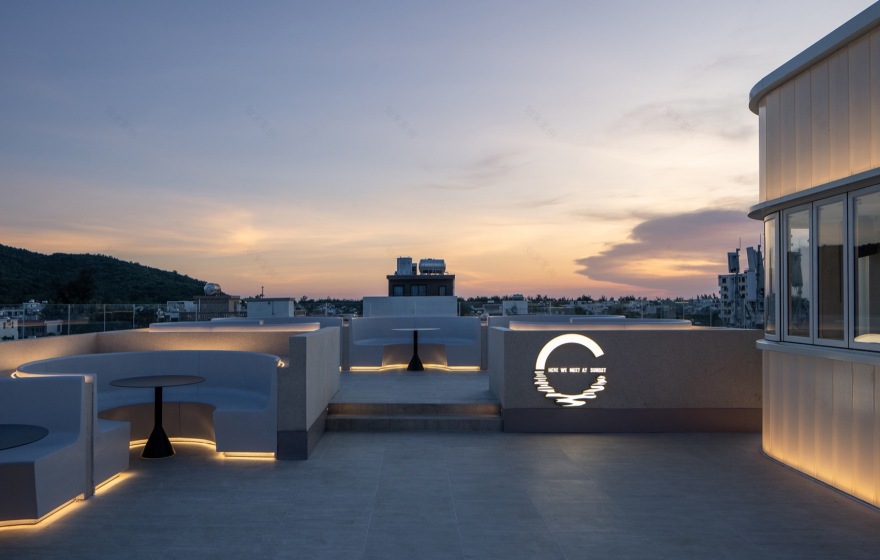
▼屋顶露台-logo,Rooftop terrace – logo © 林边
▼火锅店-室内-一层,Hotpot restaurant – interior – first floor © 林边

▼酒吧-室内,Bar – interior © 林边

设计师会员回访
1.您在项目对接平台一年一共和多少个甲方有相当程度的接触沟通,最终接到了几个项目?
一年中有5-8个甲方或多或少的接触,最终接到平均一年一个项目。
2.接到的项目是什么类型,设计费是多少?项目进展到了什么程度?该项目完成后除了设计费还给你带来了哪些你认为有价值的事情?
项目是建筑改造和商业店铺项目,设计费40多万;项目最终建成营业;除了设计费之外的价值是研究了文旅项目特点受众,商业细分领域有更多的心得经验。
3.从网络平台对接项目,在和甲方沟通的过程中是否遇到了一些不一样的问题?是如何克服的?
没有什么显著的不一样,网络平台提供了更多的机会,最终促进合作还是跟业主投资的决心和过程中沟通的细节决定的。如果说有不一样,那就是平台提供了双向选择,业主选设计师的同时,设计师也在选择业主,相对来说对接更垂直。
业主问答
1.请问在决定设计公司之前您与多少家公司进行过比较深入的沟通?
四家公司进行了深入沟通,对比了初版设计最后选择的他们家
2.请问选中的设计公司的哪些优点或者特点是您中意的?
整体设计属于简约风格,多种石材和新型材料的融入比较有这种海岛度假的氛围感,整栋建筑也是沿海路的地标,低调不失风度。
设计师相对都比较专业,可供选择比较多。最终邀请了有偿比稿,选到了最合适的设计师吧。
项目展示
Project Description
场地和回应
Background and response
项目坐落在三亚一个名叫西岛的小海岛上,是一个渔村自建房商业化改造,拥有着紧贴海岸线近乎完美的海景资源。不像三亚其他海滨所呈现出的浓重商业氛围,目前的西岛还未脱离原本渔村的质朴。在这里,好像更容易沉浸在大海所带来的放空感。利用好海景资源在这个项目中最基本的商业化考量要素,但仅仅做到如此显然并不能满足我们的野心,我们希望能强化大海所带来的情绪价值,希望跟海互动起来。
The project is located on a small island called West Island in Sanya. It is a commercial renovation of a self-built residence in a fishing village, with a nearly perfect sea view close to the coastline. Unlike other seashores in Sanya with a strong commercial atmosphere, the current West Island has not yet broken away from the simplicity of the original fishing village. Here, it seems easier to immerse yourself in the sense of natural relaxation brought by the sea. Making good use of sea view resources is the basic commercial concern in this project, but doing so alone is obviously not enough for us to respond the site. We hope to strengthen the emotional value of this place by interacting with the sea.
▼航拍-大场景,Aerial – overall scene © 林边

跟大海连起来一起放空 Connect with the sea
因为本项目是在自然渔村里长出来的宅基改造,所以距海非常近,只有一个4米的单行车道相隔。与三亚新建房子须距海退界300米的规定相比,这让本项目的场地显得尤为珍贵。距海如此之近,我们就设想是否有可能让我们的小房子跟海连起来,至少在情绪上连起来。
Because the project is a renovation of a small house in a natural fishing village, it is very close to the sea, 4 meters only divided by a road. Compared with the regulations in Sanya that new houses must be 300 meters away from the sea, this makes the site of this project particularly precious. Being so close to the sea, we wondered if it is possible to connect our house directly to the sea, at least mentally connected.
▼区位,site location© 叠重设计

▼场地原状,original building© 叠重设计

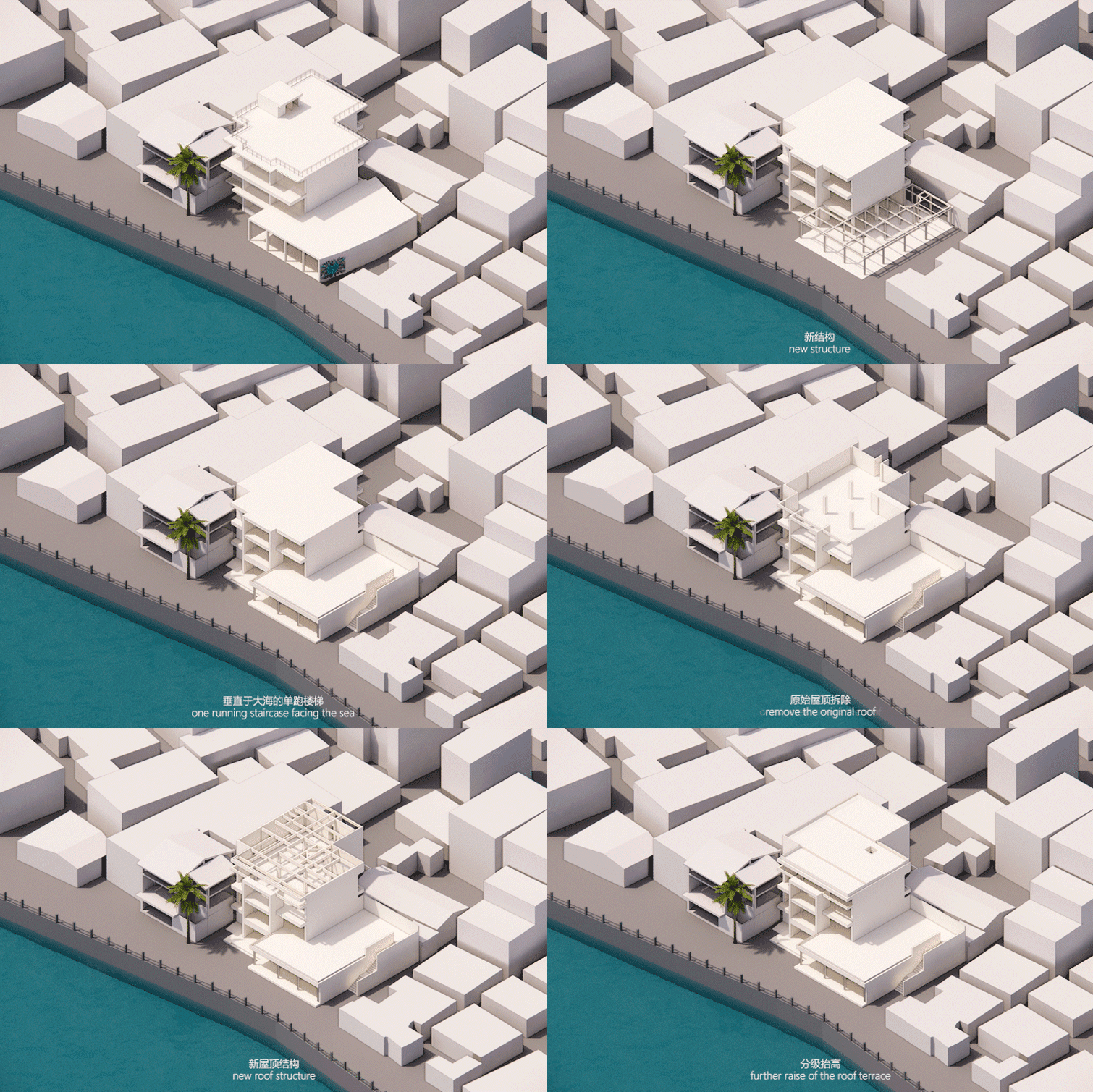
▼体量生成,massing derivation© 叠重设计
所以我们尽量把海景优势放大,面向海的立面尽量只有玻璃,把一切可能干扰的装饰因素统统去掉,同时室内座位的布置都平行于大海,让在座的客人尽可能的享受海景;天花系统强调垂直大海的线条,方便梳理天花管线的同时,也加强空间冲向海面的指向性。
In order to maximize the sea view, the facade facing the sea is made of glass as much as possible, removing all the unnecessary decorative factors that may interfere. At the same time, the indoor seats are arranged parallel to the sea, so that the customers can enjoy the sea view as much as possible. The ceiling system emphasizes the lines perpendicular to the sea, which is convenient for sorting out the ceiling pipelines while also strengthening the directionality of the space rushing towards the sea.
▼室外-立面-主入口,Exterior – facade – main entrance © 林边

▼室外-二层露台-立面,Exterior – second-floor terrace – facade © 林边

▼室外-二层露台-檐下空间,Exterior – second-floor terrace – under-eave space © 林边

▼室外-二层露台-檐下空间,Exterior – second-floor terrace – under-eave space © 林边

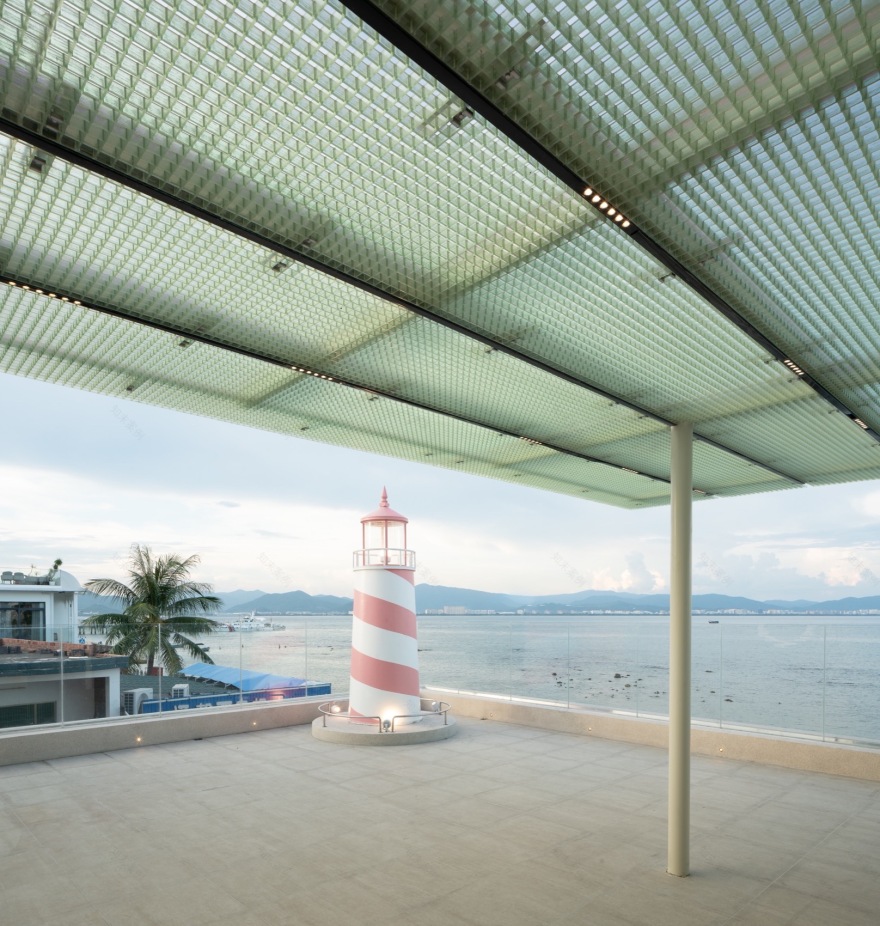
不仅如此,为了进一步加强与海的关系,室内天花的线条向外继续延伸,在与外立面幕墙交界之前变成了翡翠绿格栅材质并继续延伸直至成为外立面遮阳挑檐的一部分。这种处理手法一方面模糊了室内外的感知界限,另一方面也使得挑檐的结构可以深入到室内,从而减少外立面的斜拉构件,使得挑檐更纯粹,更轻盈。
Even more, in order to further strengthen the sense of connection with the sea, the lines of the interior ceiling continue to extend outwards, turning into emerald green grille before they meet with the exterior curtain wall and then continuing to extend until it becomes part of the exterior sunshade eaves. This method not only blurs the perceptual boundary between indoor and outdoor, but also allows the structure of the eaves to penetrate deep into the interior, thereby reducing the diagonal supporting components of the exterior facade, making the eaves purer and lighter.
▼室外-二层露台-檐下空间,Exterior – second-floor terrace – under-eave space © 林边

▼室外-二层露台-檐下空间,Exterior – second-floor terrace – under-eave space © 林边
▼室外-二层露台-檐下空间,Exterior – second-floor terrace – under-eave space © 林边

深挑檐的田字格
Deep eaves and new material
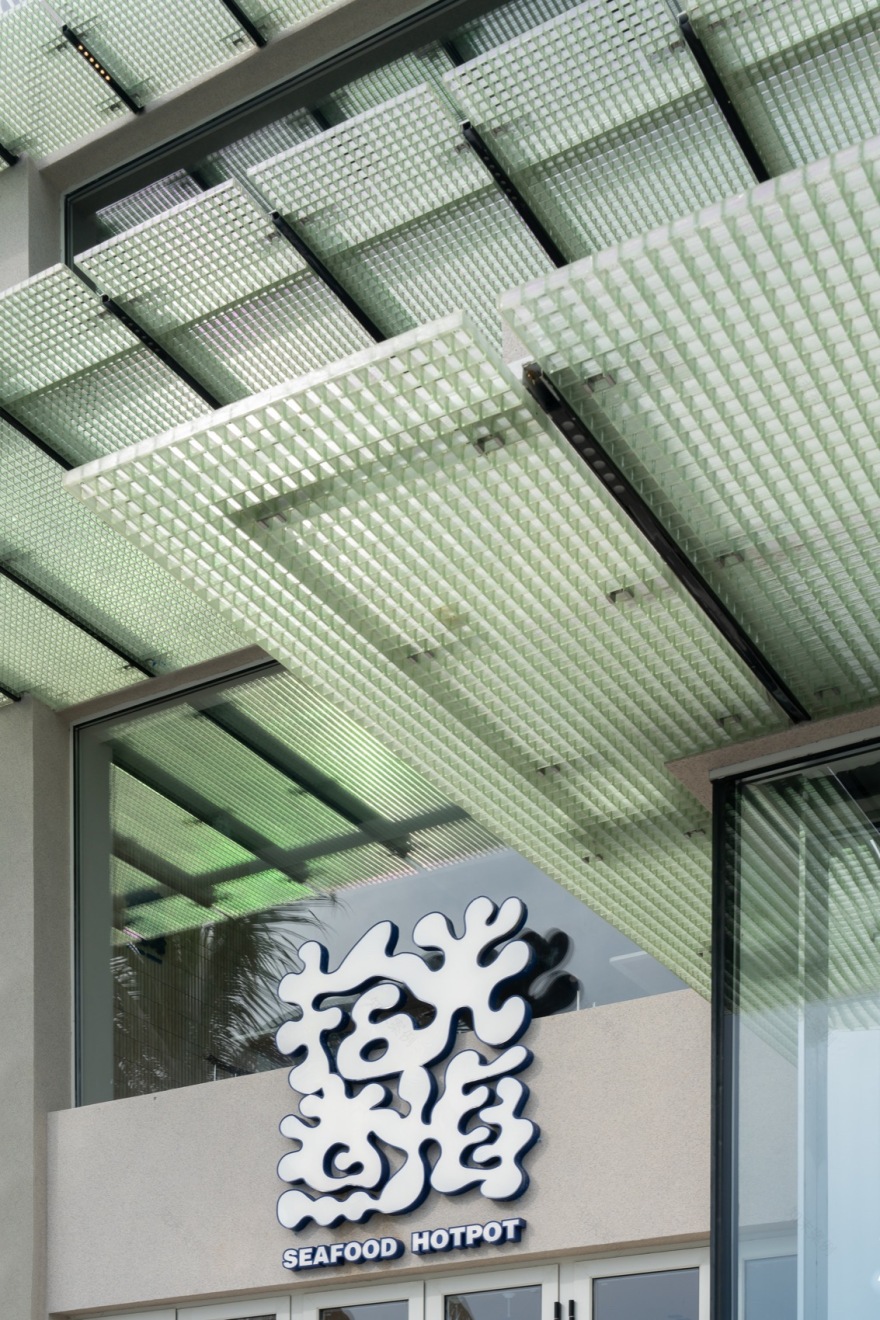
在项目开始初期的时候,一种田字格的翡翠绿玻璃钢格栅刚好出现在我们的材料库中。开始的时候不知道能拿它做什么,只知道这个材料跟场地有种莫名的契合。事后回想应该是它跟三亚独特的环境太搭了。绿油油的椰树,湛蓝的天空,透明的海,这些特质与我们选的这个田字格格栅太像了。加上这种材质本身带一点粗糙的加工肌理和超强耐候性能,能毫无围合的融入海岛渔村斑驳的自然生活状态。
▼出现在材料架上的翡翠绿格栅,Emerald-green grill.jpg that appears on the material shelf© 叠重设计

At the beginning of the project, a grid-shaped emerald green fiberglass grille just randomly appeared in our material library. At first, we didn’t know what to do with it, but we knew that this material had an inexplicable fit with the site. This new material matches perfectly with the green coconut trees, the blue sky and the transparent sea in Sanya. In addition, this material itself has a slightly rough texture and super weather resistance, which can be integrated into the mottled natural life of the island in the fishing village.
▼室外-立面-主入口,Exterior – facade – main entrance © 林边

▼室外-立面-局部,Exterior – facade – partial view © 林边
▼室外-立面-局部,Exterior – facade – partial view © 林边

因为三亚的气候关系,不论哪个方向都需要尽可能多的遮阳场地,同时因为大面积的玻璃会造成热工性能的下降,所以我们在大面积玻璃的地方,也就是面向大海的方向设置了超深挑檐结构。挑檐从室内开始穿过玻璃外墙一直伸出室外,伸向大海,一方面遮阳体系一定程度上优化了热工性能,另一方面,伸向大海的挑檐也加强了朝向大海的指向性。这里我们把翡翠绿田字格格栅应用在挑檐上,这种强化玻璃纤维合成的材料能抗得住海风的侵蚀,同时在三亚那种绚丽的阳光下折射出光彩,随着天气的变化呈现出阴天温润,晴天绚丽的不同气质。
Because of Sanya’s climate, as much shade area as possible is needed in any direction. At the same time, because large areas of glass will cause a decrease in thermal performance, we set up ultra-deep eaves in places above large area of glass, which is the same direction facing the sea. The horizontal eaves optimizes the thermal performance to a certain extent. In addition, the extended eaves also strengthen the directionality towards the sea. Here we apply emerald green grids on the eaves. This reinforced glass fiber synthetic material can resist the erosion of sea breeze. At the same time, it presents different qualities under different weather conditions. For example, it gorgeously shines on sunny days and performs humbly on cloudy days.
▼火锅店-室内-一层,Hotpot restaurant – interior – first floor © 林边

▼火锅店-室内-二层,Hotpot restaurant – interior – second floor © 林边
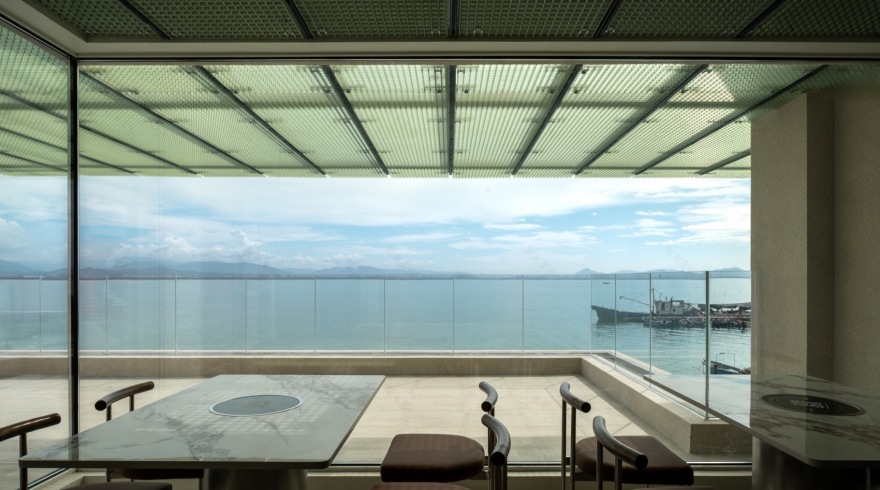
▼火锅店-室内-二层,Hotpot restaurant – interior – second floor © 林边

不论是在何种天气情况下,翡翠绿挑檐和碧绿碧绿的大海在窗前程度上交融在一起,好像随时可以走入大海一样。
No matter what the weather conditions are, to some extent, the emerald green eaves and the turquoise sea of Sanya blend together as a whole. It is like you can walk into the sea at any time in front of the window.
▼火锅店-室内-二层-小包厢,Hotpot restaurant – interior – second floor – small private room © 林边

▼室外-二层露台-檐下空间,Exterior – second-floor terrace – under-eave space © 林边
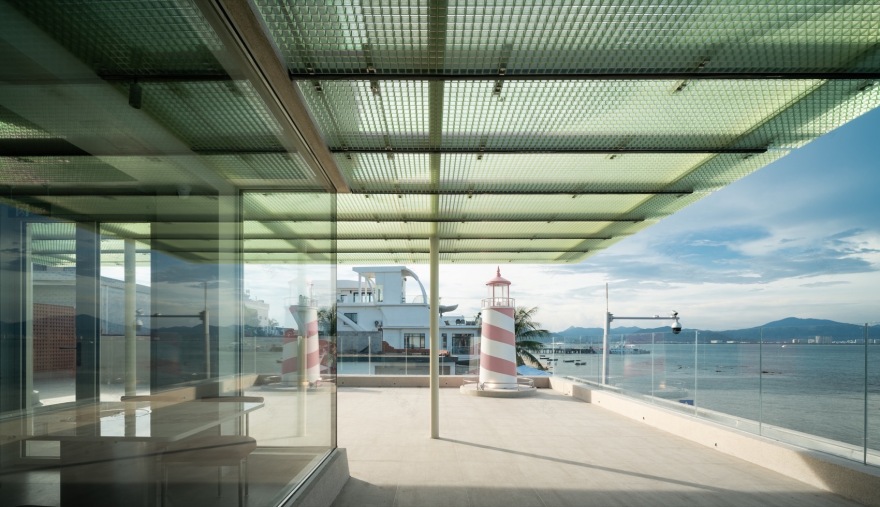
一路打卡而上的向往之地
Along the way up to Choice C
本项目是个三层小楼的改造,使用功能上要容纳了两个店铺:一二层为海鲜火锅店,三层和屋顶露台用作餐酒吧空间。两家店铺独立经营,相互不能有影响。所以改造的第一步就是考虑如何规划两条流线,使其各自独立,互不冲突。这就势必要考虑多加一个垂直交通绕过一二层,直接通向第三层。
This project is a renovation of a three-story building, which contains two stores: the first and second floors are seafood hot pot restaurants, and the third floor and roof terrace are used as dining and bar spaces. These two stores are operated independently. Therefore, the first step of the renovation is to consider how to organise the two flows so that they are independent without any conflict. This inevitably requires adding a new vertical circulation bypassing the first and second levels and directly leading to the third floor.
▼室外-二层露台-立面,Exterior – second-floor terrace – facade © 林边

▼火锅店-室内-二层,Hotpot restaurant – interior – second floor © 林边

▼火锅店-室内-一层,Hotpot restaurant – interior – first floor © 林边

▼火锅店-室内-一层,Hotpot restaurant – interior – first floor © 林边
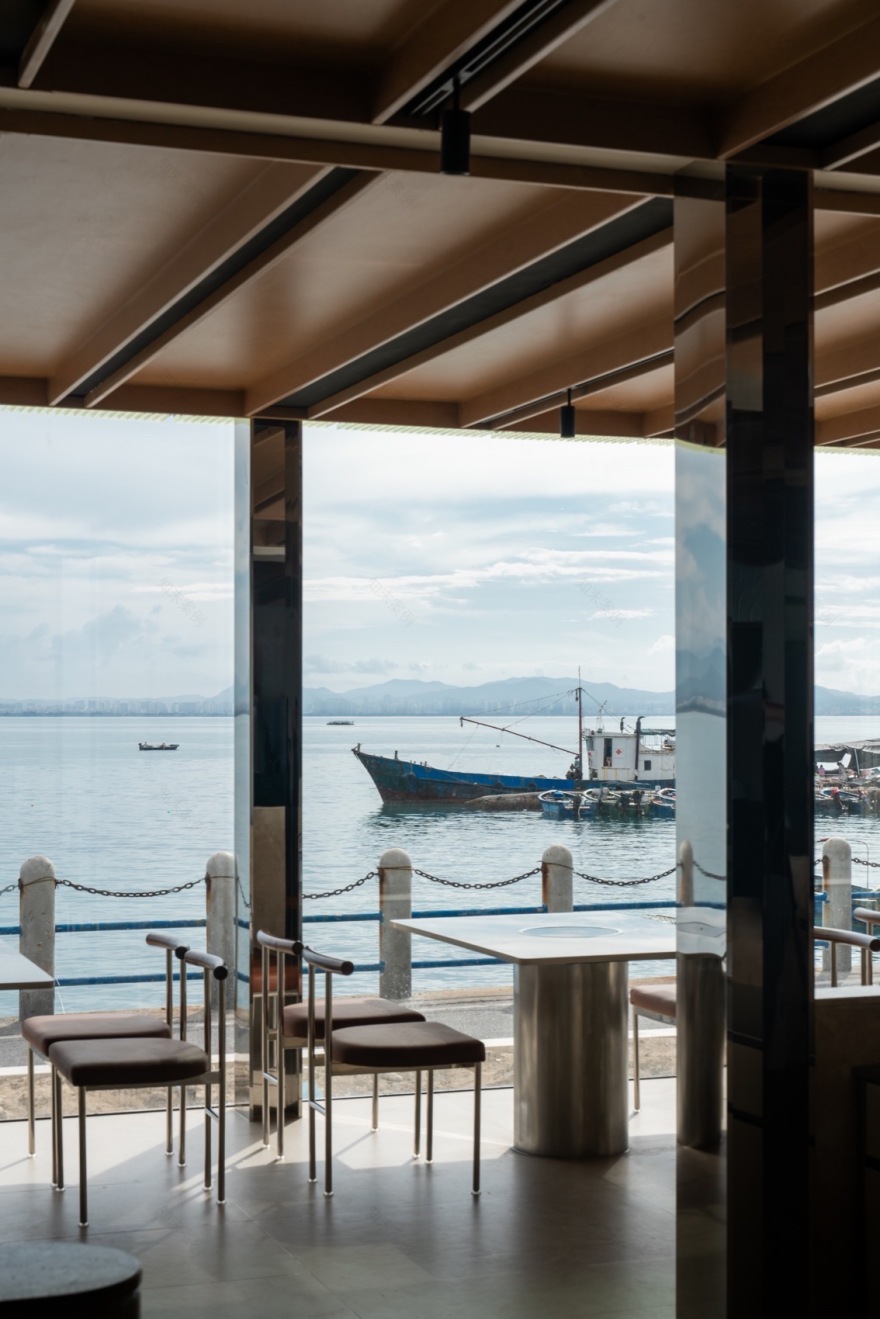
▼酒吧-室内-侧面,Bar – interior – side view © 林边

▼酒吧-室内-酒吧墙-夜景,Bar – interior – bar wall – night view © 林边

▼室外-立面-局部,Exterior – facade – partial view © 林边

我们一直认为,对于这个房子内的餐厅和酒吧而言,营业区域需要舒适平静,从而让人可以享受大海而放空。而如何进入的交通空间需要抢戏,为此我们抛弃了原本室内上下贯通的楼梯间,而是在建筑的另一侧增加了一个外挂楼梯,连接二层露台和三层酒吧,并在二层露台处又新增了一段冲向大海的直跑楼梯联通到马路上。这样我们有了两个不同感觉的竖向交通空间:一个垂直于大海,不仅是进入酒吧前的交通要道,2m的净宽和墙上的涂鸦为往来的行人提供了公共的立体打卡区;另一个外挂钢架楼梯,由半透磨砂U型玻璃包裹,与环境形成了模糊的间离效果,也为进入酒吧前的客人提供了一种心理准备的过程。
We have always believed that for the restaurant and bar in this house, the commercial area needs to be simple and calm, so that people can enjoy the sea and fully relaxed. The circulation space for entry needs to be overdrawn, so we abandoned the original stairwell that runs up and down in the room. Instead, we added an external staircase on the other side of the building, connecting the second-floor terrace and the third-floor bar; and then added a straight staircase running towards the sea on the second-floor terrace, connecting to the ground. In this way, we have two vertical circulation spaces with different feelings: one is perpendicular to the sea, with a net width of 2 meters, which is not only the main flow route before entering the bar, but also provides a public three-dimensional area for tourists to take photos; the other external steel frame staircase, wrapped in semi-transparent frosted U-shaped glass, forms a blurred alienation effect with the environment, and also provides a psychological preparation process for guests before entering the bar.
▼室外-立面-北街角,Exterior – facade – north street corner © 林边

▼室外-二层露台-立面,Exterior – second-floor terrace – facade © 林边

▼室外-立面-楼梯间,Exterior – facade – staircase © 林边
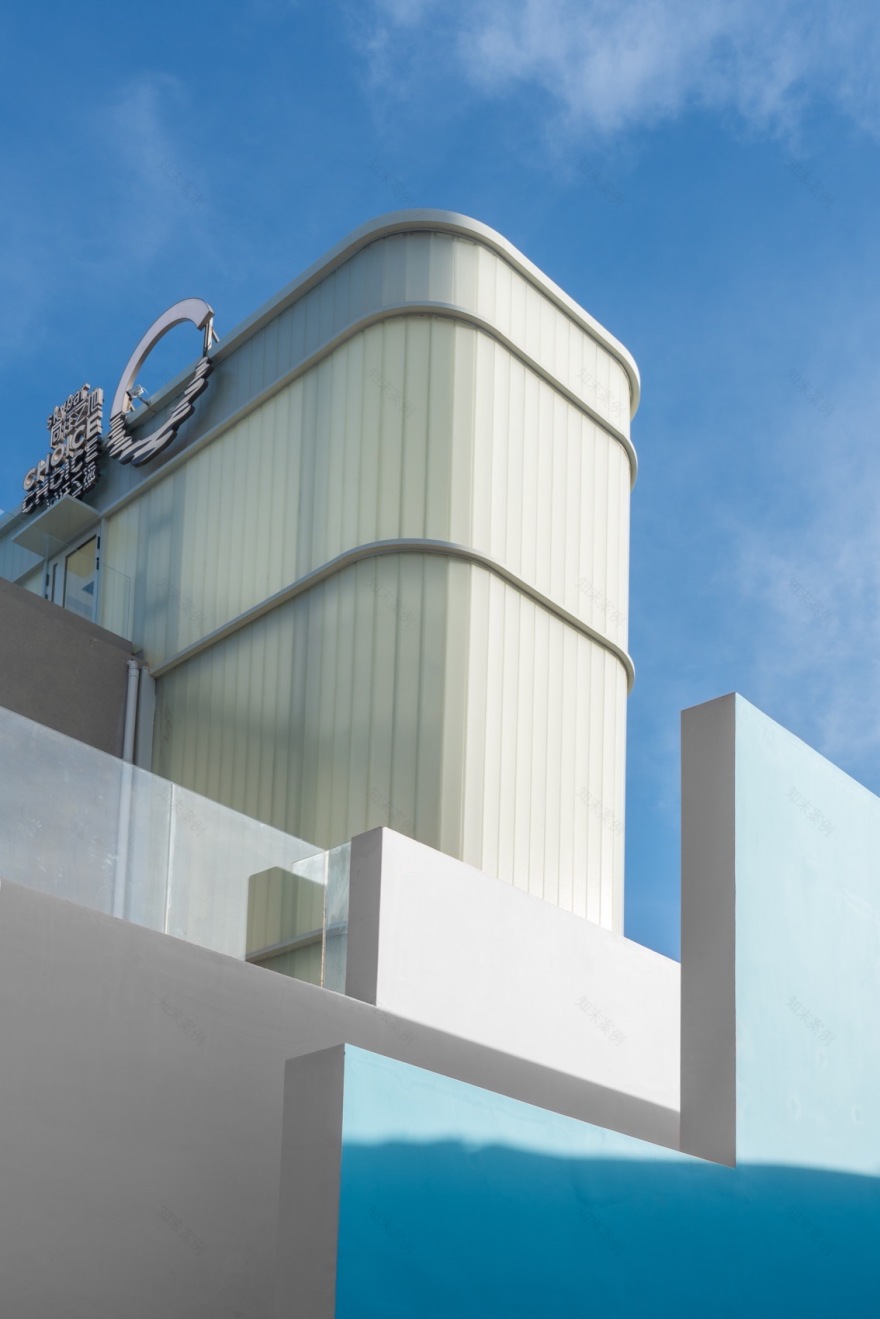
▼酒吧-室内-楼梯间,Bar – interior – staircase© 林边

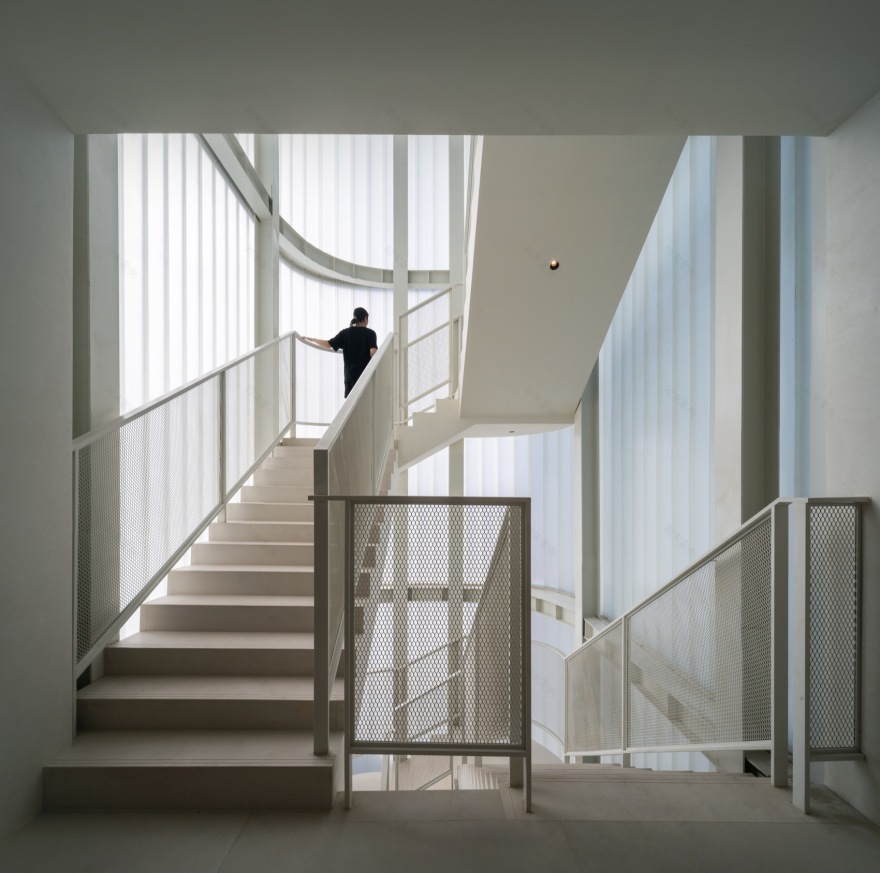
▼室外-二层露台-望海楼梯,Exterior – second-floor terrace – sea-view staircase © 林边

▼室外-露台露台-望海楼梯,Exterior – second-floor terrace – sea-view staircase © 林边

除此之外,酒吧的屋顶也是我们改动最多的地方。由于原本的三层空间净高偏低,所以我们掀掉了原有的屋顶,并往上抬高了一米,同时我们意识到屋顶露台大面积营业区域如果只是一个高度,对于海景的应用显得有点浪费,所以我们在屋顶设置了三个高度,让后排的空间也有无遮挡的海景资源。由U玻包裹的钢架楼梯直通到屋顶与屋顶吧台形成一个有机整体。傍晚时分,这个半透玻璃有机体接收到背后的夕阳晕染,为整个场地增加了浪漫的氛围,也为傍晚即将开门的酒吧空间做好了光影效果的烘托。
In addition, the roof of the bar is also the place where we made the most changes. Since the net height of the original third floor space was low, we removed the original roof and raised it up by one meter. At the same time, we realized that if this large area of the roof terrace was only one height, it would be a waste of the sea view resources, so we set three heights on the roof to allow the back row of space also having unobstructed sea view. The steel frame staircase wrapped in U-shaped glass leads directly to the roof and forms a whole scene with the rooftop bar. In the evening, this semi-transparent glass volume receives the sunset behind it, adding a romantic atmosphere to the entire venue, and also setting off the light effects for the bar space that about to open in the evening.
▼屋顶露台-望海,Rooftop terrace – sea view © 林边

▼屋顶露台-logo,Rooftop terrace – logo © 林边

▼酒吧-室内,Bar – interior © 林边

项目的两种属性和最后呈现的气质
The two attributes of the project and the temperament it presented presented
三亚的西岛是海南最大的原住民旅游海岛,与其他的地方比起来,它不仅是个拥有高质量海景资源的旅游岛屿,又是一个完整的保留着当地渔民生活状态的岛屿。这种自发的夹杂着精致旅游需求和慵懒渔民生活的混合气质正好也是我们希望抓住并在这个项目中呈现出来的一种独特气质。所以我们不追求设计上纯粹的干净,而是允许海风留下洗刷的痕迹,同样也允许船板、涂鸦、以及灯塔等渔村痕迹出现在建筑立面。
West Island in Sanya is the largest aboriginal tourist island in Hainan province. It not only has the same beautiful sea view resources like other places in Sanya, but also has a large number of local fishermen living here. A prominent feature mixed with exquisite tourism needs and cozy fishermen’s lives is exactly a unique quality that we hope to capture and present in this project. Therefore, we do not pursue pure cleanliness in design, but allow the sea breeze to leave traces of nature, and also allow traces of fishing villages such as art works of shipboard, graffiti and lighthouse sculpture to appear along with the building.
▼室外-立面-北街角,Exterior – facade – north street corner © 林边

▼室外-二层露台-logo墙,Exterior – second-floor terrace – logo wall © 林边

在动工的初期,作为设计师的我们想当然的希望项目能以精致的面貌呈现,因为她的受众是大城市来的游客。但是在建筑的过程当中,我们发现对项目的精准控制基本上是不可能的事儿,即便有驻场设计师全周期跟进的情况下,因为这个项目同时也是一个农村自建房改造,工人也都是当地的师傅,跟其他乡建项目一样,要求师傅放线打样和有计划的排产等在城市里很容易做到的事情,在这里碰上了很大的阻力。再加上海边气候的不稳定和海岛运输等问题,使得过程中我们不得不将错就错的跟进施工,随着施工的进行调整设计。
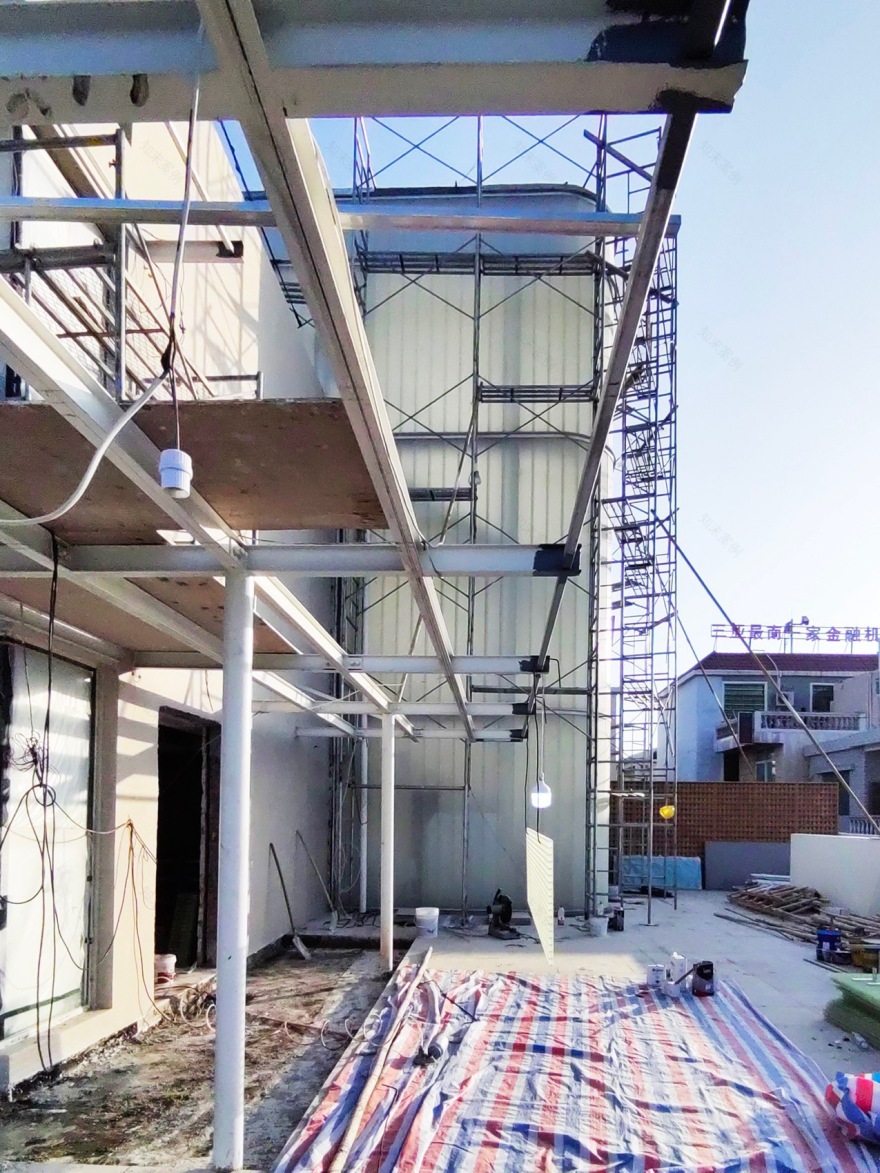
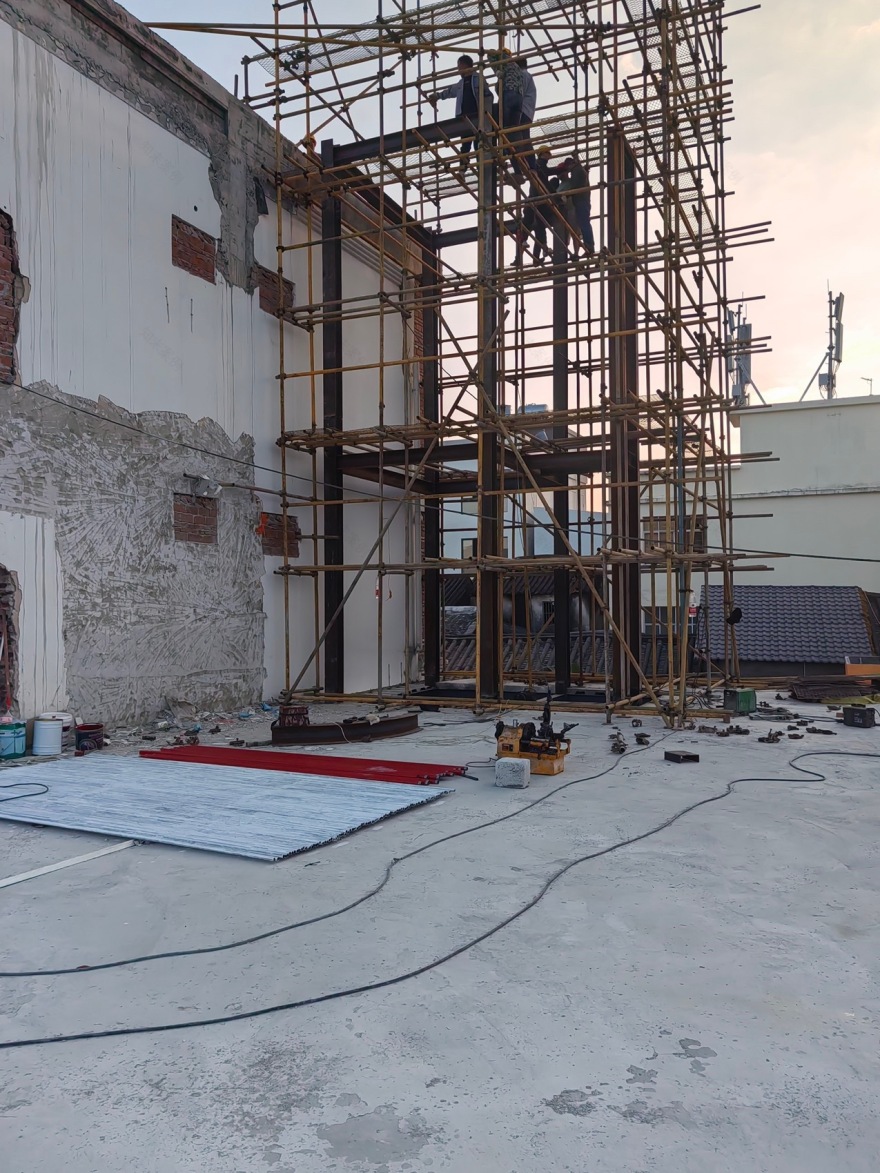
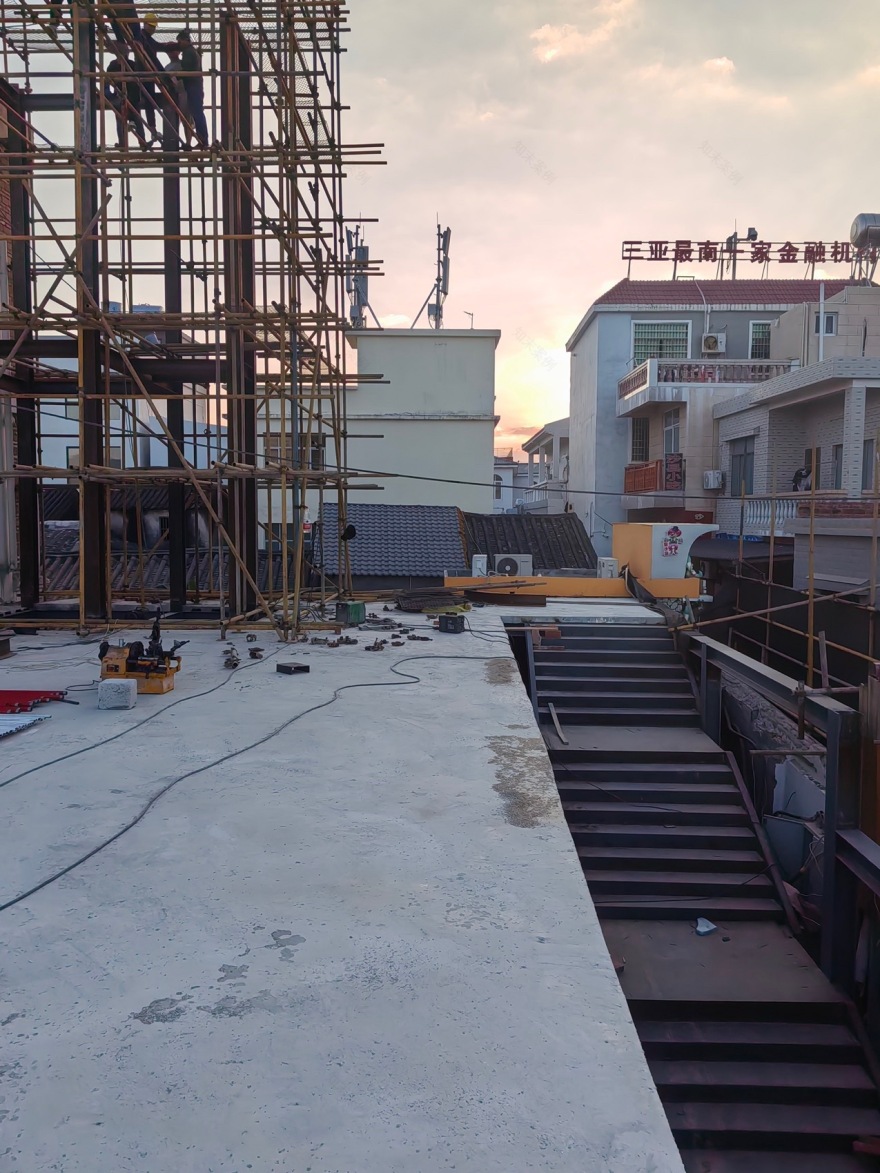
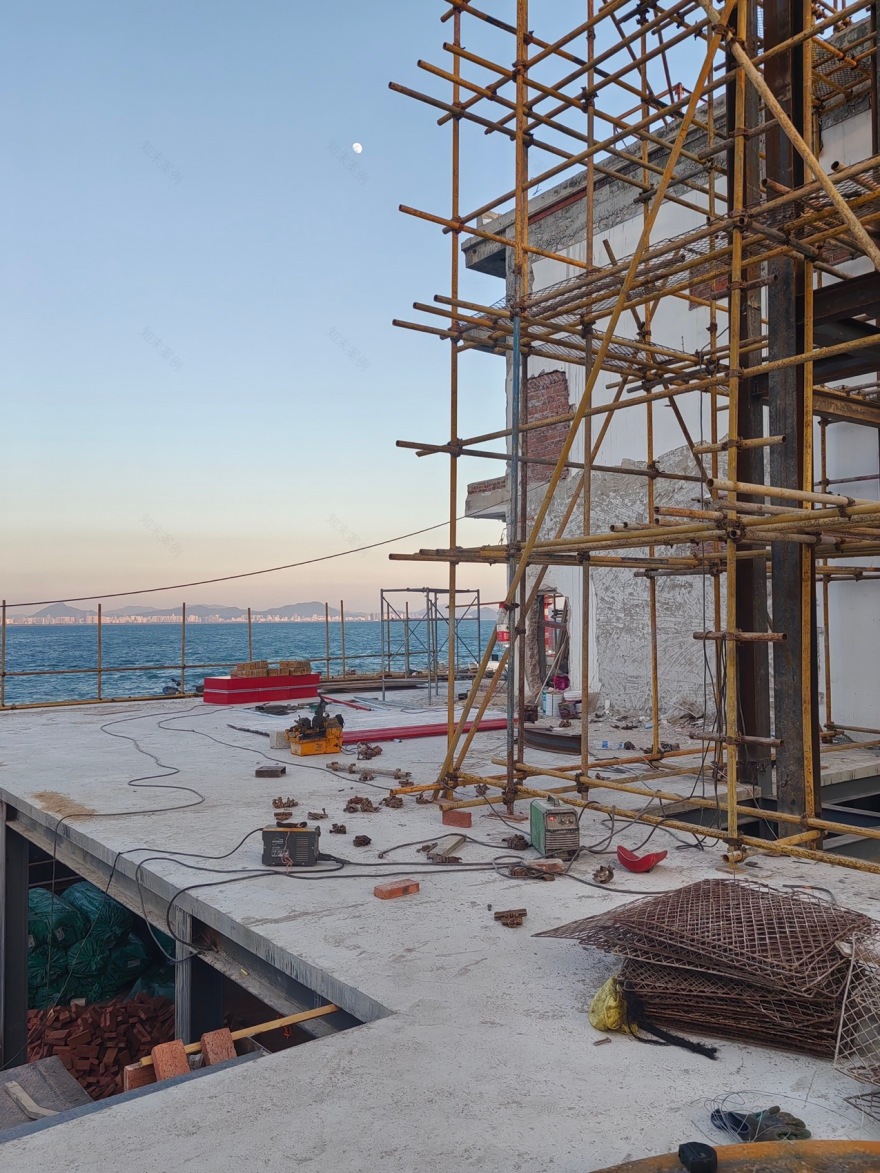
When the construction was in its early stage, as designers, we naturally hoped that the project could be presented in an exquisite manner, because its customers were tourists from big cities. However, during the construction process, we found that it was basically impossible to accurately control the project, even with the full-cycle following service of site designers. Because this project was also a self-built house renovation in the village, the workers were mostly from local. Like other rural construction projects, the standard required to lay out lines, make proofs, and schedule production in a planned manner, which could be easily achieved in the city, were encountered great resistance here. Coupled with the unstable climate at the seaside and problems such as island transportation, we had to follow up on the mistakes of construction and adjust the design with progress.
▼改造过程,Construction process© 叠重设计

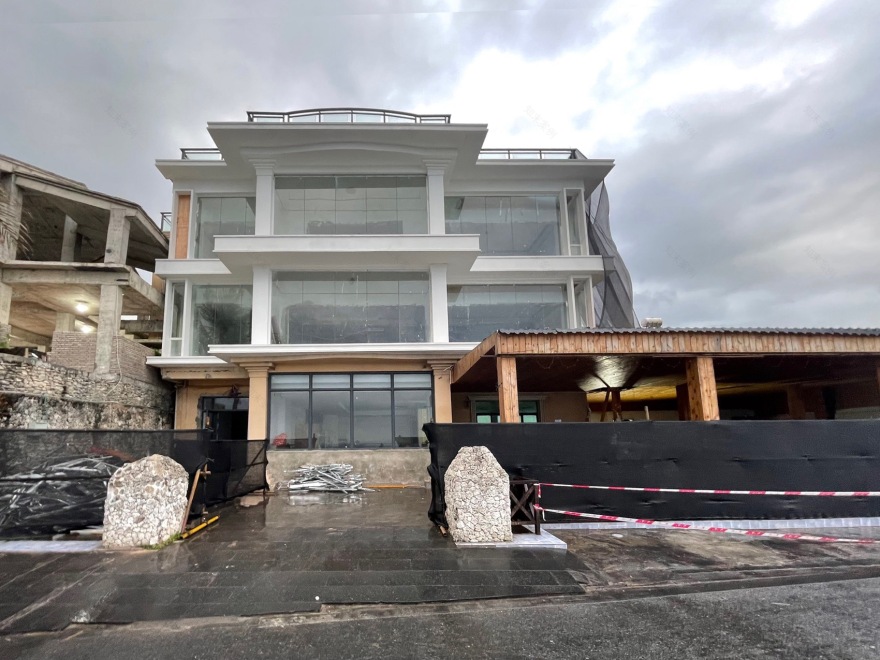
▼改造前后对比,Before and after the renovation© 叠重设计

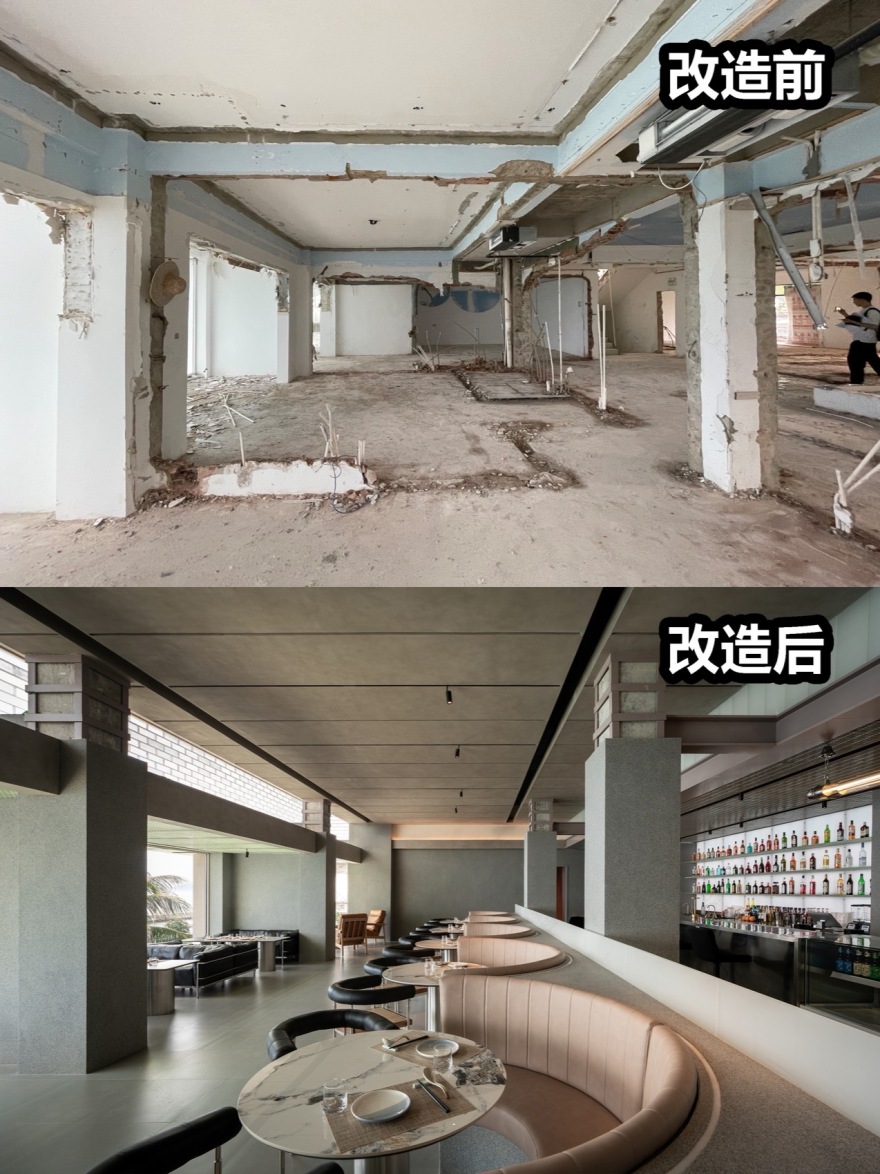
曾经一度要崩溃的我们有一天突然发现,项目最终呈现的状态,那种被海风雨水冲刷后的斑驳和不整齐的对线关系,其实跟场地周边的环境却极为融洽。而这点跟我们最初追求的体现海岛慵懒生活状态的气质反倒不谋而合。我现在觉得过于精致的项目在这个地方反而会有些突兀。或许这种既有脱离感,又被环境接纳的状态,造就了现在这个项目的特殊气质。
We were about to collapse, but one day we suddenly found that the final state of the project, the mottled and uneven lines washed by the sea wind and rain, was actually in harmony with the surrounding environment. This coincidence happenly match the quality of the cozy island life that we originally pursued. Probably, an overly refined project would be a bit abrupt in this place. Perhaps this state of having a sense of isolation and also being accepted by the environment has created the special temperament of this project.
▼西岛自建房商业改造 F1,F1 plan layout© 叠重设计

▼岛岛自建房改造改造 F2,F2 plan layout© 叠重设计
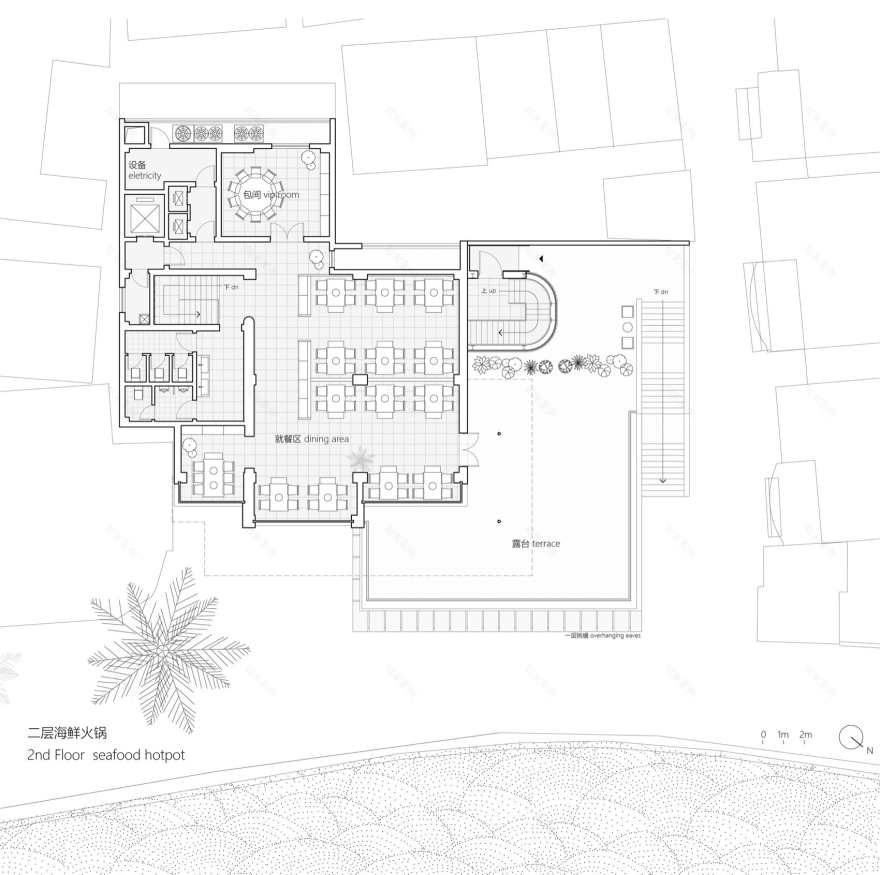
▼西岛自建房商业改造 F3,F3 plan layout© 叠重设计
▼西岛自建房商业改造 F4, RF plan layout© 叠重设计

▼墙体节点,Wall Section Detail© 叠重设计

项目名称:三亚西岛自建房商业改造
项目类型:建筑改造
设计方:上海叠重建筑设计有限公司
项目设计:2023
完成年份:2024
设计团队:刘永鹏、高文浩钰、张勇男、张恩东
项目地址:海南三亚西岛三亚湾路肖旗港码头旁
建筑面积:1200㎡
摄影版权:林边
结构机电合作设计院:海南泓景建筑设计有限公司
挑檐结构设计:王瑞
客户:逃跑星球
材料:翡翠绿玻璃钢田字格格栅挑檐
Project name:Renovation of self-built house in West Island Sanya
Project type: renovation of self-built house
Design:Re-Architecture Design studio
Design year:2023
Completion Year:2024
Leader designer & Team:Andi Liu 、 Jojo Gao、Ryan Zhang、Endong Zhang
Project location:Port Xiaoqigang West Island, Sanyan, Hainan, China
Gross built area: 1200㎡
Photo credit: Bian Lin
Structural & MEP Engineering:Hainan hongjing architectural design Ltd.
Eave structure designer: Rui Wang









南京喵熊网络科技有限公司 苏ICP备18050492号-4知末 © 2018—2020 . All photos and trademark graphics are copyrighted by their owners.增值电信业务经营许可证(ICP)苏B2-20201444 苏公网安备 32011302321234号
苏公网安备 32011302321234号客服
消息
收藏
下载
最近