

创作上传
VIP
收藏下载
登录 | 注册有礼
查看完整案例

收藏

下载

分享
晤梓一餐饭
Meet’n Meal
村民的口述回忆和盐田梓的丰富历史, 启发一持工作室与REhyphenation的第二件合作作品, “晤梓一餐飯”艺术装置, 为这条天主教客家村的过去,现在和未来作一个重聚。
Villagers’ oral memories and rich histories of yim tin tsai inspired o&o studio and rehyphenation’s second collaboration, meet’n meal, showcasing a reunion of the past, present and future of the catholic hakka village.
▼晤梓一餐飯, 盐田梓,香港,Meet’n Meal, Yim Tin Tsai, Hong Kong © Ji Xiang

背景
BACKGROUND
旅游事务署在2022年主办为期三年的西贡海艺术节,结合岛屿的历史、文化、古迹、自然景观及艺术作品,为本地和非本地游客提供多元的旅游体验。一持工作室O&O STUDIO联成艺术家REHyphenation,受委托于盐田梓创作今届其中一件艺术装置“晤梓一餐饭”。由2024年11月13日到2025年1月12日展出了两个月的时间。装置之后会是送给岛上居民的一件礼物摆放继续宣传盐田梓的开发。 “晤梓一餐饭”反映了盐田梓岛上的特性,村民通过大自然赋予的食材,创造不同的客家菜,为每天一家人的辛劳做一个温暖的总结,同时为这条天主教客家村过去的历史到今天演变作一个叙述。
注册建筑师陈思安和李雪雯于2018年成立了一持工作室O&O Studio,在上海和伦敦工作超过10年后,回到他们的家乡 - 香港。艺术家REHyphenation的霍采儿是一位中学艺术教师,霍采儿跟陈思安一起同样是香港NGO拓展公共空间的一员。三位设计师在2021年创作的社区参与公共空间装置“小街坊”获得巨大成功,2024年再次组织起来,延续一样的设计精神,发掘新的客家岛屿元素,转化成为一件有价值,有温度的艺术装置 - “晤梓一餐饭”。
Tourism Commission has launched a three-year pilot tourism project in 2022 called Sai Kung Hoi Arts Festival to diversify the tourism offerings and enrich local and non-local visitors’ experience, blending the rich history, local culture, heritage and natural environment of Sai Kung Hoi with Hong Kong’s creativity and arts atmosphere. Hong Kong firms O&O Studio (O&O) and REHyphenation were commissioned to design one of the new art installation in Yim Tin Tsai, “Meet’n Meal”, where it will stayed on the island as a gift to the villagers to continuing promoting the revitalization of the Hakka island.
Exhibited for two months from 13th November 2024 to 12th January 2025, “Meet’n Meal” is a reflection of the Hakka village characteristics. It captures the villagers’ use of natural ingredients gifted by the surrounding environment and the creation of food dishes that summarise each families’ hard working day, as well as presenting a narrative of the of this Catholic Hakka village history from the past to the present.
Architects Eric Chan and Suzanne Li established O&O in 2018, returning to their hometown of Hong Kong after working in Shanghai and London. Joyce Fok of REHyphenation teaches visual arts. Chan and Fok volunteer with NGO Hong Kong Public Space Initiative where they share community building aspirations. The three’s community engaging public space art installation design in 2021, “Siu Kai Fong”, received enormous success. Collaborating again in 2024, the team strives to continuing with the same design philosophy, explore new Hakka elements on the island and transform them into a valuable and heartfelt art installation, “Meet’n Meal”
▼鸟瞰盐田梓,看到码头,教堂及文物馆等,晤梓一餐飯就隐身与已经被植物及大树铺盖的土地上,A bird’s-eye view of Yim Tin Tsai with the pier, church and cultural relics museum, while Meet’n Meal is hidden in the land filled with plant and trees© Ji Xiang

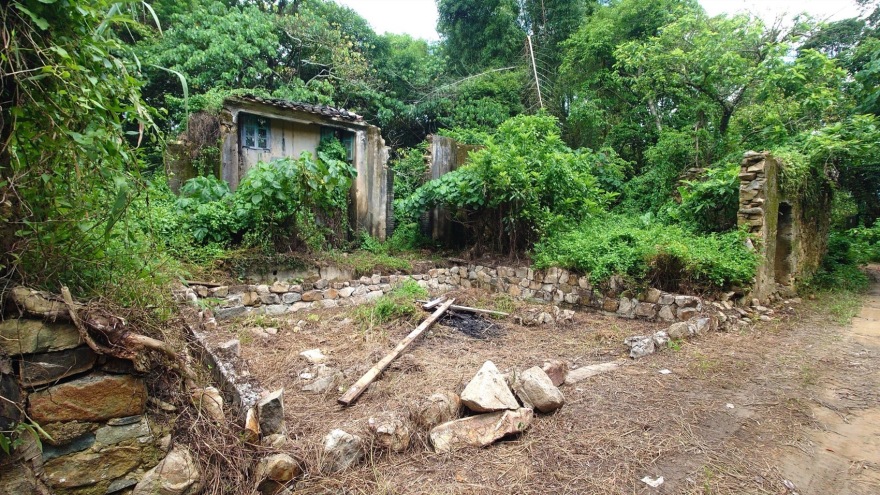
▼晤梓一餐飯选址在盐田梓老村屋遗墙的一个前院,Meet’n Meal at the front yard of the historic wall as the site© Ji Xiang
再岛聚 JOY AGAIN, GATHER
盐田梓为拥有三百年历史的陈氏客家村落,面积0.31平方公里,以晒盐,捕鱼,耕田及饲养家禽为生,全岛村民领洗信天主教,1998年最后一户村民迁离。虽然不再在岛上居住,但近年部分老村民努力拓展盐田梓文化及生态旅游的发展。 2024年是西贡海艺术节的第三届,策展方向为《再岛聚》。经过多轮与村民的采访和对盐田梓历史的研究,一持及REhyphenation利用盐田梓独有的客家菜来带出“聚”的主题,凸显一顿饭对中国人和每个家庭的重要性。
盐田梓共有三房人,即最初迁来的三兄弟所各自繁衍的子孙。如今有数家历史遗留下来的老村屋。根据村长所说,当中一条村来是原来是盐田梓三房人其中一房的,如今此村剩下的就只有一道遗墙, 见证着历史的变迁。设计团队就选址了此老村屋遗墙的一个前院。
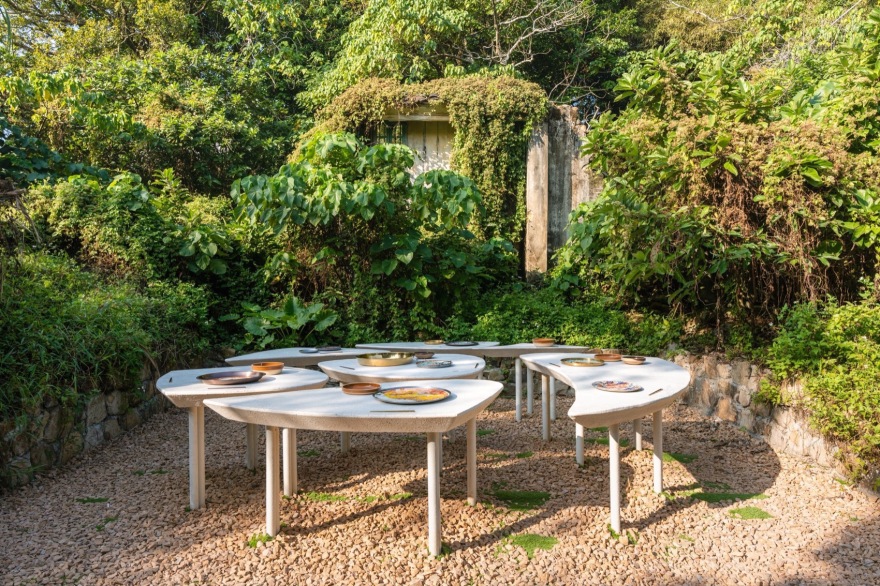
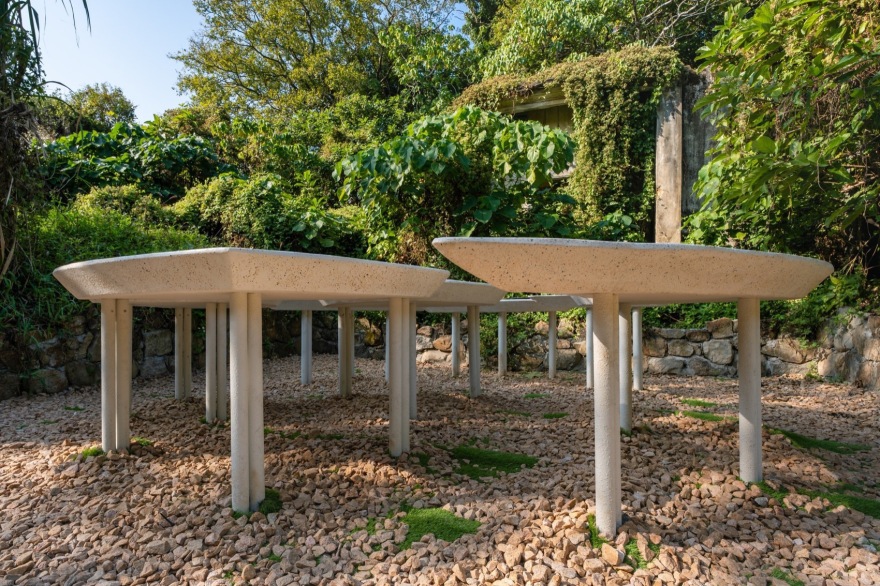
圆形饭桌由钢框架和玻璃纤维外包石感漆组成, 白色颜色取自于盐田梓的盐田,作为各菜式的主要原材料之一,而形状代表邀请每个人的参与。 同时,设计团队参考了“家”字的甲骨文,字体的屋顶像老村屋遗墙,保护前院的家禽,当中的“豕”(即猪)成为了圆桌的切割形式,意指让参观者能走进饭桌,真正融入其中。
▼选址原状,Site confidition© Eric Chan
▼“家”字的甲骨文,字体的屋顶像老村屋遗墙,保护前院的家禽,当中的“豕”(即猪)成为了圆桌的切割形式,Inspired by the Chinese Hieroglyph of the word “HOME家” the design evokes the old village house wall that shelters the poultry in the yard. The character of “PIG豕” is creatively integrated into the table design© Ji Xiang

Yim Tin Tsai, a tranquil 0.31km2 island, houses the Hakkas of the Chan family where all the baptised villagers made a living by salt-making, fishing, farming, and breeding. Following the repercussions of urbanisation on rural settlements, most villagers moved to the city or abroad. By 1998, Yim Tin Tsai officially became an uninhabited island. However, some started coming back to Yim Tin Tsai to revitalise and develop the cultural and eco-tourism of the island. Coming to its third year, the sub-theme of this year’s Sai Kung Hoi Arts Festival is “Joy Again, Gather”. Upon repeated visits and interviews with the villagers as well as research on the island’s history, the team has drawn upon the unique Hakka cuisine to illustrate the significance of gathering, as well as highlighting the importance of meals within Chinese family culture.
Yim Tin Tsai is home to three clans, descending from the three brothers who originally settled there. Today, several historic village houses stand as reminders of the past. According to the village’s chief, a particular lane originally belonged to one of the clans, with only a front wall ruin remains today that symbolises the village’s historical evolution. The design team has selected the front yard of this historic wall as the site for the art installation.
The installation features a circular table made of steel framing, glass fibre and stone texture paint, where its white colour is inspired by the island’s iconic salt pan which serves as one of the main ingredients in the dishes. The table’s round shape signifies an invitation for communities’ participation. Additionally, inspired by the Chinese Hieroglyph of the word “HOME家” the design evokes the old village house wall that shelters the poultry in the yard. The character of “PIG豕” is creatively integrated into the table design, inviting visitors to step into the dining space and immerse themselves in the rich culinary heritage of Yim Tin Tsai.
▼鸟瞰盐田梓,看到码头,教堂及文物馆等,晤梓一餐飯就隐身与已经被植物及大树铺盖的土地上,A bird’s-eye view of Yim Tin Tsai with the pier, church and cultural relics museum, while Meet’n Meal is hidden in the land filled with plant and trees© Ji Xiang

▼“家”字的甲骨文,字体的屋顶像老村屋遗墙,保护前院的家禽,当中的“豕”(即猪)成为了圆桌的切割形式,Inspired by the Chinese Hieroglyph of the word “HOME家” the design evokes the old village house wall that shelters the poultry in the yard. The character of “PIG豕” is creatively integrated into the table design© Ji Xiang

▼设计概念意指让参观者能走进饭桌,真正融入其中及盐田梓的历史故事,inviting visitors to step into the dining space and immerse themselves in the rich culinary heritage of Yim Tin Tsai© Ji Xiang
收集回忆和情感 MEMORIES AND EMOTION COLLECTION
虽然村民每天来回西贡与盐田梓继续拓展岛上的开发,但毕竟成为一个“无人岛”已有多年,剩下来的物件绝大部分都已经在文物馆里展出。与其研究到底岛上还有什么实体的文物能利用作为艺术品的原材料,一持和REhyphenation向老村民的口述和文字记录入手,利用食物来带出岛上的往事点滴。
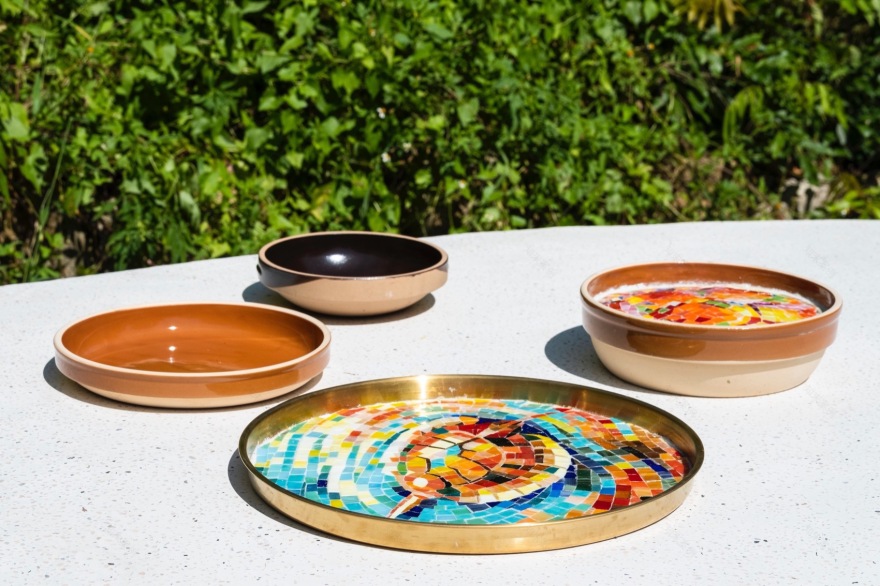
饭桌上有16个不同大小和材质的菜盘,部份是传统客家砵。其中展示的9款客家菜和食材,它们都带季节性和有跟盐田梓有特别的情意结,包括鱼,鲎,蟹,鸡泡鱼,盐焗鸡,田鸡,猪肉砵,茶果及玻璃糖。在盐田梓,女性外嫁后回娘家会带着猪肉砵作为客家传统。客家茶果作为小食代表,不得不提的是在盐田梓独有的玻璃糖。根据村民记载,当年神父看到盐田梓岛上的资源不多,小朋友也没什么吃跟玩的,所以就自己创作了玻璃糖这个零食。
Although villagers commute daily between Sai Kung and Yim Tin Tsai, it has been many years since it became an “uninhabited island”, resulting in most remaining artifacts being exhibited in the local museum today. Instead of focusing on what tangible relics might still exist on the island that could be used as materials for the art piece, the design team has turned to oral histories and written text from the older villagers. By using food, the team aims to evoke memories and stories from the island’s past.
The dining table features 16 plates of varying sizes and materials, some of which are traditional Hakka bowls. Among them are nine types of Hakka dishes and ingredients that are seasonal and hold special significance to Yim Tin Tsai, including fish, horseshoe crabs, crabs, puffer fish, chicken, frogs, pork bowls, steamed glutinous rice cake and glass candy. In Yim Tin Tsai, it is a Hakka tradition for married women to bring a pork stew back to their natal homes. While steamed glutinous rice cake is a well-known Hakka snack, according to local accounts, the priest observed that resources on the island were scarce, and children had little to eat or play with. In response, he creatively made glass candy as a treat for them.
▼饭桌上16个不同大小和材质的菜盘,Dining table features 16 plates of varying sizes and materials© Ji Xiang

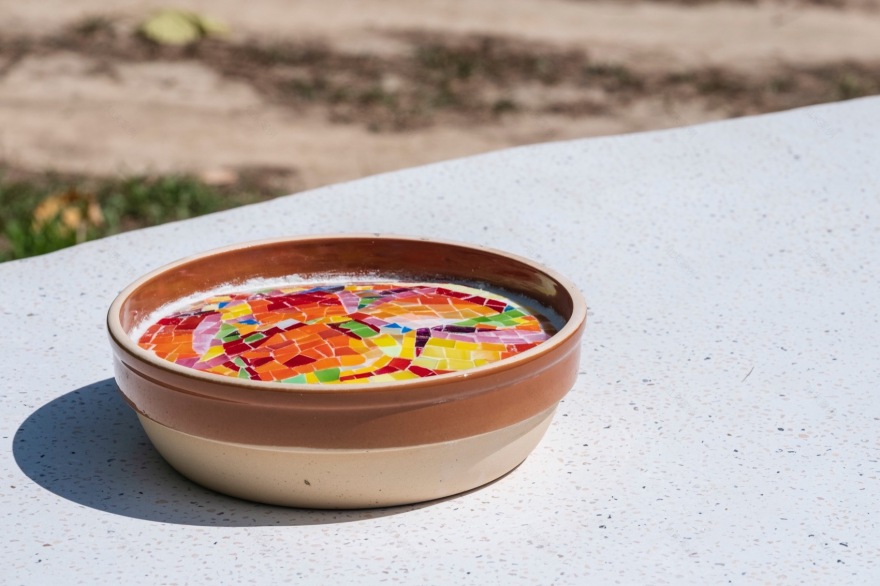
▼数款利用马赛克制作的菜式,Key dished presented in mosaic© Eric Chan

▼猪肉砵,Pork Stew© Eric Chan
▼玻璃糖,及不锈钢盘带出周边环境和阳光的倒影,Glass Candy, and the stainless steel plates capture and reflect the surrounding environment and sunlight, creating a dynamic interplay of light and reflections© Eric Chan

大自然的马赛克
IN PRAISE OF NATURE
从前的盐田梓村民都倚靠大自然获取食材,食物来之不易,设计团队把这些传统食物转化为艺术品,既赞美村民的勤劳,也感恩大自然的恩赐。每一个菜肴都承载着盐田梓的故事,让我们一起透过艺术装置,以不一样的形式来一起品味这份来自盐田梓的味道。
根据老村民的口述或文字上的记载,菜式没有一个特定的样子,设计团队利用AI自动生成来协助塑造菜式的模样,糅合了传统与现代科技,寓意新生代居民的生活方式有所转变,再用色彩丰富的马赛克拼接出来。有的比较清晰,有的需要靠些想象力,亦希望带出参观者的好奇心,在猜想菜式的同时,鼓励他们跟村民接触聊天,了解菜式背后的历史故事。同时,当阳光照射时,马赛克犹如岛上圣若瑟小堂的彩色玻璃,代表盐田梓每一位天主教教徒的虔诚,鲜艳的颜色,亦代表再聚的喜悦。同时,菜盘和马赛克都会吸收阳光,在白天时间变得温暖,带出与大自然真正的连接。
In the past, the villagers relied on nature to source their ingredients, making food a precious resource. The design team has transformed these traditional dishes into works of art, both celebrating the villagers’ hard work and expressing gratitude for nature’s bounty. Each dish carries stories of Yim Tin Tsai, inviting us to savor the unique flavour through artistic installations, allowing us to experience the essence of the island in an entirely new form.
There was not any photo or drawing that record the dishes particular appearances. Thus the design team employed AI to generate and shape the representations of these dishes, blending traditional elements with modern technology. This symbolizes the changing lifestyles of the new generation of villagers. The designs are then brought to life using vibrant mosaics, some of which are more distinct while others require a bit of imagination. This approach aims to spark visitors’ curiosity, encouraging them to engage with the villagers and learn about the historical stories behind the dishes. As sunlight filters through, the mosaics mirror the colorful stained glass of the church on the island, representing the devotion of each Catholic parishioner of Yim Tin Tsai. The vibrant hues also express the joy of gathering once again. Additionally, both the dishes and mosaics will absorb sunlight, warming up during the day and fostering a genuine connection with nature.
▼设计概念意指让参观者能走进饭桌,真正融入其中及盐田梓的历史故事,inviting visitors to step into the dining space and immerse themselves in the rich culinary heritage of Yim Tin Tsai© Ji Xiang

跨世代的参与
CROSS GENERATIONS ENGAGEMENT
设计团队坚信社区跨世代人的参与是必须的。 “晤梓一餐饭”围绕着盐田梓的三房人,从上一代,现一代,以至未来盐田梓的后代,意旨让身处香港及海外的村民重聚一堂。 “晤梓一餐饭”利用了去风格化的设计手法,没有个人的特色,而是完全利用岛上的历史,文化和人物等,以艺术形式将每个小故事一环扣一环,为盐田梓的过去,现在及未来作一个叙述。”
参观者都被各环环相扣的故事勾起无数共鸣和回忆。有的兴致勃勃写诗,有的与家人朋友热烈分享,有的更主动与人称“施姐”的老村屋主人聊天,主动了解更多岛上点滴,都是设计团队希望借着“晤梓一餐饭”带出的连串互动。
顾名思义,“晤梓一餐饭”并不仅仅是一餐饭。 “晤梓”代表相聚在盐田梓,广东话发音“唔止”,意即不仅,是一件真正有温度的艺术作品,一次重拾珍贵回忆与重新连接彼此的机会。我们希望以一张饭桌的形式,承载每一户盐田梓的村民的辛劳和故事,来营造再聚的意境,来欢迎身处香港甚至于海外的老村民,香港市民和外地游客,围着“晤梓一餐饭”再聚,重燃一家人吃饭的温暖感觉,分享彼此的生活点滴和情感,感受这个客家村的精神与文化。
The design team believes that cross generations participation within the community is essential. “Meet’n Meal” revolves around the three clans of Yim Tin Tsai, connecting the previous and the current generation as well as the future descendants of the village, aiming to bring together villagers from Hong Kong and abroad. The installation employs a de - stylized design approach, intentionally avoiding personal traits. Instead, it draws entirely from the island’s history, culture, and people, weaving together each small story in a cohesive artistic narrative. This endeavor serves to narrate the past, present, and future of Salt Field Zha, creating a heartfelt tribute to the community’s heritage.
Visitors are stirred by the interconnected stories, evoking numerous resonances and memories. Some enthusiastically write poetry, while others passionately share with family and friends. Many even actively engage in conversation with the old village house owner, known as Shi, seeking to learn more about the island’s history and experiences. These interactions are exactly what the design team envisioned through the concept of “Meet’n Meal” fostering a series of meaningful connections and dialogues.
As the name suggests, “Meet’n Meal” is more than just a meal. “晤梓” symbolizes gathering in Yim Tin Tsai, and in Cantonese, it pronounces as “唔止” means “not only”. The art piece represents a truly heartfelt artistic experience and an opportunity to rediscover precious memories and reconnect with one another. The design team aim to use a dining table as a vessel to encapsulate the hard work and stories of each villager from Yim Tin Tsai, creating an ambiance of reunion, warmly welcome both former villagers residing in Hong Kong and overseas, as well as local residents and tourists, to come together around “Meet’n Meal.” This experience seeks to rekindle the warmth of family meals, encouraging the sharing of life’s moments and emotions while experiencing the spirit and culture of this Hakka village.
▼设计概念意指让参观者能走进饭桌,真正融入其中及盐田梓的历史故事,inviting visitors to step into the dining space and immerse themselves in the rich culinary heritage of Yim Tin Tsai© Ji Xiang

▼设计图,Design Drawing© Illustration by O&O Studio

项目: 晤梓一餐飯
项目类别: 艺术装置,文化,公共空间, 社区参与, 景观
地址: 中国香港,西贡,盐田梓
建成状态: 建成
设计周期: 2024年 03月-9月
建设周期: 2024年10月-11月
项目年份: 2024年 11月开幕
面积: 30平方米
设计单位: 一持工作室,REhyphenation
设计单位联系:主持建筑师: 陈思安(一持工作室), 李雪雯 (一持工作室),冯文禧(一持工作室),霍采儿 (REhphenation)
材料: 钢管,玻璃纤维,石材漆,马赛克
主办单位: 香港旅游事务署
策展團隊: 一口设计工作室
摄影师: Jason Ji, Eric Chan
文字: Eric Chan
Project: MEET’N MEAL
Typology: Art Installation, Culture, Public Space, Community Engagement, Landscape
Address: Yim Tin Tsai, Sai Kung, Hong Kong, PRC
Status: Completed
Design date: March 2024
Construction date: September 2024
Completion: November 2024
Area: 30sqm
Architect/Artist: O&O STUDIO, REhyphenation
Chief Designer: Eric Chan (O&O Studio), Suzanne Li (O&O Studio), Hazel Fung (O&O Studio), Joyce Fok (REhyphenation)
Materials: Steel sections, glass fibre, texture paint, mosaics
Organiser: Hong Kong Tourism Commission
Curatorial Partner: One Bite Design Studio
Photographer: Jason Ji, Eric Chan
Text: Eric Chan




南京喵熊网络科技有限公司 苏ICP备18050492号-4知末 © 2018—2020 . All photos and trademark graphics are copyrighted by their owners.增值电信业务经营许可证(ICP)苏B2-20201444 苏公网安备 32011302321234号
苏公网安备 32011302321234号客服
消息
收藏
下载
最近