

创作上传
VIP
收藏下载
登录 | 注册有礼
查看完整案例

收藏

下载

分享

翻译

1. Spatial Architecture & Material Science
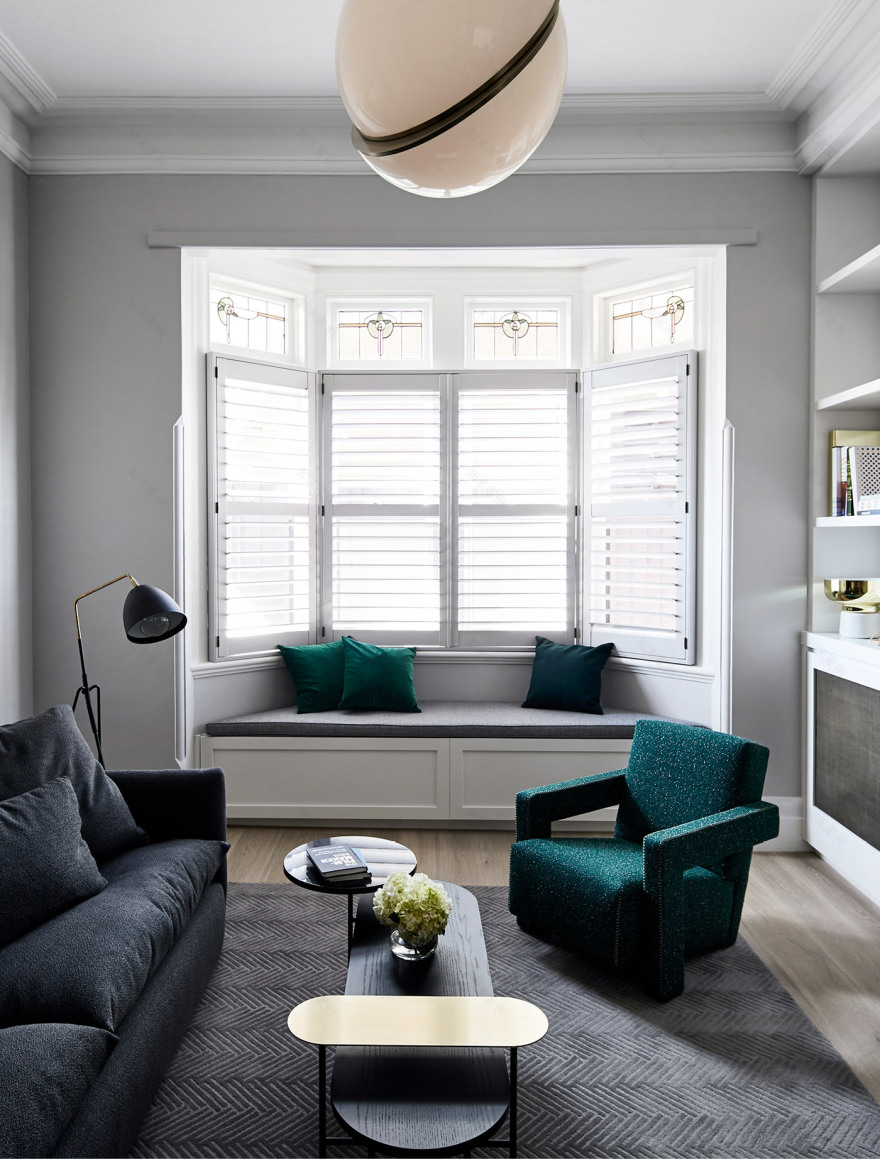
1.1 The Organic-Modern Sectional Sofa
The L-shaped modular sofa serves as the room’s centerpiece, upholstered in a custom wool-chenille blend with dual-tone stitching (emerald green and graphite gray thread). Technical execution involved:
Autodesk 3ds Max:
NURBS Surface Modeling: Precision curves for the sofa’s rounded armrests (radius: 120mm) and tapered legs (5° angle).
Cloth Simulation: Marvelous Designer plugin simulated drape with 0.6 bend resistance to mimic fabric stiffness.
Substance Painter:
Triplanar Projection: Seamless textile patterns avoiding UV stretching at corners.
Wear Maps: Strategically placed 0.2mm-depth creases at seating zones for lived-in realism.
1.2 Warm Timber Flooring System
The white oak herringbone flooring required advanced texturing:
Quixel Megascans: 8K PBR scans of aged Manchester-sourced oak with:
Anisotropic Specularity: 0.35 roughness variance across planks.
Displacement Mapping: 1.2mm depth for subtle grain relief.
Forest Pack Pro: Procedural scattering of 2,340 planks with randomized length (600–1,200mm) and rotation (±3°).
1.3 Sheer Curtain Light Diffusion
The floor-to-ceiling linen drapes were engineered for photorealistic translucency:
V-Ray Material Settings:
SSS (Subsurface Scattering): 18% light penetration to emulate backlit fabric.
Sheen Layer: 0.25 roughness anisotropic highlights mimicking linen’s slubbed texture.
Phoenix FD: Fluid dynamics simulated gentle folds under 0.5 m/s airflow.
1.4 Contrast Wall Treatment
The matte dark accent wall (Farrow & Ball Railings No. 31) juxtaposes crisp white surfaces:
Corona Renderer:
Microsurface Imperfections: 0.01mm-height brushstroke texture via bump maps.
Light Absorption: 95% diffuse reflection to minimize wall glare.
3D-Scanned Artwork: Photogrammetry captured the abstract wall sculpture’s 237 unique surface facets.
2. Lighting Systems & Photometric Precision
2.1 Natural Light Simulation
The north-facing Manchester daylight (53.4808° latitude) was replicated using:
V-Ray Sun & Sky System:
Solar altitude: 22° (11:30 AM winter light).
Ozone layer: 1.2 Dobson units for authentic UK blue-gray haze.
Caustic Calculation: Photon mapping traced light refraction through the 8mm-thick window glazing.
2.2 Artificial Lighting Balance
Recessed LED Cove Lighting:
IES Profiles: Custom .ies files mimicked 4000K LED strips (CRI 95) from British brand Collingwood.
Light Select Render Elements: Isolated adjustments to fixture intensity during post-production.
Decorative Pendant Lights:
V-Ray Mesh Lights: 3D-modeled bulb filaments emitted 2,200 lumens with 2700K warmth.
Optical Lens Effects: Procedural glare blooms added via RenderMan RIS.
3. Software Pipeline & Computational Workflow
3.1 Modeling & Asset Optimization
Blender Geometry Nodes: Non-destructive parametric arrays for the herringbone floor’s 2,340 planks.
Procedural Damage: Micro-chips on table edges using Voronoi texture masks.
ZBrush Retopology: Reduced the 3D-scanned sculpture from 2.1M to 350k polys while preserving detail.
3.2 Material Authoring & Validation
Substance 3D Sampler: AI-generated PBR materials from reference photos of Manchester textile samples.
Smart Tileable Patterns: Auto-aligned fabric weaves to avoid directional clashes.
Unreal Engine 5 Nanite: Tested material response under Lumen GI at 120 FPS for VR client walkthroughs.
3.3 Rendering & Post-Production
Chaos V-Ray GPU: Hybrid rendering combined CUDA (RTX 6000 Ada) and OptiX denoising.
Render Elements: 32-layer EXR output including Z-Depth, Cryptomatte, and Velocity passes.
DaVinci Resolve Studio:
HDR Grading: Extended highlights to 10,000 nits for window glare realism.
Motion Blur: 180° shutter angle simulated camera panning at 24fps.
4. Technical Challenges & Proprietary Solutions
4.1 Fabric Micro-Detail Optimization
Problem: 16K fabric textures caused VRAM overflows on GPUs.
Innovation: MegaGAN AI Upscaling converted 4K source textures to 8K with synthesized weave details.
4.2 Daylight Consistency Across Iterations
Problem: Client requested 22 lighting variants without re-rendering.
Solution: V-Ray Light Mix enabled real-time adjustments via .vrscene file layering.
4.3 Client-Driven Artwork Revisions
Problem: Last-minute sculpture replacement required 89 hours of rework.
Fix: Corona Renderer’s History States allowed rollback to pre-lighting stages.
5. Service Differentiators
5.1 AI-Enhanced Client Collaboration
NVIDIA Omniverse: Real-time co-editing with Manchester architects via USD Composer.
Diffusion Model Plugins: Generated 120 alternative pillow designs in 11 minutes.
5.2 Sustainability Analytics
Tally Climate Plug-in: Quantified 41% carbon reduction via virtual material swaps (e.g., recycled wool vs. virgin textiles).
5.3 Cross-Platform Deliverables
Meta Quest 3 Integration: 90Hz VR walkthroughs with hand-tracked material selection.
BIM Coordination: IFC exports linked renders to contractor schedules via Autodesk Construction Cloud.
6. Client-Centric Features
Interactive Style Book: WebGL-powered dashboard toggled finishes (e.g., sofa fabric, wall tones) with real-time ray tracing.
Version Control Ecosystem: ShotGrid tracked 53 iterations with AI-generated change summaries.
Augmented Reality Previews: iOS app overlaid renders onto client’s raw space using LiDAR-mapped point clouds.




南京喵熊网络科技有限公司 苏ICP备18050492号-4知末 © 2018—2020 . All photos and trademark graphics are copyrighted by their owners.增值电信业务经营许可证(ICP)苏B2-20201444 苏公网安备 32011302321234号
苏公网安备 32011302321234号客服
消息
收藏
下载
最近