

创作上传
VIP
收藏下载
登录 | 注册有礼
查看完整案例

收藏

下载

分享
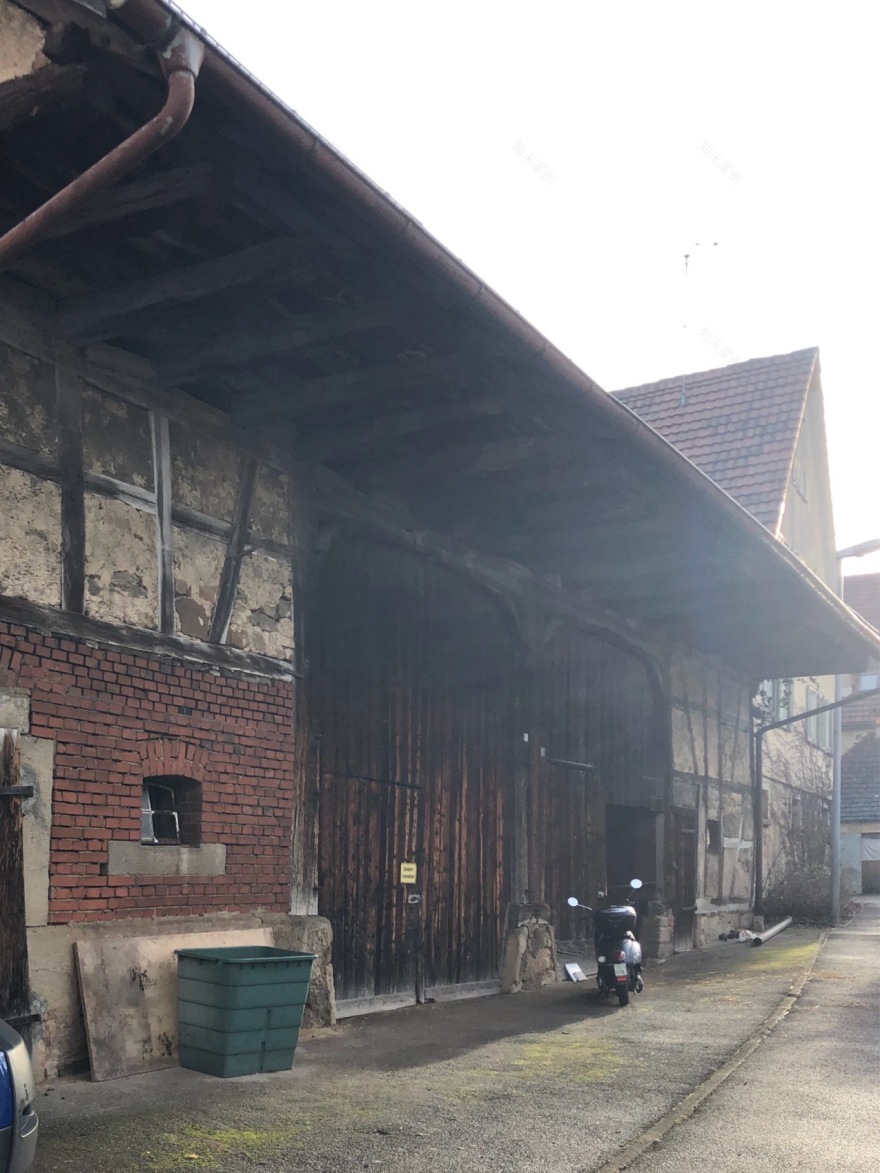
位于图宾根市西南部的图宾根-德伦丁根中心,历史上作为带状逐渐发展形成。如今,这一村庄中心正处于变革之中——原有建筑正陆续被翻新或改造,同时具有潜力的地块也正在加密开发或新建。在教堂、老学校、历史烘焙坊及多座历史农业建筑的近邻处,坐落着一座建于1806年的历史保护建筑谷仓。它紧邻道路,设有两个大仓库门和两个牲畜围栏区。
In the southwest of the city of Tübingen lies the centre of Tübingen-Derendingen, which has historically evolved as a ribbon development. The centre of the village is currently, however, subject to change – the existing building stock is being renovated and/or repurposed while potential plots are being redensified or newly built on. Here, in the immediate vicinity of the church, the old school building, the historic bakehouse, and several historic agricultural buildings, stands a listed barn erected in 1806 which sits right next to the road with its two large threshing floor doors and two stable areas.
▼住宅外观,exterior view © SEBASTIAN SCHELS
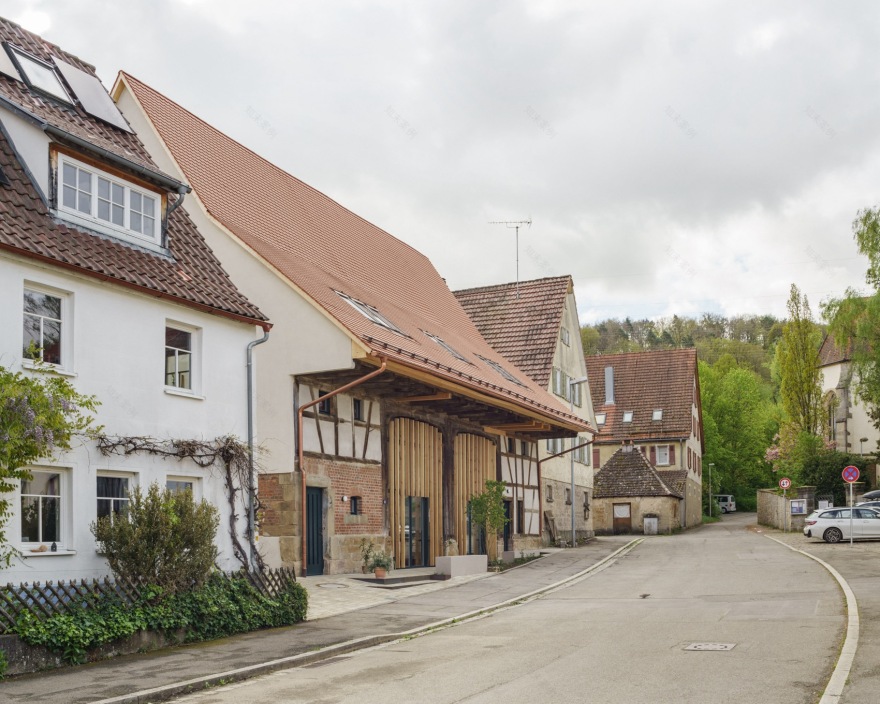
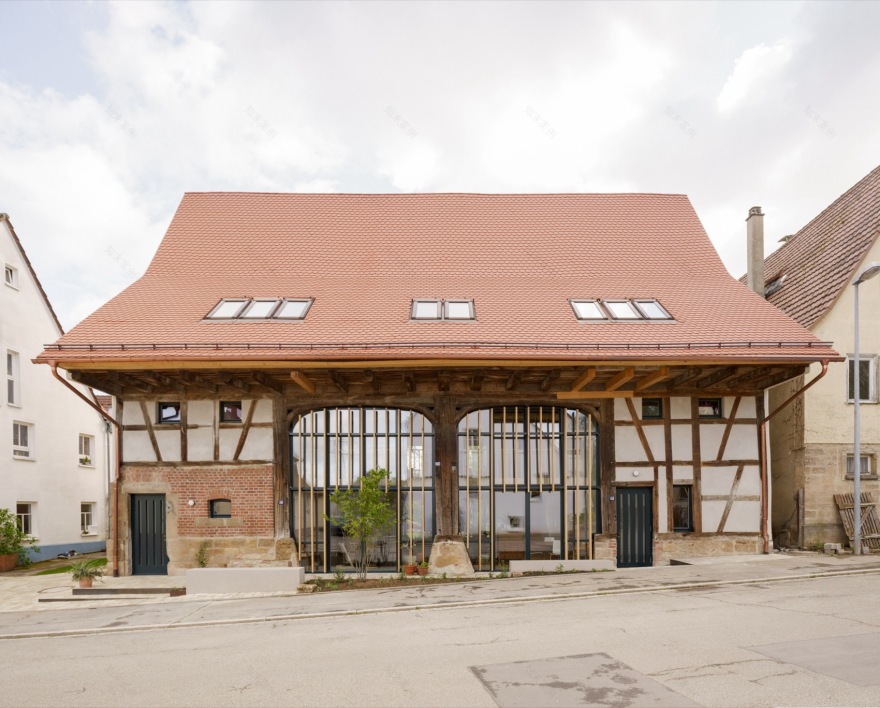
得益于一个私人合作建房组织的推动,这座原本简朴的农业建筑——其间曾陆续添加了多个棚屋与附属结构——被改造成了一栋四户住宅楼。该项目面临诸多挑战,包括与邻近建筑之间的距离、建筑本身的高度,以及与之相关的历史保护法规,尤其在防火、建筑物理性能和结构工程方面的严格要求。
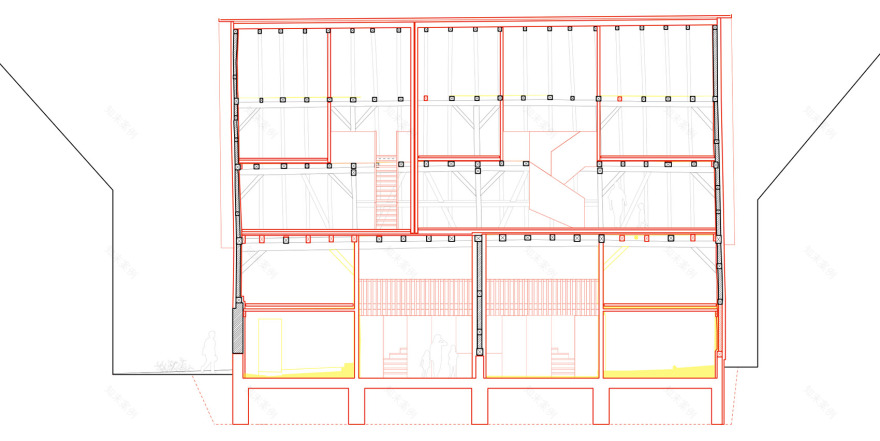
▼剖面手绘,section drawings © KO/OK Architektur
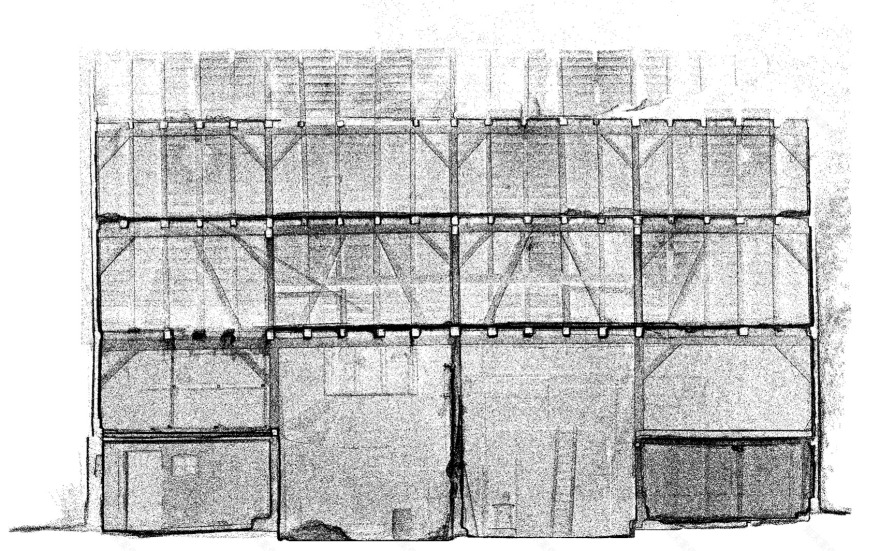

Thanks to the initiative of a private joint building venture, the simple agricultural building, which had been complemented by various sheds and lean-tos, was converted into a four-unit apartment house. This enterprise was faced with the challenges of the closeness of neighbouring buildings and the height of the building itself, both of which in combination with the applicable requirements for the preservation of historical monuments. This held especially true for all aspects of fire protection, construction physics, and structural engineering.
▼内院,backyard © SEBASTIAN SCHELS

▼立面,facade © SEBASTIAN SCHELS

历史建筑内的全新室内空间只有在近距离观察时方能识别。其表皮几乎未做改动,农业建筑的原始气质得以保留。旧谷仓门的开口处由未经处理的竖向木条遮挡,这些木条掩盖了大部分玻璃窗,仅在傍晚时分,才能透过其间一瞥如今已成为生活空间的原打谷区域。可见的半木结构外墙在檐口下仅开设了最必要的小窗与新设的“牲畜门”。砂岩与砖砌底墙得到了加固与修复。面向街道的屋顶立面极为显眼,仅由三个小型条窗打断。居民通过原畜圈大门进入建筑,这些门也承担了四户住宅的通行组织功能。
The historic building ’s new interior can only be divined on closer inspection. Its outer shell has experienced little change and the character of the agricultural building has been preserved. The openings of the former barn doors are concealed behind untreated vertical wooden slats which mask most of the extensive glazing. Only here, and most notably in the evening hours, one can catch a glimpse of the former threshing floor, by now living space. The openings in the visible half-timbered facade under the eaves are limited to the bare necessities and merely manifest themselves as small windows and new Òstable doorsÓ. The sandstone and brick plinth walls have been supported and repaired. The impressive street-facing roof area is only interrupted by three small ribbon windows. The building is entered via the former stable doors, which also organize access to the four flats.
▼沿街立面,street side facade © SEBASTIAN SCHELS


无论是首层的两套公寓,还是阁楼层的两套公寓,其起居区均具有极高的层高,并配有夹层阁楼。这些空间位于原先、如今为两层的打谷区以及如今的多层阁楼中,在空间使用和感知上形成了鲜明特征,使整栋建筑的核心空间充满独特魅力,尽管其建筑密度很高。
Both the two ground floor flats and the flats in the roof are strongly marked by the extra-high ceilings in their respective lounge areas with built-in galleries. These are located on the former and now two-storey threshing floors and in the now two-to-three-storey attic and make for a special use and perception of these rooms that are so distinctive for the entire building, in spite of their highly constructed density.
▼餐厨空间,kitchen and dining area © SEBASTIAN SCHELS


▼餐厨空间,kitchen and dining area © SEBASTIAN SCHELS


技术与材料实践 / 最大化材料再利用:
Technical and Material Realisation/Maximum Reuse of Material:
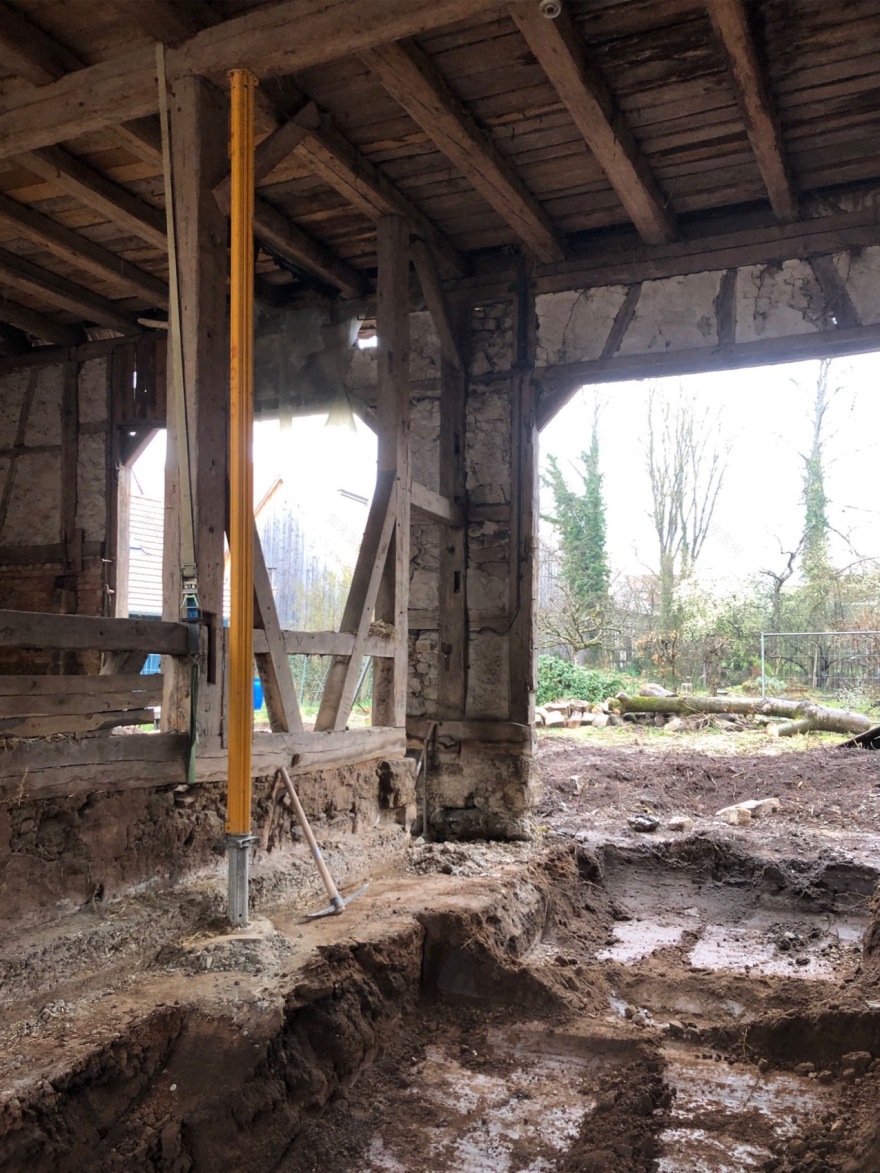
项目的核心目标是在尽可能保持外表皮原貌的前提下,谨慎修复底墙。然而,整个建筑必须加固基础并重新进行地基施工。指导思想是尽量使用从当地一家旧车匠铺获得的旧木材,作为修复构件,部分采用历史工艺和结构方式重建,以忠实于建筑原始时期的建造手法。
The project’s objective was to leave the building’s outer shell mostly untouched and carefully renovate its plinth walls. Nevertheless, the entire building had to be underpinned und its foundation reconstructed. The guiding principle was to reuse as much of the timber found at a local former wainwright ’s as possible as repair parts and refit the building in a partly historical manner and with a construction method that did justice to the original construction period.
▼二层房间,room on the first floor © SEBASTIAN SCHELS

保留原有木结构,并以新增木构件加以补充:
Preservation of the Timber Bearing Structure and Additive Complementation of New Timber Components:
整栋建筑的木结构框架——包括三层的屋架——都以高度的工匠技艺进行了精细修复,且在改造后仍然在各个空间清晰可见。楼板、屋顶的新构造以及新增结构部件均使用本地针叶实木以加建方式完成,所有旧木与新木的连接也采用传统木匠的榫卯工艺制作。几乎所有木结构的缺失或损坏部分都通过本地回收木料得以修复。必要时,隔墙则使用黏土砖填补。在室外,所有新旧隔墙填料均采用麻纤维与石灰混合抹灰,不加涂层;室内则使用保温性能良好的石灰灰泥。
The building’s entire timber bearing structure – along with its three-storey roof truss – was refitted carefully and with a high amount of craftsmanship and artisanal effort and is visibly preserved in all parts of the building – even after the conversion. New casings both in the ceiling and the roof as well as additional building parts were inserted additively using domestic solid coniferous timber while existing and new timbers were produced using classical carpenter-style joinery. Nearly all defects and missing components of the timber framework could be refitted using locally sourced waste wood. Wherever necessary, partitions were completed using adobe. On the outside, all old and new partition fillings were treated with hemp and lime plaster without coating. On the inside insulating lime plaster was used.
▼阁楼房间,room on the first floor © SEBASTIAN SCHELS


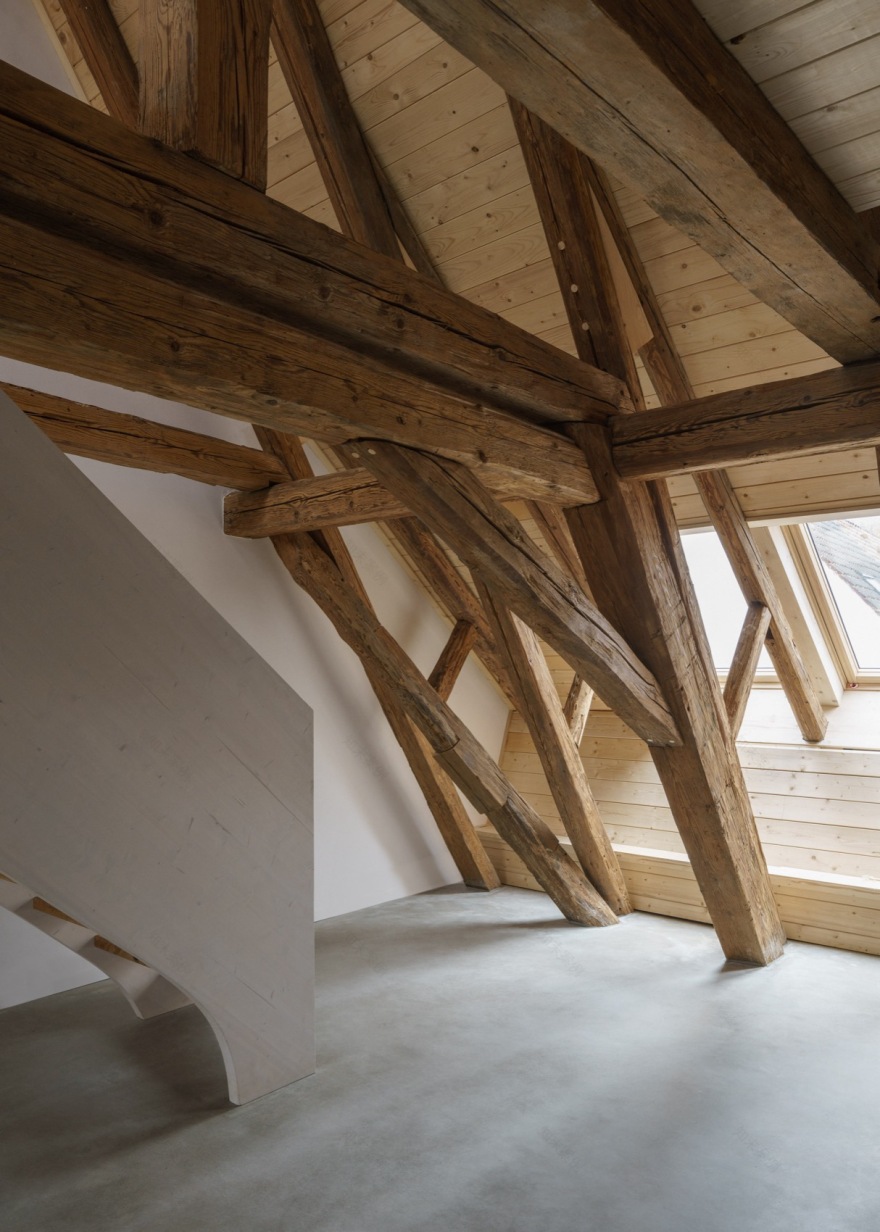
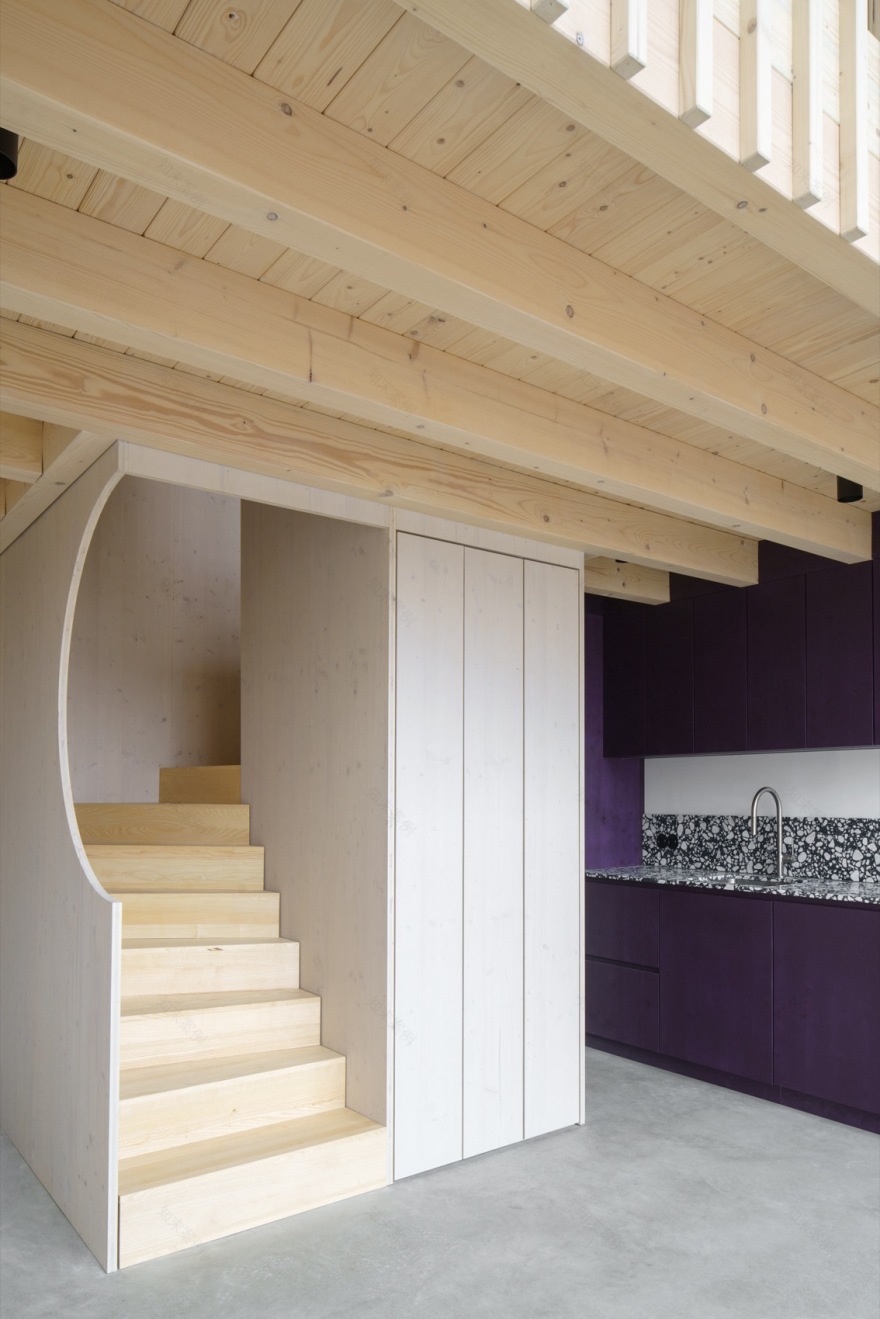
其中一个特别的设计特征,是每户住宅的双层起居空间内均设置了一座具有空间主导性的木楼梯。在首层的公寓中,这些楼梯还兼具多功能家具的作用;在阁楼中,则显得更加通透、富有雕塑感。
As a special design feature, a room-defining wooden staircase was placed into the respective two-storey living areas of every residential unit. These stairs serve as a multi-functional piece of furniture in the ground floor flats and appear even more airy and sculptural in the attic.
▼主导性的木楼梯,room-defining wooden staircase © SEBASTIAN SCHELS

本项目实现了所谓的“Effizienzhaus Denkmal”(高效文物建筑),即具备能源效率标准的历史保护类建筑。尽管没有采用复杂的技术系统,但所用材料(如黏土、石灰和木材)具备良好的透湿性与吸湿性,能够调节湿度,营造出舒适的室内气候。
The building was realized as a so-called “Effizienzhaus Denkmal”, a category of energy efficiency for listed buildings. Nevertheless, a high level of technical sophistication was not used. The diffusion openness and sorption capacity of the materials used – clay, lime and wood – buffer, conduct moisture and ensure a pleasant room climate.
▼木楼梯俯瞰,wooden staircase view from top © SEBASTIAN SCHELS

该建筑展示了对历史建筑结构进行当代表达的可行路径。其在实现手法上的简洁性、材料的循环利用、较高的能效标准与空间的充分利用,使其在当前众多建筑议题中具有原型意义,尤其在材料循环、区域价值创造、以及存量建筑合理利用等方面具有示范价值。
The building is an example of how a contemporary approach to any listed existing building structures can be successful. The project’s focus on simple realization and the circularity of the materials used – combined with a high degree of energy efficiency and the sufficient utilisation of space – mark it as a prototypical approach in terms of numerous contemporary architectural discourses such as circularity, regional value creation and sufficiency in the appropriate use of existing buildings.
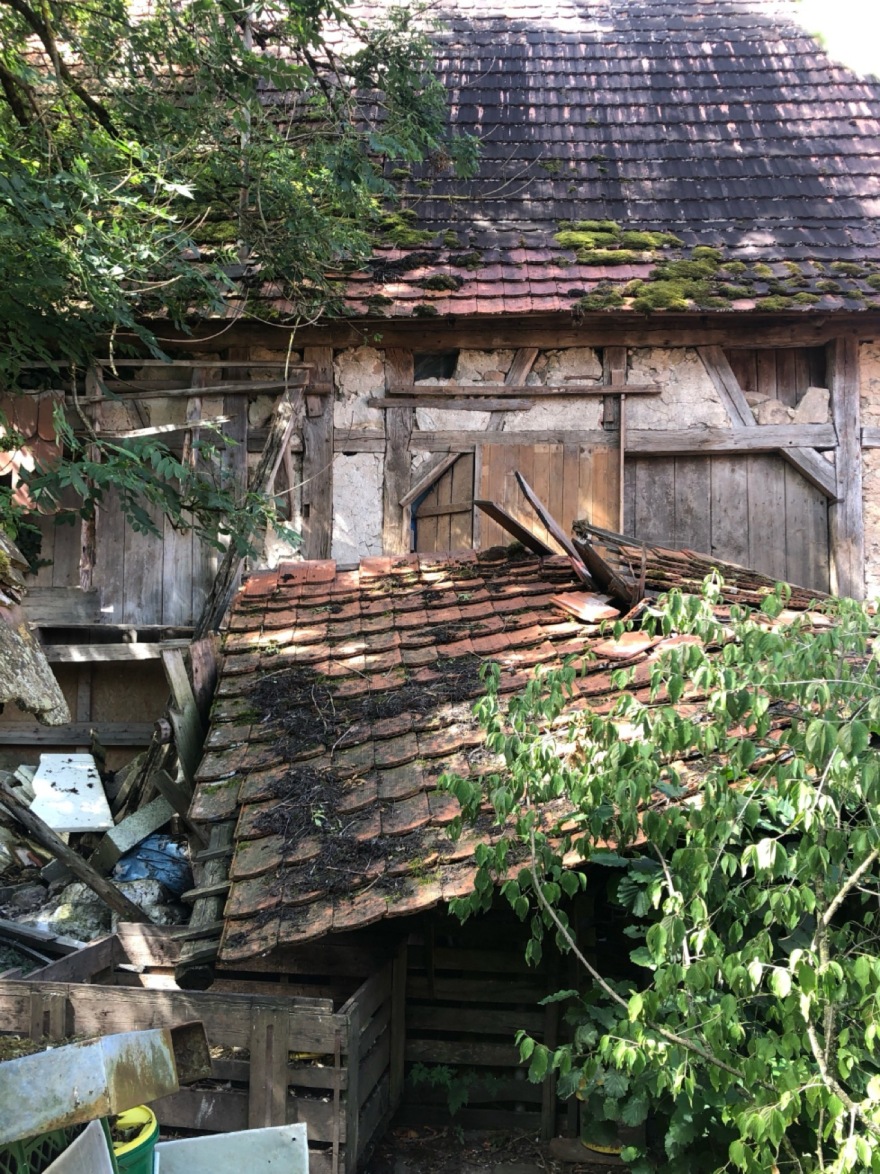
▼原有结构,existed building © KO/OK Architektur

▼区位图,site location © KO/OK Architektur

▼首层平面图,Ground floor plan © KO/OK Architektur

▼二层平面图,First floor plan © KO/OK Architektur

▼三层平面图,Second floor plan © KO/OK Architektur
▼四层平面图,Third floor plan © KO/OK Architektur

▼立面图,Elevations © KO/OK Architektur


▼剖面图,Sections © KO/OK Architektur

Location: Germany – Tübingen
Designer: KO/OK Architektur
Project Year: 2024
Photos by Sebastian Schels – @sebastianschels



南京喵熊网络科技有限公司 苏ICP备18050492号-4知末 © 2018—2020 . All photos and trademark graphics are copyrighted by their owners.增值电信业务经营许可证(ICP)苏B2-20201444 苏公网安备 32011302321234号
苏公网安备 32011302321234号客服
消息
收藏
下载
最近