

创作上传
VIP
收藏下载
登录 | 注册有礼
查看完整案例

收藏

下载

分享
位于金巷住宅区(Golden Lane Estate)的新月公寓是一栋二级保护建筑,建于1960年代初。它被视为Barbican住宅区设计深化发展过程中的关键过渡,由同一组建筑师Chamberlin, Powell and Bon所设计。
The Grade 2* listed Crescent House on the Golden Lane Estate, built in the early 1960s, is seen as a stepping stone to the design and detailing of the Barbican Estate, by the same architects: Chamberlin, Powell and Bon.
▼Barbican住宅区,Barbican Estate © Lorenzo Zandri

建筑事务所TYPE完成了该建筑中一套拱顶单间公寓的改造项目。该项目展示出:通过精心的规划与细致的设计,改造不仅可以降低能源消耗、提升居住舒适度,还能进一步凸显历史建筑独有的魅力与价值。
TYPE has completed a retrofit of a vaulted studio flat within Crescent House. The project demonstrates that through careful planning and detailing, retrofits can reduce energy use and improve comfort whilst enhancing the special and unique character of the listing.
▼拱顶单间公寓,vaulted studio flat © Lorenzo Zandri

▼公寓楼立面,flat facade © Lorenzo Zandri

该项目提出了一种实现可负担式改造的路径。TYPE 重点在于重新审视材料的运用,通过发现被忽视的低价、可持续材料,并将其巧妙组合,以突出空间原有的美学潜力。
The project identifies one method for achieving affordable retrofits. TYPE focused on revising the material palette by identifying underused cheap sustainable materials, which combined to enhance the inherent beauty of the space.
▼首层,ground floor © Lorenzo Zandri
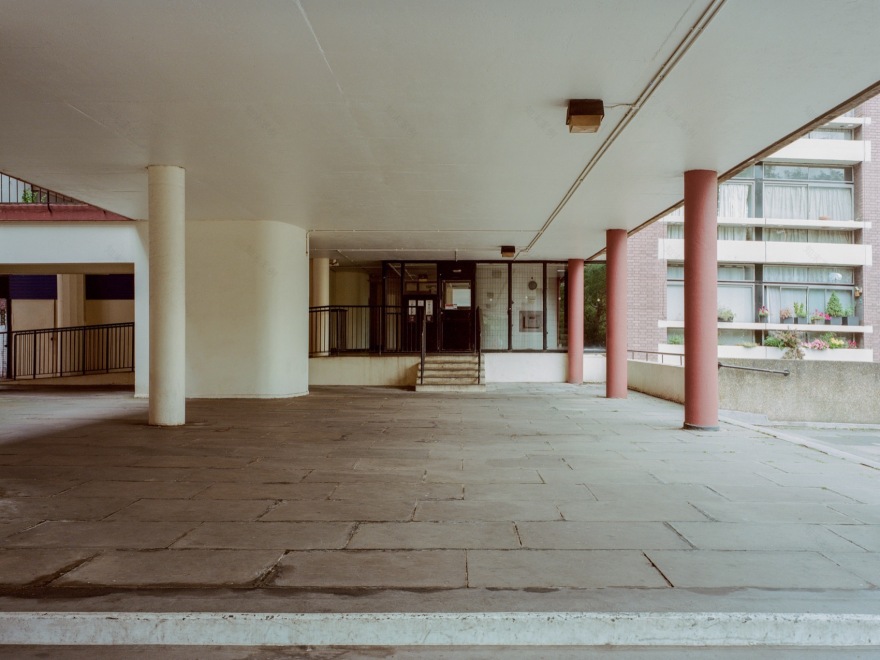
▼平台,terrace © Lorenzo Zandri


▼连廊,bridge © Lorenzo Zandri

本项目面临三大挑战:首先,该公寓及其主要构件为二级保护对象,任何施工都必须谨慎考虑其历史价值,避免对原有元素造成破坏;第二,该建筑建于1960年,几乎没有任何保温措施,长期存在严重的潮湿与冷凝问题。地方政府已意识到此问题,正计划将外立面原有窗户更换为真空玻璃窗以提升能效。我们的设计希望与政府外立面改造的目标相呼应,但由于缺乏其具体设计信息,其它部分的配合改造也变得颇具挑战;第三,原始设计将单间分为起居、餐饮与睡眠三个区块,但这一布局已无法满足当下居住方式的需求,改造需使空间适应当代生活方式。
The project had three main challenges; the first was that the flat and the key components within the flat were Grade 2* listed. Any work that was to be undertaken had to be carefully considered against the historic value of the existing elements. The second was that the flat was built in 1960, and had little to no insulation, significant damp and condensation issues. The Local Authority understands this and is in the process of carrying out major works to upgrade the existing windows to vacuum glazing to the external facades of the block. Our design aimed to rise to the ambition of the LA façade retrofit, but designing the other elements was a challenge as we had no information on what their work would look like. The third challenge was to adapt the studio to contemporary life which was no longer reflective of the three zones originally designed; living, dining and sleeping.
▼入口,entrance © Lorenzo Zandri

▼公寓室内概览,flat interior overview © Lorenzo Zandri


▼厨房,kitchen © Lorenzo Zandri

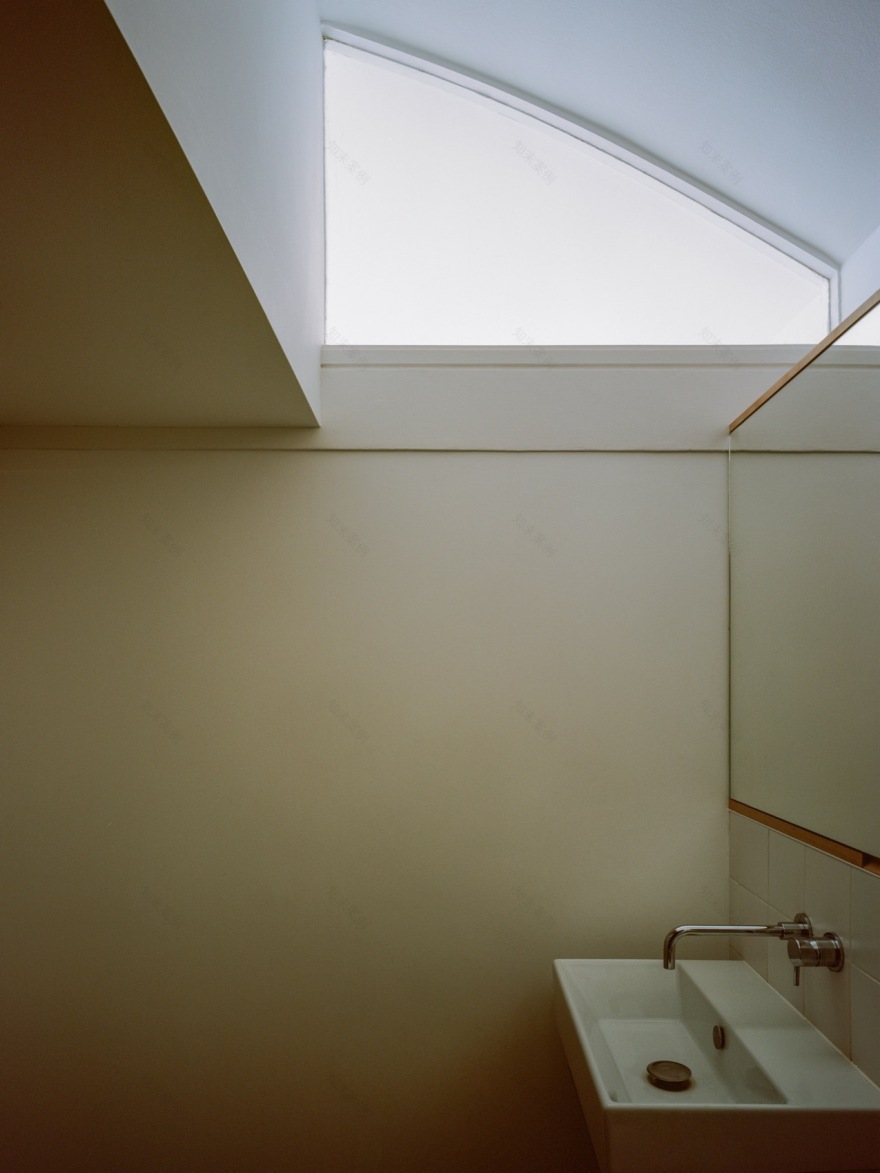
项目采用“建筑围护结构优先”的策略,对墙体与天花进行内部保温处理。随后,设计团队确定了一组基本材料语言:简单、实用、可持续且经济可行。
The project prioritised a fabric first approach, internally insulating the walls and ceilings. We then identified a basic palette of materials that are simple, affordable, sustainable, and functional for the finishes.
▼起居空间概览,living area overview © Lorenzo Zandri


▼书桌,office corner © Lorenzo Zandri


▼沙发,sofa © Lorenzo Zandri
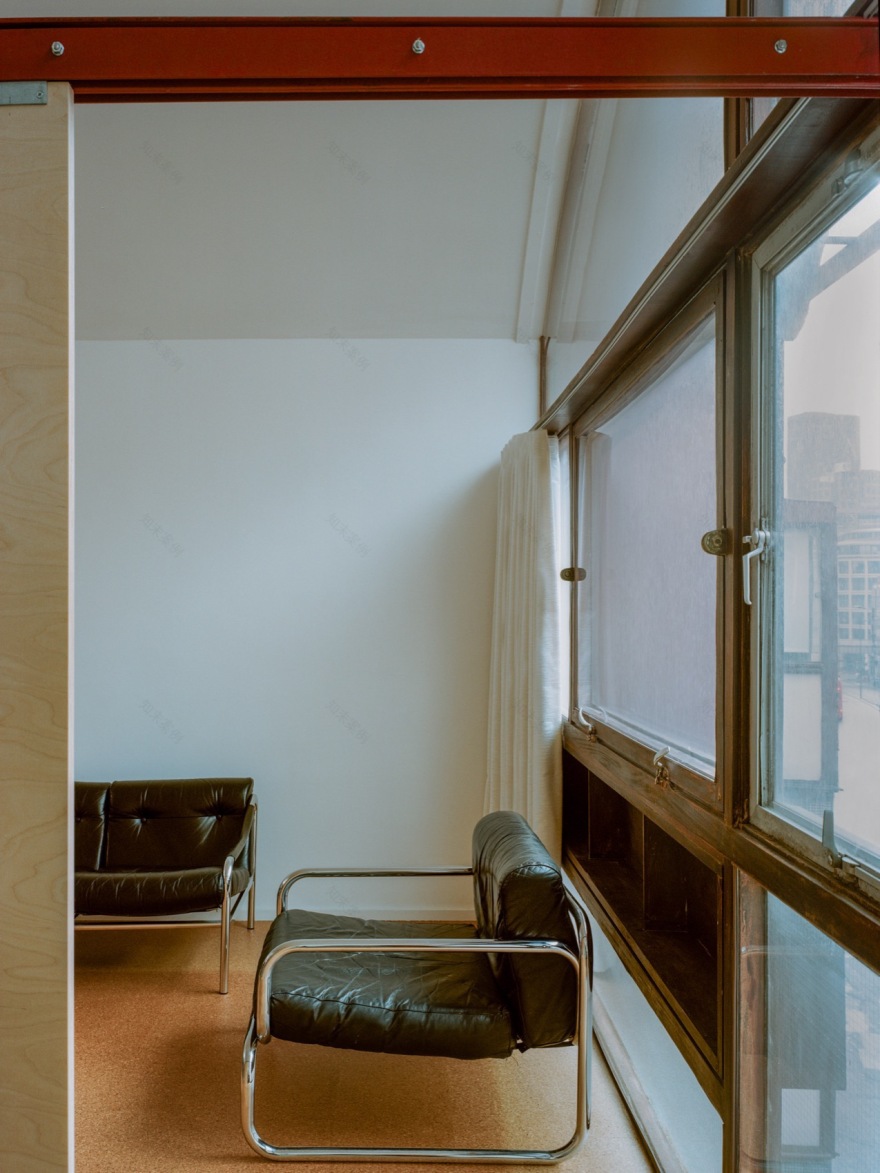
▼细部,details © Lorenzo Zandri


材料的选择兼顾了环保与成本考量,例如:软木地板、粉刷饰面、蜂窝纸滑动隔断、裸露的钢结构,以及用 Ecoboard(环保板)取代中密度板(MDF)作为厨房与定制家具的主材。考虑到建筑受保护的身份,所有构件均设计为可拆卸、可回收,确保在必要时可以灵活移除或替换。
The materials have been chosen for their affordability and sustainability, such as cork floors, painted surfaces, honeycomb cardboard sliding partitions, the exposed steel structure, and Ecoboard in place of MDF for kitchen cabinetry and joinery. Items are demountable and recyclable where required due to its listed status.
▼滑动门,slide door © Lorenzo Zandri


▼卧室走道,bedroom walkway © Lorenzo Zandri

▼轴测,axon © TYPE

▼平面图,plan © TYPE

▼剖面图,section © TYPE

Address: Crescent House, Golden Lane Estate, London
Gross internal area: 45sqm
Client: Ogi Ristic, TYPE
Construction cost: £30,000
Architect: TYPE
Project architect: Ogi Ristic
Contractor: Borisa Ristic & Co
Appointment: Sept 2019
Design phase: Sept 2019 – Jan 2020
Construction Phase: Feb 2020 – May 2020
Photographer: Lorenzo Zandri

南京喵熊网络科技有限公司 苏ICP备18050492号-4知末 © 2018—2020 . All photos and trademark graphics are copyrighted by their owners.增值电信业务经营许可证(ICP)苏B2-20201444 苏公网安备 32011302321234号
苏公网安备 32011302321234号客服
消息
收藏
下载
最近