

创作上传
VIP
收藏下载
登录 | 注册有礼
查看完整案例

收藏

下载

分享
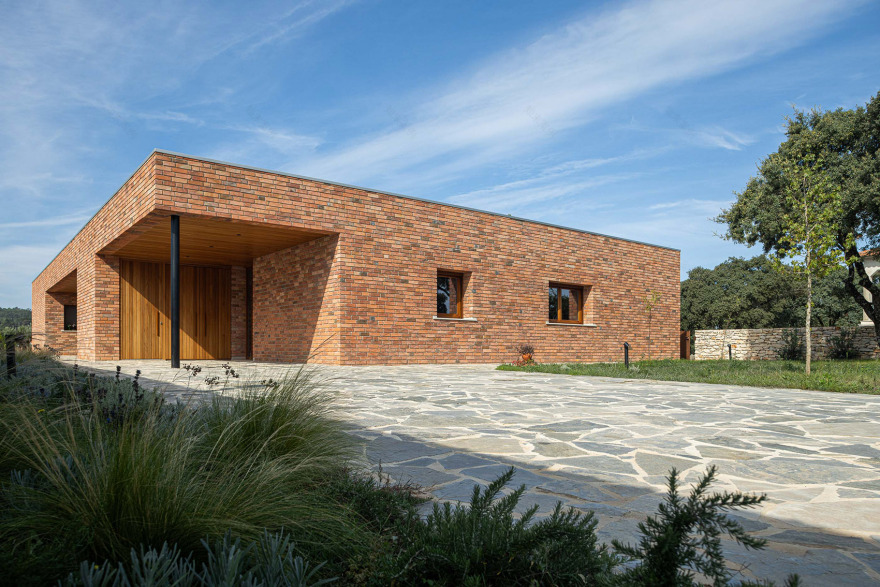
该项目是一座独栋住宅,位于法蒂玛市中心附近,虽然地理位置靠近城市,但其所处环境已具备典型的乡村特征。项目的设计初衷是尊重周边的自然景观以及地块本身的特性,并在此基础上尝试提升当地材料的价值。
Located close to the city center of Fátima, but already integrated into an environment with fundamentally rural characteristics, the project of this single-family house appears as an intervention that has in its genesis respect for the surrounding natural landscape, as well as the characteristics of the land on which it is located, simultaneously seeking to enhance local materials.
▼住宅概览,overview of the house©Ivo Tavares Studio

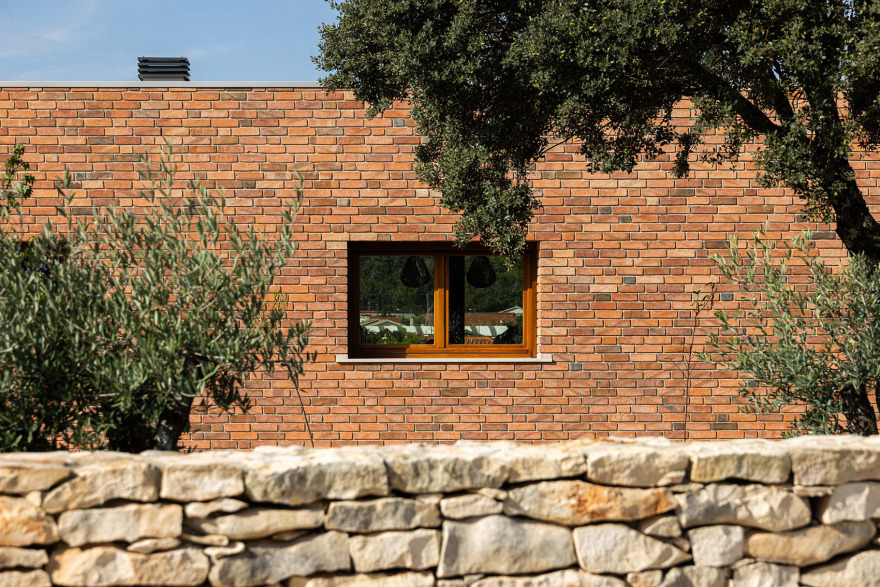
▼住宅外观,exterior of the house©Ivo Tavares Studio


业主是一对年轻夫妇,有两个孩子。其中一位业主受过建筑专业训练,因此从一开始便参与了项目的设计,与设计团队共同推进。他以路德维希·密斯·凡·德·罗的“勒姆克住宅”(Lemke House)为灵感与参照。该项目旨在回应业主提出的前期设想和日常生活体验的目标,重点关注自然采光的引入、室内外空间的连续性(同时保障私密性)、空间的灵活性,以及优先使用天然和本地材料。
The owners are a young couple, with two children. As one of the couple’s members is an architect by training, from the beginning he was involved in the development of the project together with the design team, having brought the Lemke House by Ludwig Mies van der Rohe as inspiration and reference for the work. The project sought to respond to the premises established by the owners and the objectives relating to the daily experience intended for the home, with emphasis on the enhancement of natural light, the idea of continuity between indoor and outdoor spaces – ensuring their privacy –, spatial flexibility and the primacy of the use of natural and local materials.
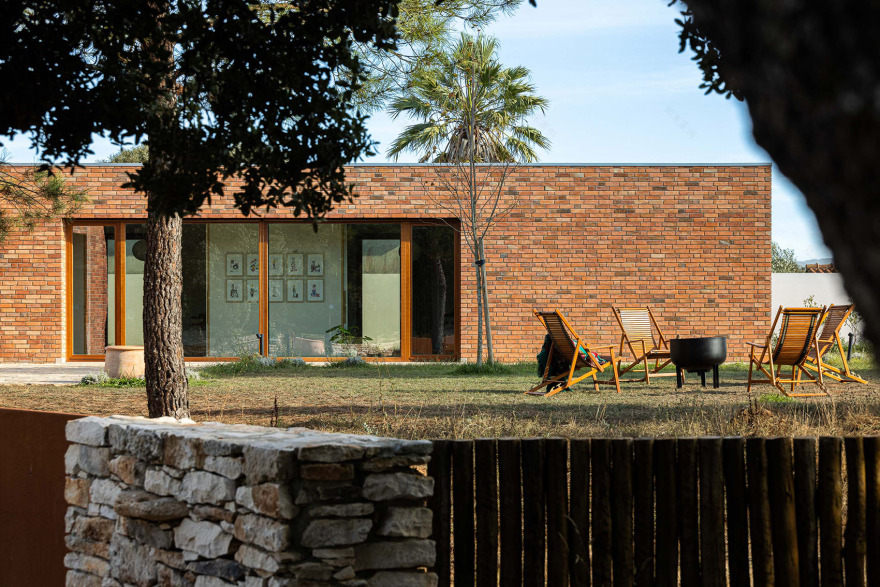
▼住宅外观,exterior of the house©Ivo Tavares Studio

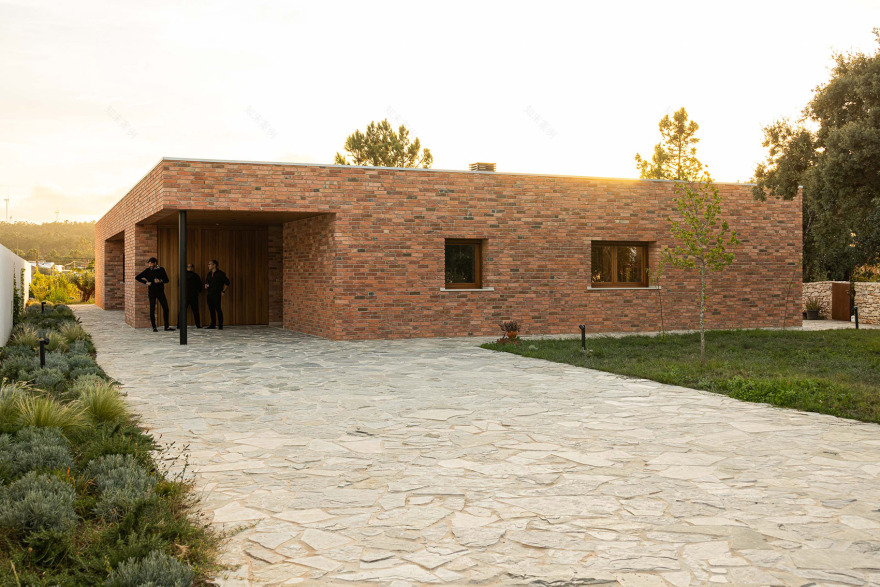
▼住宅外观采用手工砖建造,The use of handcrafted solid brick©Ivo Tavares Studio


▼住宅外观采用手工砖建造,The use of handcrafted solid brick©Ivo Tavares Studio

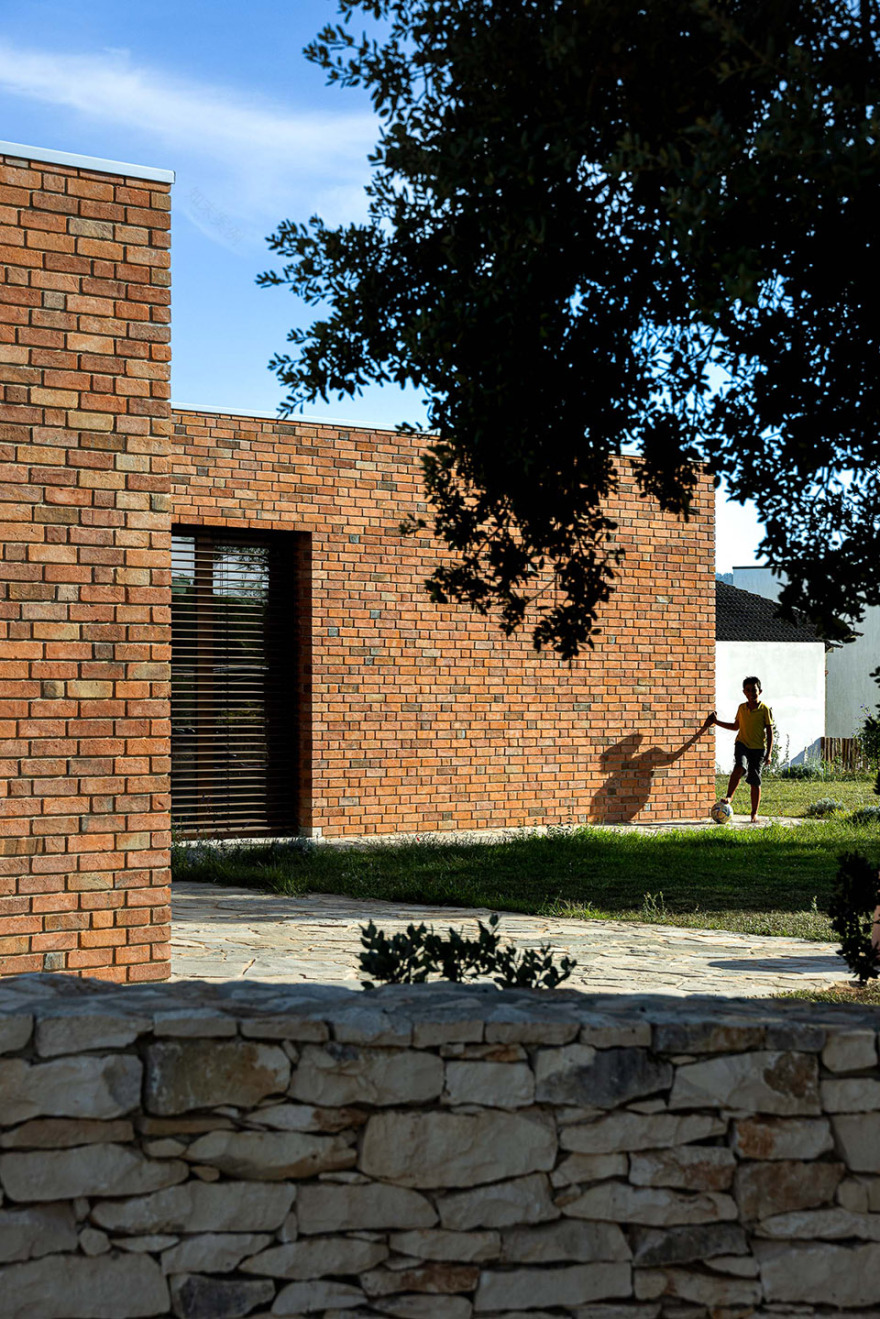
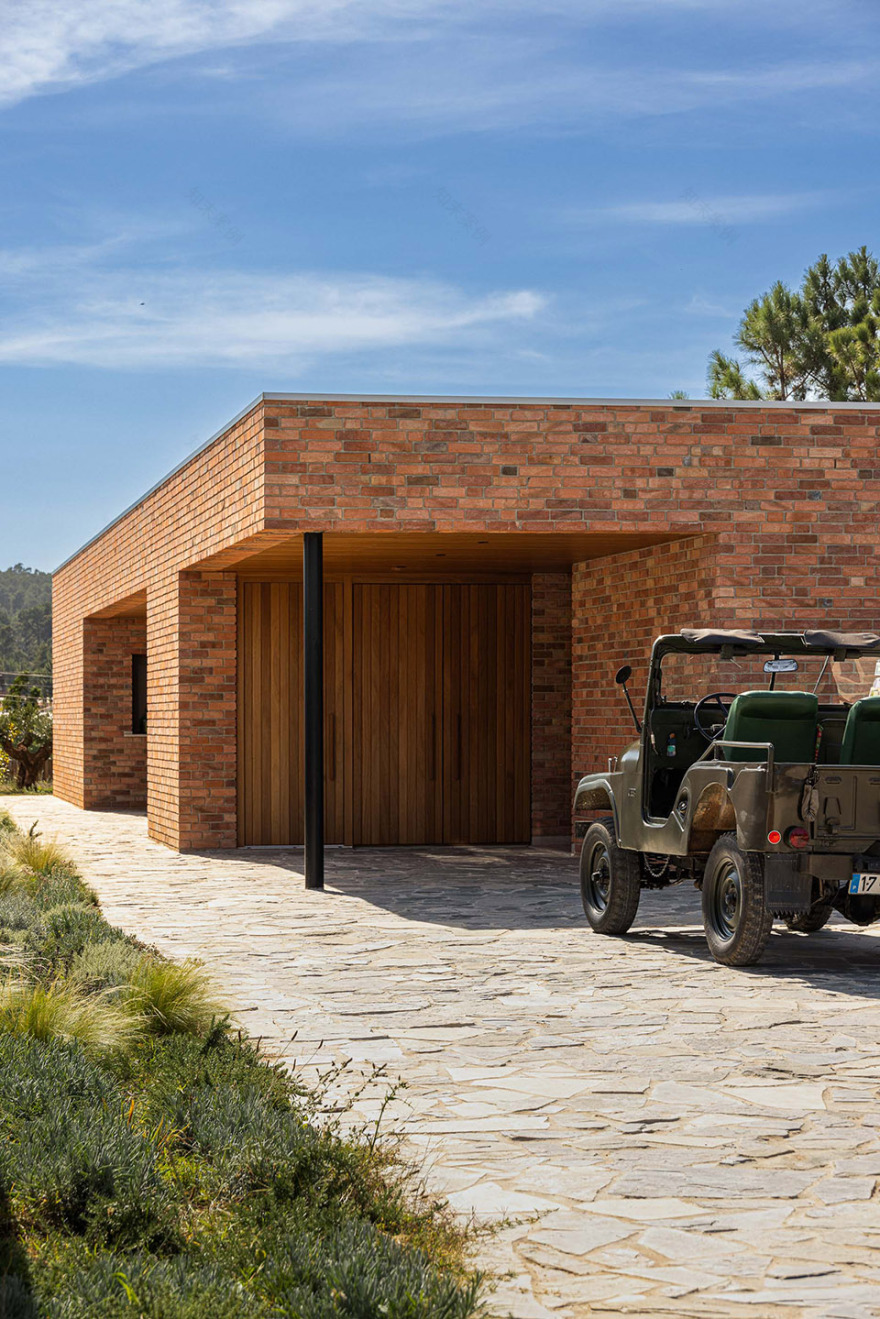
▼住宅入口,entrance of the house©Ivo Tavares Studio

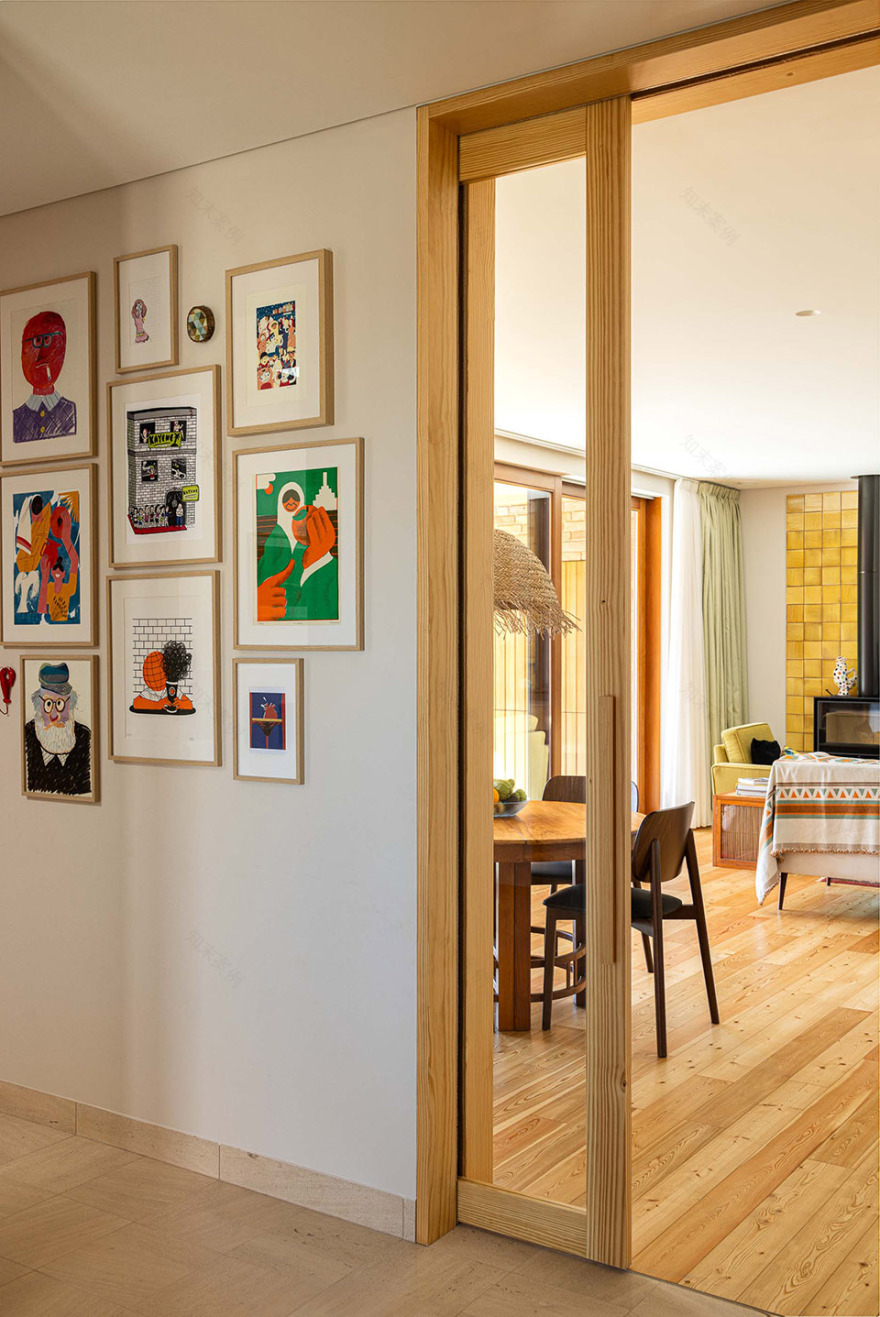
关于空间的灵活性,设计希望儿童房成为功能多变的空间,既能作为休息和学习的封闭场所,也能在白天及玩耍时间敞开,与家庭的公共区域连通。为了实现这一灵活性,设计引入了大型滑动隔板,使这些房间的一整面墙几乎可以完全打开,连通走廊空间;而走廊则通过一扇大窗户与花园直接相连,形成开阔的视觉与动线关系。
Regarding the concept of spatial flexibility, it was intended that the children’s rooms would function as versatile compartments, allowing them to be used both for retreat during rest or study hours, functioning as more enclosed spaces, but which could simultaneously be opened up in continuity with the social spaces of the house during the day and during playtime. This idea of versatility is materialized through the creation of large sliding panels, which allow these rooms to be opened almost to the full extent of one of their walls, in order to absorb the space of the corridor – which, in turn, relates, in a frank and direct way, to the garden through a large window.
▼引入滑动隔板使墙面完全打开,
the creation of sliding panel allow these rooms to be opened©Ivo Tavares Studio


▼连通走廊空间,connected to the corridor©Ivo Tavares Studio


▼客厅与花园直接相连,living room connects with the garden©Ivo Tavares Studio


▼客厅与花园直接相连,living room connects with the garden©Ivo Tavares Studio

在材料运用上,该项目最具特色的一点,是难得地采用了越来越少见的手工和本地材料及施工技艺。这种选择反映出与当下建筑界普遍依赖工业化、标准化材料的趋势背道而驰。在这方面,手工实心砖的使用最为突出。其供应商是一位年事已高的匠人,在为本项目提供完砖后便停止了生产。当项目进入施工末期砖料短缺时,住宅业主和其子不得不亲自参与砖块制作过程,最终才得以完成所需数量,实现预期的立面构图与肌理效果。每一块砖都是独一无二的,具有各自独特的尺寸、质感与色彩。
As for materiality, the most differentiating character of this project is related to the fact that there was an increasingly less common opportunity to use artisanal and local materials and construction techniques, in contrast to the current scenario of a growing shortage of specialized labor and the consequent widespread use of industrialized and fully standardized materials. The use of handcrafted solid brick that covers the facades is the best example of this, with its manufacturer, already of advanced age, ending production after providing the necessary material for the construction of this house, which was already in its final stages with difficulty – which led the owner of the house and one of his sons to actively participate in the production process, so that with their help it was possible to reach the quantity necessary to carry out the work. Only in this way was it possible to obtain the desired result for the composition and texture of the facades, where each brick is a unique piece, with particular dimensions, textures and colors.
▼采用手工实心砖,the use of handcrafted solid brick©Ivo Tavares Studio
▼采用手工实心砖,the use of handcrafted solid brick©Ivo Tavares Studio


如果仔细观察,可以在朝东的立面中发现一件被嵌入砖墙中的设计物件——“蜜蜂砖”(Bee Brick)。它由回收材料制成,是为独居蜜蜂提供筑巢之所的生态构件,亦成为立面设计的一部分。
Through a closer look, it will be possible to discover a design object integrated into the east-facing facade, which was possible to incorporate into the brick cladding itself. This is the “Bee Brick”, designed as a nesting shelter for solitary bees, produced through the incorporation of recycled materials.
▼被嵌入砖墙中的设计物件——“蜜蜂砖”,
a design object integrated into the east-facing facade “Bee Brick”©Ivo Tavares Studio

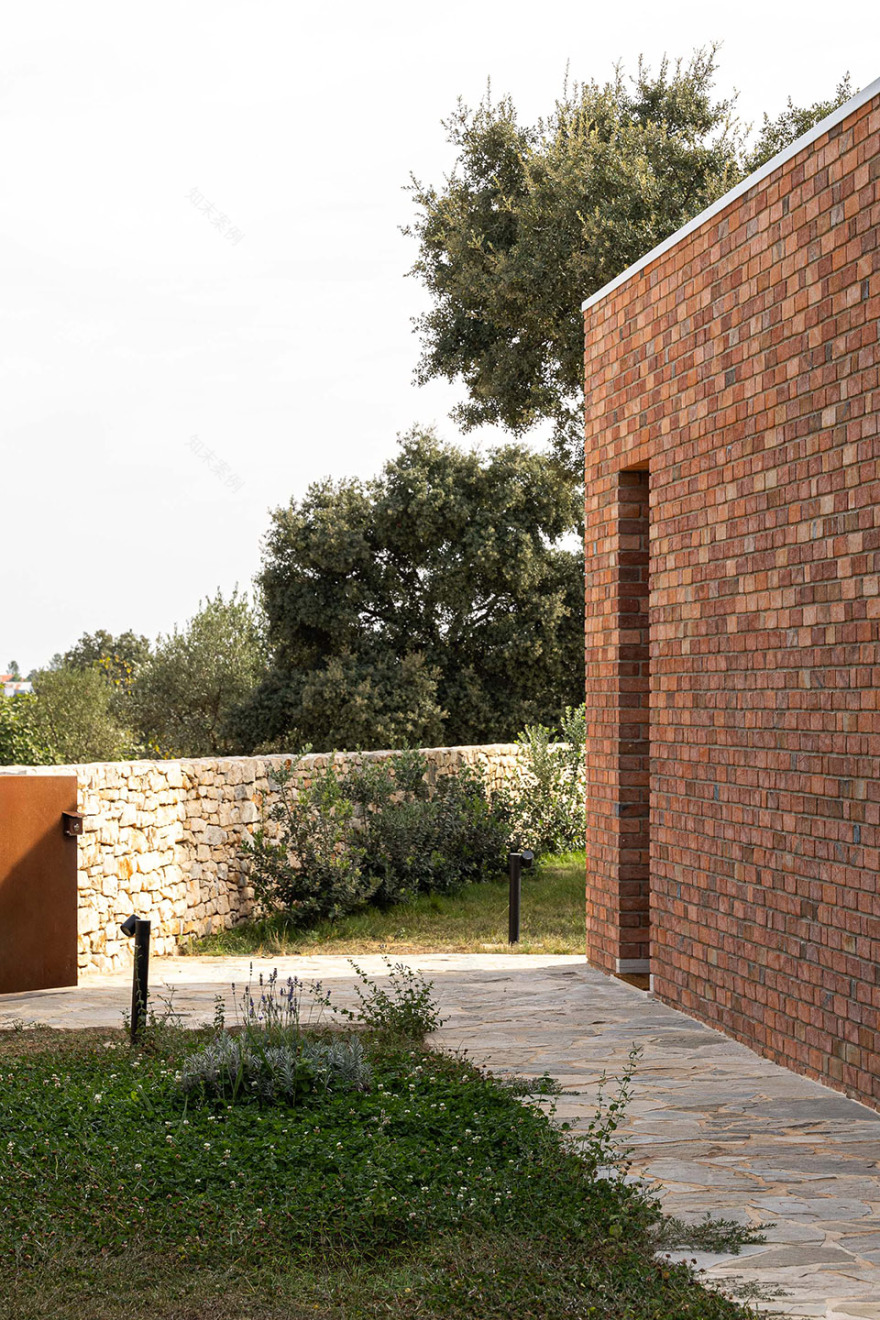
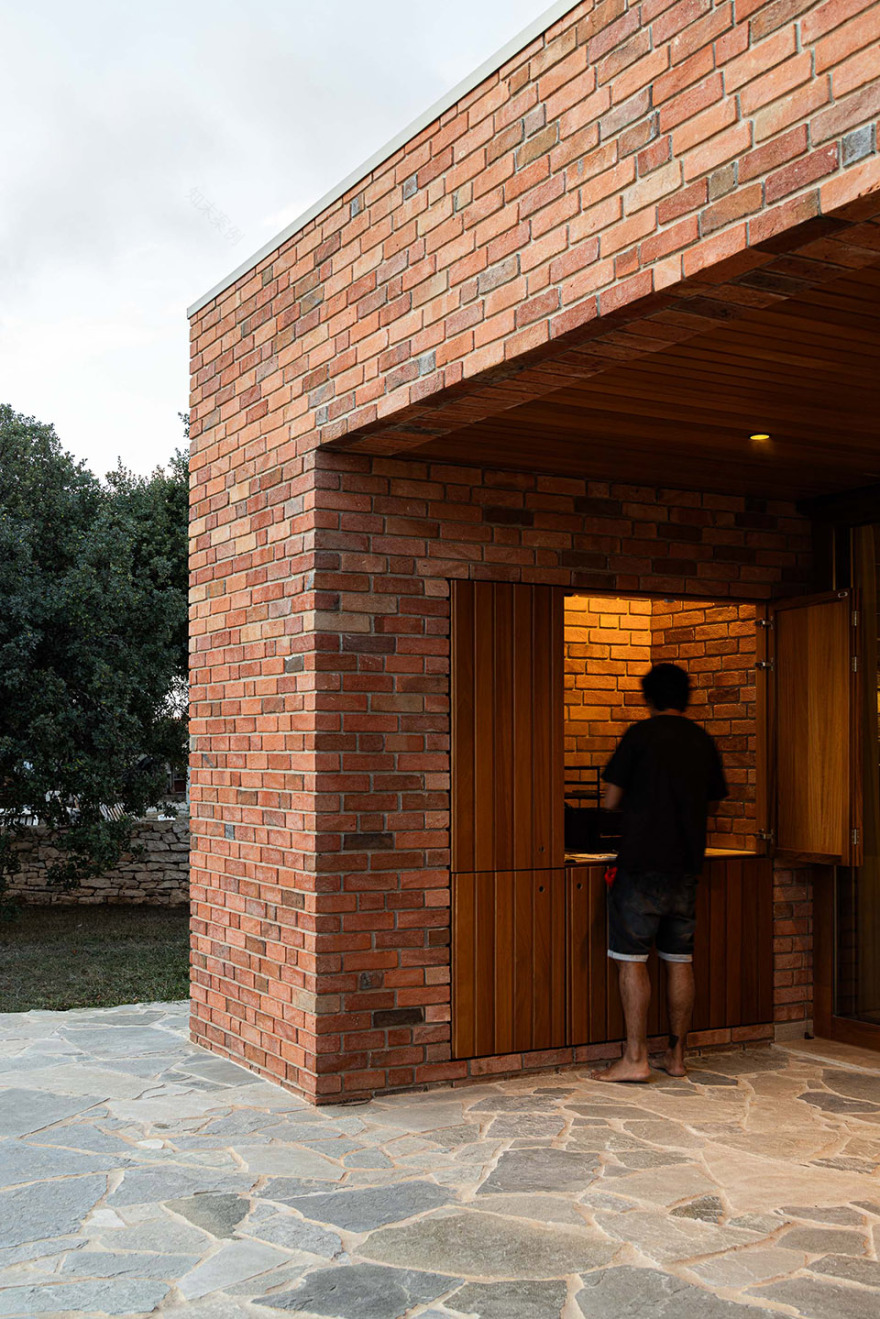
虽然手工砖最为显眼,但这种重视本地材料与技艺的理念贯穿整个项目。围绕场地的石墙是手工砌筑而成,使用的是从附近废弃古墙中回收的石材。在施工期间,业主得知这些旧墙即将被拆除,便与工匠一同前往现场挑选、运输建造新石墙所需的石料。窗框与室外吊顶采用本地天然木材,由本地工匠打造;建筑中使用的石材也采自法蒂玛地区的采石场。各种材料的肌理在手工工艺的处理下得以呈现,为建筑赋予了丰富的触感。
Although handcrafted brick is the most prominent material, this idea of proximity to local materials and techniques extended to the majority of the work. The hand-laid stone walls that enclose the land were made with stone reused from centuries-old walls in ruins nearby. During the work, the owner learned that these walls would be demolished and, together with the artisans, they went to the site and selected and transported the stone needed to build the new walls of the house. The window frames and external ceilings in natural wood were also made by local artisans and the stonework used in the work is of local origin, from the quarries in Fátima. The different textures of these materials are highlighted, applied using artisanal techniques, giving the work a tactile character.
▼围绕场地的石墙是手工砌筑而成,
The hand-laid stone walls that enclose the land were made with stone©Ivo Tavares Studio

▼门廊,porch©Ivo Tavares Studio

▼门廊细部,porch detail©Ivo Tavares Studio

▼门厅,foyer©Ivo Tavares Studio
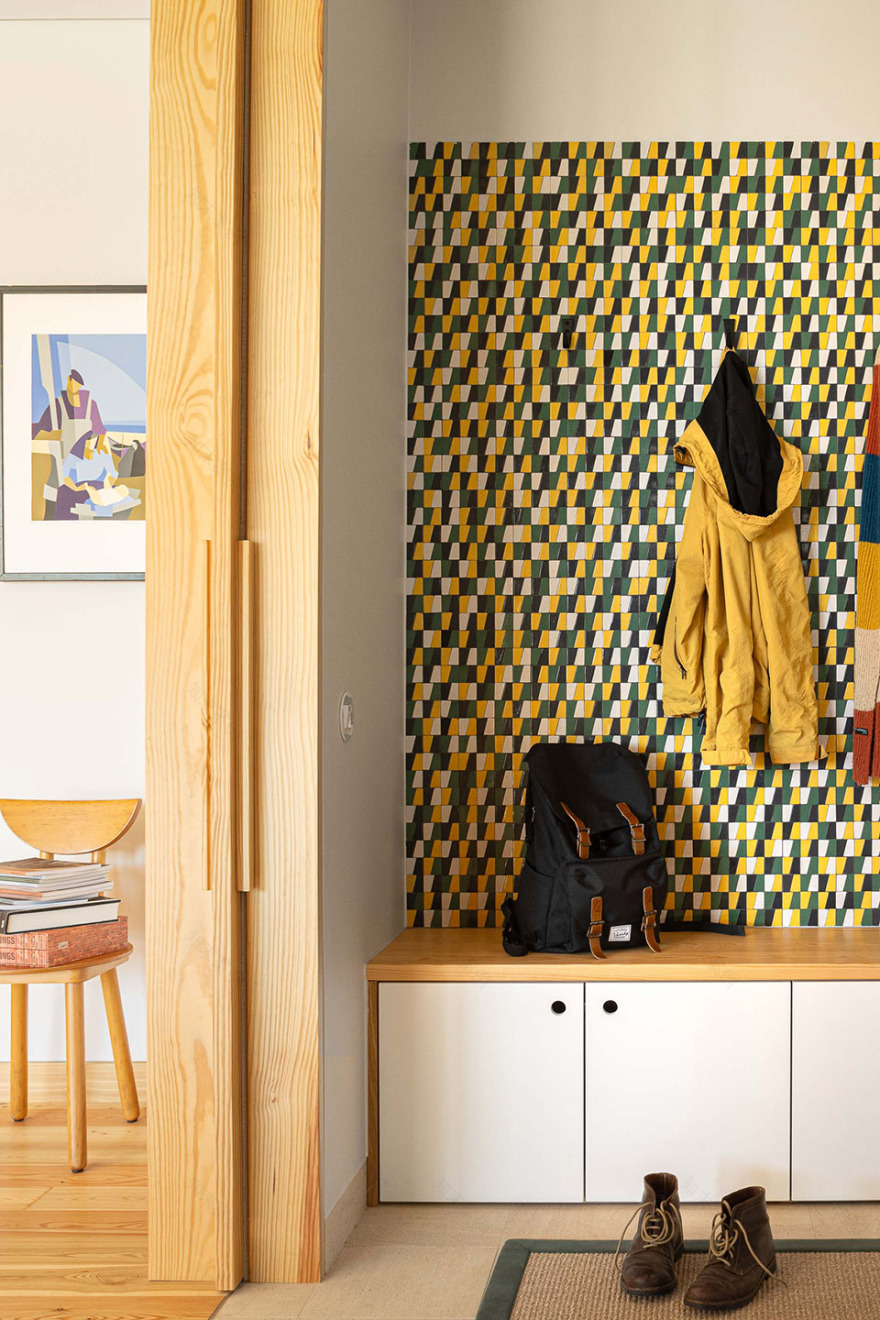
▼门厅细部,foyer detail©Ivo Tavares Studio

▼走廊,corridor©Ivo Tavares Studio


住宅本体由一个“L”形的简单体量构成,外部的半室外空间通过对该体块的“切除”形成。建筑合理地布局于基地之上,与现有的植被——包括常绿栎、橄榄树与松树——和谐共存,追求舒适性、私密性与生态性的平衡。该体块设置在地块的最高平台上,靠近东侧的公共通道入口,这样的布置在接近主入口的动线上增强了私密性。主立面相对封闭,仅开设较小的窗洞,而面向西侧的立面则采用大面积开窗,最大限度地向花园敞开,使室内外空间实现连续性,同时引入充足自然光,营造明亮且温馨的氛围。
The house is essentially composed of a simple volume, in the shape of an “L”, from which the voids corresponding to the exterior covered spaces are removed, being located on the land in order to safeguard a harmonious integration with the existing afforestation – composed of holm oaks, olive trees and pine trees – providing a balance between comfort, privacy and respect for the environment. This volume is positioned on a flat platform, at the highest level of the land and close to the public access road, to the east, ensuring greater privacy on the route approaching the main entrance, its main elevation denoting this idea of greater closure, with smaller openings, in contrast to the west-facing fronts, which open generously onto the garden area, through large openings, which allow to create a notion of continuity between internal and external spaces and for natural light to spread, in a controlled manner, providing a bright and welcoming environment.
▼客厅,living room©Ivo Tavares Studio


▼厨房,kitchen©Ivo Tavares Studio
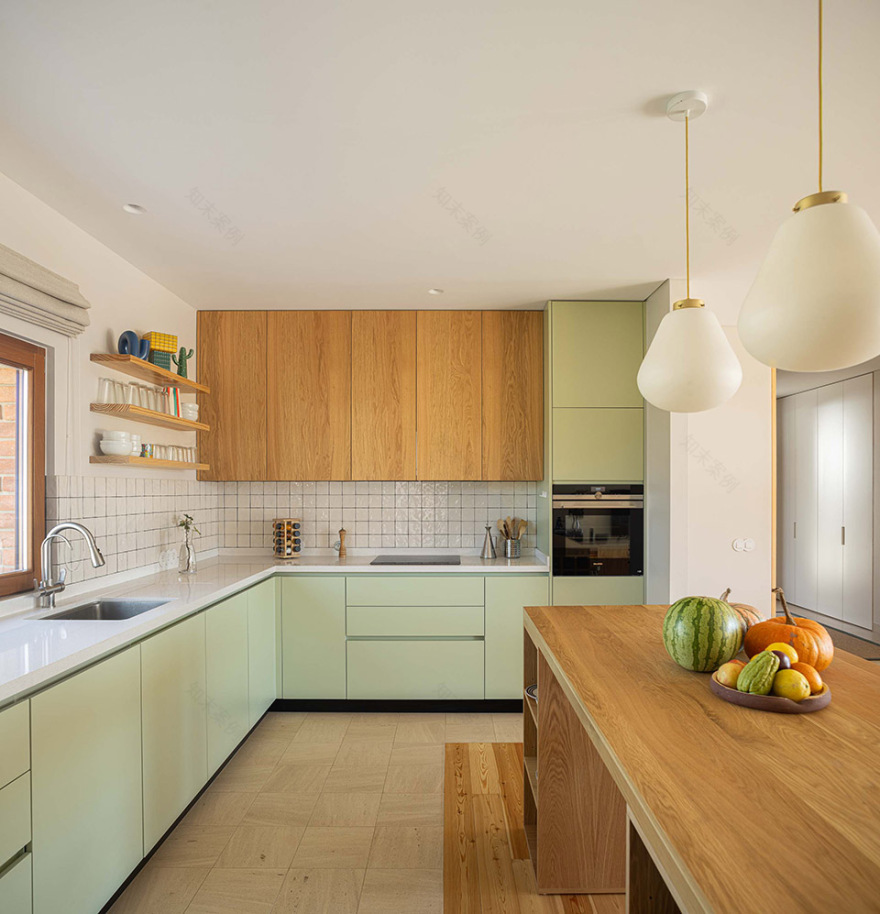
▼餐厅,dining hall©Ivo Tavares Studio


▼卧室,bedroom©Ivo Tavares Studio
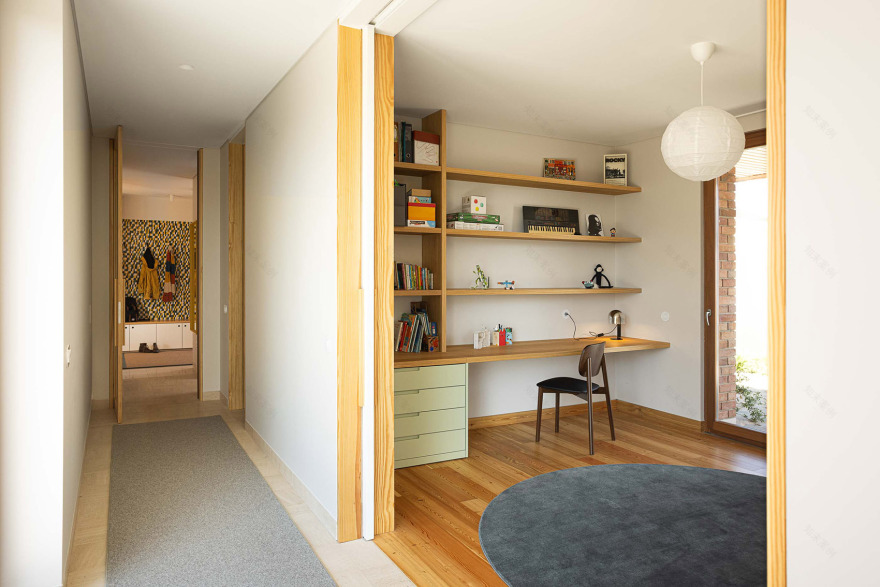

▼卧室,bedroom©Ivo Tavares Studio

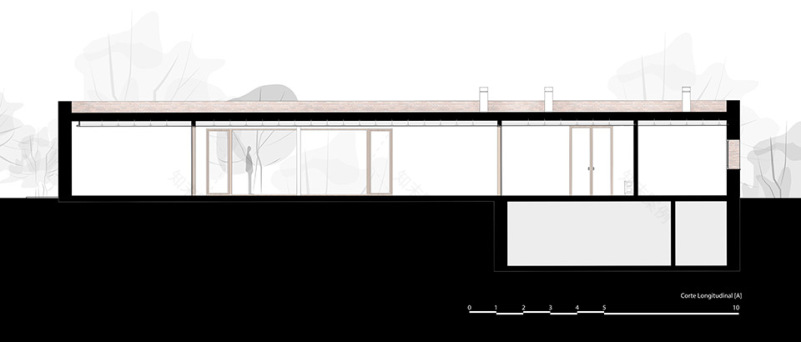
在内部功能布局方面,住宅主要围绕入口门厅形成两个分区:一侧为家庭的公共社交区域,包括客厅、餐厅与开放式厨房、洗衣房、书房及部分室外覆盖空间;另一侧为私密空间,如卧室与卫浴。此外,建筑还设有一个地下一层,可从外部进入,主要用于储藏与设备机房。
As for the internal distribution of the house, the program is essentially developed in two distinct wings, demarcated by the entrance atrium: the first corresponds to the predominantly common and social spaces of the house, such as the living room, dining room and kitchen in open space, laundry, office and also covered outdoor areas; while the other wing contains private spaces, such as bedrooms and sanitary facilities. There is also a basement area, with access from the outside, for storage and technical areas.
▼住宅夜景,house at night©Ivo Tavares Studio

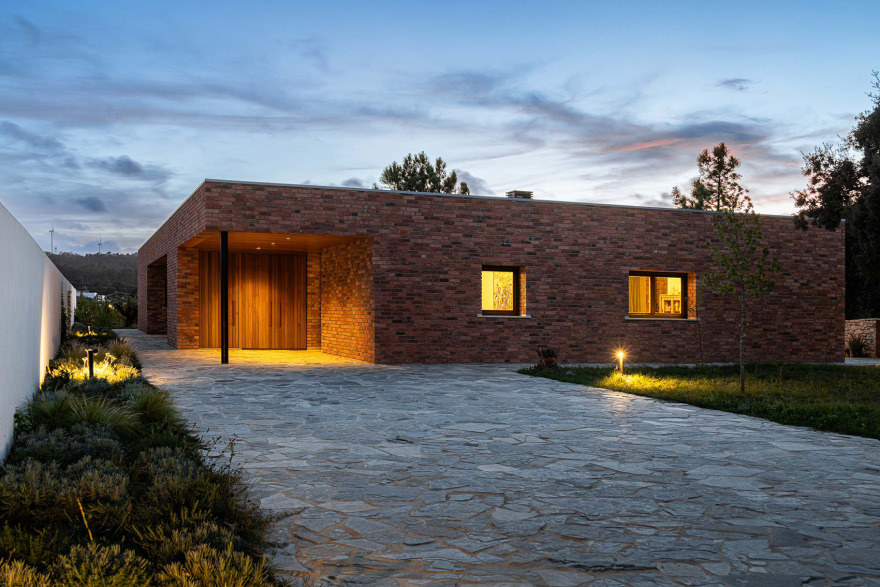
▼住宅夜景,house at night©Ivo Tavares Studio

▼场地平面,site plan©João Pedro Pedrosa – Arquitectos

▼一层平面,ground floor plan©João Pedro Pedrosa – Arquitectos

▼地下室平面,basement plan©João Pedro Pedrosa – Arquitectos

▼立面图,elevation©João Pedro Pedrosa – Arquitectos
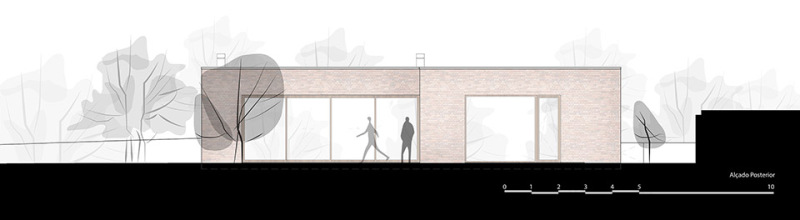


▼剖面图,section©João Pedro Pedrosa – Arquitectos
Project name: Casa na Lameira
Architecture Office: João Pedro Pedrosa – Arquitectos
Main Architect: João Pedro Pedrosa
Collaboration: António João de Almeida, Cassandra Machado, Michael Marques, Paulo Teixeira, Tiago Alves
geral@joaopedropedrosa.pt
Facebook:
Instagram:
Location: Fátima
Year of conclusion : 2024
Total area: 345 m2
Builder: Concroc Unipessoal Lda
Engineering: Vitor Glória
Architectural photographer: Ivo Tavares Studio
Website :
Facebook:




南京喵熊网络科技有限公司 苏ICP备18050492号-4知末 © 2018—2020 . All photos and trademark graphics are copyrighted by their owners.增值电信业务经营许可证(ICP)苏B2-20201444 苏公网安备 32011302321234号
苏公网安备 32011302321234号客服
消息
收藏
下载
最近