

创作上传
VIP
收藏下载
登录 | 注册有礼
查看完整案例

收藏

下载

分享
威尼斯国家考古博物馆(Museo archeologico nazionale di Venezia),作为“威尼斯及潟湖国家考古博物馆”体系的一部分,正式重开阿格里帕庭院,标志着其历史发展进入崭新阶段。从2025年5月6日起,博物馆将重新启用位于圣马可小广场17号、面对总督府的历史正门。这一新入口将与现有的科雷尔博物馆通道共同使用,也象征着博物馆组织架构的重要调整,并凸显其在可达性与包容性参观体验上的承诺。
The Museo archeologico nazionale di Venezia (National Archaeological Museum of Venice) —part of the Musei archeologici nazionali di Venezia e della Laguna (National Archaeological Museums of Venice and the Lagoon) — reopenes the Courtyard of Agrippa, marking the beginning of a new chapter in the museum’s history. Starting May 6, the museum reopens its historic entrance at No. 17 Piazzetta San Marco, directly facing the Doge’s Palace. This new access complements the existing one through the Correr Museum and signifies the launch of a significant reorganization process. It also underscores the museum’s commitment to accessibility and a renewed, inclusive visitor experience.
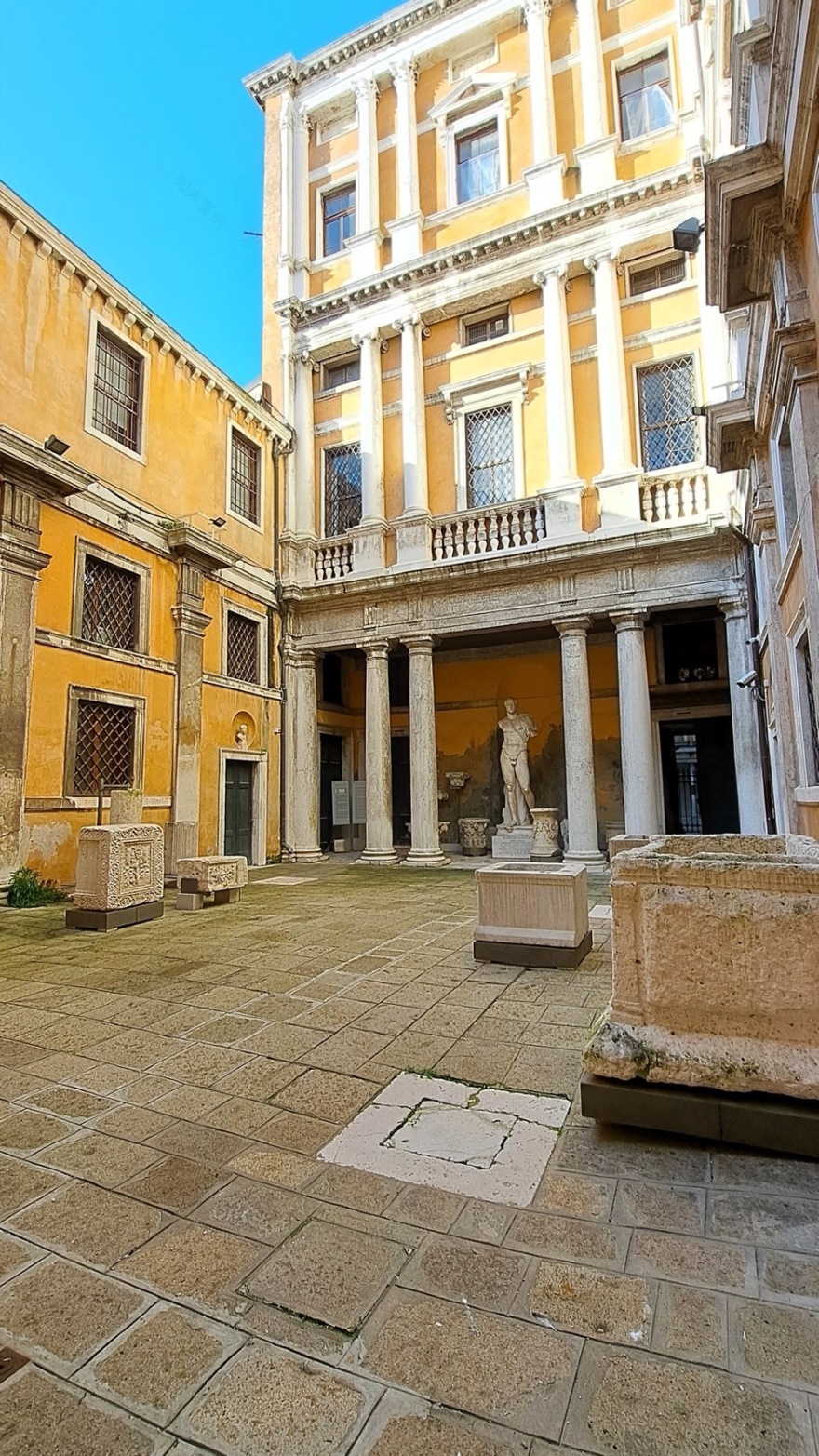
▼阿格里帕庭院, the Courtyard of Agrippa ©Museo archeologico nazionale di Venezia

▼威尼斯国家考古博物馆室内大厅,
entrance foyer of the Museo archeologico nazionale di Venezia ©Museo archeologico nazionale di Venezia

配合这一愿景,展览路线回归1924至1926年间由著名古典学家、帕多瓦大学考古学教授、后任校长卡洛·安蒂(Carlo Anti)确立的原始顺序。展览按时间顺序展示希腊与罗马雕塑艺术,从公元前5世纪延续至罗马帝国晚期,同时呈现陶器、青铜小雕像、钱币等16至19世纪期间由威尼斯贵族收集和捐赠的珍贵文物。为提升观众体验,博物馆引入独立售票系统,适用于国家考古博物馆与马尔恰纳图书馆,并增设年度订阅制度,为观众提供灵活不限次数的参观权限。新设的多功能空间则用于展示重点藏品及更新重整项目的相关信息。
In line with this vision, the museum route returns to the original order established between 1924 and 1926 by Carlo Anti, a distinguished classicist, professor of Archaeology, and later rector of the University of Padua. The itinerary offers a chronological narrative of Greek and Roman art through sculpture—from the 5th century BC to the late imperial era—alongside ceramics, bronze statuettes, coins, and other precious objects collected and donated by the Venetian aristocracy between the 16th and 19th centuries. To enhance the visitors experience, a new independent ticketing system for the Archaeological Museum and the Marciana Library is introduced and added to the existing one, along with an annual subscription that provides unlimited, flexible access to the collections. A newly created multifunctional space also showcases prestigious artifacts and provide visitors with updates on the museum’s ongoing reinstallation project.
▼阿格里帕庭院内的特别装置艺术展《LINES》,
LINES by KENGO KITO in the Courtyard of Agrippa ©Ilaria Zago / Joan Porcel Studio

▼全新门厅内的特别装置艺术展《LINES》,
LINES by KENGO KITO in new foyer ©Ilaria Zago / Joan Porcel Studio

上述举措是意大利文化部新设机构“威尼斯及潟湖国家考古博物馆”(Musei archeologici nazionali di Venezia e della Laguna)实体化的首批举措之一。该机构于2024年5月成立,由玛丽安娜·布雷桑(Marianna Bressan)担任馆长,涵盖威尼斯国家考古博物馆、格里马尼宫博物馆、阿尔蒂诺考古公园及未来位于老隔离岛(Lazzaretto Vecchio)的潟湖国家考古博物馆,旨在通过整合推动威尼斯及潟湖地区考古遗产的整体呈现与传播。
These initiatives represent the first tangible step in the formation of a new institution under Italy’s Ministry of Culture: the Musei archeologici nazionali di Venezia e della Laguna (National Archaeological Museums of Venice and the Lagoon), established in May 2024 under the direction of Marianna Bressan. This institution encompasses the Museo archeologico nazionale di Venezia, the Museo di Palazzo Grimani, the Parco archeologico di Altino (Archaeological Park of Altino), and the upcoming Museo archeologico nazionale della laguna di Venezia (National Archaeological Museum of the Venice Lagoon) on the island of Lazzaretto Vecchio. Together, they promote an integrated and coherent cultural offering that enhances the archaeological heritage of Venice and its lagoon.
▼由门洞看庭院与装置,
view the courtyard and installations from the doorway ©Ilaria Zago / Joan Porcel Studio

▼庭院与装置,courtyard and Installations ©Tommaso Giacomin / Joan Porcel Studio

为庆祝此次重新开放,阿格里帕庭院还将呈现一场特别装置艺术展,作为2025年威尼斯建筑双年展预展期间的亮点项目。该名为《LINES》的现场特定作品由艺术家鬼頭健吾(KENGO KITO)创作、斋藤正彦策展、anonymous art project资助,设于阿格里帕庭院及博物馆第五展厅,并持续展出至2025年9月28日。作品试图与威尼斯文化遗产及文艺复兴建筑展开对话,激发公众对艺术与公共空间关系的思考。展览还包括对庭院中因岁月与湿度侵蚀而破损的阿格里帕雕像背后墙体进行的临时保护修复项目。该工作由 anonymous art project 资助,包含表面除尘、结构加固与色调协调处理,试图在古代、现代与当代艺术间建立动态联系。这种实验性修复模式或将为博物馆未来的文物保护提供借鉴。
To celebrate this reopening, the courtyard also hosts a striking site-specific installation opening during the preview days of the 2025 Venice Architecture Biennale. LINES by KENGO KITO, curated by Masahiko Haito and supported by anonymous art project, will is installed both in the Courtyard of Agrippa and Room V of the Museum and runs until September 28th, 2025. The work establishes a dialogue with Venetian cultural heritage and Renaissance architecture, sparking a reflection on the interaction between art and public space. Also part of the exhibition, a temporary conservation intervention—also supported by anonymous art project—on the wall behind the statue of Agrippa, weathered by time and humidity. The work includes surface dust removal, consolidation, and subtle tone harmonization, aiming to create a dynamic relationship between ancient, modern, and contemporary art. This experimental restoration model may inform future developments within the museum. The artistic project will contribute to further enhance this restoration, underlining the importance of the continuous comparison between the historicity of the place and current artistic expressions.
▼彩色装置与威尼斯文化遗产及文艺复兴建筑展开对话,
the colorful installation engages in a dialogue with Venice’s cultural heritage and Renaissance architecture ©Ilaria Zago / Joan Porcel Studio

“圣马可小广场历史入口的重新开放,”威尼斯及潟湖国家考古博物馆馆长布雷桑表示,“是这一新机构在威尼斯展开的首个具体行动,也体现了我们希望发展的文化愿景。这项干预将一座文艺复兴时期建筑瑰宝重新呈现给城市与世界,通过对古代雕塑陈列方式与空间的研究,实现彼此的价值提升,提出一种展览与藏品库兼容的灵活展示模式。更重要的是,它在物理空间上重新连接了博物馆与威尼斯,通过街道层面的直接入口重回市民生活,同时在文化内容上也重新建立了联系:在售票厅旁的展室内,博物馆将逐步展示重整的各个阶段,订阅观众可不限次数前来,见证进展、参与活动、熟悉藏品,也重温这座博物馆与威尼斯历史深度交织的故事。”
“The reopening of the museum’s historic entrance on Piazzetta San Marco,” states Marianna Bressan, Director of the Musei archeologici nazionali di Venezia e della Laguna, “is the first tangible act in Venice by this new institution. It reflects the cultural vision we aim to develop. The intervention in fact returns to the city and to the world a jewel of Renaissance architecture, studies the distribution of ancient sculptures and the architectural space for a mutual valorisation, proposes a conceptually flexible installation, part permanent exhibition and part visitable depot. Furthermore, it intends to reconnect the relationship of the Archaeological Museum with Venice both physically, through the access directly from the Piazza level, and in the proposal of cultural fruition: in the room adjacent to the ticket office, the Museum recounts step by step the phases of its rebirth, visitors, by subscribing, will be able to return as many times as they want to see the progress, to participate in the dedicated events, to familiarize themselves with the collections and the history of this place, so linked to the history of Venice itself”.
▼由艺术装置看古典雕塑,
viewing classical sculptures through art installations ©Ilaria Zago / Joan Porcel Studio

穿越全新门厅,参观者将步入“阿格里帕庭院”(Courtyard of Agrippa),这里矗立着一尊据信描绘罗马政治家兼将军马库斯·维普萨尼乌斯·阿格里帕(公元前63年–公元12年)的纪念性雕像。这个空间连接了马尔恰纳地区的建筑、威尼斯的政治中心,以及古典古物收藏的历史遗产。雕像呈现出威尼斯与古罗马之间深厚的联系,这一主题在博物馆藏品中也得到了广泛呼应。这种联系揭示了收藏作为一种战略工具,如何被用于巩固“威尼斯共和国”(Serenissima)的文化与政治身份。
Crossing the museum’s new threshold, visitors are welcomed into the Courtyard of Agrippa, home to the monumental statue believed to depict the Roman statesman and general Marcus Vipsanius Agrippa (63 BC – AD 12). This space acts as a bridge between the Marciana area’s architecture, Venice’s political centre, and the legacy of classical antiquity collecting. The statue introduces the deep connection between Venice and ancient Rome, a theme echoed throughout the museum’s collection. This link reveals how collecting was a strategic tool to bolster the cultural and political identity of the Serenissima.
▼装置与雕塑的对话,
dialogue between installations and sculptures ©Ilaria Zago / Joan Porcel Studio
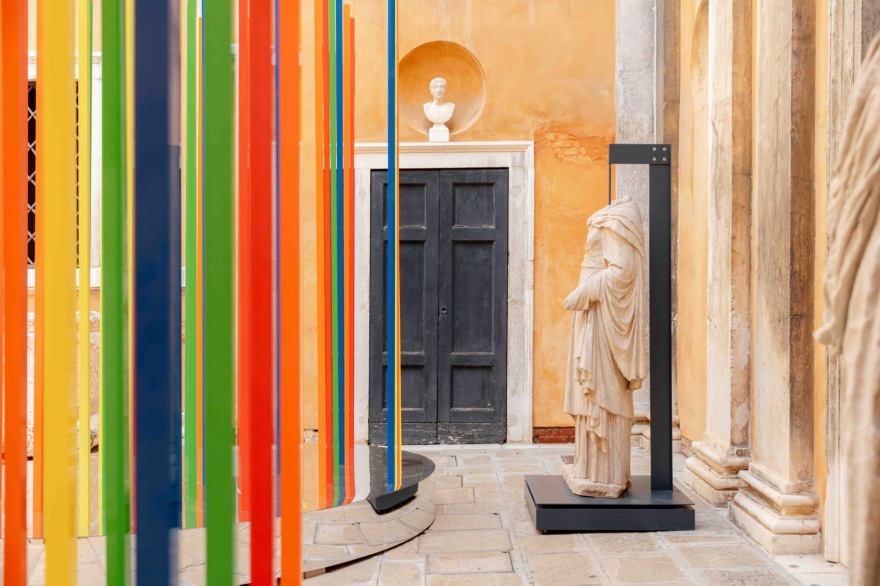
这件雕塑自19世纪60年代起成为公共收藏的一部分,代表了一段重要的历史见证,也印证了16世纪初由多梅尼科·格里马尼(Domenico Grimani,1461–1523)发起的私人收藏捐赠给共和国的悠久传统。1587年,乔瓦尼·格里马尼(Giovanni Grimani,1506–1593)在整合其叔叔的藏品后,将部分个人收藏捐赠给威尼斯,并承诺在当时的“马尔恰纳图书馆”前厅设置雕塑展厅,该展厅于1596年向公众开放,是世界上最早的公共博物馆之一。格里马尼家族的捐赠开启了威尼斯贵族积极参与国家声望建设的历程。事实上,许多威尼斯贵族纷纷效仿,将他们的藏品捐赠给城市。古代艺术品(尤其是罗马艺术品)的占比之高,清楚地表明了威尼斯希望将自身与一个虽非其起源、却可为其文化、政治与军事权力合法性背书的历史传统建立关联。古代艺术收藏因此成为连接“威尼斯共和国”与罗马伟大历史之间的一座桥梁,加强了威尼斯作为罗马帝国(尤其在地中海东部)权力继承者的地位。
Having become part of public collections in the 1860s, the work represents a significant historical testimony, which confirms a long tradition of private collections donated to the Republic and begun in the early decades of the sixteenth century by Domenico Grimani (1461 – 1523). Integrating his uncle’s donation with his own collections, in 1587 Giovanni Grimani (1506 – 1593) donated part of his collection to the Serenissima and committed to setting up the Statuary in the anteroom of the then “Libreria” Marciana, opened to the public in 1596 among the first examples of a public museum in the world. The Grimani donations marked the beginning of a process of active involvement of the Venetian patriciate in strengthening the prestige of the State. Numerous members of the Venetian nobility, in fact, would follow their example, donating part of their collections to the city. The predominance of ancient works of art, especially Roman, becomes clear evidence of the desire to associate Venice with a historical tradition that, although not part of its foundation, could legitimise it as a cultural, political and military power. The collection of ancient art thus becomes a bridge between the Serenissima and the great Roman history, strengthening the position of Venice as heir to the dominion and power of the Roman Empire, especially in the eastern Mediterranean.
▼全新门厅内的特别装置艺术展《LINES》,
LINES by KENGO KITO in new foyer ©Ilaria Zago / Joan Porcel Studio
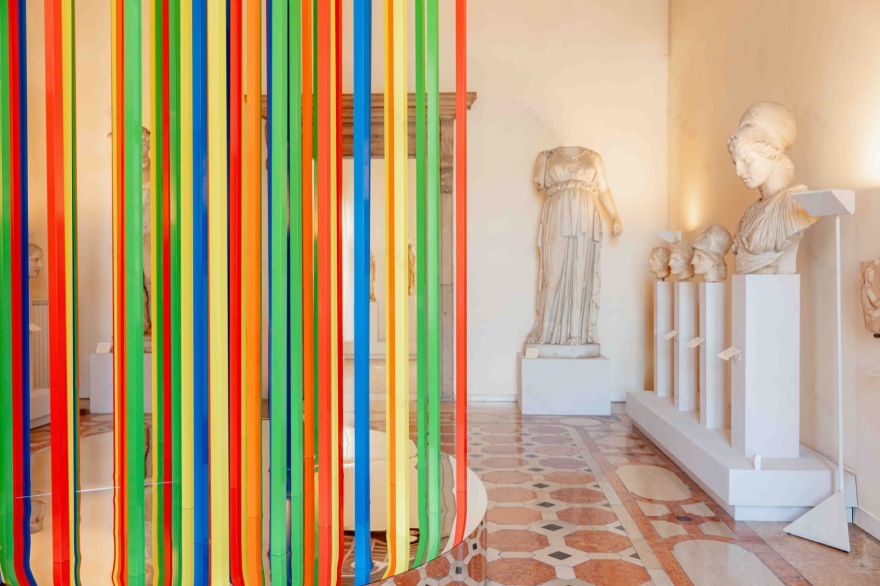

为了提供完整的文化体验,新的独立博物馆入口也同步启用,专为希望仅参观考古博物馆的访客而设,与现有的科雷尔博物馆入口形成互补。新增的通道使阿格里帕庭院重新回归其原本应有的可见性与可达性——该庭院是新总督府(Procuratie Nuove)中唯一由文艺复兴建筑语言大师文琴佐·斯卡莫齐(Vincenzo Scamozzi)设计的庭院空间。为了重新确立符合原始路线的参观体验,新入口需购买独立门票。与此同时,一处毗邻的新多功能空间也将启用,用于展示馆藏石雕作品,形成一个可供参观的“开放式藏品库”。该空间内还将设有一份可灵活更新的信息图,向公众讲述国家考古博物馆重整展陈的全过程,其序章便是阿格里帕庭院的重新开放。此外,为了让展览尽可能具有包容性和可访问性,博物馆推出年度订阅计划,参观者可自由多次进入展馆,并参与博物馆的各类活动。此举不仅打开了博物馆的大门,更通过建立观众黏性,为他们带来更加动态、参与式的参观体验。
In a program that aims to offer a complete cultural experience, the new independent entrance to the museum, designed for those who wish to visit only the Archaeological Museum, integrates with the existing access from the Museo Correr. The addition of a new passageway restores the Courtyard of Agrippa to its original visibility and accessibility: the space, in fact, is the only one among the courtyards of the Procuratie Nuove designed by Vincenzo Scamozzi, one of the greatest interpreters of the Renaissance architectural language. To re-establish the visit according to the original route, the new entrance corresponds to a separate ticket. To this is also added an adjacent multifunctional space, where stone works belonging to the permanent collection will be set up, creating a real visitable depot. Here, an infographic designed to be flexible and updatable will tell visitors about the process of re-setting up the National Archaeological Museum of Venice, which begins with the reopening of the Courtyard of Agrippa. Finally, to make the offer as inclusive and usable as possible, an annual subscription is introduced, which allows flexible entry to the collections, as well as access to the Museum’s event program. The initiative thus opens the institution to the city, building visitor loyalty and guaranteeing them a more dynamic visit.
▼装置近景,closer views of the installation ©Ilaria Zago / Joan Porcel Studio

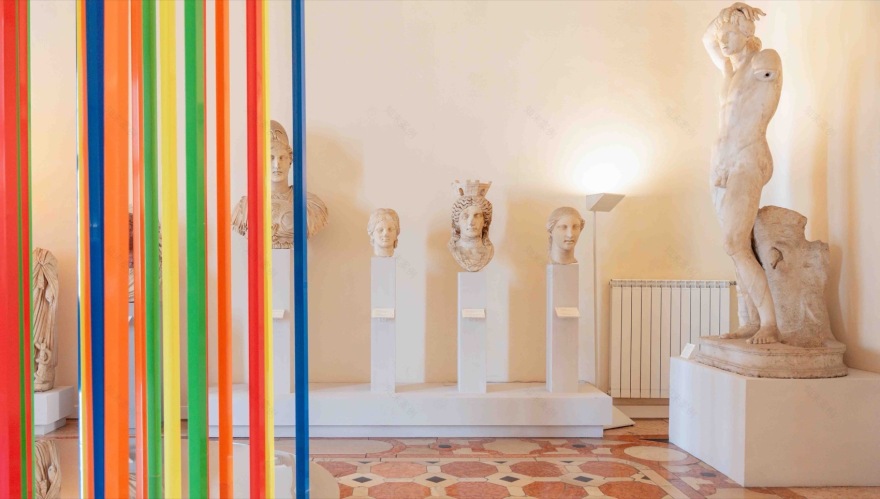
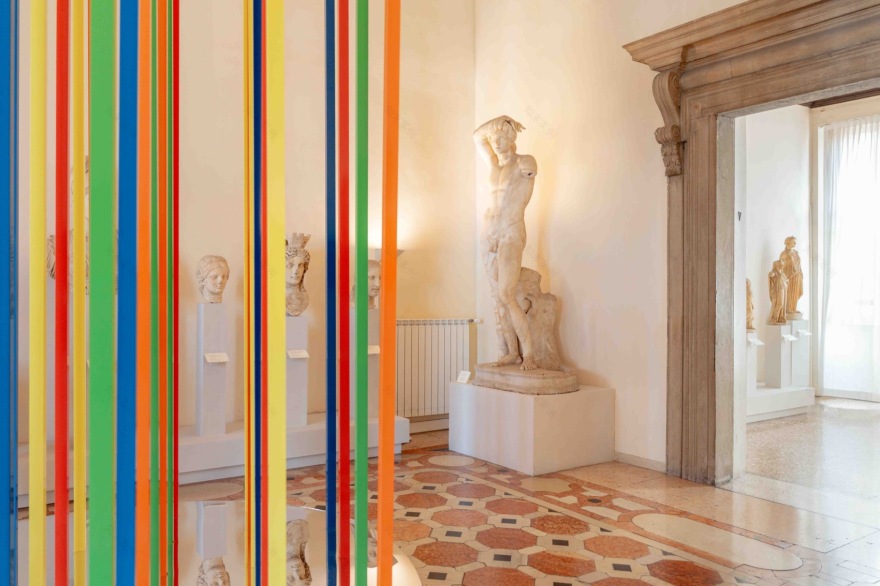
阿格里帕庭院的重启,是威尼斯考古遗产重组与提升进程中的重要一步,也标志着“威尼斯及环潟湖国家考古博物馆体系”(Musei archeologici nazionali di Venezia e della Laguna)协同机制的正式开启。该体系隶属于意大利文化部,整合了威尼斯地区不同面向的身份与历史记忆。格里马尼宫博物馆(Museo di Palazzo Grimani)与国家考古博物馆,聚焦于与考古学与古典艺术相关的收藏叙事。格里马尼宫尤其通过“珍宝厅”(Tribuna)的重新布置,庆祝了格里马尼家族,尤其是阿奎莱亚主教乔瓦尼·格里马尼的收藏实践;而国家考古博物馆则讲述了威尼斯的整体收藏史。阿尔蒂诺考古公园(Parco archeologico di Altino)依托现场发掘,展示了一个从公元前8世纪至公元7世纪活跃于潟湖边缘的古代城市的历史,是“活态考古”的代表。而正在筹建的“威尼斯潟湖国家考古博物馆”(Museo archeologico nazionale della laguna di Venezia),将选址于拉扎雷托韦基奥岛,专注展示潟湖区域从自然起源至威尼斯建城过程中的人类活动与居住演变。这四家博物馆的整合,意在丰富威尼斯的文化供给体系,为公众呈现一幅完整而层次分明的威尼斯与潟湖历史图景。
The reopening of the Courtyard of Agrippa marks an important step in the process of reorganization and enhancement of the archaeological heritage of Venice, which finds new synergy within the National Archaeological Museums of Venice and the Lagoon. Within this institution, belonging to the Ministry of Culture, the different facets of the identity and history of the Venetian territory are integrated. The Museum of Palazzo Grimani and the National Archaeological Museum offer a historical-artistic narrative on collecting linked to archaeology and classical art: Palazzo Grimani, in particular, celebrates, through the reorganization of the Tribuna, the collecting experience of the Grimani family – specifically the patriarch of Aquileia, Giovanni -, while the National Archaeological Museum of Venice tells the story of Venetian collecting. The Archaeological Park of Altino, thanks to the excavations present on the site, represents an example of living archaeology, tells the story of the largest city around the lagoon active between the 8th century BC and the 7th century A.D. Finally, the National Archaeological Museum of the Venice Lagoon, which will be built on the island of Lazzaretto Vecchio, will focus on the history of the settlements and the anthropization of the lagoon, from its origins to the foundation of Venice. The integration of the four museums aims to amplify the cultural proposal of the city, offering visitors a complete and articulated vision of its history and the history of the lagoon.
▼细部,details ©Ilaria Zago / Joan Porcel Studio


Information for the public
Museo archeologico nazionale di Venezia – Musei archeologici nazionali di Venezia e della Laguna
Piazzetta San Marco 17, Venice
Opening hours: from Tuesday to Sunday, from 10am to 6pm
Tickets: free entrance to the courtyard;
8 euros for the National Archaeological Museum of Venice and the Marciana Library
(except for reductions and free admission by law);
30 euros for an integrated ticket for the National Archaeological Museum of Venice, the Marciana Library, the Doge’s Palace, and the Museo Correr (except for reductions and free admission).



南京喵熊网络科技有限公司 苏ICP备18050492号-4知末 © 2018—2020 . All photos and trademark graphics are copyrighted by their owners.增值电信业务经营许可证(ICP)苏B2-20201444 苏公网安备 32011302321234号
苏公网安备 32011302321234号客服
消息
收藏
下载
最近