

创作上传
VIP
收藏下载
登录 | 注册有礼
查看完整案例

收藏

下载

分享
在圣劳伦斯河的一座孤立小岛上,白色纤细的临时性装置重燃了魁北克地方建造文化中被忽视的一面,也为人们想象气候变化应对的新场景提供了灵感。在绿岛五十位常住居民的支持下,Atelier Pierre Thibault开展了一个协作式建筑项目,将当地传统的鱼类烟熏屋——“boucaneries”——重新解读为创意平台,构想岛上社区温室、艺术工作室与集会场所等增强自主性的全新用途。这一2024年持续数月、与居民深入对话的田野实践,于2025年5月10日至11月23日在由Carlo Ratti策展的第十九届威尼斯国际建筑双年展中全球首展,以敏感而集体化的建筑姿态回应传统建造方式的衰退与岛屿环境中居民所面临的重大气候挑战。
On an isolated island in the Saint Lawrence River, astonishing white, slender, ephemeral installations have revived an overlooked aspect of Quebec’s vernacular heritage and made it possible to envision new scenarios for adapting to climate change. With the support of the fifty permanent residents of Île Verte, Atelier Pierre Thibault has designed a participatory architectural project that reinterprets the boucaneries — the old fish smokehouses — as creative canvases to imagine new uses to strengthen Île Verte’s autonomy, including community greenhouses, artist studios, and gathering places. The result of a close dialogue with the local population, this fieldwork carried out over several months in 2024 is presented as a world premiere at the 19th International Architecture Exhibition at La Biennale di Venezia, curated by Carlo Ratti, from May 10 to November 23, 2025, highlighting the strength of a sensitive and collective gesture in response to the erosion of traditional buildings and the major climate challenges faced by inhabitants living year-round in an isolated island environment.
▼海边装置鸟瞰,aerial view of the project by the seaside© Alex Lesage


生活在绿岛:扎根与复原力,在潮汐与季节之间
Living on Île Verte: between rootedness and resilience, in rhythm with the tides and seasons
源于为一对酷爱出版与文学的私人委托人设计图书馆的契机,Atelier Pierre Thibault的建筑师与来自拉瓦尔大学的实习生受邀深入绿岛,在一年四季的变化中体验其生活节奏。这座位于圣劳伦斯河上的长约十四公里的小岛,以崎岖的海岸线、受北东风不断侵蚀的岩石海滩、俯瞰广阔河口的悬崖、以及牧场与云杉森林交织的景观而闻名。
Following the commission of a private library project for a duo passionate about publishing and literature, the architects from Atelier Pierre Thibault—along with intern students from Université Laval—were invited to immerse themselves in the rhythms and realities of Île Verte across the changing seasons. Situated in the Saint Lawrence River, this fourteen-kilometre-long island is defined by its rugged coastline, where rocky beaches are ceaselessly sculpted by the Nordet winds, its cliffs that open onto the vast estuarial horizon, and its contrasting landscape of pastoral meadows and dense spruce forests.
▼远景,viewing the project at distance© Alex Lesage

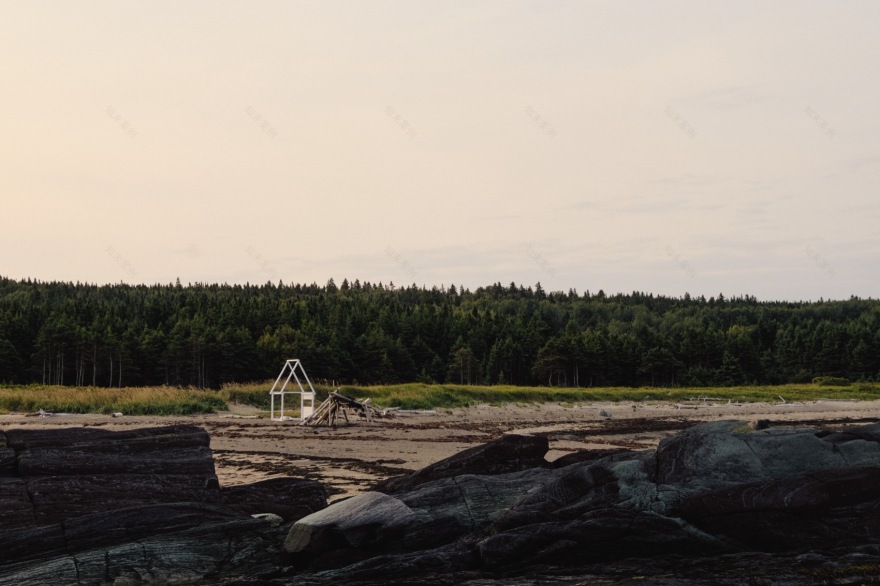
尽管常住人口仅约五十人,绿岛的生活状态随季节剧烈波动,与魁北克大陆保持着某种程度的距离——如同一个时间胶囊,日常需求和可获取资源都受到孤立条件的特殊塑造。冬季时,结冰的河面阻断了轮渡通行,曾经用于连接陆地的冰桥也因气候变化而变得不可依赖,如今,每年近五个月的时间,居民只能依靠直升机进行采购、探亲或参与岛外的社会生活。与先辈一样,绿岛社区仍需不断探索适应方式。▼草图,sketches© Pierre Thibault
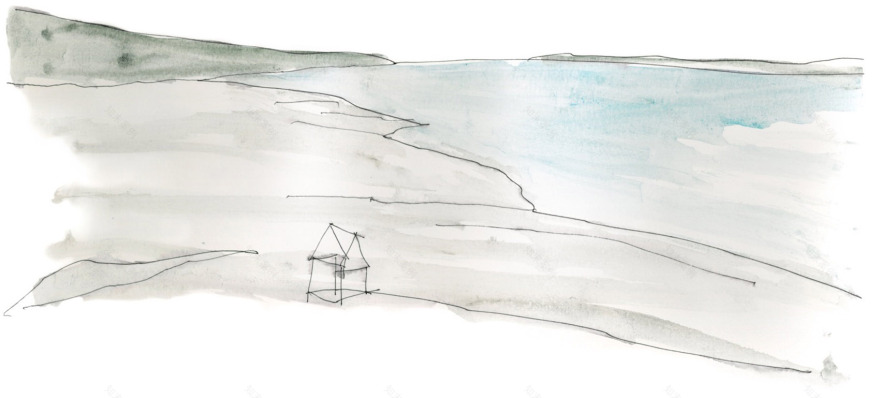

Home to only around fifty permanent residents, Île Verte experiences stark population fluctuations and exists somewhat apart from the rest of Quebec—like a time capsule where daily needs and available resources are uniquely shaped by isolation. In winter, the river’s ice makes ferry access impossible. While an ice bridge once connected the island to the mainland, climate change has rendered this option unreliable. Today, for nearly five months each year, residents must rely on helicopter transport to shop, visit family, or participate in social life beyond the island. As generations before them once did, Île Verte’s community must continue to find new ways to adapt.
▼冬季景观,winter view© Alex Lesage

▼海滩人视,perspective view from the beach© Alex Lesage

烟熏屋:十二座独特的建筑
The boucaneries: twelve singular buildings
在访问绿岛和与岛民“Verdoyants”交流的过程中,建筑师们重新发现了十二座令人着迷的结构。这些被称为“boucaneries”的本土建筑,灵感来源于传统烟熏屋,建于1920至1980年代,旨在抵御岛上恶劣的气候条件。作为定置网捕鱼的一部分,烟熏鱼业曾是绿岛经济和文化的重要组成部分。这些建筑以无窗立面和垂直延展的造型为特征,然而随着卫生法规的变化及渔业的衰落,它们逐渐被弃用。多年来,风雪雨水不断侵蚀着这些曾具有象征意义的建筑,它们也长期未能获得新的用途。▼历史照片,historical photos© Jean-Marie Cossette


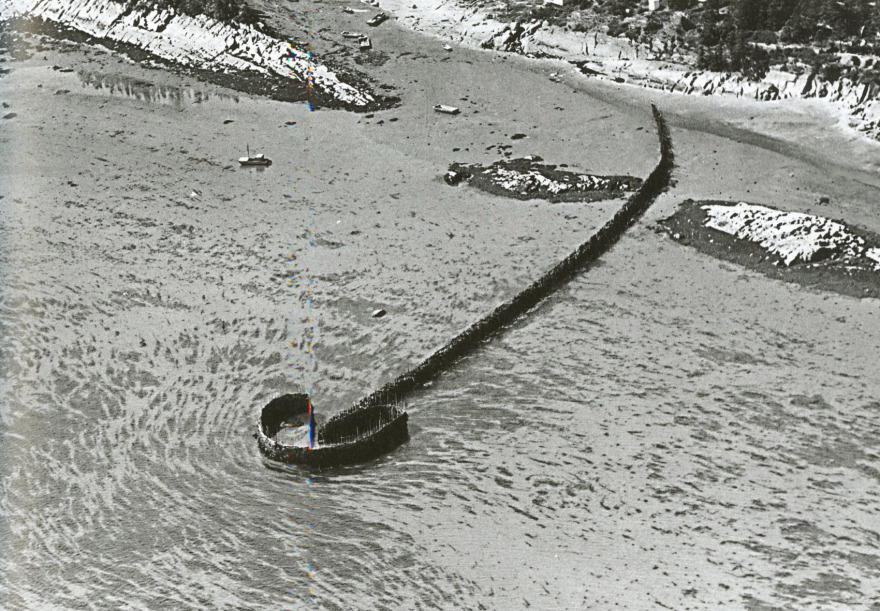
▼历史照片,historical photo© Mireille Caron

During visits to Île Verte and through conversations with the Verdoyants—as the island’s residents are known—twelve captivating structures were (re)discovered. Known as boucaneries, these vernacular buildings, inspired by traditional smokehouses, were constructed between the 1920s and 1980s to withstand the island’s particularly harsh climatic conditions. Once integral to the practice of weir fishing, fish smoking was both an economic driver and a cultural hallmark of life on Île Verte. Characterized by their windowless façades and vertically elongated forms, the boucaneries gradually fell into disuse. Changes in hygiene regulations, along with the decline of the local fishing industry, rendered them obsolete. Since then, wind, snow, and rain have continued to erode these symbolic structures, which, for decades, had remained without a renewed purpose.
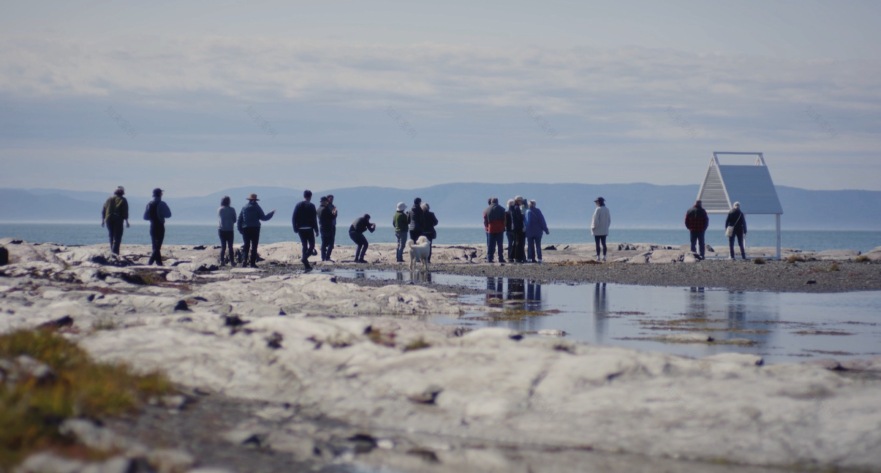
▼烟熏屋与装置,the Boucaneries and the device© Alex Lesage


▼烟熏屋外观,exterior view of the Boucaneries© Alex Lesage


▼其它烟熏屋,other Boucaneries © Alexis Boivin


濒危遗产,社区动员
A heritage at risk, a mobilized community
2023年,遗产保护建筑师Pascal Létourneau的调查报告指出,绿岛现存的十二座烟熏屋中,有四座具备卓越的遗产价值,六座也具有较高价值。其显著的垂直比例、屋脊开口、悬挂结构与湿度控制系统均被认为应予以保留。然而,其中半数已严重或极度破损,一座甚至在数年前倒塌。面对居民强烈的保存愿望,Atelier Pierre Thibault发起了一个协作设计项目,旨在为这些建筑探索新的用途。项目的核心问题是:这些沉默的历史见证者能否为未来生活提供启发?▼草图,sketch© Pierre Thibault

A 2023 report by architect Pascal Létourneau, a specialist in heritage conservation, revealed that among the twelve remaining smokehouses on Île Verte, four possess exceptional heritage value, while six are considered to have high heritage value. Key architectural features such as their pronounced verticality, roof ridge openings, drying pole systems, and humidity control mechanisms were identified as elements worth preserving. Unfortunately, half of these boucaneries are now in an advanced or critical state of deterioration—one even collapsed a few years ago. In response to the Verdoyants’ strong desire to preserve and revitalize this unique built heritage, the Atelier Pierre Thibault launched a participatory design project aimed at exploring new uses for these structures. At the heart of the initiative lies a central question: How can these silent witnesses of the past help shape the future?
▼海滩与装置,the seaside and the device© Alex Lesage
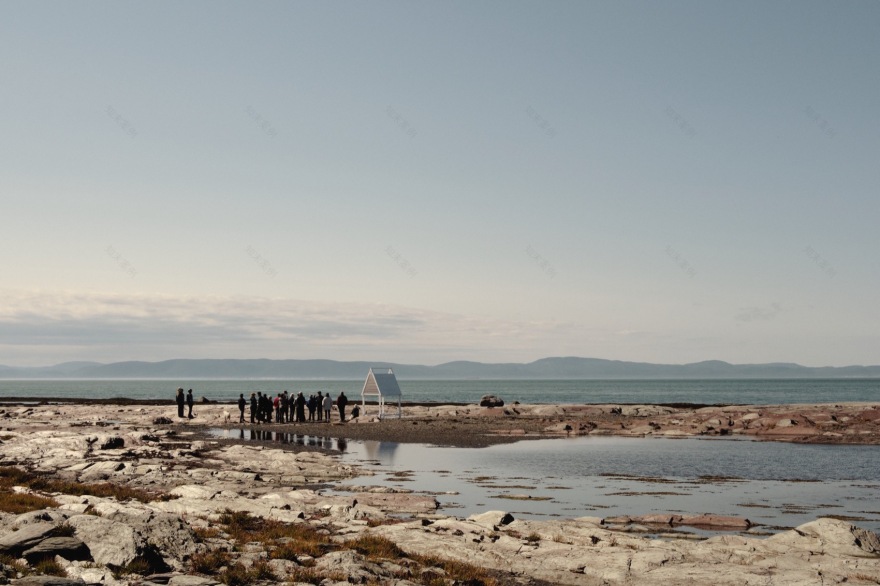
自主性:孤立环境下的关键议题,受气候变化加剧
Autonomy, a crucial issue in isolated areas, exacerbated by climate change
与绿岛居民的对话中,多个核心价值观逐渐清晰:团结协作、食品自给自足、以及对文化与艺术活动的热情。为评估岛屿的复原力,建筑师绘制了当前支持社区自主性的行动地图,包括:Jacques的鲱鱼与香鱼捕捞、Marie-Claire每周制作约二十个面包、Anne与Charles的二十只羊、Michelle的鸡舍、Geneviève的种子保存小组、Nolwen与Régis的自制餐点、Véronique与Colin的蜂蜜、薰衣草、猪、覆盆子甚至柠檬、Mijanou的蒜田,以及Gilbert的番茄温室。▼分析图,analysis diagram© Atelier Pierre Thibault

Through conversations with the residents of Île Verte, several core values and community priorities emerged in connection with the project—chief among them a strong sense of solidarity, a commitment to food self-sufficiency, and a shared enthusiasm for cultural and artistic activities. To better understand and assess the island’s resilience, the architects mapped existing initiatives that support community autonomy. These included: Jacques’ herring and smelt fishing; Marie-Claire’s weekly production of around twenty loaves; Anne and Charles’ flock of twenty lambs; Michelle’s chicken coop; Geneviève’s seed-saving collective; Nolwen and Régis’ homemade dishes and pastries; Véronique and Colin’s honey, lavender, pigs, raspberries, and even lemons; Mijanou’s garlic crops; and Gilbert’s tomato greenhouse.
▼项目外观,exterior view of the device© Alex Lesage

▼顶视图,top view© Alex Lesage

建筑装置:揭示人与场地、空间与用途的新关系
Architectural installations to reveal new relationships between landscape, volume, uses, and people
为帮助居民更直观地构想新用途并参与讨论,建筑师于2024年9月回到绿岛,搭建了一系列临时装置,重新诠释烟熏屋的建筑特征,并通过共创工作坊激发社区参与。这些装置借鉴原有建筑的朴素精神,采用当代木构技术建造,形成简洁而优雅的开放结构,与岛屿多变的自然环境和谐共生。它们揭示了建筑与自然、与社区之间的潜在新关系。
To help residents visualize potential new uses and actively engage in the ideation process, the architects returned to Île Verte in September 2024. There, they created a series of ephemeral installations that reinterpreted the unique features of the boucaneries and facilitated community dialogue through participatory discussion sessions. Echoing the spirit of the original vernacular structures, these new installations embraced the simplicity and efficiency of contemporary timber construction. The result: elegant, open frameworks that stood as inspiring visions of the future, thoughtfully integrated into the island’s varied landscapes. These temporary structures revealed new relationships between landscape, built form, and community.
▼装置材料运输过程,transportation process of device materials© Alex Lesage

▼搭建过程,construction process© Alex Lesage
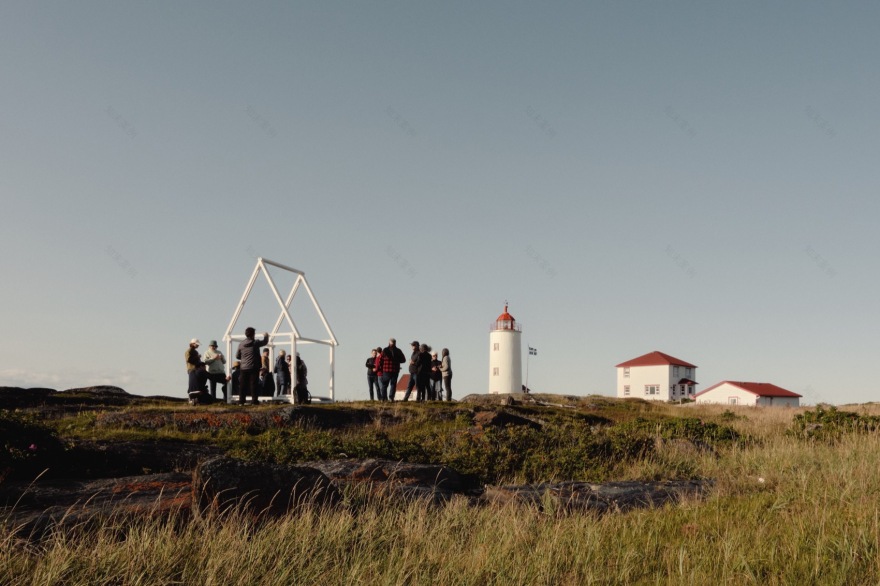
▼社区参与,participation of community © Alex Lesage


这些高度抽象化的装置成为概念画布,引导居民以积极且面向未来的视角重新连接自身文化遗产。轻盈可移动的结构如同游牧的象征性形体,从海岸到田野自由迁移。虽然原计划在建筑师离开后拆除,其中一些装置被社区自发保留,成为烟熏屋未来可能性的重要提示符,也维系着岛屿的集体记忆与共享价值观。
Harnessing the power of abstraction in architectural expression, the reinterpretations served as conceptual canvases—inviting the Verdoyants to reconnect with their cultural and architectural heritage through a hopeful, forward-looking lens. Lightweight and easily transportable, the installations were moved across the island—from the shoreline to fields and meadows—like evocative, nomadic figures. Though originally intended to be dismantled after the architects’ departure, some of the structures were embraced by the community and left standing, adopted as tangible markers of the boucaneries’ untapped potential—keeping the island’s collective memory and core values vibrantly alive.
▼鸟瞰,aerial view© Alex Lesage

▼高度抽象化的装置成为概念画布,highly abstract installations become conceptual canvases© Alex Lesage


▼细部,details© Alex Lesage


构想实验室:为烟熏屋寻找新用途
An island ideas laboratory to identify new uses
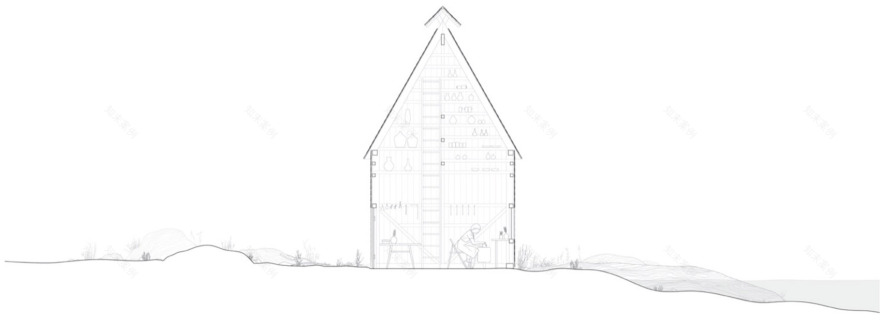
此次田野实践成果丰厚:多个可行的新用途被提出,以确保烟熏屋的长期保存。例如,将建筑类型转化为全年运行的温室——用聚碳酸酯替换原有木瓦,并利用屋脊开口调节湿度;另一方案是改造为艺术制作空间,增设窗户并用原有挂杆晾晒陶器、画布或摄影作品;第三个建议是在确保消防安全的前提下恢复传统烟熏鱼操作,既保留文化价值又激活原用途。2024年9月11日参观装置后,居民们纷纷设想起这些建筑的个人化新用途。Geneviève计划将烟熏屋改为鸡舍,养她的十只母鸡;Louise提议作为蒜头的晾晒棚;Lyne则希望用来存储农具,为集体想象赋予更多实际功能。
The ephemeral work carried out on Île Verte proved remarkably fruitful: following the installations, several promising new uses were identified to help ensure the long - term preservation of the boucaneries. One idea involved transforming the typology into greenhouses to promote year - round food self - sufficiency—by replacing the cedar shingle siding with polycarbonate panels and using the existing roof ridge openings to regulate humidity. Another concept explored the adaptation of a smokehouse into an artistic production space, with the addition of a few windows and the reuse of drying poles to support pottery, canvases, or photographic prints during their drying process. A third proposal involved bringing one of the structures up to current fire safety standards, enabling the revival of traditional fish smoking while safeguarding its cultural and heritage value. After visiting the installations on September 11, 2024, residents began imagining new, personal uses for these iconic buildings—rekindling their attachment to this unique local heritage. Geneviève envisioned transforming her smokehouse into a chicken coop for her ten hens. Louise proposed repurposing one as a drying shed for Mijanou’s garlic harvests. Lyne suggested using a structure for storage—adding a practical dimension to this collective reimagining.
▼白色纤细的临时性装置,slender white temporary device©Alex Lesage / Alexis Boivin
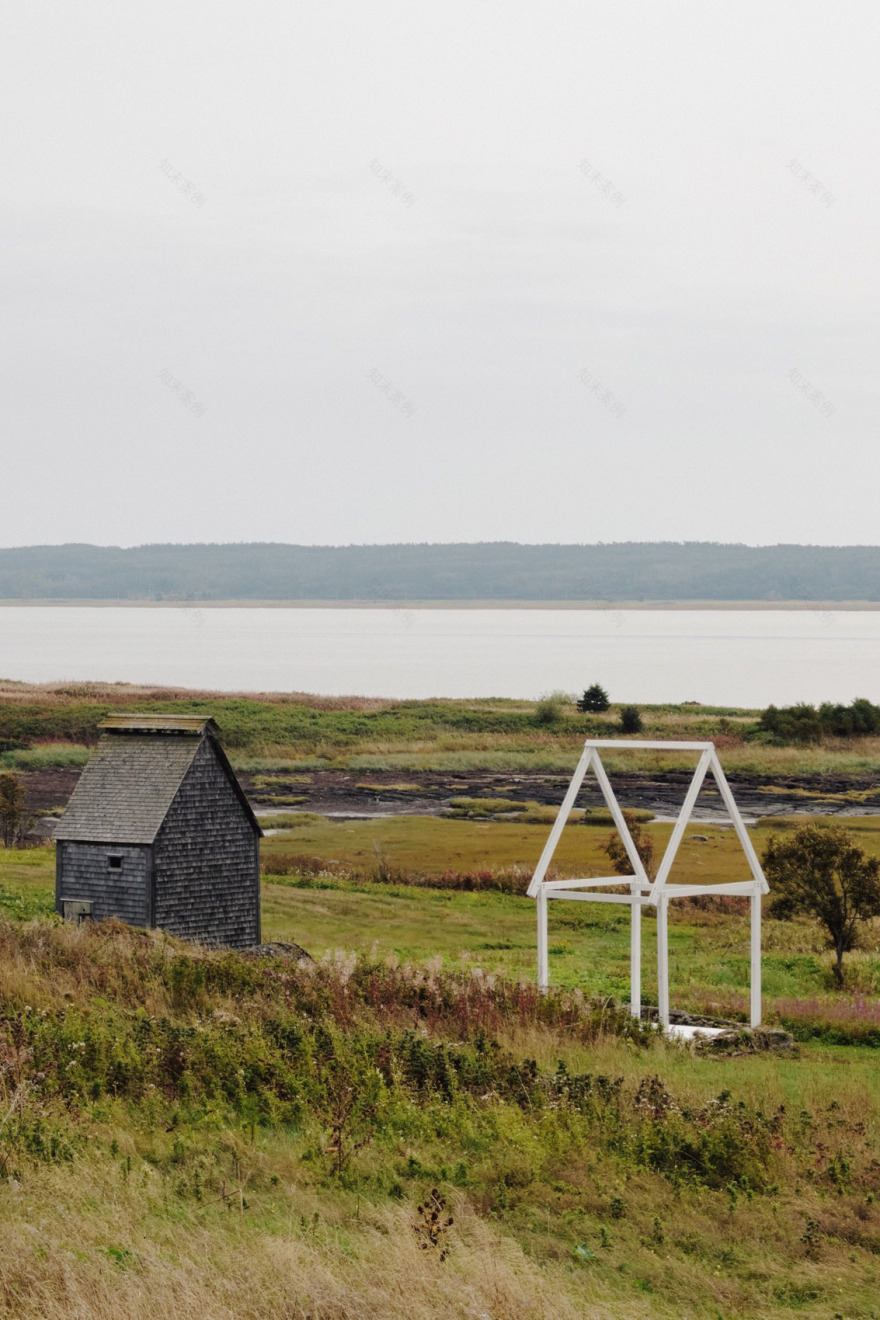

▼聚碳酸酯板为装置赋予新用途,polycarbonate plates give new uses to the device© Alex Lesage /Atelier Pierre Thibault
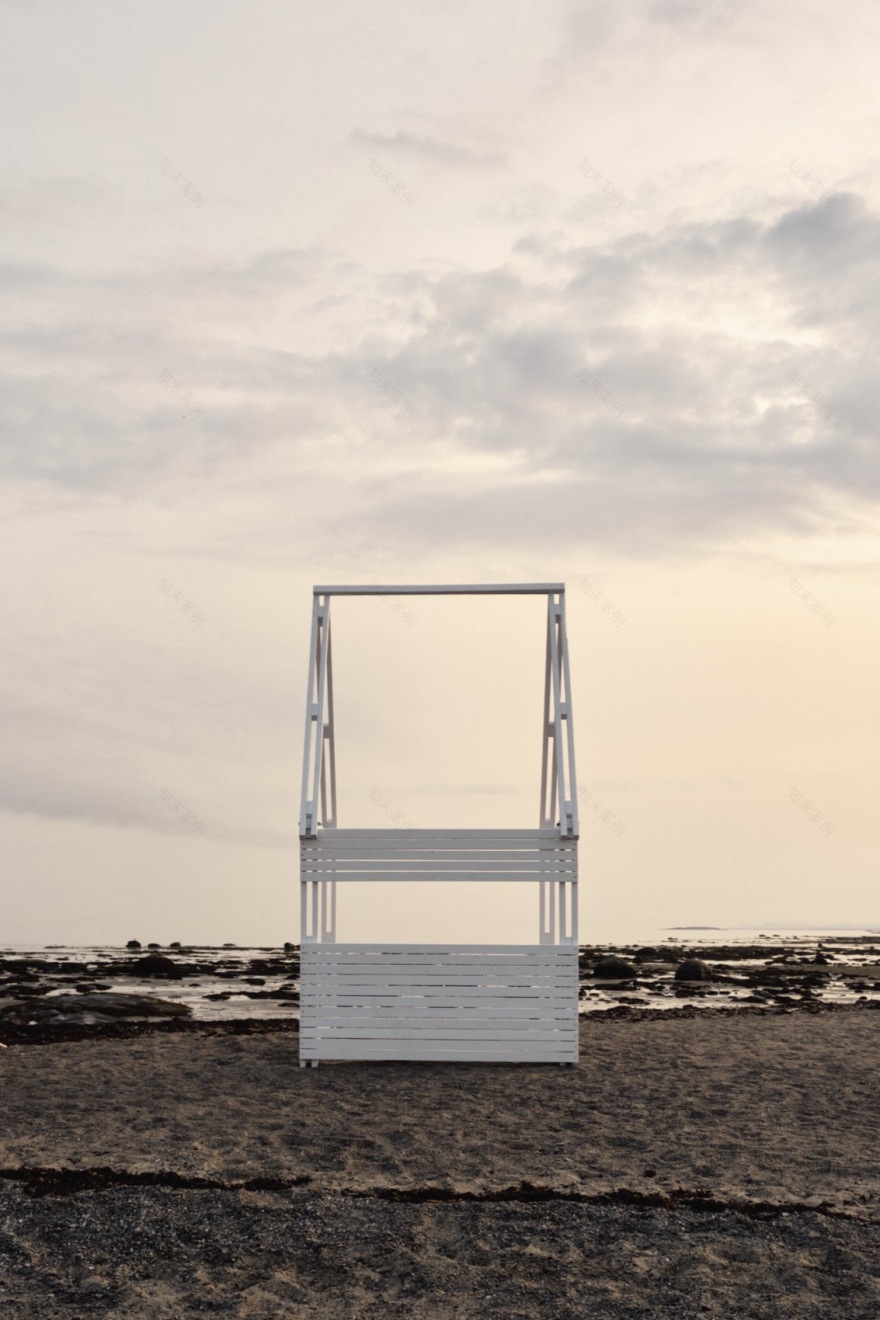

留下持久印记的体验
An experience leaving lasting traces
尽管这些装置是短暂的,它们在绿岛留下了长久的印记。一些结构被社区保留,另一些在拆除后仍促发了有关未来的讨论。为了延续公众关注,Notre-Dame-des-Sept-Douleurs市政府近期通过抽签将两座装置免费赠予居民,作为激发社区持续参与的创意之举。建筑师团队将于2025年夏天重返绿岛,与居民共同推进更多与食品自主相关的想法。
Though ephemeral by design, the project on Île Verte has left lasting and meaningful traces. Some of the installations remain standing, having been spontaneously adopted by the community, while others were dismantled—prompting reflection on their potential future. In a creative gesture to sustain public engagement, the municipality of Notre-Dame-des-Sept-Douleurs recently raffled off two of the structures to residents, free of charge. For the mayor, this initiative offers an original way to extend the dialogue around built heritage.
▼绿岛环境,environment of the Île Verte© Alexis Boivin
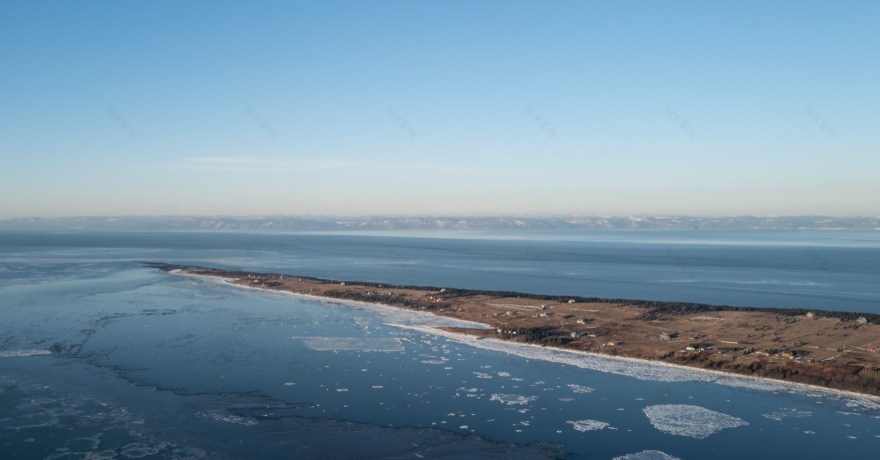
▼远观,viewing the project at distance© Alexis Boivin


▼项目外观,exterior view of the device© Alexis Boivin

更广义地说,该项目激发了对濒危本土建筑遗产的再认识,也促进了关于烟熏屋知识的代际传承。对Atelier Pierre Thibault而言,这次协作经验不仅增强了团队凝聚力,也深化了他们对“扎根现实、来源于日常”的建筑理念的实践信念。更重要的是,该项目再次确认了建筑在社会与文化调解中的重要角色——建筑不仅是空间建造的技术,更能成为记忆、相遇与想象未来的媒介。
Atelier Pierre Thibault will return to the island this summer to continue this conversation, following the many concrete ideas proposed by residents—particularly those centered on food autonomy, a pressing issue in isolated environments. More broadly, the project has sparked renewed appreciation for a threatened vernacular heritage, while encouraging the intergenerational transmission of knowledge linked to the boucaneries. For the Atelier Pierre Thibault team, this collective experience reinforced their cohesion, nurtured their initiative, and deepened their commitment to an architecture grounded in lived experience and local realities. Above all, the project affirmed architecture’s role as a tool for social and cultural mediation—capable of opening spaces for encounter, remembrance, and imagination for the future.
▼建设过程,construction details© Atelier Pierre Thibault


▼人与装置的互动,interaction between people and the device© Atelier Pierre Thibault


从圣劳伦斯河到威尼斯双年展:赞颂集体智慧
From the Saint Lawrence River to La Biennale di Venezia: celebrating collective intelligence
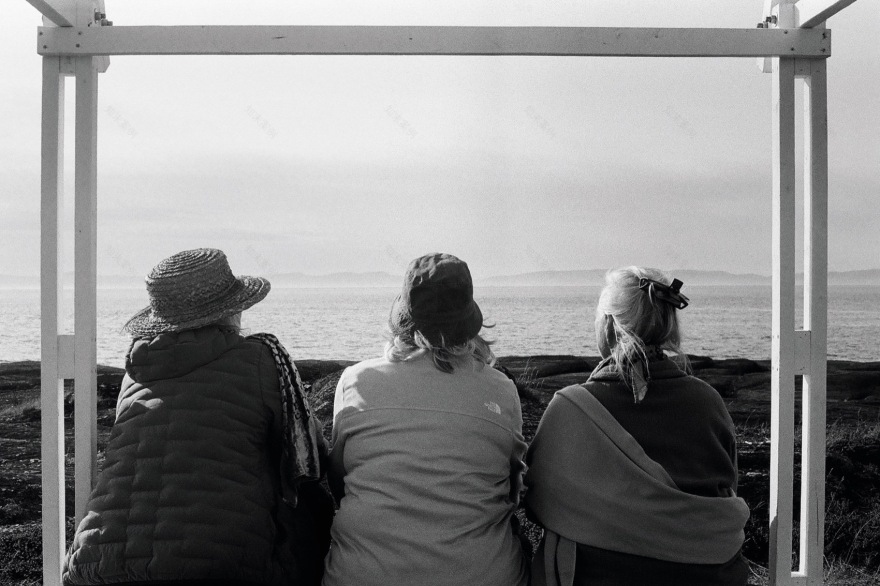
以临时性建筑闻名的Atelier Pierre Thibault,再次展现了其动员多方力量参与创意项目的能力,并以敏感、富有远见的方式重新诠释魁北克的地域建筑。此次装置的建造及与社区的深度互动过程被系统记录为影像与照片,不仅呈现了实践过程,也保留了项目所激发的共创精神。在2025年5月10日至11月23日举办的第十九届威尼斯建筑双年展上,本项目将作为代表性成果参展,由Carlo Ratti策展,主题为“Intelligens”,凸显了这一模式的典范价值与国际意义。它既是对绿岛集体智慧的庆典,也是在全球语境下,对地方建筑未来的一次深刻反思。▼黑白记录照片,black and white photos© Julia Thibault

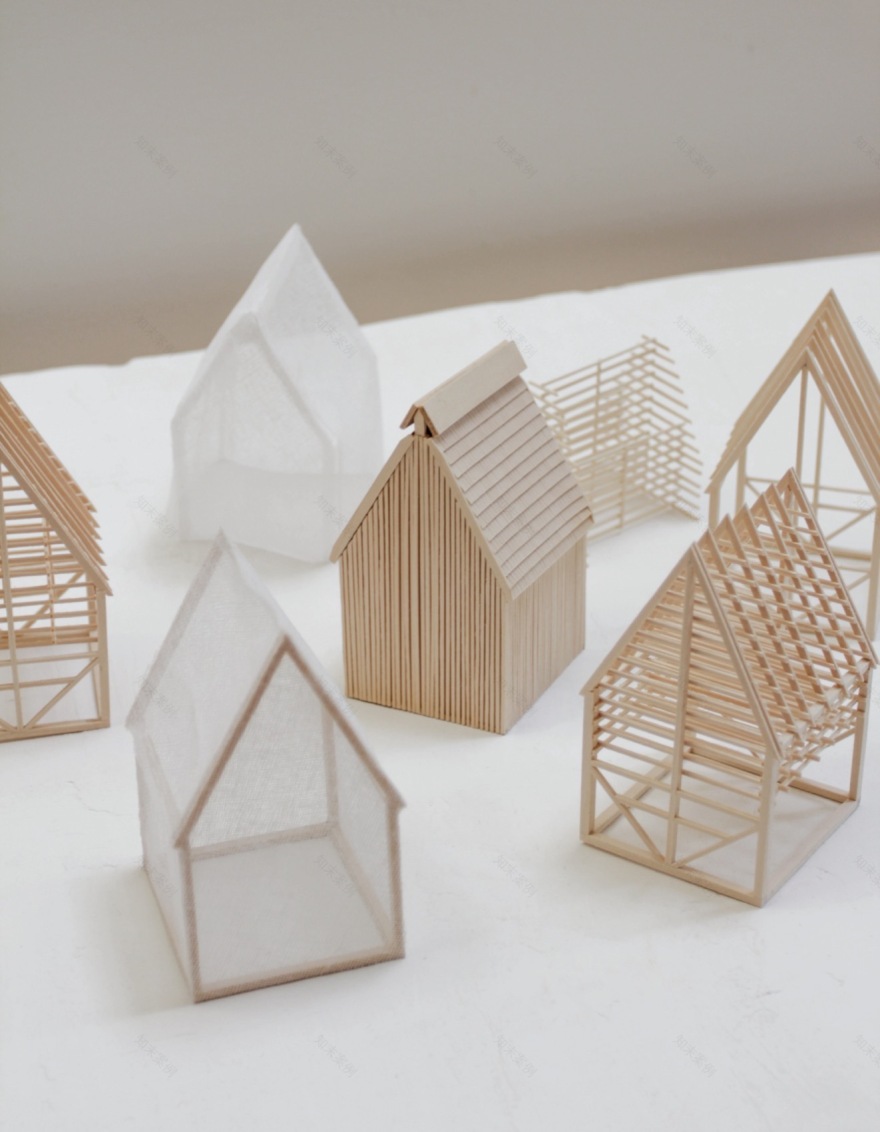
▼模型,models© Pierre-Ulric Gagné
▼剖面场景1,section scenario 1© Atelier Pierre Thibault

▼剖面场景2,section scenario 2© Atelier Pierre Thibault

▼剖面场景3,section scenario 3© Atelier Pierre Thibault
Project Title:Boucaneries
Year of completion:2024
Participants: Atelier Pierre Thibault (Québec City, Canada
·Pierre Thibault, Montréal, Canada, 1959. Lives and works in Québec City, Canada.
·Alexis Boivin, Hai Hung, Vietnam, 1994. Lives and works in Québec City, Canada.
·Francis Gaignard, Laval, Canada, 1993. Lives and works in Québec City, Canada.
·Étienne Bourgeois, Québec City, Canada, 1999. Lives and works in Québec City, Canada.
Team Members: Pierre-Ulric Gagné (Designer and Photographer), Éloïse Fortin (Designer), Sandrine Gaulin (Writer), Louise Alain (Advisor), Geneviève Boudreault (Advisor), Gilbert Delage (Advisor), Alex Lesage (Photographer)
Construction:Félix Gélinas, Nicolas Girard
Details of the architectural installations 1 installation – 10’ x 10’ 5” x 19’ 3 installations – 6’ x 6’ x 11’
Photo credits:Atelier Pierre Thibault, Alexis Boivin, Alex Lesage, Julia Thibault, Pierre-Ulric Gagné


南京喵熊网络科技有限公司 苏ICP备18050492号-4知末 © 2018—2020 . All photos and trademark graphics are copyrighted by their owners.增值电信业务经营许可证(ICP)苏B2-20201444 苏公网安备 32011302321234号
苏公网安备 32011302321234号客服
消息
收藏
下载
最近