

创作上传
VIP
收藏下载
登录 | 注册有礼
查看完整案例

收藏

下载

分享
The Nelson-Atkins Museum of Art Expansion by Steven Holl Architects

The Nelson-Atkins Museum of Art Expansion | © Iwan Baan
The expansion of The Nelson-Atkins Museum of Art, completed in 2007, seamlessly merges architecture, landscape, and art into a cohesive, experiential whole. Designed by Steven Holl Architects, the Bloch Building redefines how visitors engage with art, architecture, and the surrounding environment. By establishing a delicate yet striking relationship between the 1933 classical building and the modern addition, the project sets a new standard in architectural dialogue, resonating with timeless innovation. This expansion is a physical addition and a reimagining of how space, light, and movement shape the visitor’s journey.
Nelson-Atkins Museum of Art Expansion Technical Information
Architects: Steven Holl Architects
Location: Kansas City, Missouri, United States
Topics: Museums
Area: 15,300 m2 (165,000 Sq. Ft.)
Original Building: 1933
Project Year: 1999 – 2007
Photographs: Iwan Baan, © Steven Holl Architects
The expansion of The Nelson-Atkins Museum of Art fuses architecture with landscape to create an experiential architecture that unfolds for visitors as it is perceived through each individual’s movement through space and time. – Steven Holl Architects
Nelson-Atkins Museum of Art Expansion Photographs

Night View | © Iwan Baan

Facade | © Iwan Baan

Street View | © Iwan Baan
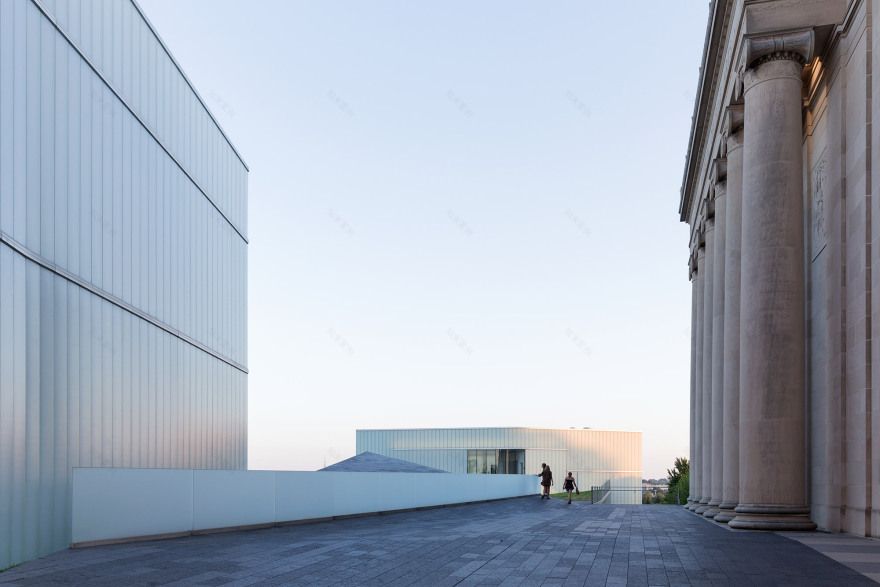
Museum Relation | © Iwan Baan

Ramps | © Iwan Baan

Interior Space | © Iwan Baan

Corridors | © Iwan Baan
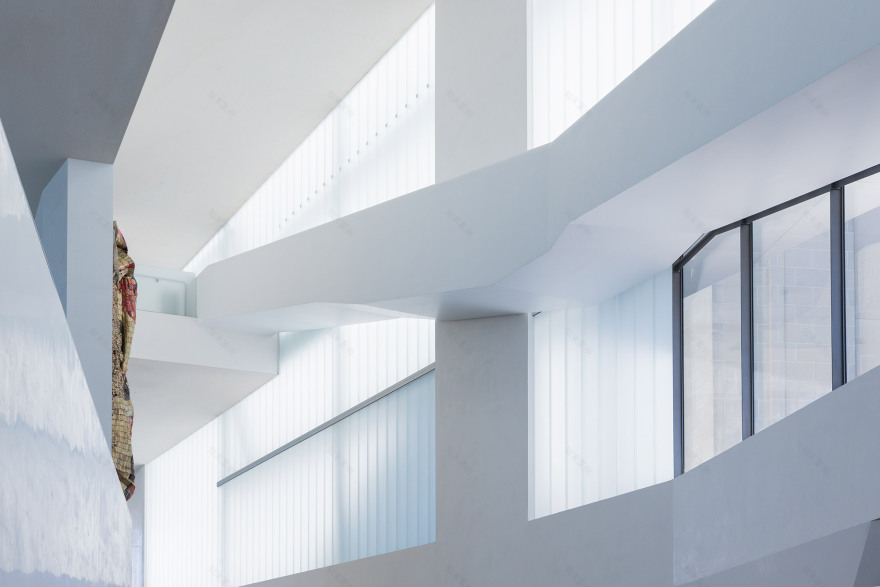
Interior Light | © Iwan Baan

Exhibition Spaces | © Iwan Baan

Exhibition Spaces | © Iwan Baan

Exhibition Spaces | © Iwan Baan
The Nelson-Atkins Museum: The Fusion of Architecture and Landscape
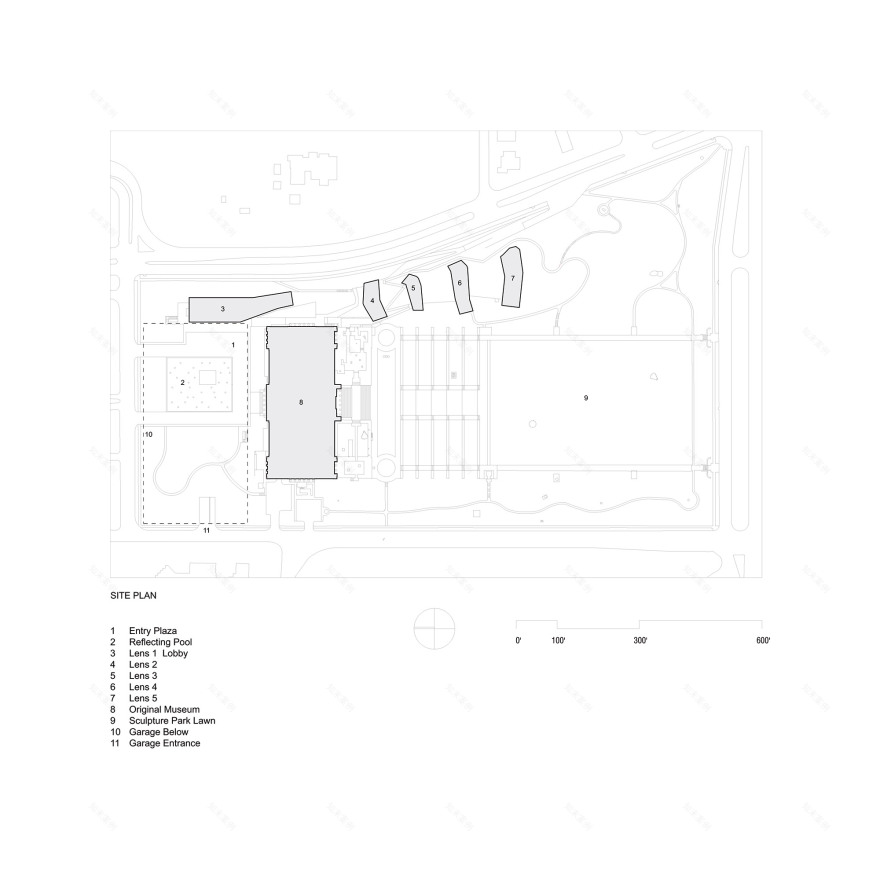
The Bloch Building stretches along the eastern edge of the Nelson-Atkins campus, seamlessly integrating with the Sculpture Park. Its defining feature is a series of five glass “lenses” that engage the landscape while creating new spatial relationships. These translucent volumes act as visual and functional mediators, blurring the boundaries between interior and exterior spaces.
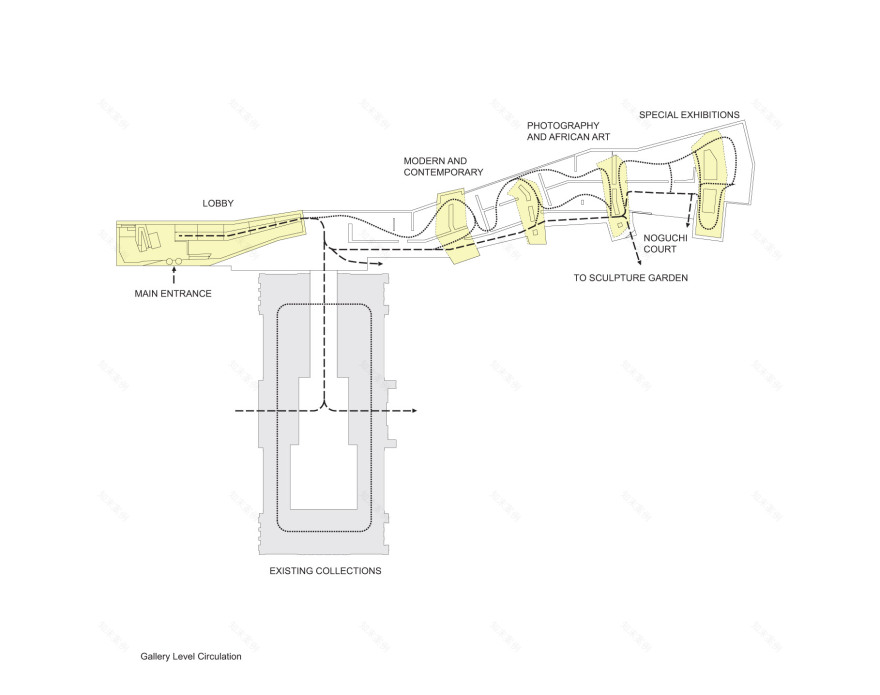
Visitors experience the architecture as a dynamic interplay of forms, light, and perspectives. Movement through the site is intentionally fluid, with pathways weaving through the lenses above ground and open galleries below. The addition transforms the entire museum site into a holistic precinct, where the architecture invites exploration and discovery at every turn. This interplay of space and movement allows visitors to perceive the building and its surroundings as a unified experience.
Complementary Contrast with the Original Building
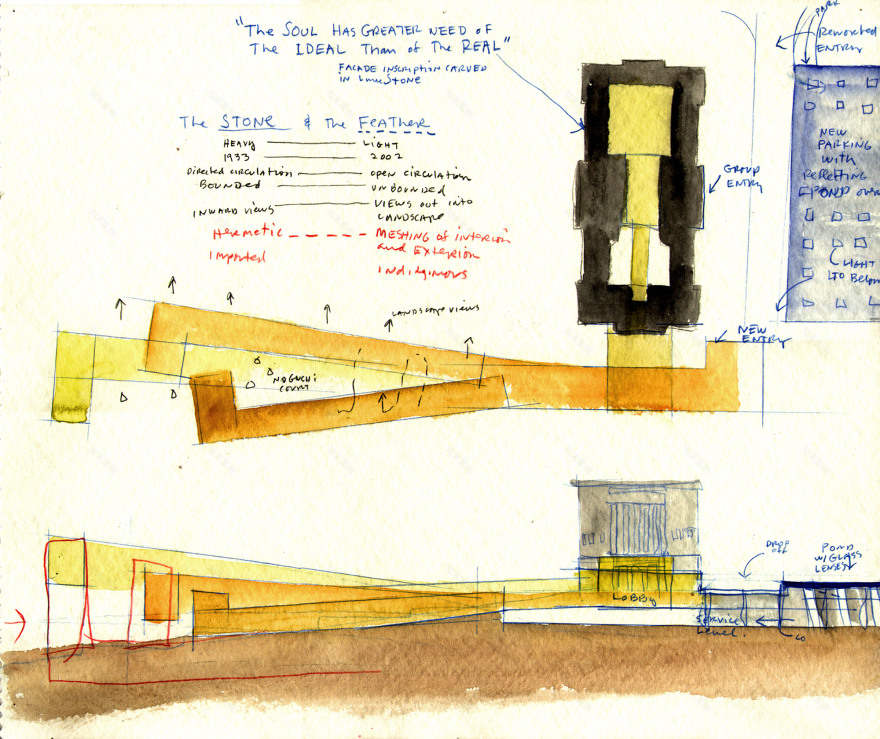
The original Nelson-Atkins Museum building, often referred to as a “Temple to Art,” is characterized by its classical, opaque, and inward-facing design. In contrast, the Bloch Building embodies lightness, transparency, and openness. Rather than mimicking or overshadowing the historic structure, the addition achieves a delicate balance, complementing the existing building while asserting its distinct identity.
Key contrasts between the two structures underscore this harmony. The original building’s solid massing and directed circulation give way to the Bloch Building’s light-filled, unbounded flow. The transparent lenses invite outward views, connecting visitors to the landscape. This complementary contrast enriches both elements, with the original building providing historical gravitas and the addition offering a modern reinterpretation of spatial engagement.
Experiential Design through Light and Materiality

© Iwan Baan

© Iwan Baan
Central to the Bloch Building’s architectural language is its relationship with light. The glass lenses serve as dynamic filters, gathering, diffusing, and refracting light to create varied atmospheres. During the day, natural light penetrates the galleries, bathing art in a soft, shifting glow. The lenses transform into luminous beacons at night, animating the Sculpture Park and inviting visitors to evening events.
The experience of moving through the building is equally impactful. A “meandering path” winds between the lenses above ground, mirrored by the open flow of galleries below. This spatial fluidity fosters a sense of discovery as views shift between levels and from interior spaces to the surrounding landscape. The materials themselves—layers of translucent glass—enhance this sensory experience, giving the architecture an ethereal quality that feels both substantial and ephemeral.
Sustainability and Structural Innovation
The Bloch Building integrates sustainability at its core, setting a precedent for environmentally conscious museum design. The green roofs over the galleries are a standout feature, blending the Sculpture Park with the architecture while providing insulation and stormwater management. These roofs create sculpture courts between the lenses, extending the landscape and enhancing the site’s ecological performance.
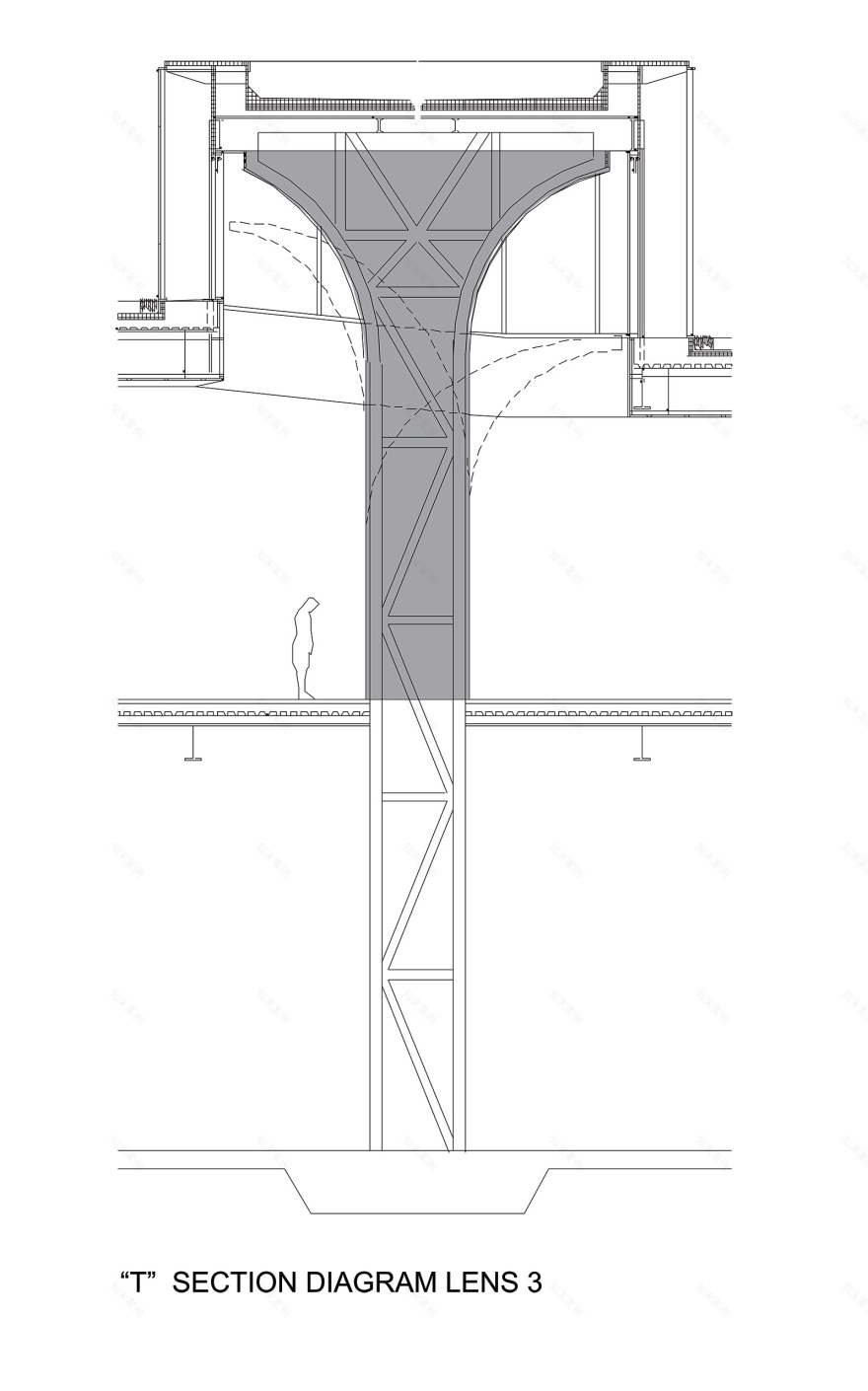
Innovative structural systems further elevate the building’s design. The “Breathing T’s,” a central structural concept, transport light and air into the galleries below. These curved forms merge functionality with aesthetics, embodying the building’s ethos of integrating technical solutions with architectural beauty. Such innovations highlight the project’s commitment to sustainability without compromising its visual and experiential impact.
The Bloch Building expansion of The Nelson-Atkins Museum of Art redefines the relationship between architecture, landscape, and art. By embracing transparency, movement, and sustainability, the design creates a living dialogue between old and new, where each element enhances the other’s presence. It challenges architects to rethink the possibilities of experiential design and the ways architecture can shape human interaction with art and the environment.
Nelson-Atkins Museum of Art Expansion Plans
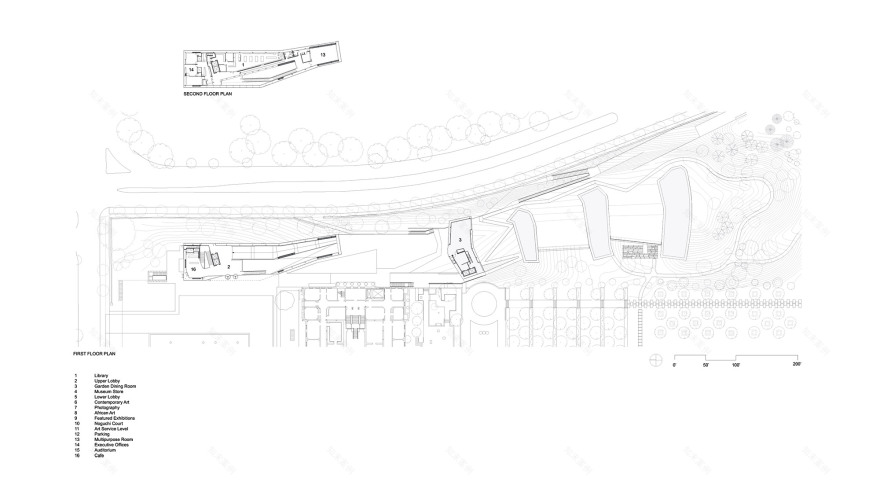
First Floor | © Steven Holl Architects

Ground Floor | © Steven Holl Architects

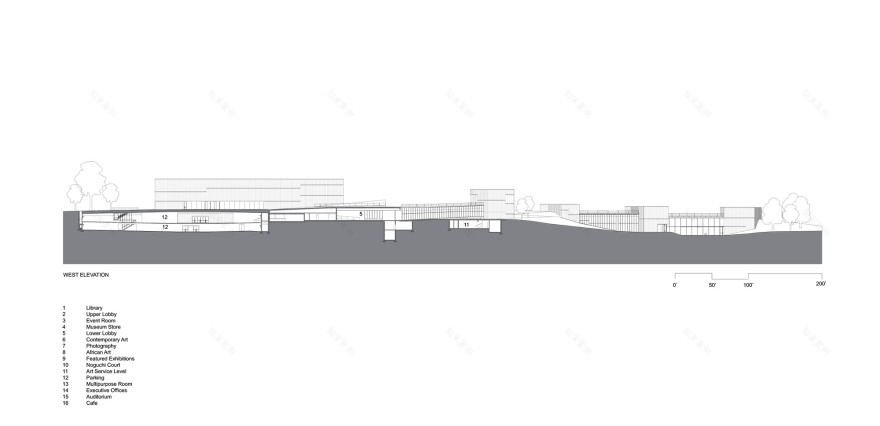
Longitudinal Section | © Steven Holl Architects

Cross Section by Main Lobby & Garage | © Steven Holl Architects

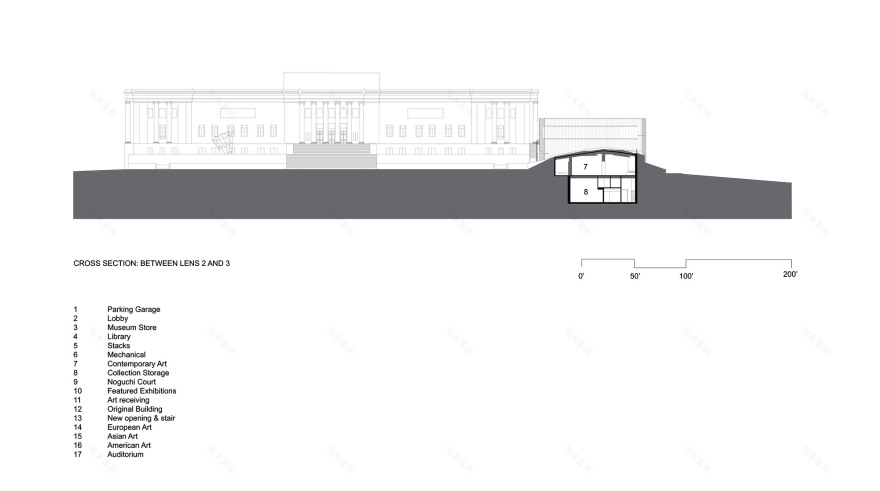
Cross Section Conexion with Original Building | © Steven Holl Architects
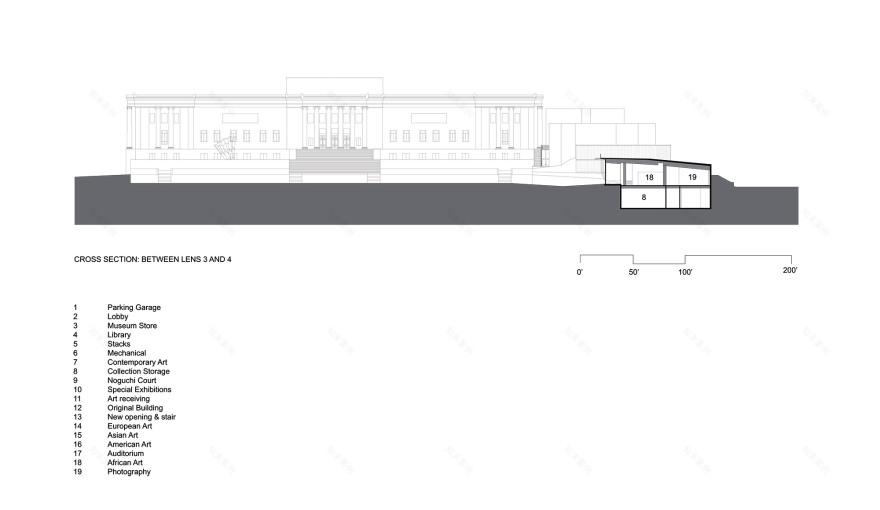
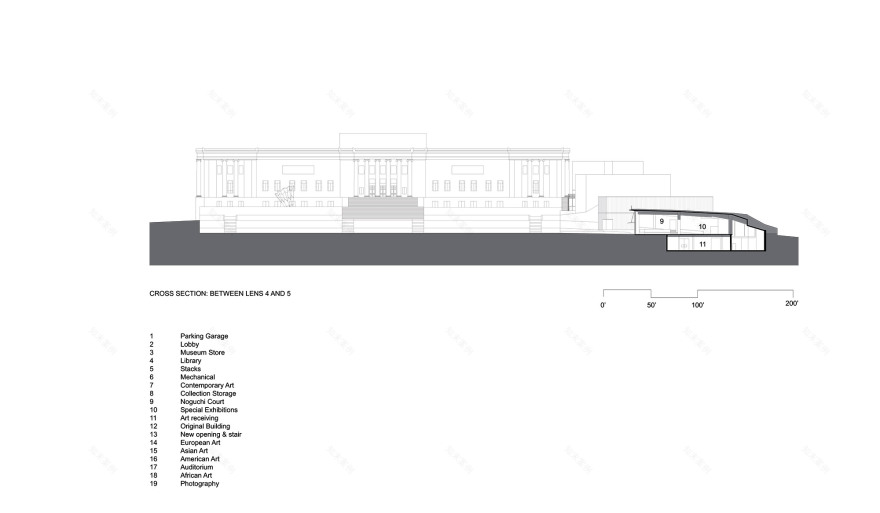
Cross Section | © Steven Holl Architects
Nelson-Atkins Museum of Art Expansion Image Gallery











About Steven Holl Architects
Steven Holl is an acclaimed American architect known for his innovative approach to integrating architecture, landscape, and light. Born in 1947 in Bremerton, Washington, Holl founded Steven Holl Architects in 1976 and has since completed numerous iconic projects worldwide. Renowned for his conceptual and experiential designs, Holl often employs a poetic use of light and materiality, creating spaces that engage the senses and respond to their environmental and cultural contexts. Some of his most celebrated works include the Bloch Building at the Nelson-Atkins Museum of Art, the Simmons Hall at MIT, and the Linked Hybrid in Beijing.
Notes & Additional Credits
Client: Nelson-Atkins Museum of Art
Architect: Steven Holl Architects
Local Architect: BNIM Architects
Design Architect: Steven Holl, Chris McVoy
Partner in Charge: Chris McVoy
Project Architects: Martin Cox, Richard Tobias
Project Team: Masao Akiyoshi, Gabriela Barman-Kraemer, Matthias Blass, Molly Blieden, Elissavet Chryssochoides, Robert Edmonds, Simone Giostra, Annette Goderbauer, Mimi Hoang, Makram El-Kadi, Edward Lalonde, Li Hu, Justin Korhammer, Linda Lee, Fabian Llonch, Stephen O’Dell, Susi Sanchez, Irene Vogt, Urs Vogt, Christian Wassmann
Structural Engineer: Guy Nordenson and Associates
Associate Structural Engineer: Structural Engineering Associates
Mechanical Engineer: W.L. Cassell & Associates
Glass Consultant: R.A. Heintges & Associates
Lighting Consultant: Renfro Design Group
Landscape Architect: Gould Evans Goodman Associates
Artist: Walter De Maria
南京喵熊网络科技有限公司 苏ICP备18050492号-4知末 © 2018—2020 . All photos and trademark graphics are copyrighted by their owners.增值电信业务经营许可证(ICP)苏B2-20201444 苏公网安备 32011302321234号
苏公网安备 32011302321234号客服
消息
收藏
下载
最近