

创作上传
VIP
收藏下载
登录 | 注册有礼
查看完整案例

收藏

下载

分享
城市中日益高涨的购房成本促使租赁住房与合作公寓等居住模式重新受到关注。这两种模式皆因城市住房长期短缺及高昂房价而产生。合作公寓具有许多优势,例如可选择购买股份、强烈的社区归属感、参与管理与决策的机会以及更高的居住稳定性;而租赁住房则以其灵活性与简便性为特点。尽管长期以来人们普遍认为租赁公寓质量较低、易导致贫民化,但这些偏见正逐渐被打破。鉴于城市住房危机持续存在,预计这两种模式在解决当下住房市场难题中将发挥愈发重要的作用。
The growing unaffordability of home ownership in cities has led to the resurgence of models such as rental housing and cooperative apartments. Both models emerged as a response to the long-term unavailability of housing and the high property prices in urban areas. While cooperative apartments offer benefits such as the option to purchase a share, a strong sense of community, involvement in management and decision-making and greater stability, rental housing is characterized by flexibility and simplicity. Despite the common prejudice that rental apartments are of lower quality or lead to ghettoization, these stereotypes are gradually being dispelled. Given the ongoing housing crisis in cities, it is expected that both models will play an increasingly important role in addressing the current housing market challenges.
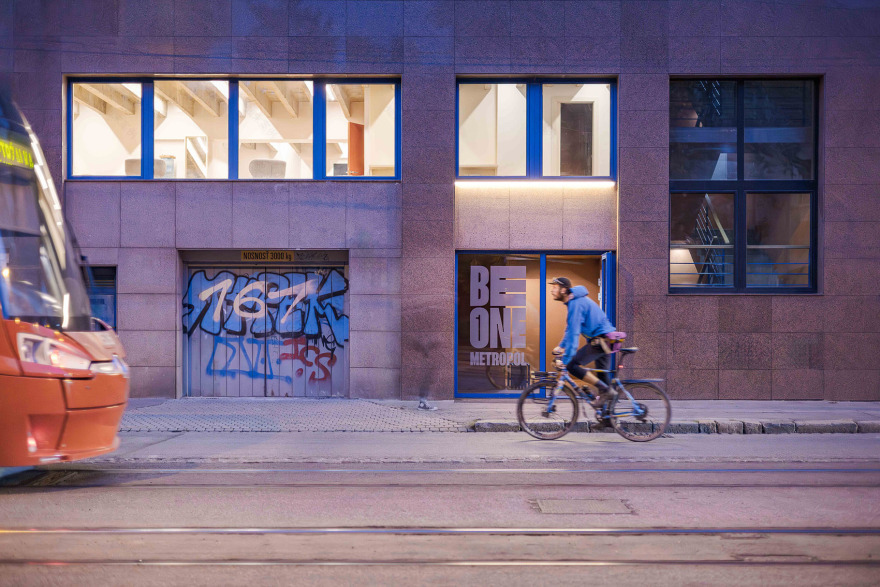
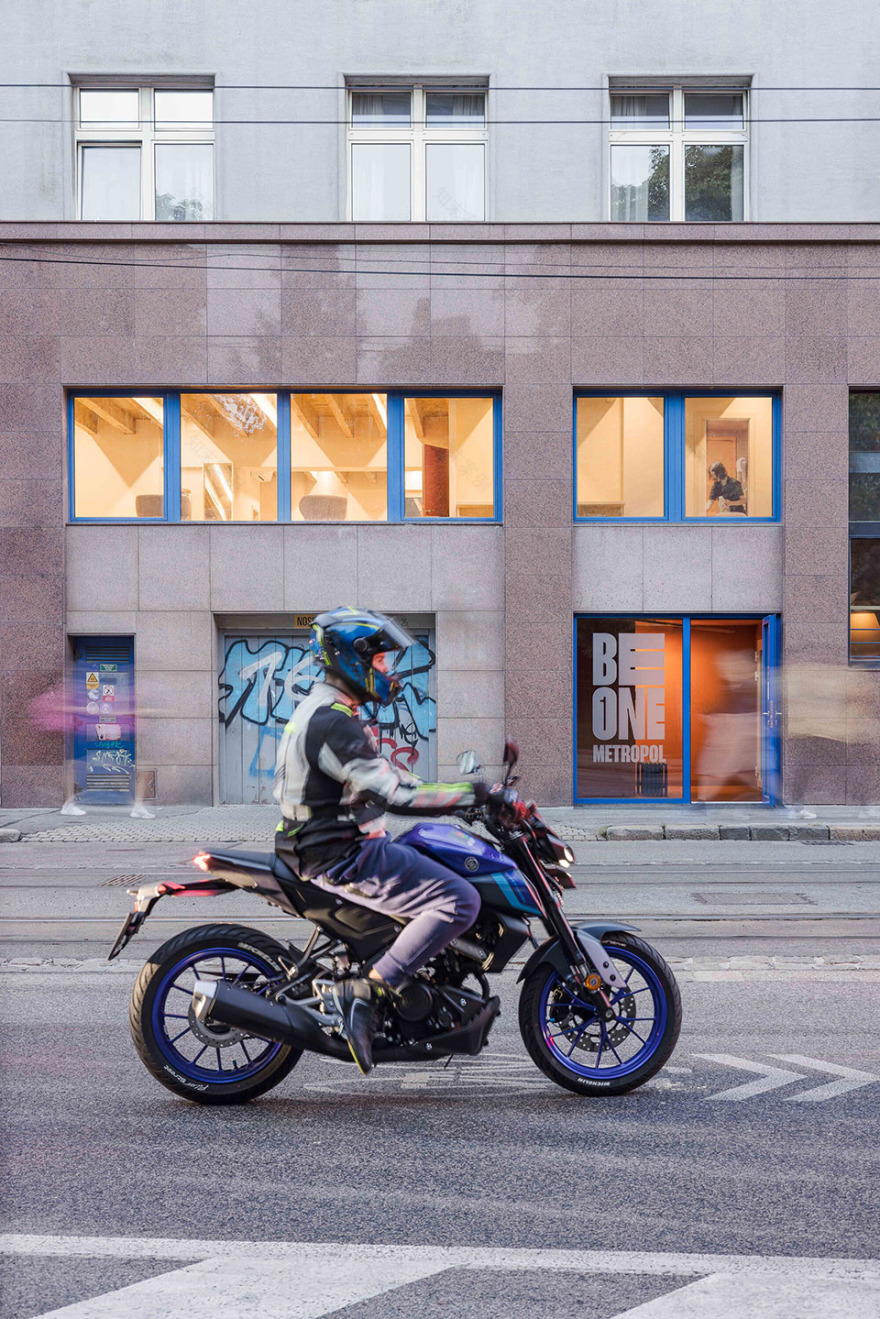
▼建筑外观,exterior of the building ©Lenka Némethová

▼建筑外观,exterior of the building ©Lenka Némethová
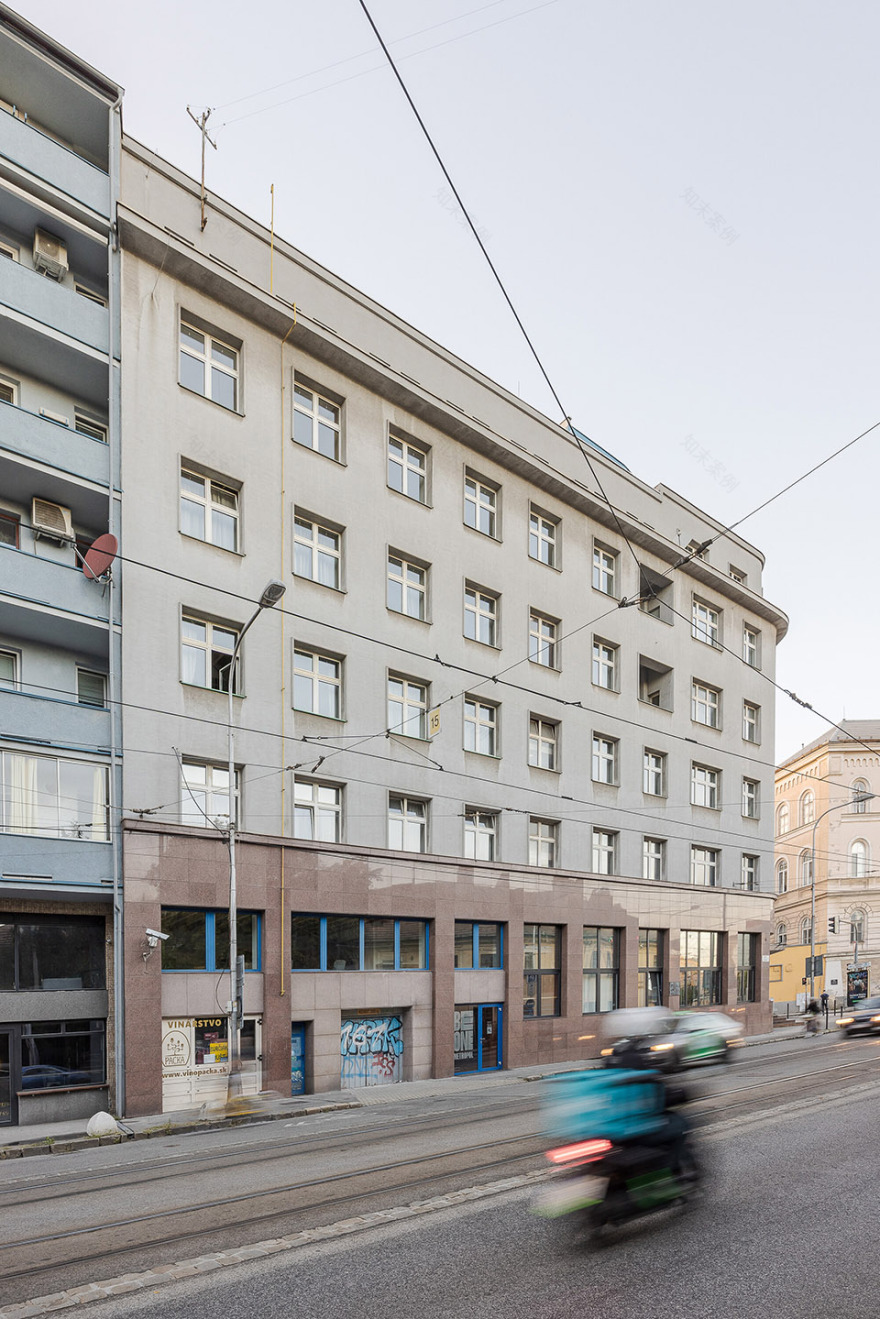
由建筑师Juraj Tvarožka于20世纪上半叶设计的现代主义建筑Metropol,曾是布拉迪斯拉发的重要文化与社交场所。因其靠近市中心的位置,Metropol至今仍是城市的重要地标,与Medická Záhrada和Americké Námestie紧密相连。Metropol拥有丰富的社交历史,最著名的是其地下影院的功能。此次对该建筑的改造,向其原有的社会角色致敬,使其在当代语境中焕发新生。它被改造为一座共居空间,保留了场地原有的氛围,并通过包容多元社会群体的住房形式延续其社交性。现代共居模式自然延续了Metropol的历史功能,使其以当代形式回归其社会根基。
The modernist Metropol building, designed by architect Juraj Tvarožka in the first half of the 20th century, once served as a cultural and social hub of Bratislava. Due to its location near the city center it remains a significant landmark closely connected to the Medická Záhrada and Americké Námestie. Metropol has a rich history of social gatherings, most notably as a cinema located underground. The current conversion of this building pays homage to its original functions, restoring its social role in a modern context. It has been transformed into a coliving space that retains the authentic atmosphere of the site while preserving the idea of social interaction through housing that unites different social groups. Modern coliving is a natural continuation of Metropol’s historical function, returning to its social roots in a contemporary form.
▼一层门厅,lobby on the ground floor ©Lenka Némethová


▼公共空间,common space ©Lenka Némethová


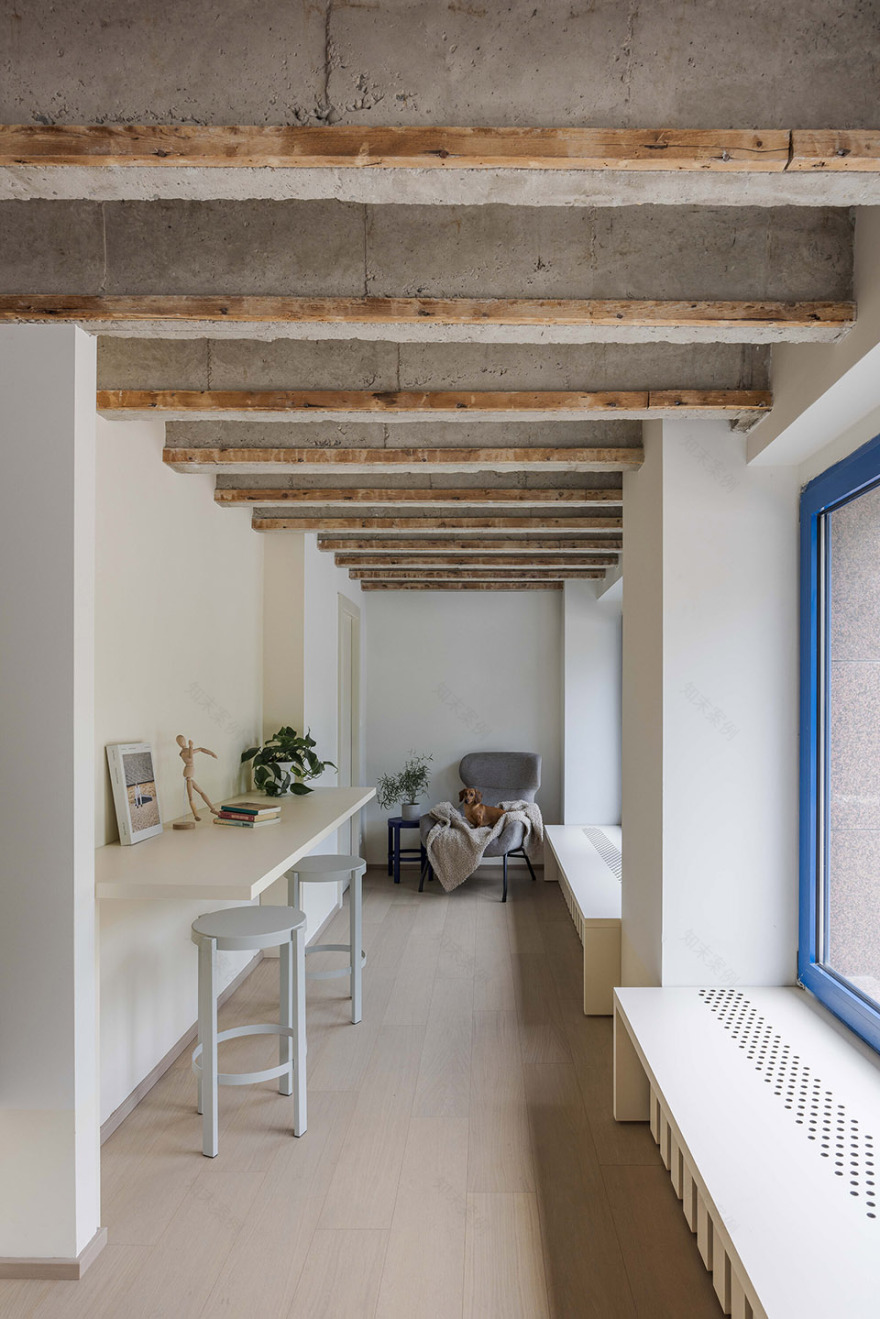
▼一层讨论区域,discussion area on the ground floor ©Lenka Némethová

▼一层茶水间,pantry on the ground floor ©Lenka Némethová

作为一种住宅模式,共居体现了更现代的生活方式,它在不牺牲品质与舒适度的前提下,为城市结构中的居住问题提供了可负担的解决方案。这一模式回应了当前住房不可负担的现状,同时满足了当代人对灵活性的需求。共居模式鼓励社区生活,强化居民之间的社会联系与互动,同时带来经济效益。通过共享资源与空间,共居也代表了一种更可持续的住房方式。面向全体住户的公共空间被设计为鼓励社交的场所,有助于构建更紧密的社区关系。除私人起居单元外,一楼还设有共用厨房、休闲区和洗衣房等共享空间。在高房价与居住疏离感普遍存在的城市环境中,共居模式提供了一个结合可持续性、生活质量与建立深层人际关系的解决方案。
Coliving as a housing model represents a more modern approach to living. It also offers affordable housing within urban structures without sacrificing quality and comfort. It addresses the current issue of housing unaffordability while providing the flexibility that many people today find essential. Coliving fosters community life, strengthening social cohesion and interactions between residents while also offering economic benefits. Coliving also presents a more sustainable approach to housing through the sharing of resources and spaces. Common areas accessible to all residents are designed to encourage social interaction, contributing to the creation of a stronger community. In addition to private living units, shared spaces are available on the first floor, including a communal kitchen, a chill-out zone, and a laundry room. In an urban environment where housing is often expensive and impersonal, the co-living model offers a solution that combines sustainability, quality of life, and the opportunity to form deeper interpersonal relationships.
▼公寓空间,apartment space ©Lenka Némethová


▼可适应多种居住形态,adapt to various living arrangements ©Lenka Némethová


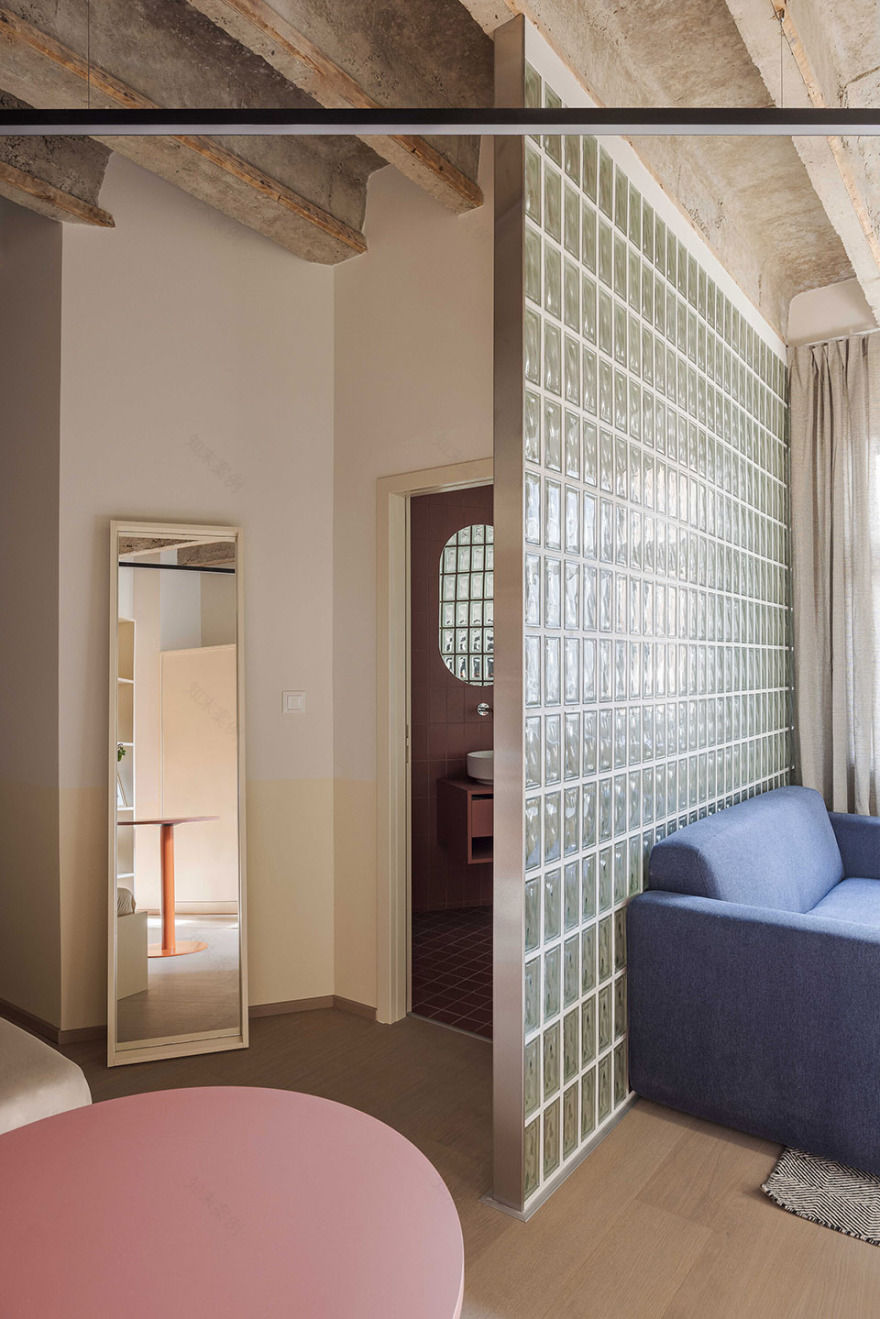
建筑的室内布局充分考虑了住户的居住需求,注重舒适性与功能性。整栋楼共有19个公寓单元,面积各异,从适合个人居住的16平方米小型公寓,到更宽敞舒适的35平方米单位。单元的灵活性使其可适应多种居住形态,这在家庭结构与住房模式不断变化的当下尤为重要。开放式设计使各功能区之间流动自然,增强空间的通透感。浴室中使用的玻璃砖进一步提升了采光,同时也为公寓增添了独特的设计元素。
The interior layout of the building reflects the needs of apartment residents, focusing on comfort and functionality. The total of 19 apartments vary in size, with units designed to accommodate different forms of living, ranging from small, 16 sqm apartments for individuals to larger, 35 sqm, more comfortable units. The flexibility of the apartments allows them to adapt to various living arrangements, which is crucial at a time when family structures and housing patterns are changing. The open-concept design creates a spacious yet functional flow between different areas of the apartment. Airiness is further enhanced by glass blocks used in the bathrooms, which provide secondary lighting and add a unique design element to the apartments.
▼注重舒适性与功能性的空间,space focusing on comfort and functionality ©Lenka Némethová
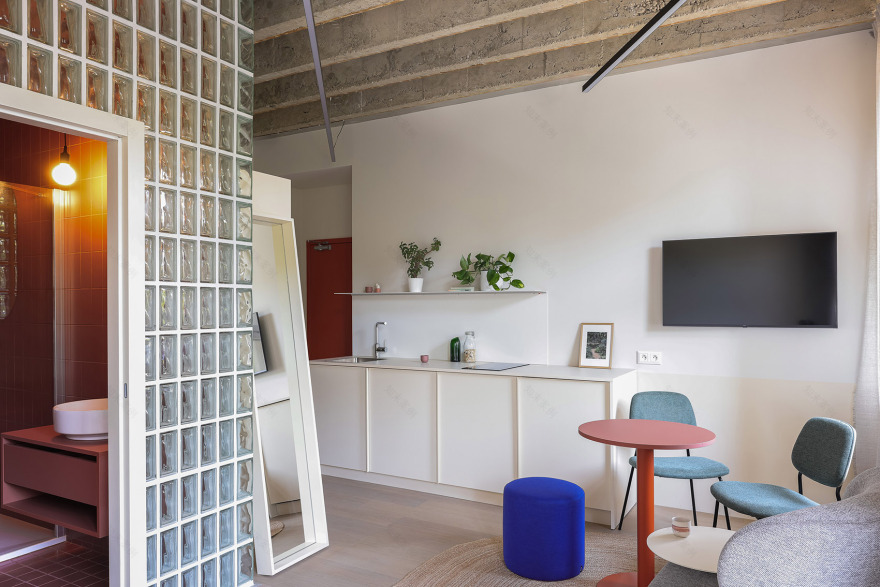
▼小户型公寓,small apartment ©Lenka Némethová
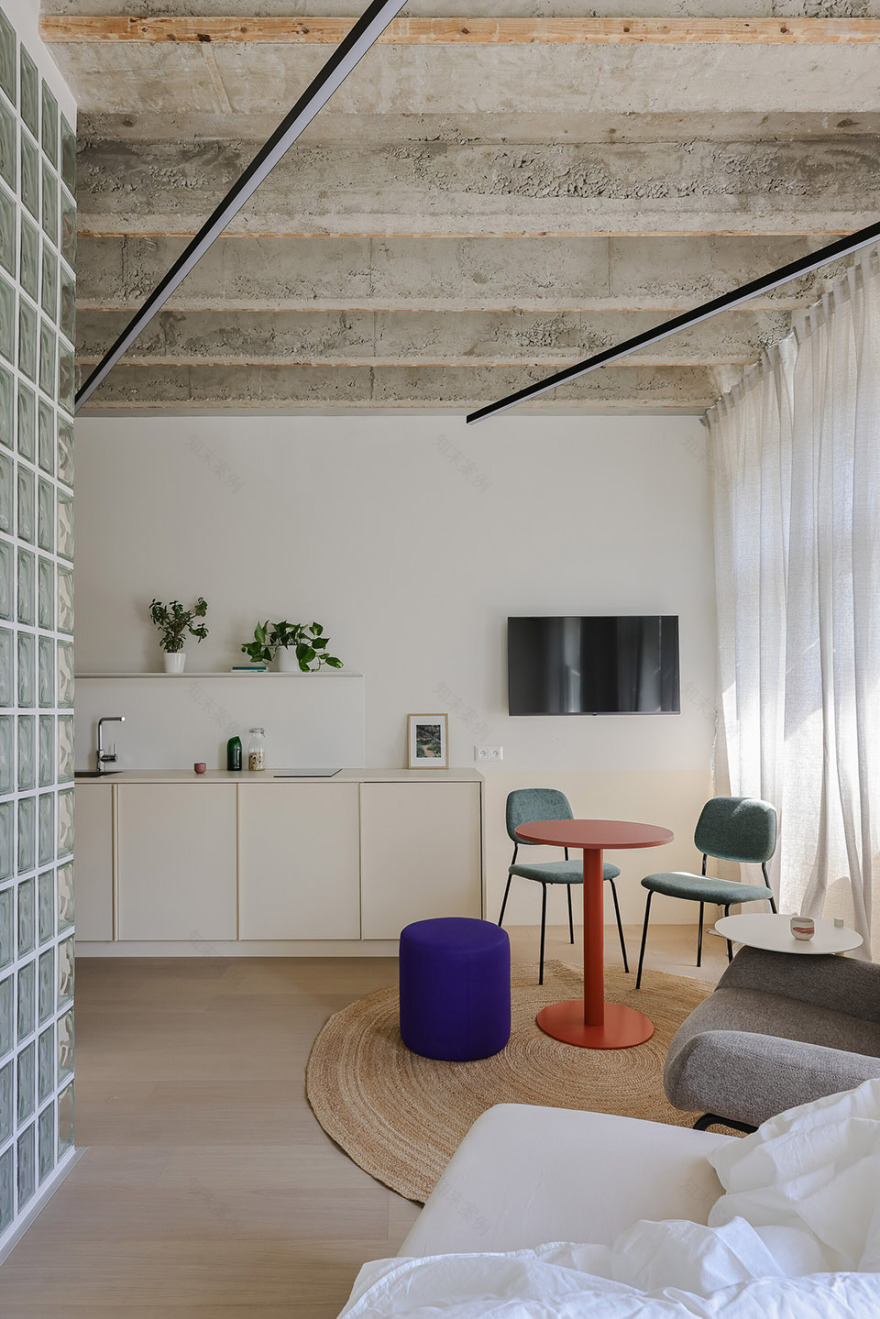


▼玻璃砖进一步提升了采光,
glass partition wall provides secondary lighting ©Lenka Némethová


室内设计尊重并延续了Metropol建筑的原始特色,保留并强调了其历史与真实性氛围。外露的肋状天花板构成了显著且独特的视觉元素,使公寓更具个性、历史感与永恒价值。标志性的蓝色窗框也被保留下来,作为连接过去与现在的视觉线索。这些设计不仅保留了空间的历史身份,也赋予其独特的视觉个性与鲜明的认同感。
The interior design respects the original character of the Metropol building, preserving and highlighting its historical, authentic features and atmosphere. The exposed ribbed ceiling which has been uncovered forms a distinctive and unique element, giving the apartments authenticity, character and timelessness. The original iconic blue windows which serve as a visual link between the past and the present have also been preserved. These features not only maintain the historical identity of the space but also offer a unique visual character and a strong sense of identity.
▼外露的肋状天花板,the exposed ribbed ceiling ©Lenka Némethová

▼外露的肋状天花板,the exposed ribbed ceiling ©Lenka Némethová


▼整体内饰以米色与灰色等中性色调为主,
the interior is dominated by neutral colors such as beige and gray ©Lenka Némethová


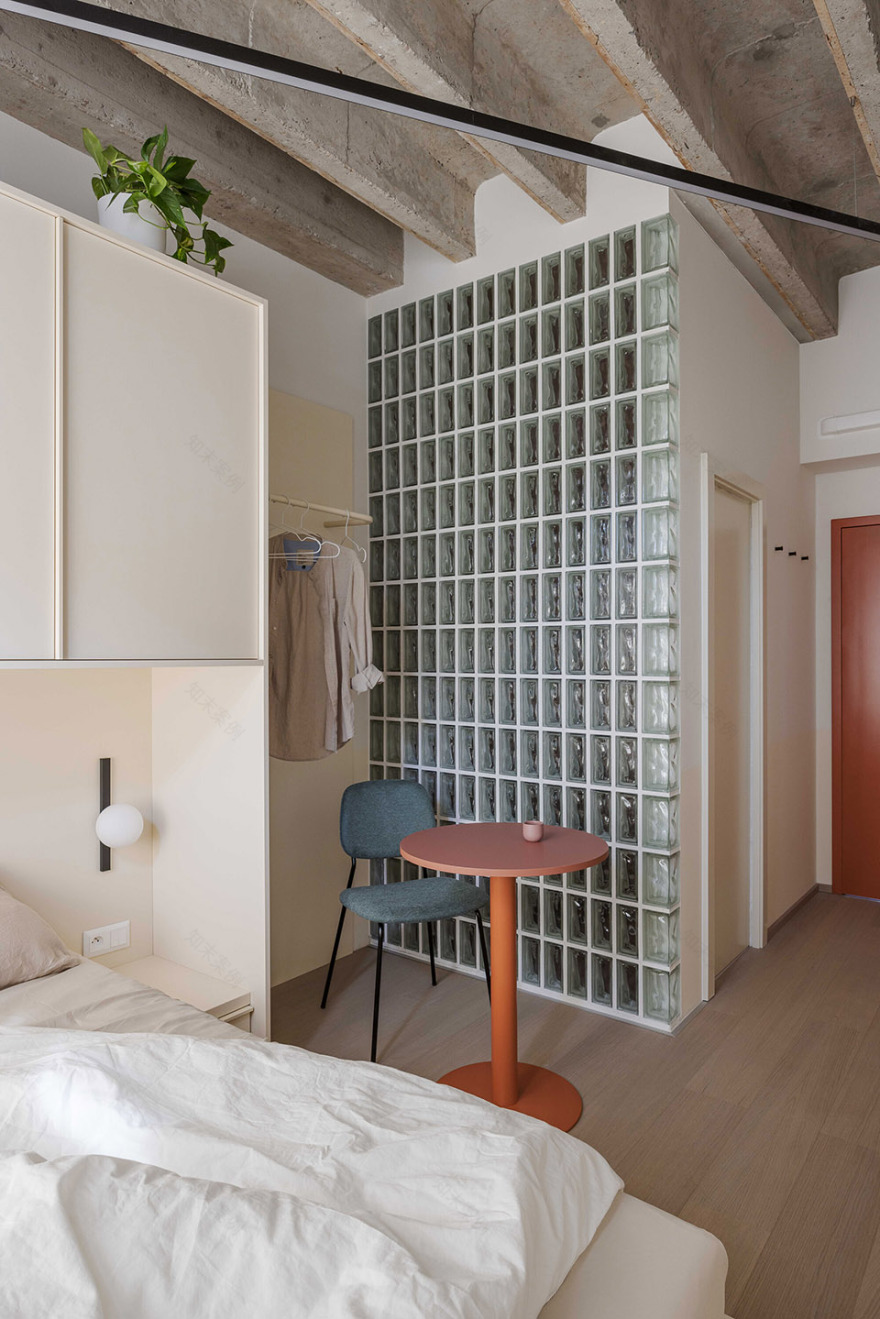
▼木地板为空间增添温度与触感层次,
wooden floors bring warmth and tactile contrast to the minimalist design ©Lenka Némethová


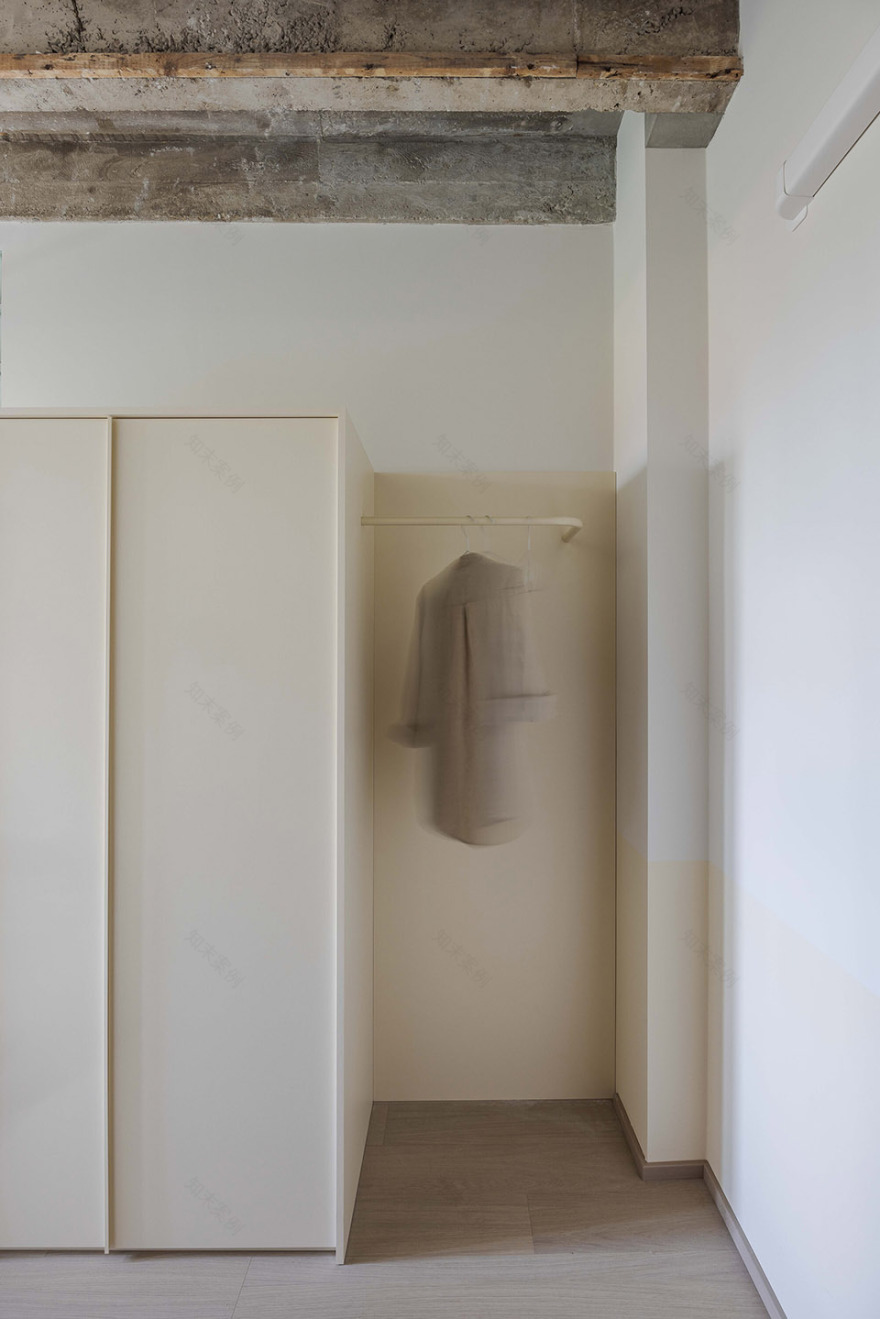
整体内饰以米色与灰色等中性色调为主,为公寓打造出一种永不过时、适应性强的基调。这些色彩使住户可以根据个人偏好自由装饰空间,而不会破坏整体建筑风格的一致性。中性色还与家具中的柔和色彩形成对比。木地板为空间增添温度与触感层次,而哑光金属元素则引入一丝温和的工业气息。这些细节构成了极简设计的重要补充,展现出对细节的高度关注。
The interior is dominated by neutral colors such as beige and gray creating a timeless and universal foundation for the apartments. These colors allow residents to personalize their spaces according to their own preferences and add their personal style without disrupting the architectural integrity. The neutral tones also provide contrast to subtle color accents in the furniture. Wooden floors bring warmth and tactile contrast to the minimalist design, while matte metal elements add a gentle industrial touch. These elements complement the minimalist design with an emphasis on detail.
▼标志性的蓝色窗框也被保留下来,The original iconic blue windows have also been preserved ©Lenka Némethová
▼一层平面,ground floor plan ©BEEF ARCHITEKTI

▼标准层平面,typical floor plan ©BEEF ARCHITEKTI

Studio:BEEF ARCHITEKTI
Author: Rado Buzinkay, Andrej Ferenčík, Peter Baroš
architekti@beef.sk
Social media:
Studio address: Gajova 4, 811 09 Bratislava, Slovakia
Project location: Mickiewiczova 2256/18, Bratislava
Project country: Slovakia
Project year: 2024
Completion year: 2024
Usable floor area: 559 m²
Photographer: Lenka Némethová, ,



南京喵熊网络科技有限公司 苏ICP备18050492号-4知末 © 2018—2020 . All photos and trademark graphics are copyrighted by their owners.增值电信业务经营许可证(ICP)苏B2-20201444 苏公网安备 32011302321234号
苏公网安备 32011302321234号客服
消息
收藏
下载
最近