

创作上传
VIP
收藏下载
登录 | 注册有礼
查看完整案例

收藏

下载

分享
客户在长野的山区长大,周围遍布滑雪场和其他休闲设施,他亲眼见证了这些曾经充满活力的场所如何逐渐被闲置。它们大多建于20世纪末日本经济高速发展时期,如今仍作为景观中显眼但日益沉寂的存在保留着。项目从一开始便旨在回应这种转变——不是通过增加更多永久性基础设施,而是提供一种温和的方式,重新进入这些场所,重新与自然建立联系,并支持新一轮的活力循环,同时从过去的经验中学习,避免重蹈覆辙。
The client, who grew up in Nagano’s mountainous region surrounded by ski resorts and other leisure sites, witnessed how these once-vibrant facilities gradually became underused. Many were built during Japan’s late 20th-century economic boom and now remain as visible but less active parts of the landscape. From the outset, the project aimed to respond to this shift—not by adding more permanent infrastructure, but by offering a way to gently reinhabit these places, reconnect ourselves with nature and support a renewed cycle of activity, while learning from and avoiding the mistakes of the past.
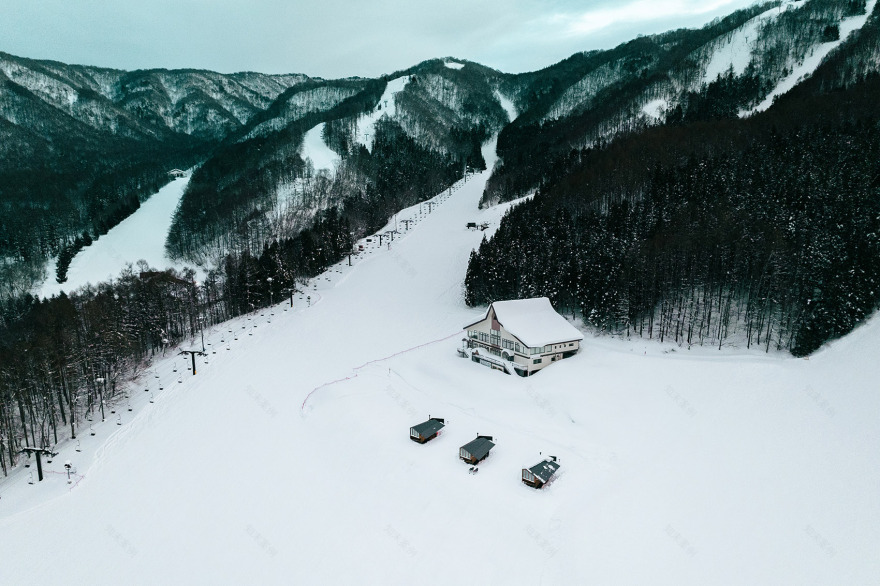
▼山区鸟瞰,aerial view of the mountainous region ©Earthboat


这正是“Earthboat”(大地之舟)项目的设计初衷:打造一种小规模、可适应的住宿模型,能够悄然融入周围环境,支持新的循环,并避免在未来成为负担。该概念需要具备适应性、可移动性和可扩展性——既能在全国范围内复兴类似场所,又为未来的变化保留空间。
This led to the brief for Earthboat: to design a small-scale, adaptable accommodation model that could quietly integrate with its surroundings, support new cycles, and avoid becoming a future burden. The concept needed to be adaptable, mobile, and scalable—able to revitalise these sites across the country while leaving them open to future change.
▼大地之舟鸟瞰,aerial view of the Earthboat ©Earthboat


为了将这一概念变为可建造、可推广的现实,设计过程专注于将一个单元精炼为功能完善、可复制的结构。
To turn that concept into something buildable and scalable, the design process focused on refining a single unit into a functional and replicable structure.
▼可复制的建筑结构,a functional and replicable structure ©Earthboat

▼可复制的建筑结构,a functional and replicable structure ©Earthboat


▼打造一种小规模、可适应的居住模型,a small-scale, adaptable accommodation model ©Earthboat
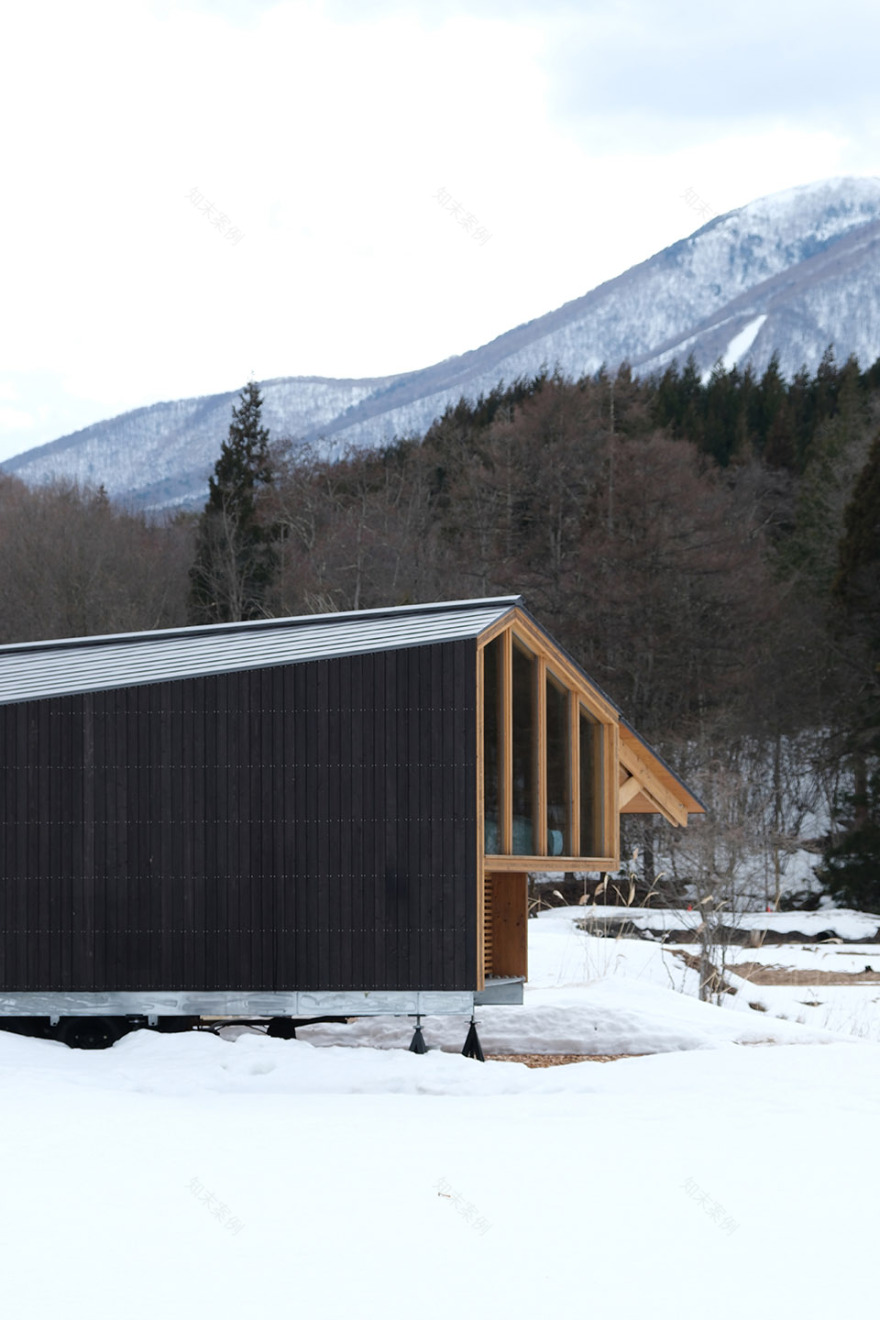

每座小屋完全由日本杉木CLT(交叉层压木)制成,在东京附近预制后整体运输并安装。设计源于设计师、制造商与承包商之间的长期合作,致力于简化生产流程,最终实现了CLT单元的一日装配系统。迄今为止,已建造超过80座小屋,每一座都助力于共同构建一套持续优化的建造体系。与日本常见的CLT项目——通常是大型公共建筑——不同,Earthboat将其应用于紧凑、可重复的模块化结构,使其得以在乡村地区广泛推广,适应类似的场地条件。
▼CLT单元装配过程,CLT units assemble progress ©Cypress Sunadaya


Each cabin is built entirely from Japanese cedar CLT and prefabricated near Tokyo, then transported and installed as a complete unit. The design emerged from a
long-term collaboration among designers, manufacturers, and contractors aimed at streamlining production, resulting in a single-day assembly system for the CLT unit. More than 80 cabins have been built to date, with each one contributing to the refinement of a shared construction system. Unlike most CLT projects in Japan, which are typically large-scale public buildings, Earthboat applies it to a compact, repeatable format—making it possible to scale across rural areas where similar conditions are widely observed.
▼木屋由杉木交叉层压木材制成,built entirely from Japanese cedar CLT ©Earthboat


▼由杉木交叉层压木材制成可重复的模块化结构,compact, repeatable format built entirely from Japanese cedar CLT ©Earthboat

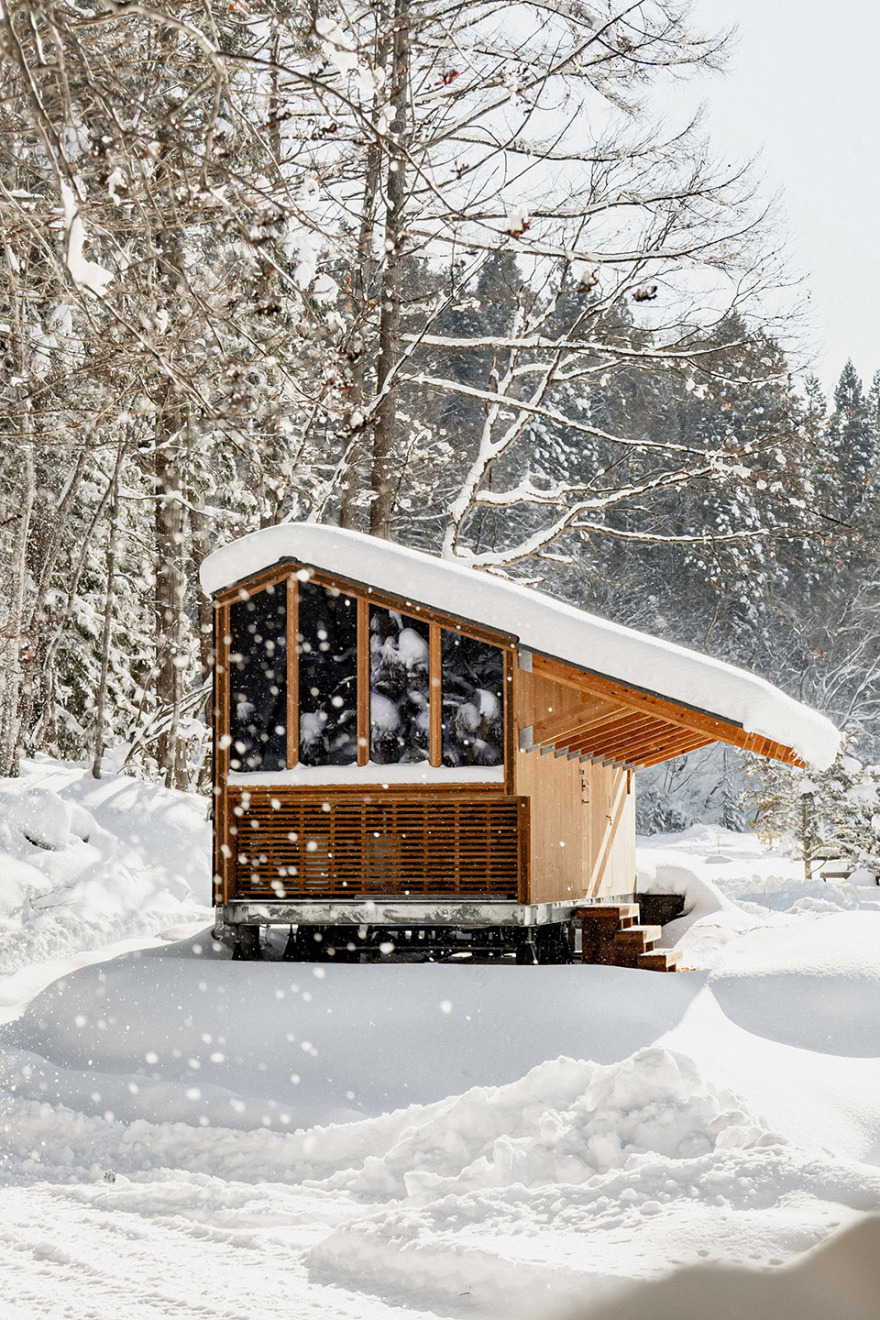
设计风格有意保持低调。外观上,小屋呈现一种简洁而熟悉的形式,不显突兀地融入自然环境;内部则通过一个大开口将自然景观纳入视野,空间体验围绕自然展开。裸露的CLT木材表面营造出温暖而宁静的氛围。每个单元还配备紧凑的桑拿间,以支持全年使用,并在寒冷季节激活木结构的热惰性。
The design is intentionally understated. From the outside, the cabin takes on a simple, familiar form that avoids being an alien in the landscape. Inside, a large opening frames the view, anchoring the spatial experience around the natural surroundings. Exposed CLT surfaces define the interior with a warm, quiet atmosphere. Each unit includes a compact sauna to support year-round use and activate the thermal mass of the timber structure in colder seasons.
▼设计不显突兀地融入自然环境,design form that avoids being an alien in the landscape ©Earthboat

▼营造出温暖而宁静的氛围,creates a warm, quiet atmosphere ©Earthboat


▼露营度假好去处,great place for a camping holiday ©Earthboat


小屋设计中不使用粘合剂或隔热层,非有机材料使用极少。舒适性完全依靠实木的热性能来实现。若将来不再使用,该小屋可被迁移,或任其自然回归土地,避免过去开发项目留下的长期负担。
The cabin is designed without adhesives or insulation, using minimal non-organic materials. Comfort is achieved solely through the thermal performance of solid mass timber. If no longer needed, the cabin can be relocated or left to return naturally to the land over time, avoiding the long-term burdens left behind by past developments.
▼通过一个大开口将自然景观纳入视野,a large opening frames the view ©Earthboat

▼通过一个大开口将自然景观纳入视野,a large opening frames the view ©Earthboat


▼空间体验围绕自然展开,the spatial experience around the natural surroundings ©Earthboat

▼冬季时享有雪景的木屋,cabins with snowy views in winter ©Earthboat

▼冬季时享有雪景的木屋,cabins with snowy views in winter ©Earthboat

▼卫生间,bathroom ©Earthboat


Earthboat并非某一个孤立的建筑,而是一个持续发展的系统。它以一致的建筑框架在日本多个乡村地区展开,根据各地景观进行在地适应,形成一个分布式网络。该网络使生活在城市中的人们能够通过共享但因地制宜的体验重新接触自然——通过共通的设计语言连接遥远的地点。在此过程中,Earthboat促使人们重新与土地建立联系,支持新的区域使用节奏、关照方式与持续关系。
Earthboat is not a singular structure, but a growing system. With a consistent architectural framework, it is deployed across various rural regions in Japan, adapting to each landscape while forming a dispersed network. This network allows people living in urban areas to access nature through a shared but site-specific experience—bridging distant places through a common design language. In doing so, Earthboat reconnects people with the land and supports new regional rhythms of use, care, and continuity.
▼平面图,plan ©PAN- PROJECTS

▼剖面图,section ©PAN- PROJECTS

Completion Date: January 2024
Project Location: Mountainous regions throughout Japan
Area: 20.5m2
Function: Mobile Cabin, Hotel
Status: Built
Primary Material: Japanese Cedar CLT (Cross Laminated Timber)
Design Firm: PAN- PROJECTS
Instagram:
Structural engineer: ARSTR
Instagram:
Photo Credit
Photo Credit 1: Earthboat
Additional Credit
Contractor: TIC PLAN
Client: Earthboat


南京喵熊网络科技有限公司 苏ICP备18050492号-4知末 © 2018—2020 . All photos and trademark graphics are copyrighted by their owners.增值电信业务经营许可证(ICP)苏B2-20201444 苏公网安备 32011302321234号
苏公网安备 32011302321234号客服
消息
收藏
下载
最近