

创作上传
VIP
收藏下载
登录 | 注册有礼
查看完整案例

收藏

下载

分享
位于安德莱赫特的Bon Air街区是布鲁塞尔众多花园城市中的一颗稀有明珠。与大多数已被城市高密度肌理吞没的花园社区不同,Bon Air仍坐落于郊区,保留了低密度的居住特质和开放、村落般的氛围。这一特性赋予了它在城市历史中的独特地位,但也带来了需要以当代方式加以审慎回应的挑战。
The Bon Air A neighborhood in Anderlecht is a rare gem among Brussels garden cities. Unlike most others, which have been absorbed into the city’s dense urban fabric, Bon Air remains in the suburbs, preserving its low-density character and open, village-like feel. This distinction gives it a unique place in the city’s history, but it also presents challenges that needed to be addressed in a thoughtful and contemporary way.
▼顶视图,top views© Serge Brison

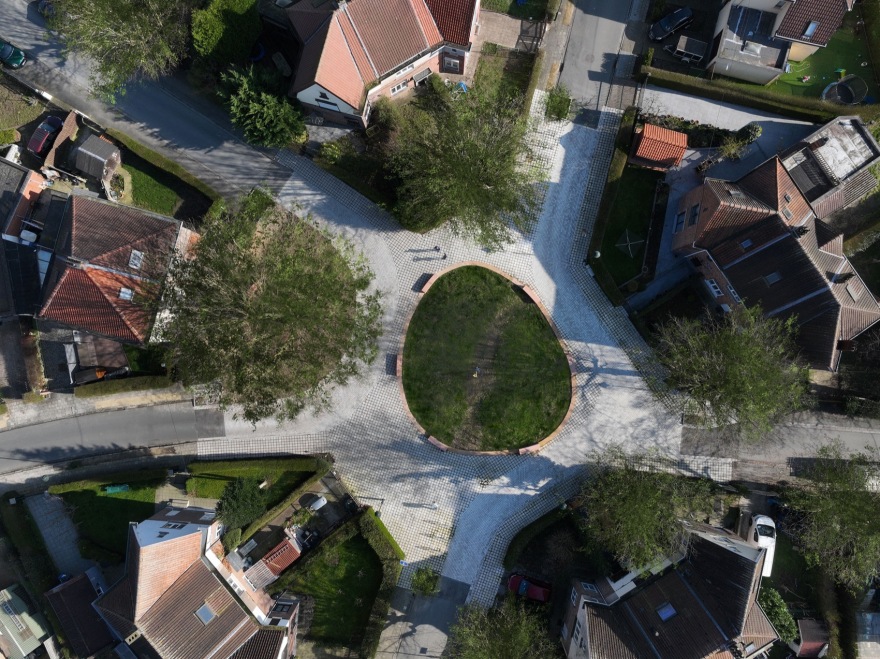

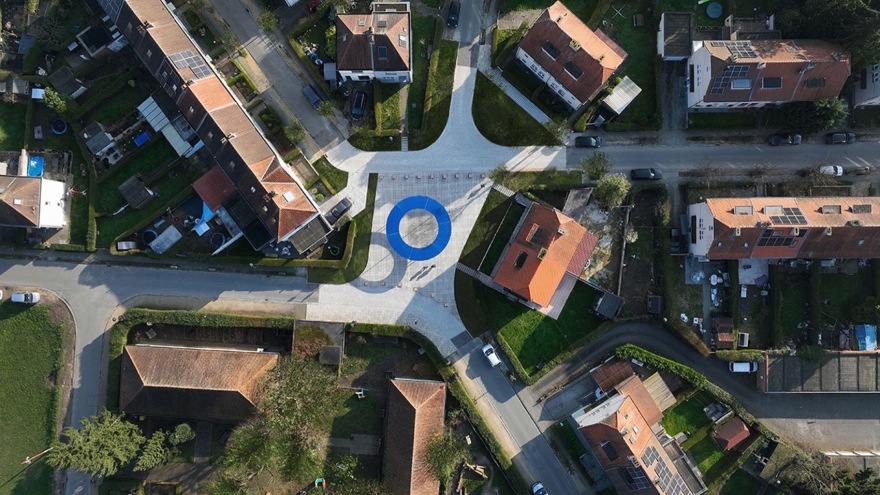
最初,Bon Air的规划由一系列小街道和宽阔的步行小径构成,在可达性与步行性之间形成了平衡。历史照片显示,这些小径曾是重要的社交与游玩空间。然而,随着汽车主导地位的不断扩张,这些步行路径的宽度和重要性显著下降,逐渐消失或边缘化。这一变化不仅影响了街区的物理布局,也改变了其社会结构。
▼原状,original state©L’atelier DEV architecture
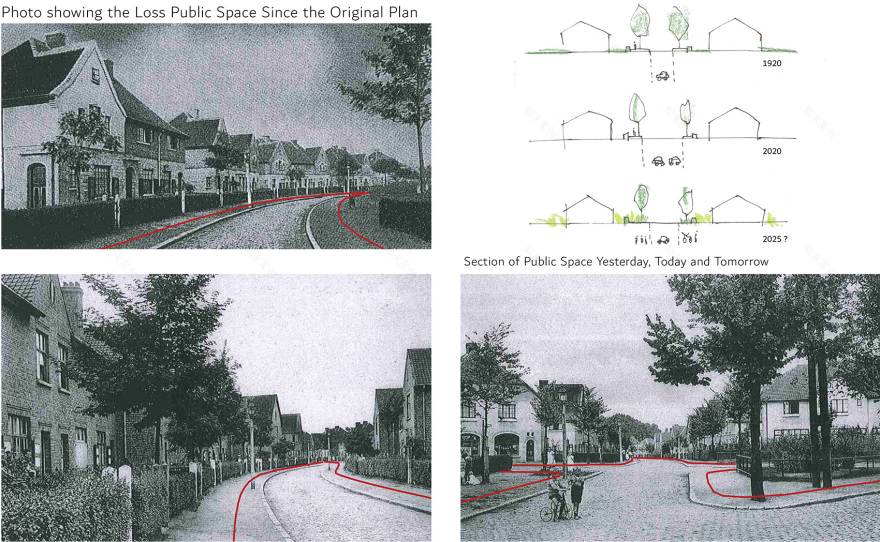
Originally, Bon Air was designed with a network of smaller streets complemented by wide pedestrian alleys, creating a balance between accessibility and walkability. Archival photos highlight how these alleys served as vital spaces for social interaction and play. However, over time, the expansion of car dominance has drastically reduced the width and importance of these pedestrian pathways, leaving them nearly inexistent or marginal. This shift has not only altered the neighborhood’s physical layout but also its social dynamics.
▼小径是重要的社交与游玩空间,alleys served as vital spaces for social interaction and play © Serge Brison


更为严重的是,Bon Air逐渐演变成周边街区之间车辆通行的捷径。原本为安静慢行环境设计的街道频繁被高速穿行的车辆占用,不仅危及在户外玩耍的儿童,也干扰了居民的日常生活。因此,遏制汽车穿行并恢复街区以人为本的特质,成为本次改造的核心诉求。
▼分析图,analysis diagram©L’atelier DEV architecture

Adding to this problem, Bon Air became a shortcut for cars traveling between other neighborhoods. The streets, designed for a quieter, slower-paced environment, were frequently used as high-speed transit routes, endangering children playing outside and disrupting the daily lives of residents. Addressing this issue became a central focus of the project, alongside the need to restore the neighborhood’s pedestrian-friendly identity.
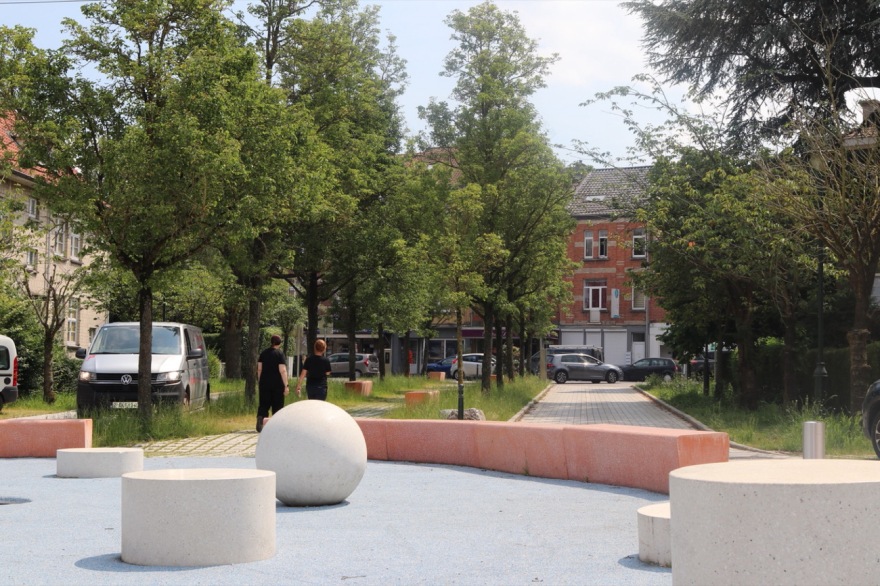
▼雨水广场,Rainwater Square© Serge Brison
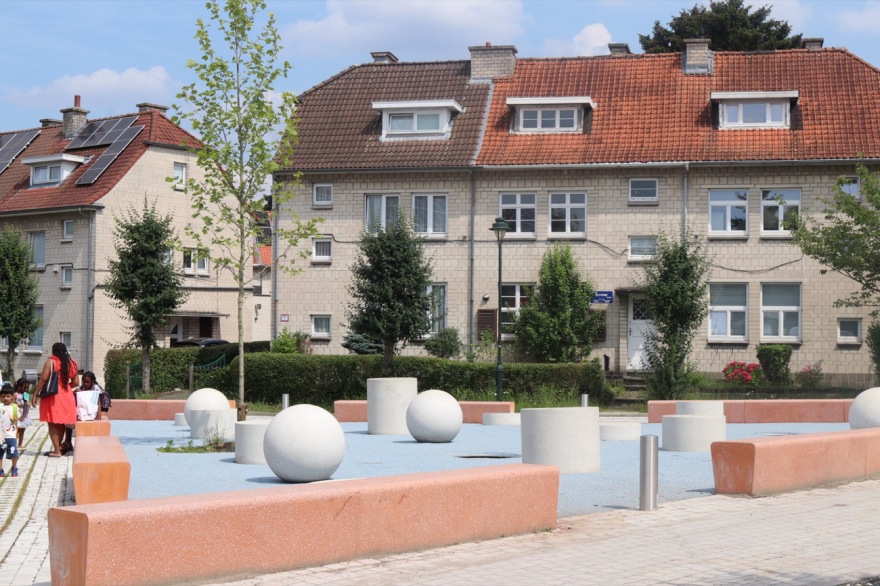
▼充满趣味性的座椅与设施,Interesting seats and facilities© Serge Brison

为应对这些问题,设计团队制定了一套全面的总体规划,目标是将Bon Air真正还给居民。第一步是重组交通路网,将所有街道改为单行道,并引入环形交通系统。此举有效取消了Bon Air作为车辆捷径的功能,显著降低车速,为行人与骑行者创造出更加安全的街道环境。▼分析图,analysis diagram©L’atelier DEV architecture

To resolve these challenges, the project team developed a comprehensive masterplan aimed at reclaiming Bon Air for its residents. The first step was to reorganize the road network, converting all streets into one-way routes and introducing a loop system. This intervention eliminated the neighborhood’s role as a transit shortcut, reduced traffic speeds, and created safer streets for pedestrians and cyclists.
▼软性地面铺地与雨水滞留与调蓄空间,soft ground paving and rainwater retention and storage space© Serge Brison


▼不同地面铺地的衔接,
the connection of different ground coverings© Serge Brison

在交通得以控制之后,项目将重心转向重要街口空间的转化,打造五个主题广场,它们不仅承担社区特定功能,也融入了可持续性与社会互动的设计原则:
- 林荫广场:网格状的树阵与树荫下的座椅,为居民提供静谧的休憩与交流场所。
- 绿色丘陵中心:覆盖多样植被的种植小丘,作为绿色地标同时增强街区生物多样性。
- 学校广场:一处充满趣味的校园入口,设有蹦床与雕塑化座椅,鼓励儿童与家庭的参与。
- 雨水广场:一处雨水滞留与调蓄空间,在应对暴雨的同时兼具娱乐功能。
- 社区凉亭:一座用于举办集市、活动与聚会的遮蔽结构,促进邻里交流。
▼分析图,analysis diagram©L’atelier DEV architecture

With traffic under control, the project shifted focus to transforming key intersections into vibrant public spaces. Five thematic squares were created, each designed to serve a specific role within the community while integrating the principles of sustainability and social interaction:
–Shaded Grove: A grid of trees with seating beneath the canopy, offering a tranquil space for residents to relax and connect.
–Green Hill Hub: A planted hill with diverse vegetation, creating a green landmark and enhancing biodiversity in the neighborhood.
–School Plaza: A playful entrance to the school, featuring trampolines and sculptural seating, designed to engage children and families.
–Rainwater Square: A sustainable water retention area, designed to manage heavy rainfall while doubling as a recreational space.
–Community Canopy: A sheltered structure for hosting events, markets, and other gatherings, fostering community connection.
▼住宅前的可渗透停车区,the permeable parking area in front of the residence © Serge Brison


▼林荫广场,Shaded Grove © Serge Brison


▼网格状的树阵与树荫下的座椅,
A grid of trees with seating beneath the canopy © Serge Brison

除了这五个广场,总体规划还重新定义了街区入口、引入口袋公园,并对中央公园进行更新,增设了一座全新的体育设施。这些举措体现了一种整体性的城市设计策略,确保街区的每个角落都能成为一个多元、包容的公共空间。通过将城市视作“起居室”的理念,Bon Air项目聚焦于安全、可持续性与社会凝聚力,将这一历史悠久的花园社区转化为当代表郊生活的典范。
Beyond the five squares, the masterplan also redefined the entrances to the neighborhood, introduced pocket parks, and revitalized the central park with a new sports facility. These interventions reflect a holistic approach to urban design, ensuring that every corner of the neighborhood contributes to a cohesive and inclusive environment. By treating the city as a “living room” and focusing on safety, sustainability, and social cohesion, the Bon Air project transforms a historic garden city into a model for contemporary suburban living.
▼社区凉亭,Community Canopy© Serge Brison

▼细部,details© Serge Brison

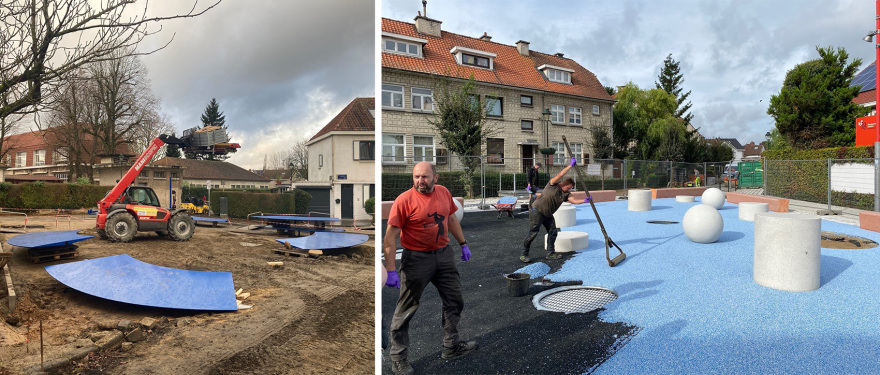
▼施工过程,construction details© Serge Brison


▼区位图,location©L’atelier DEV architecture

▼城市轴测图,axonometric drawing©L’atelier DEV architecture

Main Information
Project Name: Contemporary Garden City
Office Name: L’atelier DEV architecture
Social Media Accounts: pe@latelier.work
Firm Location: Brussels
Completion Year: 2024
Gross Built Area (m2): 20 000
Project Location: Brussels, Belgium
Program / Use / Building Function: Masterplan and public space
Lead Architects: Julien Deloffre deloffre@dev - space.eu
Photographer
Photo Credits: Serge Brison
南京喵熊网络科技有限公司 苏ICP备18050492号-4知末 © 2018—2020 . All photos and trademark graphics are copyrighted by their owners.增值电信业务经营许可证(ICP)苏B2-20201444 苏公网安备 32011302321234号
苏公网安备 32011302321234号客服
消息
收藏
下载
最近