

创作上传
VIP
收藏下载
登录 | 注册有礼
查看完整案例

收藏

下载

分享
自然野趣
Natural Wilderness
项目选址位于西溪湿地的南侧福堤附近,东临高庄 ,场地为一组合院,三面环溪,西侧为开阔广场与停车场。考察场地时,踱步环于合院,林木葱茂,建筑外貌被遮掩于树影之间,溪水蜿蜒,忽现几处孤岛,野柿树随意的垂于水面,不同于高庄江南古典园林的灵秀,颇有自然之野趣。
The project site is located near Fu Causeway on the south side of Xixi Wetland, facing Gaozhuang to the east. The site is a combination courtyard surrounded by streams on three sides, with an open square and car parking on the west side. Strolling around the courtyard, surrounded by lush forests, the building’s appearance is obscured by tree shadows. Strolling around the courtyard, surrounded by lush forests, the building’s appearance is obscured by tree shadows. The stream winds, and several isolated islands suddenly appear. Wild persimmon trees hang freely on the water surface, which is different from the elegance of classical gardens in south China and has a natural wild charm.
▼美术馆外观,exterior of the art museum©刘国威

▼项目位于西溪湿地,art museum located in the Xixi Wetland©刘国威

▼现场环境,surroundings©中国美术学院风景建筑设计研究总院+森上建筑

▼现场环境,surroundings©刘国威

湿地游径
Wetland Trail
环抱于湿地自然之中,展馆应借西溪之景,融于环境成为更为开放的空间。因此,在根据现场条件与保持西溪传统建筑风貌的前提下,应运而生了两种不同的游览体验。
▼场地分析,site analysis©中国美术学院风景建筑设计研究总院+森上建筑
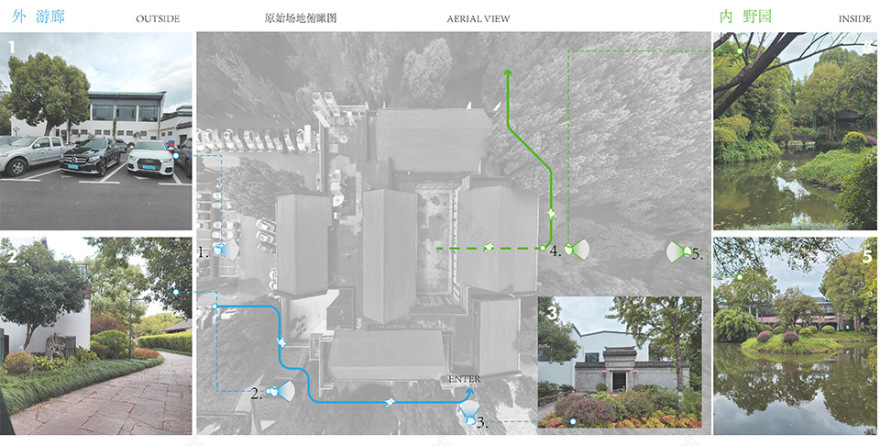
Surrounded by wetland nature, the exhibition hall should take advantage of the scenery of Xixi and blend into the environment to become a more open space. Therefore, based on the site conditions and maintaining the traditional architectural style of Xixi, two different tourism experiences have emerged.
▼环抱于湿地自然之中,surrounded by wetland nature©刘国威

▼美术馆入口,entrance of the art museum©刘国威

▼美术馆入口,entrance of the art museum©刘国威

游廊
Veranda
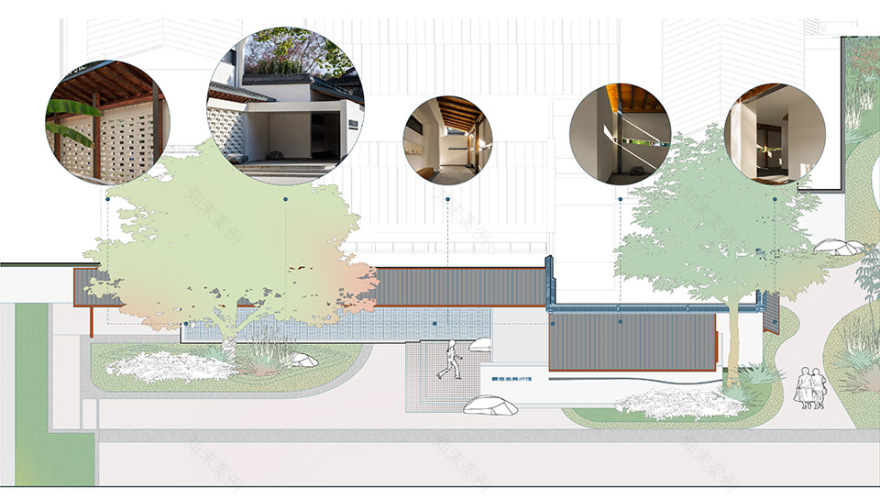
沿外部道路营造了一条半开放游廊,贴合建筑的边界,从西侧停车场开始,曲径通幽,既作为隔绝外界嘈杂的遮蔽,又是指引进入内部展馆的风雨廊和前序。
▼场地轴测图,site axonometric©中国美术学院风景建筑设计研究总院+森上建筑

A semi open corridor has been created along the external road, fitting the boundary of the building. Starting from the west parking lot, the winding path leads to a secluded place, serving as both a shelter to isolate external noise and a corridor and preface to guide entry into the internal exhibition hall.
▼半开放游廊,asemi open corridor©刘国威

▼沿游廊到展厅入口,along the corridor to the entrance of the exhibition hall©刘国威
▼沿游廊到展厅入口,along the corridor to the entrance of the exhibition hall©余烨
野园
Wild Garden
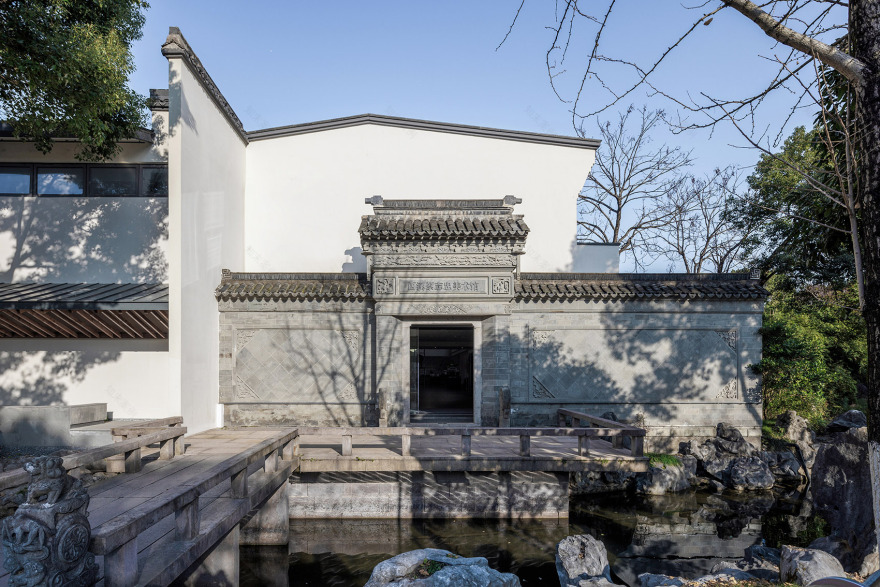
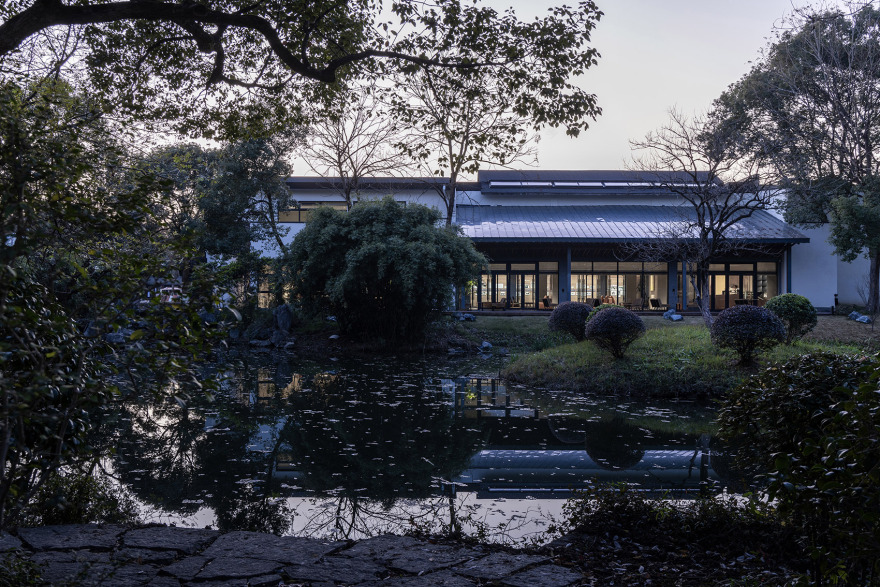
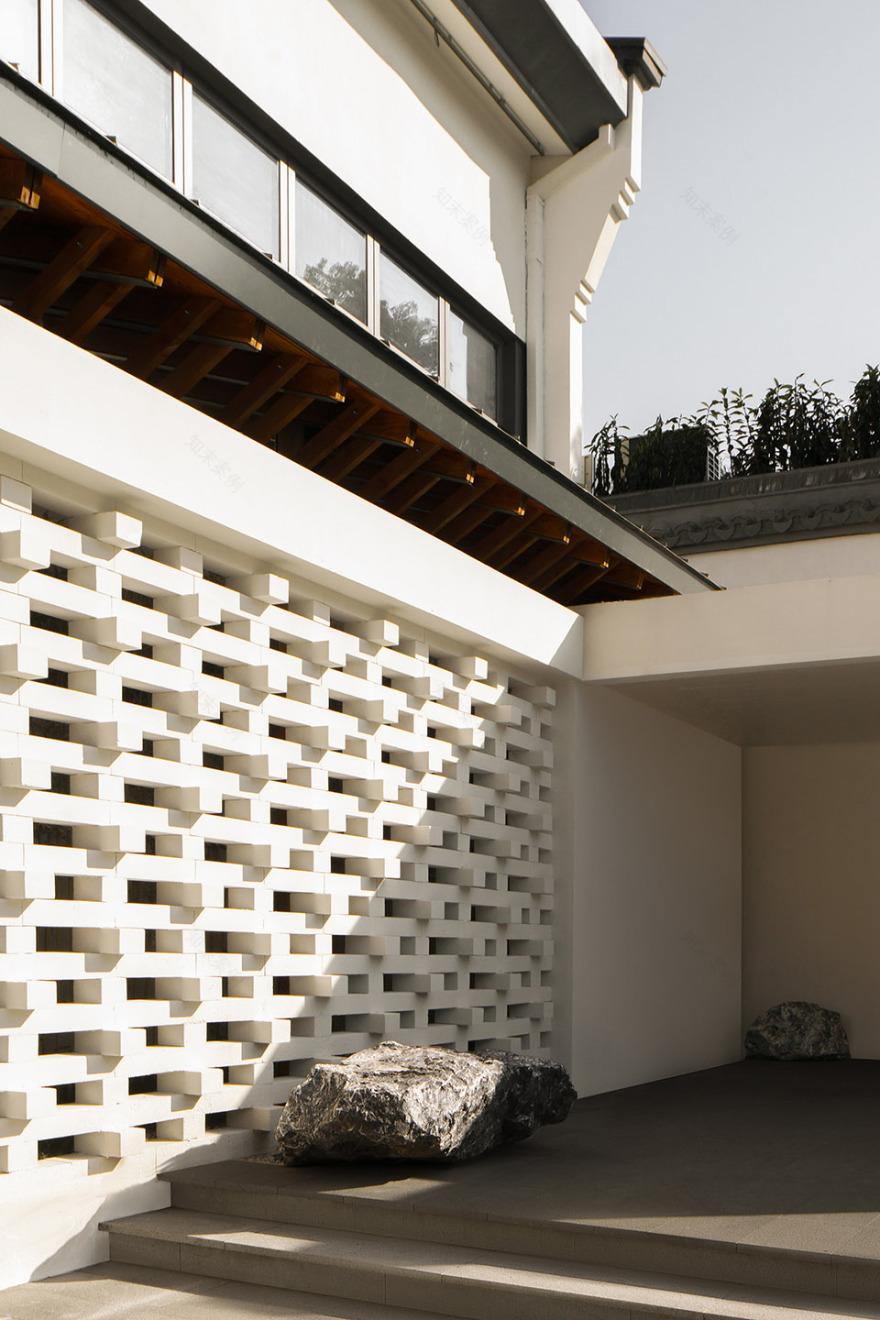
经过保留的折桥与门头,是室内展览的开始,足迹厅、笔迹厅、心迹厅三大展厅描绘了蔡志忠一生创作的精华。途径高庄一侧,便看到颇有野趣的园林场景。木构架雨廊的拓展压低了屋檐,拉伸了视线的宽幅并形成构景。
The reserved bridge and doorway are the beginning of the indoor exhibition. The three exhibition halls of Footprint Hall, Handwriting Hall and Mind Script Hall describe the essence of Cai Zhizhong’s life creation. Passing by the side of Gaozhuang, a garden scene can be seen with a wild charm. The expansion of the wooden rain corridor lowered the eaves, stretched the width of the line of sight, and formed a landscape.
▼颇有野趣的园林场景,a garden scene can be seen with a wild charm©刘国威

留白与笔墨之意
Artistic Conception of Blank Space and Ink
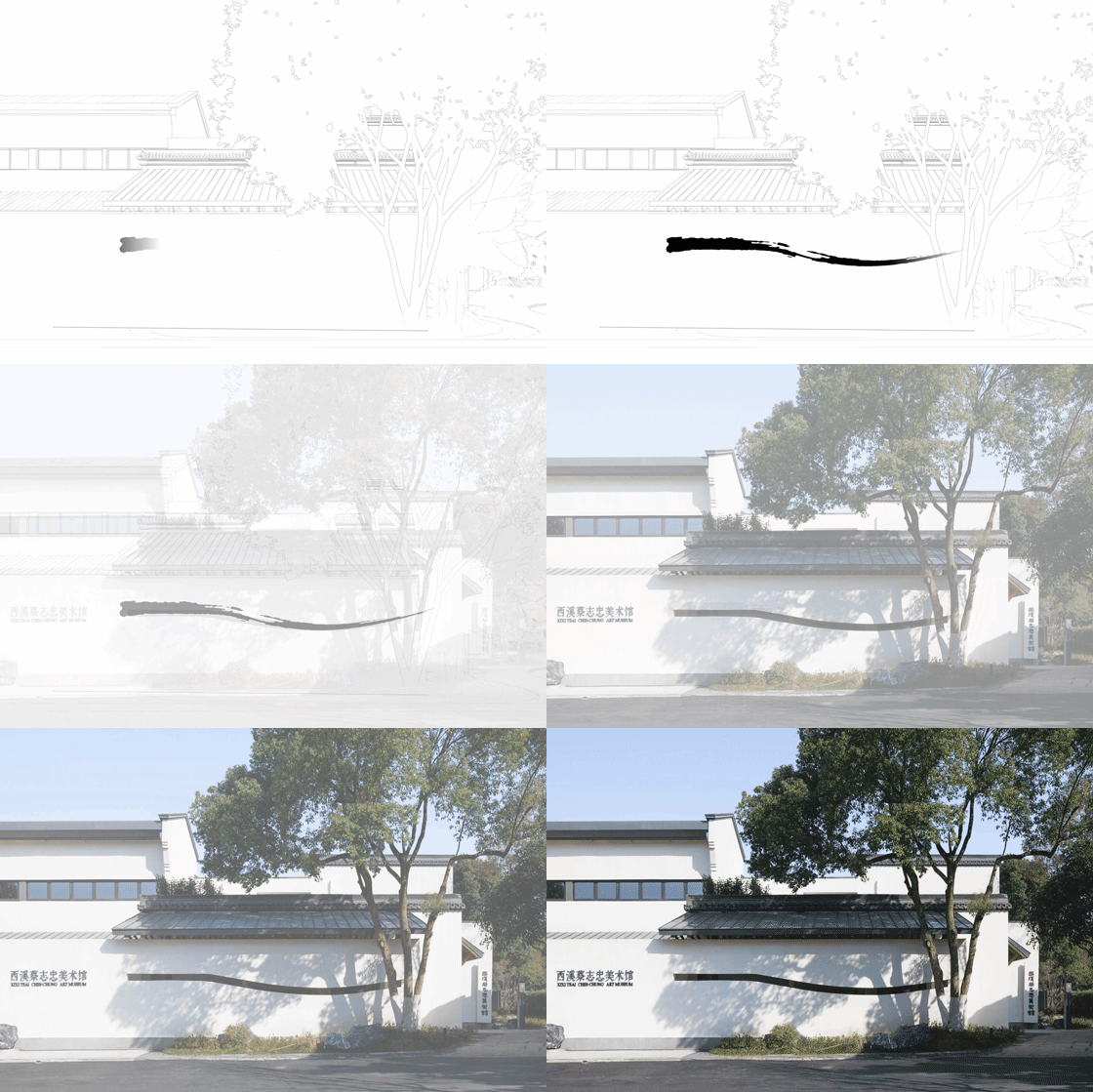
与古为新,和传统的展览建筑不同,设计力图找到一种松弛的表达,来找寻与蔡志忠漫画笔韵的对话。其线条笔墨的纯粹简洁印象深刻,这与园林的留白如画异曲同工。借由笔墨之意的灵感,在美术馆入口山墙设计了一条曲线,既为蔡志忠美术馆的符号,又成为游廊人流导向的指引。▼入口山墙的设计曲线,a curve was designed on the entrance wall©中国美术学院风景建筑设计研究总院+森上建筑
▼入口处场景营造,scenario design at the entrance©中国美术学院风景建筑设计研究总院+森上建筑
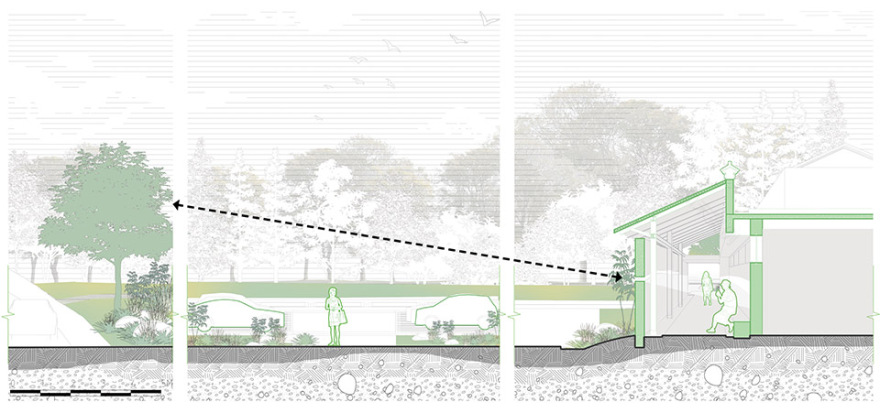
▼造型窗洞的视野关系,the visual relationship between the window and scene©中国美术学院风景建筑设计研究总院+森上建筑
Different with traditional exhibition buildings, the design strives to find a relaxed expression to engage in dialogue with Cai Zhizhong’s comic painting style. The pure simplicity of its lines and strokes leaves a deep impression, which is similar to the technique of leaving blank space in gardens. Taking inspiration from the meaning of ink and brush, a curve was designed on the entrance wall of the art museum, which serves as both a symbol of the Cai Zhizhong Art Museum and a guide for the flow of people in the gallery.
▼入口处的曲线开口设计,the curved line opening at the entrance wall©刘国威

▼入口处主形象墙夜景,the entrance wall at night©刘国威
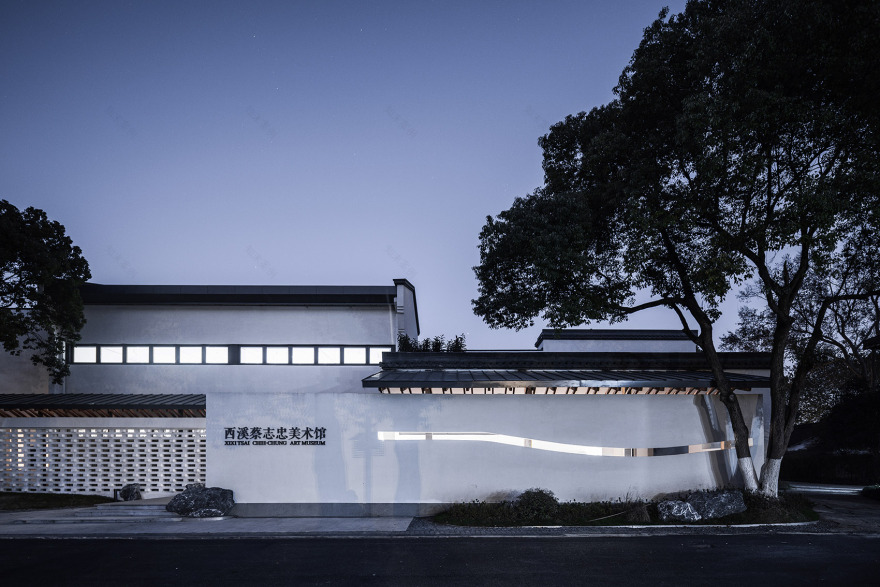
▼入口处主形象墙,the entrance wall at night©余烨
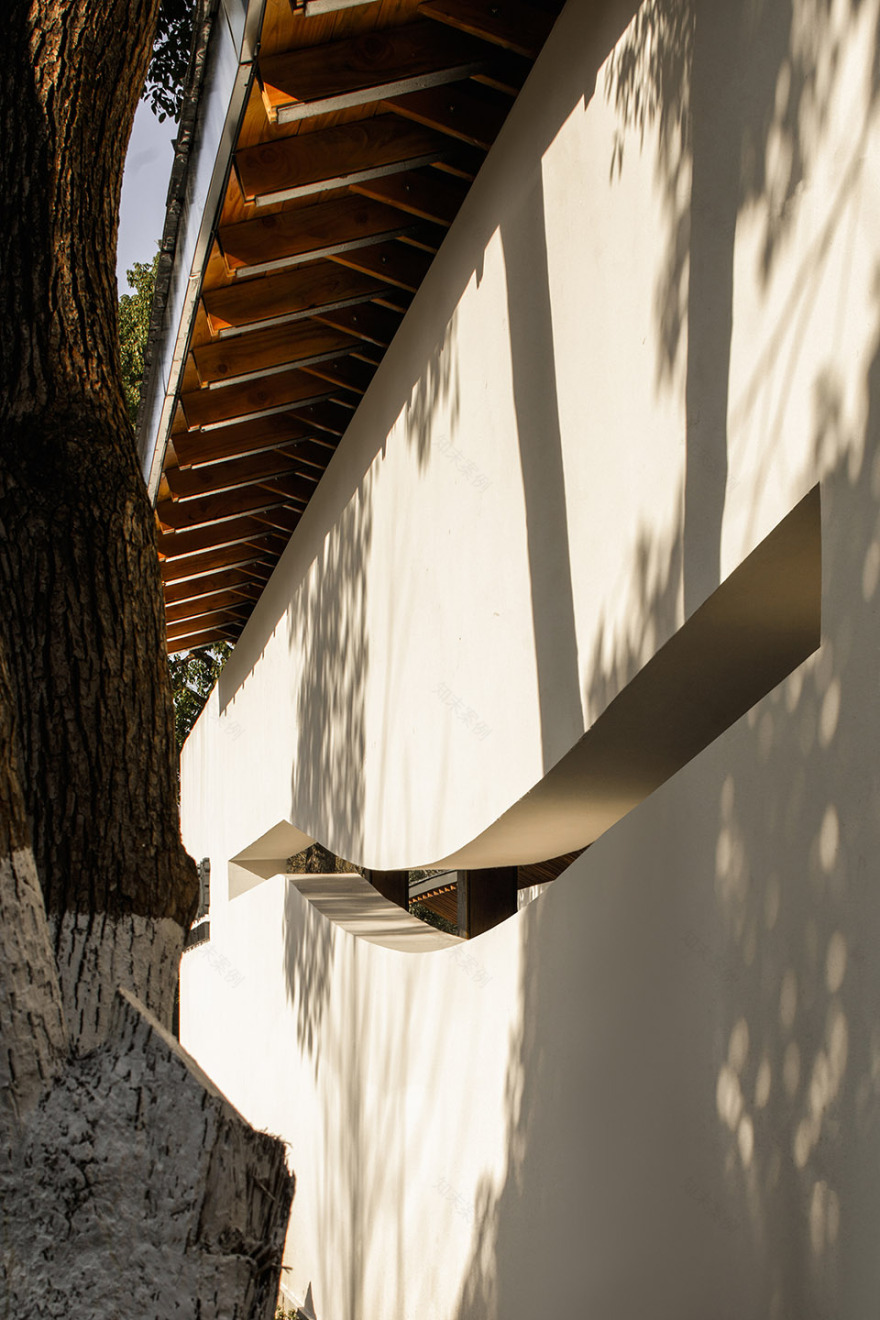

▼光影变化,Light and shadow changes©余烨

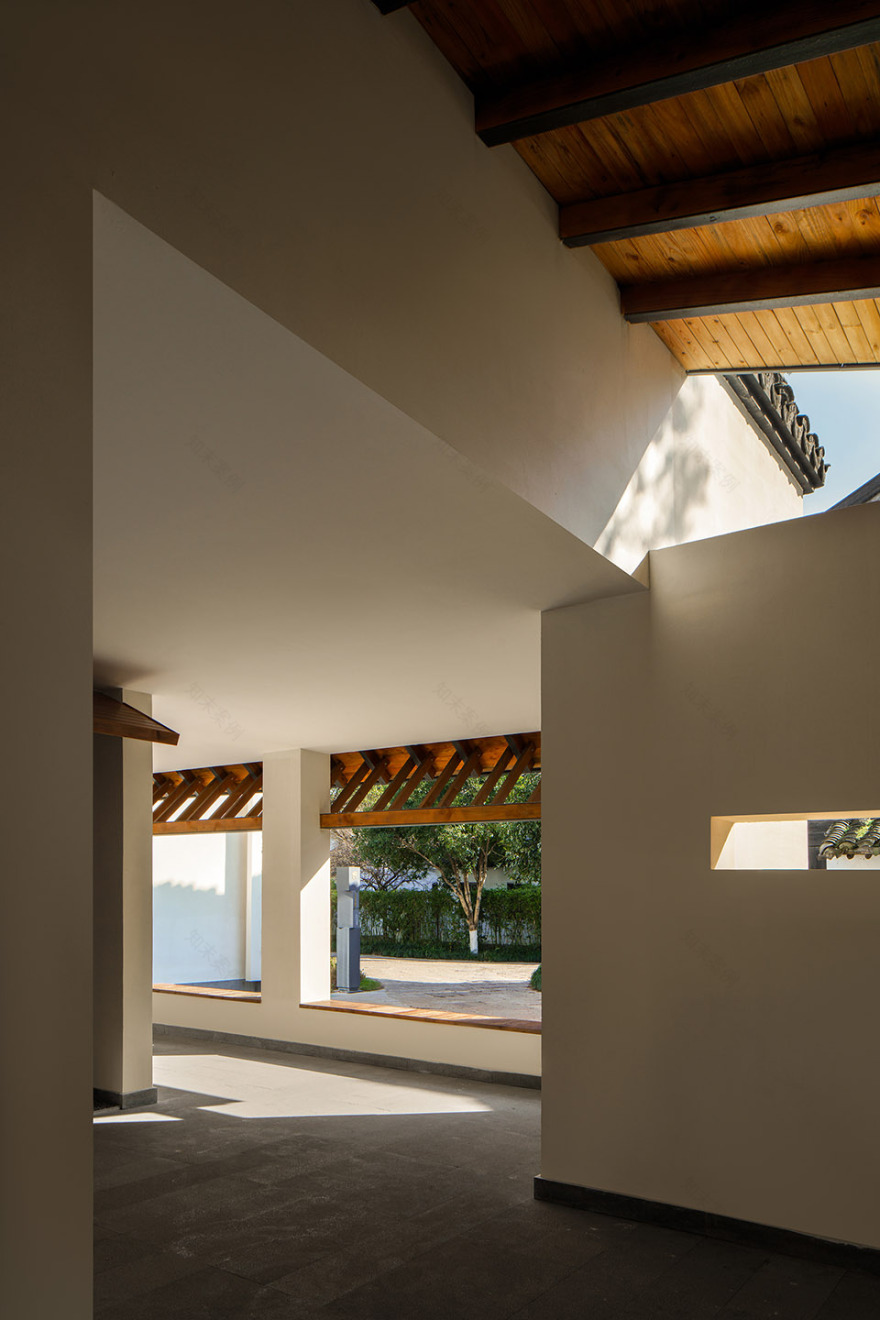
经由石阶拾级而上,游廊的墙体隔断了停车场的视野,曲线窗洞则框出了西溪的山林与景色,光影随着局部打开的廊架洒落,让游客忘却现实的繁杂;山墙拐角处,营建亭阁,可窥探展馆内文创体验区的景象,吸引人们前往寻找美术馆的展厅入口。转至雨廊框景间,绿树繁茂,树影摇曳,蔡志忠漫画故事也在游廊间缓缓开始诉说。光影与游径,如同画中笔墨,让到访的游客体验时间与生命的意义。
Climbing up the stone steps, the walls of the corridor block the view of the parking lot, while the curved windows frame the mountains, forests, and scenery of Xixi. Light and shadow fall with the partially opened corridor, making tourists forget the complexity of reality; At the corner of the mountain wall, a pavilion is built to provide a glimpse of the creative experience area inside the exhibition hall, attracting people to search for the entrance of the art museum. Turning to the framed scenery of the rain corridor, lush green trees sway with their shadows, and Cai Zhizhong’s comic stories slowly begin to be told in the corridor. Light, shadow, and paths are like brush and ink in a painting, allowing visitors to experience the meaning of time and life.
▼构架与砌筑,framing and building ©左:刘国威;右:余烨

湿地美术馆
Art Museum in Wetland
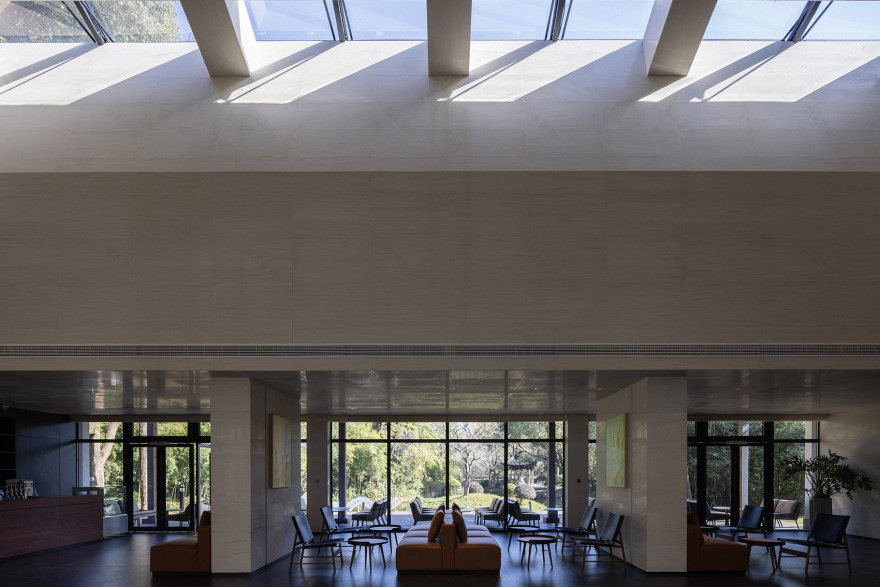
根据合院的原有组团布局,恢复原建筑的采光中庭,结合西溪湿地的对景关系形成各展厅空间。一条打开的线性天光,从通高的大厅洒落。通过建筑界面的重新规划,朝向湿地的方向以落地窗的方式打开,尽可能的收揽自然。朝向街道与广场的人流方向,则以实体的展墙为主,仅留些许高窗,捕捉绿意。
▼剖面,section©中国美术学院风景建筑设计研究总院+森上建筑

According to the original group layout of the courtyard, restore the natural lighting atrium of the original building, and combine it with the landscape relationship of Xixi Wetland to form various exhibition hall spaces. A linear sky light that opens falls from the high hall. Through the re planning of the building interface, open it in the way of french window towards the wetland, and try to capture the nature as much as possible. The direction of pedestrian flow towards the streets and squares is mainly based on physical exhibition walls, with only a few high windows left to capture greenery.
▼线性天光从通高的大厅洒落,a linear sky light that opens falls from the high hall©刘国威

由内及外:
From inside out:
美术馆的一层为三个常驻展厅,展出了其400余件精品漫画,其中包括200余件手稿。二层则为百人大课堂及书画教室,中间设置了灵活可移动的隔断,形成定期举办艺术展览和讲座沙龙的多功能空间。
The first floor of the art museum consists of three permanent exhibition halls, showcasing over 400 exquisite comics, including more than 200 manuscripts. The second floor consists of a classroom which can accommodate hundreds people and a calligraphy and painting classroom, with a flexible and movable partition in the middle, forming a multifunctional space for regular art exhibitions and lecture salons.
▼常驻展厅,permanent exhibition halls©余烨

▼常驻展厅,permanent exhibition halls©刘国威

▼楼梯设计,staircase design©刘国威

美术馆室内的流线除了满足蔡志忠漫画叙事与生平线索的功能布置以外,更强调了由内及外与湿地的对话关系。对于采光要求不高的展厅空间,通过对于窗户形状和朝向的界定,横向长窗勾勒出西溪湿地的长卷,与蔡志忠的漫画世界形成有趣的联动,自然与画作皆是美术馆的展品。
The interior flow of the art museum not only satisfies the functional arrangement of Cai Zhizhong’s comic narrative and life clues, but also emphasizes the dialogue relationship between the inside and outside and the wetland. For exhibition spaces with low lighting requirements, by defining the shape and orientation of the windows, the horizontal long windows outline the long scroll of Xixi Wetland, forming an interesting linkage with Cai Zhizhong’s comic world. Both nature and paintings are exhibits in the art museum.
▼由内及外与湿地的对话关系,the dialogue relationship between the inside and outside and the wetland©余烨


曲院
Curved Yard
原本封闭的中央庭院被重新打开,并赋予了全新的定义。水院的设计,作为雨水收集的同时,也是对湿地溪流的回应。沿内院在二层新增了一圈外廊,由于改造荷载等原因,选择了最为轻质的格栅体系,过滤了阳光的直射,又形成了连续完整的光影序列。驻足于内院,仰望苍穹,寄情于山水湿地间,成为平时主人与游客净心忘我的精神场域。
▼曲院轴测图,curved yard axonometric©中国美术学院风景建筑设计研究总院+森上建筑
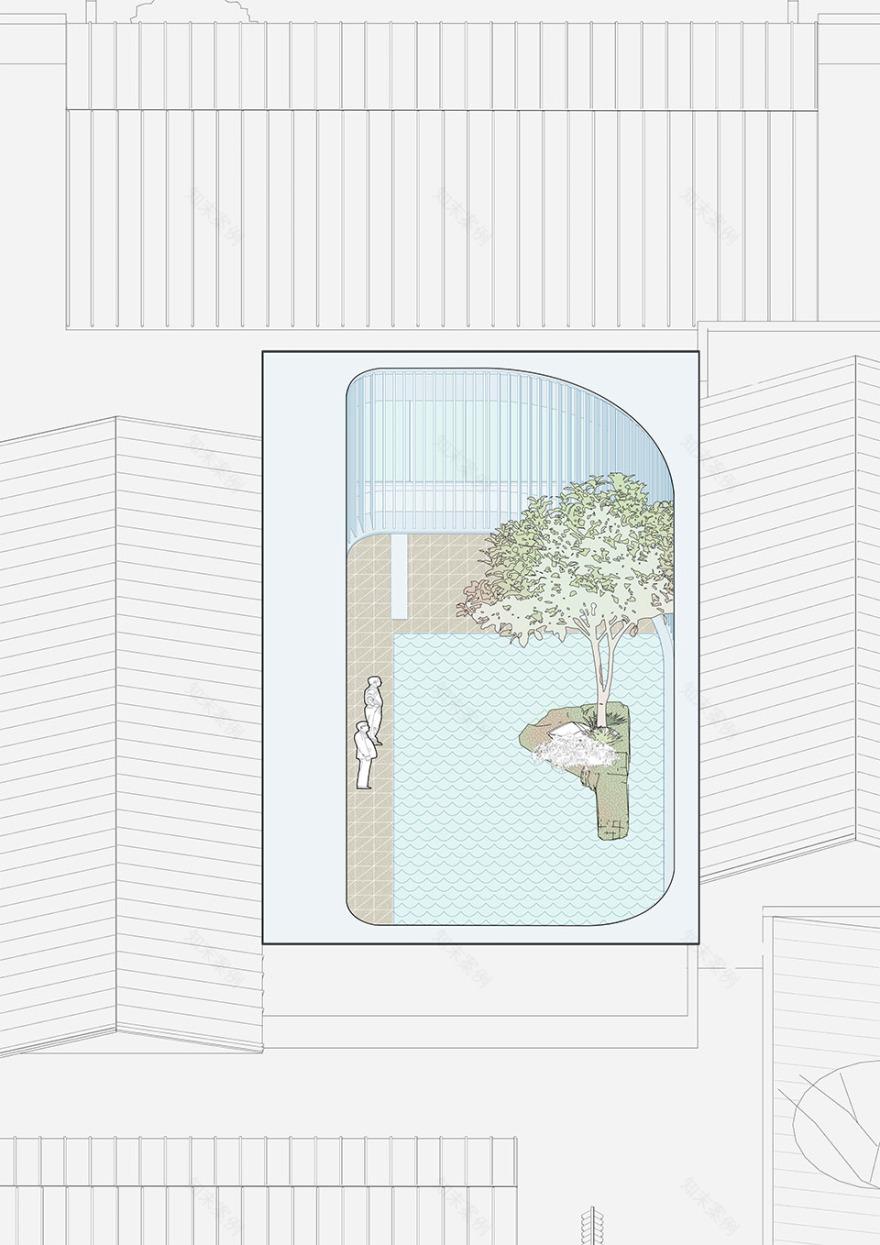
The originally closed central courtyard has been reopened and given a new definition. The design of the water institute not only collects rainwater, but also responds to wetland streams. A new outer corridor has been added along the inner courtyard on the second floor. Due to renovation loads and other reasons, the lightest grille system has been selected to filter out direct sunlight and form a continuous and complete sequence of light and shadow. Standing in the inner courtyard, gazing up at the sky, and immersing oneself in the mountains, waters, and wetlands, it becomes a spiritual field for both hosts and tourists to purify their minds and forget themselves.
▼场地鸟瞰,aerial view of the site©刘国威

▼曲院鸟瞰,aerial view of the curved yard©刘国威

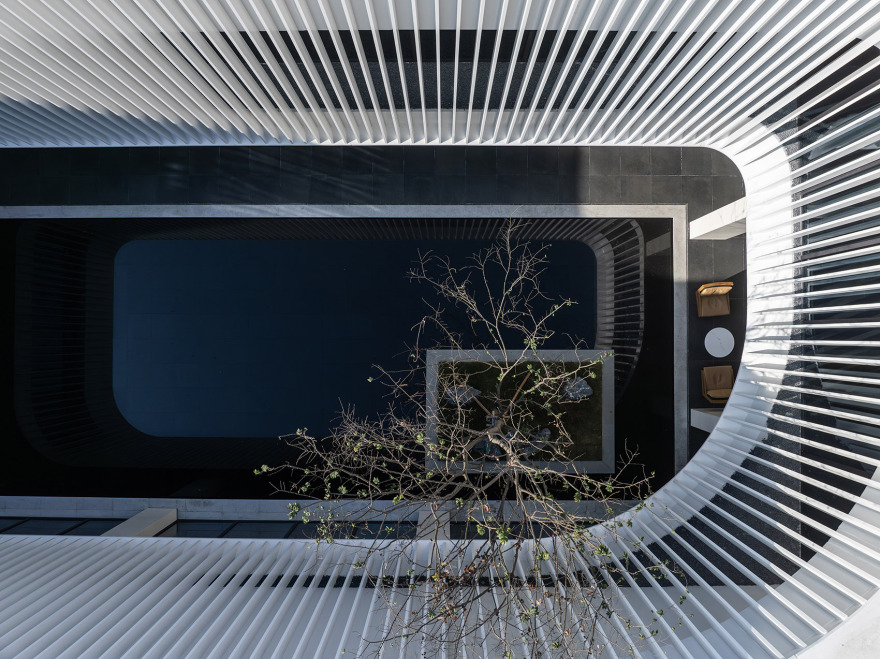
▼被重新打开的中央庭院,reopened central courtyard©刘国威

▼被重新打开的中央庭院,reopened central courtyard©刘国威


▼场地区位,site location©中国美术学院风景建筑设计研究总院+森上建筑

▼一层平面,ground floor plan©中国美术学院风景建筑设计研究总院+森上建筑
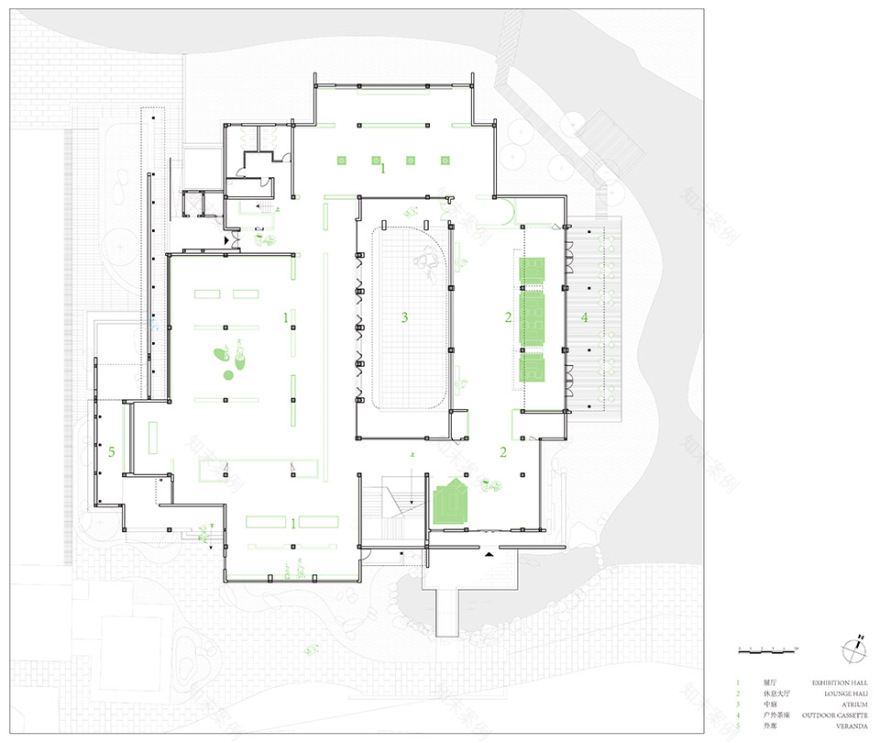
▼二层平面,first floor plan©中国美术学院风景建筑设计研究总院+森上建筑

▼立面,elevation©中国美术学院风景建筑设计研究总院+森上建筑


项目名称:西溪蔡志忠美术馆
项目类型:建筑改造设计
设计方:中国美术学院风景建筑设计研究总院+森上建筑
项目设计:2023.07
完成年份:2024.12
项目主创:章楷、章钧添
建筑立面改造设计团队:孙鸿斐 王宝山
景观设计团队:苏通博、刘畅
室内设计团队:牟夏阳、李浩、张明
项目地址:浙江杭州
建筑面积:3000㎡
摄影版权:刘国威、余烨
材料:钢材,木材,石材
Project Name: Cai Zhizhong Art Museum in Xixi Wetland
Project Type: Architectural Renovation Design
Designer: The Design Institute of Landscape and Architectural China Academy of Art Co., Ltd. + Sens Architects
Project Design: July 2023
Year of completion: December 2024
Project leader:Zhang Kai,Zhang Juntian
Architectural facade renovation design team: Sun Hongfei , Wang Baoshan
Landscape design team:Su Tongbo,Liu Chang
Interior design team: Mou Xiayang,Li Hao,Zhang Ming
Project Address: Hangzhou, Zhejiang
Building area: 3000 square meters
Photography copyright: Liu Guowei ,Yu Ye
Materials: Steel, Wood, Stone


南京喵熊网络科技有限公司 苏ICP备18050492号-4知末 © 2018—2020 . All photos and trademark graphics are copyrighted by their owners.增值电信业务经营许可证(ICP)苏B2-20201444 苏公网安备 32011302321234号
苏公网安备 32011302321234号客服
消息
收藏
下载
最近