

创作上传
VIP
收藏下载
登录 | 注册有礼
查看完整案例

收藏

下载

分享
本项目是荟同学校及其工作坊(Whittle School & Studios)在中国的首个落地项目,未来将成为全球30个WSS校园体系的一部分,遍布世界主要城市。新校园位于深圳前海妈湾开发片区的核心区域——一个由填海而成的全新城市片区。项目用地面积约10,400平方米,位置优越,北侧与东侧紧邻城市公共公园。基地周边是正在建设中的住宅及商业高楼,部分高度可达150米;而沿公园一侧则布置着低层建筑,未来将承载更多公共活动。荟同学校及其工作坊的设计目标是容纳2,200名学生在此学习与成长。
This building represents the first Whittle School & Studios project in China and will be part of a system of 30 WSS campuses in the World’s leading cities. The new school is in the centre of Qianhai Mawan Development in Shenzhen, a completely new district rising from reclaimed land. The site is on a 10,400 sqm plot, conveniently situated and bordered on the North/East by the new urban public park. The site is surrounded by residential and commercial towers reaching up to 150m, some of which are currently under construction. Low-rise buildings are located along the district park where there will be more public activities. The Whittle School & Studios has been designed to be a place for 2,200 students to learn and grow.
▼建筑日景, day view of the building ©Zhang Chao

▼建筑夜景, night view of the building ©Zhang Chao

学校总建筑面积为58,000平方米,由两栋建筑组成。主楼高度32米,建筑平面为70米×70米,共十层,其中地上八层,地下两层。中部18米高的体量整体架空6米,并被划分为八个块状单元。底层及上部三层设有退台处理,以突出中部四层的体量感。主楼西侧另设有一座三层的小体量建筑,前方为景观化的户外活动场地。
▼草图,sketch ©Renzo Piano

The 58,000 sqm school is organised into two buildings. The main building is 32m high with a footprint of 70m by 70m and is organized on ten floors, eight above ground and two below. The 18m-high central volume is levitating 6m above grade and its mass is broken up into eight blocks. The ground and three upper floors are set back to emphasize the volume of the middle four levels. A smaller three-storey building sits just West, with a landscaped playground in front.
▼建筑立面细部, facade detail ©Zhang Chao
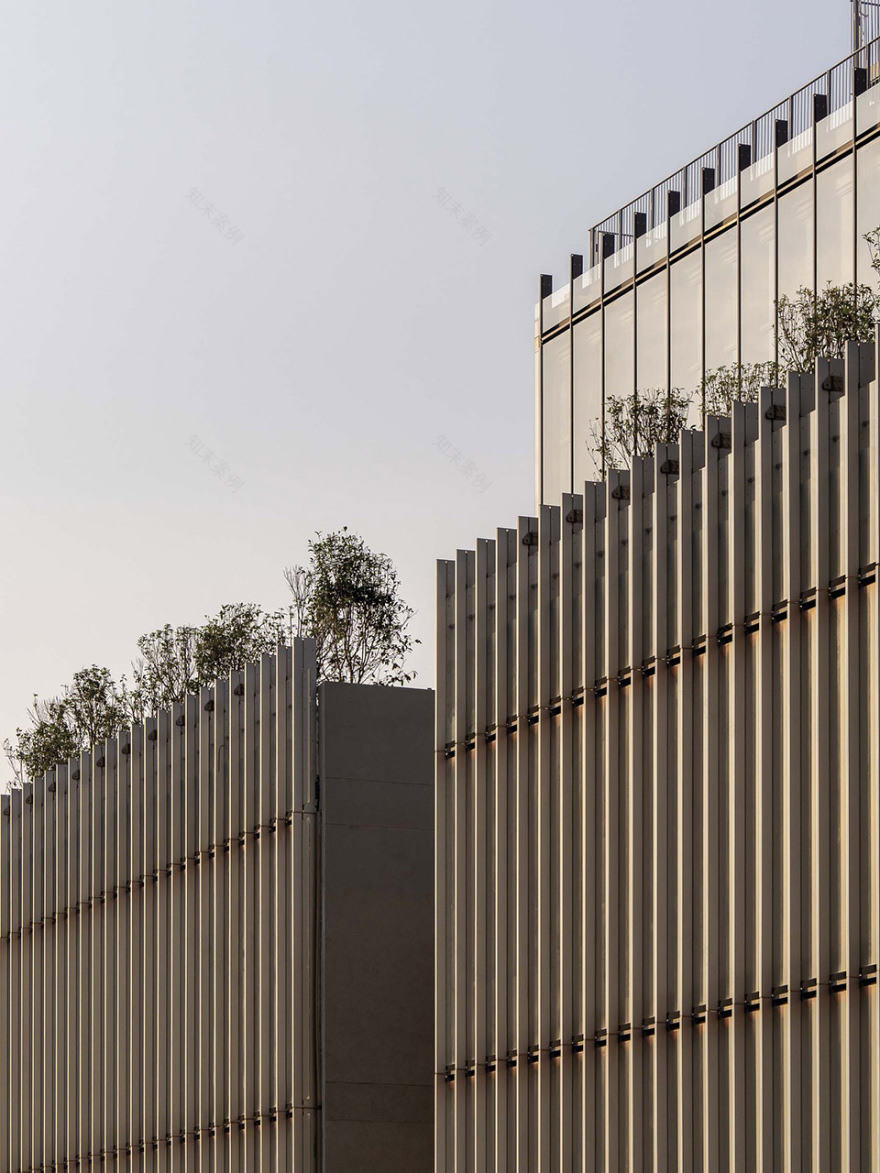

项目的核心理念是:校园应当如同一个“教育村落”。其尺度和体量可类比为一座意大利中世纪山城,由彼此互动的单体建筑构成。正如中世纪小镇中心常设广场以供居民交流,WSS校园的多个功能单元也围绕学生社交活动的核心节点组织布局。
▼模型照片,model photo ©Renzo Piano Building Workshop Architects

At the core of the design is the view that a school should be like an educational village. The school’s size and scale are comparable to that of a medieval hilltop Italian town made of singular buildings interacting with each other. As the medieval layout has a piazza for its residents to gather and meet, the programmatic blocks of the school are gathered around a central node of activities for the students’ social life.
▼校园应当如同一个“教育村落”, a school should be like an educational village ©Zhang Chao
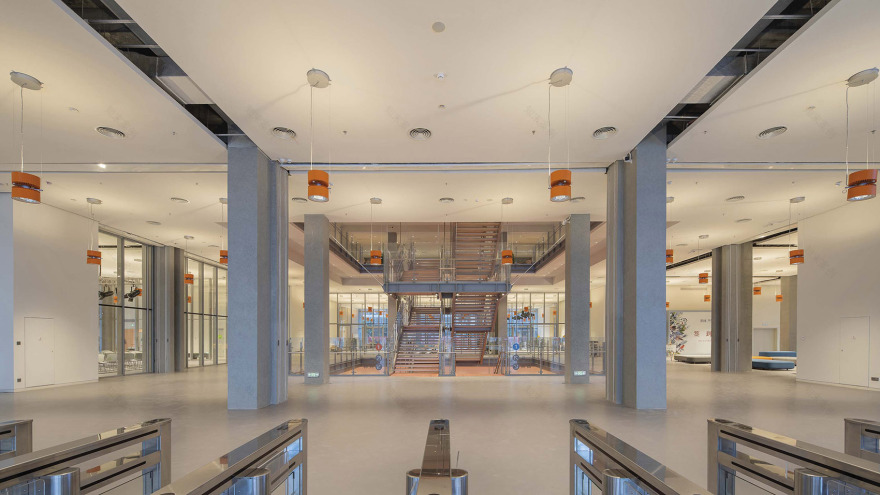
底层层高为6米,视觉通透,是建筑与外部世界开放交流的场所,学生可在安全环境中与社区互动。该区域整日充满活力,课后亦对城市开放,地下层设有可对外开放的演出空间及运动中心。该层的核心是一个设有连通楼梯和中庭的交通枢纽,连接下方的公共空间与上方的教学空间。
The ground floor is 6m high and visually transparent. It becomes a space where the building opens up to the external world and enables the students to interact with the community in a safe environment. The public areas are alive throughout the day and open to the city after school hours when the performance spaces and athletic complex in the levels below become accessible to the public. In the heart of this level, the central nexus of circulation stairs and atrium serves as a connecting point between the public spaces below and the academic incubator above.
▼底层层高6米公共教学空间,6m hight public teaching place on the ground floor ©Zhang Chao

教学核心区位于中部四层。第二层作为过渡空间,连接公共区域与私密的学校区域,设有辅助功能区、创客实验室及展览空间,不仅为学生服务,也向社区开放。其上三层分别为小学、初中与高中部。每层设有24间教室,单间面积70平方米,层高3.2米,均位于建筑外围,享有良好的自然采光与外部视野。主要公共空间面向中央楼梯,并从顶部天窗引入自然光。
The educational hub is organised on the four middle levels. The first, Level Two, is a transitional space between the public area and the private school. There are ancillary program spaces, maker laboratories, and exhibition centres. They serve as learning spaces and lecture halls for students and the community. The remaining three floors each contain a specific school: lower, middle, and high. Each school has twenty-four classrooms 3,2m high and 70sqm in size, all located on the perimeter with a direct view to the outside. The main commons face the central stairs and receive natural daylight from above.
▼连通楼梯和中庭的交通枢纽,the central nexus of circulation stairs and atrium ©Zhang Chao

幼儿园的主入口及主要共享空间位于主楼南侧一层,设有实验室、体育馆和剧场等功能。18间教学单元则设于独立的西侧小楼,面向一个专属花园与游乐区。两栋楼之间通过一座玻璃温室相连,该处设有实验性绿色实验室。
The kindergarten’s main entrance and common spaces are on the South side of the main ground floor with laboratories, gym, and a theatre – while the 18 dedicated learning studios are in the more intimate, separate building. All the studios face a private garden and playground. The connection between the buildings is through a glass house hosting experimental green laboratories.
▼中庭连接所有区域,atrium connects all areas ©Zhang Chao

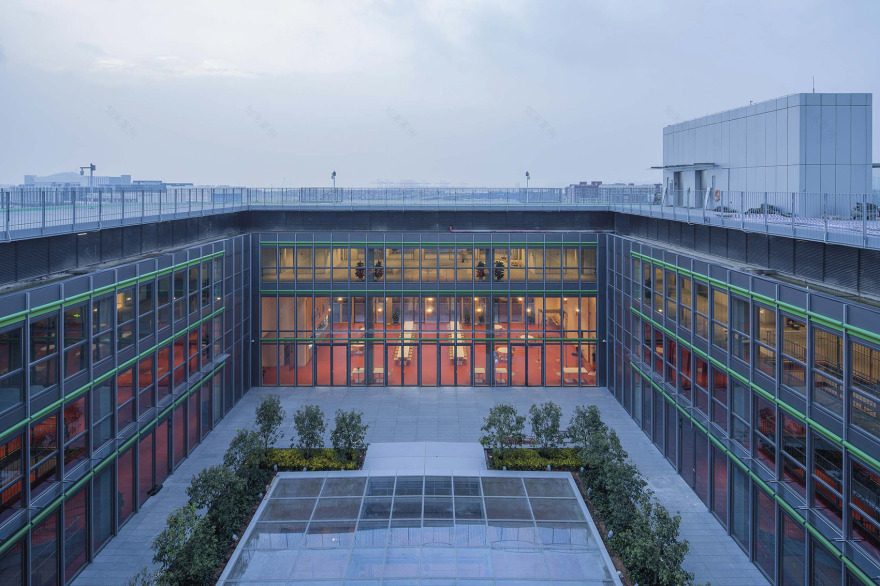
与传统校园不同,该校的“校园层”位于第六层,也就是教学区之上,供学生在此用餐、休憩,俯瞰公园与城市。外围露台与中央庭院种植树木,营造舒适的户外活动空间。屋顶区域亦被设计为可供教学与体育活动使用的场所,与地下运动中心相辅相成。
Unlike other education facility models, the campus level of this school sits on top of the educational block, at Level Six, where the students can enjoy their dining and leisure time in a private place overlooking the park and the city. The perimeter terrace and central courtyard are planted with trees, shading these outdoor spaces. Furthermore, the roof above becomes a place for learning and sport activities complimenting the athletic complex below.
▼简洁、开放与高效的空间特质,simplicity, openness, and efficiency ©Zhang Chao
在设计理念上,WSS受到工厂建筑的简洁、开放与高效特质启发。视觉上采用工业语言,保留裸露的设备管线与结构构件。整座建筑是一个具有互动性与包容性的学习空间,将成为学生综合教育体验的重要组成部分。
Conceptually the design of the WSS has been inspired by the simplicity, openness, and efficiency of a factory. Visually, the spaces have an industrial language with exposed services and structure. The whole building will be an interactive and nurturing space for future generations and will play a role in the holistic educational experience.
▼保留裸露的设备管线与结构构件,exposed services and structure ©Zhang Chao

建筑强调开放性与视觉通透性,确保自然光的引入并强化与社区的联系,营造空间之间的视觉联动,使学生既有归属感,也能与外部世界建立联系。自然元素特别有助于激发学生灵感并提升其身心健康。因此,建筑尽量减小占地面积,为底层预留更多空间种植高大乔木,同时在第六层外围与庭院种植小型树木,实现校园与新建城市公园的融合。从空中俯瞰,该建筑就像城市绿带的自然延伸。自然采光是设计优先项之一。白天,智能玻璃立面与中央天井将受控自然光引入室内;而到了夜晚,灯光渐次点亮,整座校园如同城市中的一盏“魔法灯笼”。
▼剖面, section ©Renzo Piano Building Workshop Architects

The openness and visual transparency provide natural light and an experiential connection to the community. It creates visual links between the spaces and creates a sense of belonging to the school and the outside world. Nature, in particular, inspires the students and improves their well-being. That is why the building footprint has been reduced to the minimum. This allows taller trees on the ground level, while smaller trees are placed on Level 6 along the perimeter and in the central courtyard and integrates the building within the new urban park. From above, the site becomes a natural appendix of the city’s green belt. Daylight is priority in this school. During the day, controlled natural light fills the spaces entering the building through the intelligent glazed facades and the large central light-well over the stair. While in the evening, as the daylight fades, artificial lights gradually turn on and the school begins to glow like a magic lantern in the city.
▼自然采光是设计优先项之一,daylight is priority in this school ©Zhang Chao
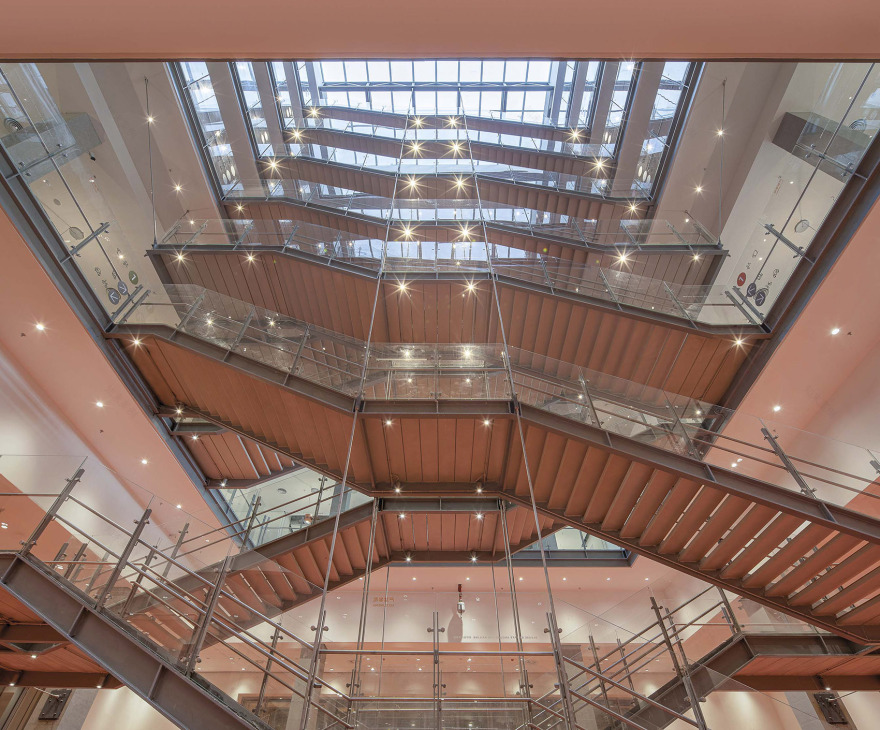
除了光与通透性,内部设计也营造出温馨与友好的氛围。通过策略性地使用色彩,为空间注入活力,激发尤其是年幼学生的创造力。主楼梯、地面及灯具等公共功能区域加入温暖色调,室内家具则选用温润的胶合板材料,营造灵活实用的学习环境。典型教室配备两块大面积的胶合板展示墙,并配有可滑动的玻璃书写板,形成简洁而高效的教学空间,鼓励学生动手创作、展示作品、分享观点与开展讨论
Paired with the emphasis on light and transparency is a warm and welcoming approach to the interior design. The strategic use of colour creates a lively and joyful atmosphere, and stimulate the students’ creativity, especially at younger ages. A warm colour has been introduced on the main stairs, floors, and smaller elements such as the lighting features to enhance their public functions. A warm plywood material has been selected for the interior furniture and flexible workable areas. A typical classroom has two large pinup plywood panels with sliding glass writing surfaces that create a frugal but practical space for different teaching methods: the students are invited to make, display, share, and debate.
▼教室内部营造温馨与友好的氛围,a warm and welcoming approach to the interior design ©Zhang Chao

学生在校园中居于中心地位,他们的舒适感至关重要。学习并非单一方式,而是随着日光、季节变化而展开的多样体验。建筑采用诸如外遮阳、光过滤等被动式设计策略,营造丰富的感官变化体验。诸如玻璃温室与中庭等视觉联通的学习空间,让学生在“室内—室外”的环境中,亲身感知周遭环境的影响。这一切汇聚成一个结论:这座建筑本身就是教育过程中的“积极参与者”。
The students play a central role in their education and their comfort is essential. Learning happens in many ways and students will experience changes in the day and season with passive building strategies like exterior shading, light filtration, and other embedded design elements. Hands-on learning spaces like the Glass House or visually connective central atrium provide unique opportunities to study the direct effects of their surroundings in an indoor / outdoor environment. Together the experience culminates in the building being an active participant in the teaching environment of the school.
▼建筑夜景,night view of the building ©Zhang Chao

▼地下一层平面,basement plan ©Renzo Piano Building Workshop Architects
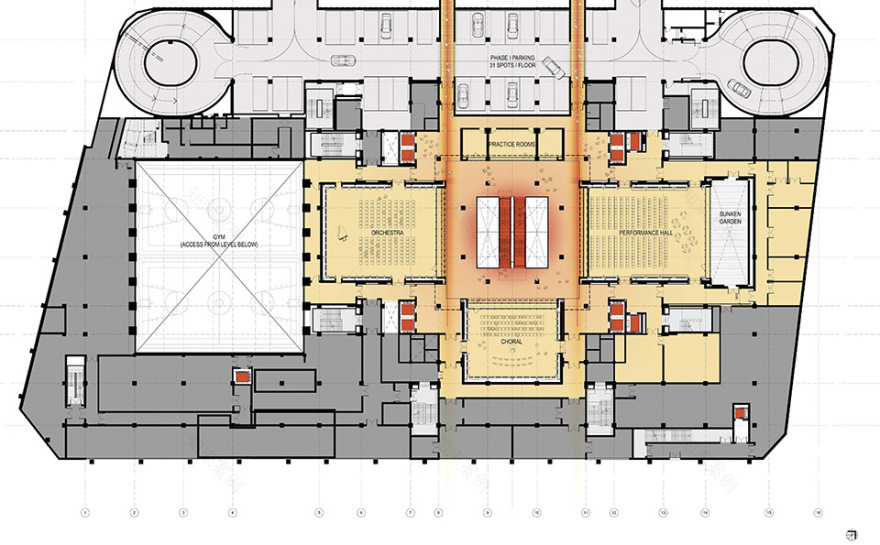
▼一层平面, ground floor plan ©Renzo Piano Building Workshop Architects

▼五层平面,Level 5 Functional plan ©Renzo Piano Building Workshop Architects

▼六层平面,Level 6 Functional plan ©Renzo Piano Building Workshop Architects

▼建筑表皮剖面,facade section ©Renzo Piano Building Workshop Architects

Location:Shenzhen, China
Client: Whittle School & Studios
Renzo Piano Building Workshop, architects
in collaboration with China Construction Design International (Shenzhen) and Group of Architects Co.,Ltd.(GOA), Hangzhou
Design team: M.Carroll (partner in charge), O.De Nooyer, D.Piano, S.Lafranconi, P.Fang with G.Boller, E.Ginocchio, L.Jin, Z.Kuehn, M.Ottonello, L.Peraita, S.Polotti, and J.Jiang, R.Raimondi, M.Tokarnia, V.Volpi; B.Pignatti, A.Pizzolato, G.Semprini, C.Zaccaria (CGI); M. Abidos, F.Cappellini, D.Lange, F.Terranova (models)
Consultants: Arup (structure, MEP, façade, lighting, acoustic); Alvisi Kirimoto & Partners (interior design); Studio Giorgetta (landscaping)
Year: 2016-2019
南京喵熊网络科技有限公司 苏ICP备18050492号-4知末 © 2018—2020 . All photos and trademark graphics are copyrighted by their owners.增值电信业务经营许可证(ICP)苏B2-20201444 苏公网安备 32011302321234号
苏公网安备 32011302321234号客服
消息
收藏
下载
最近