

创作上传
VIP
收藏下载
登录 | 注册有礼
查看完整案例

收藏

下载

分享
Louisiana Children’s Museum: A Joyous Landscape in City Park|Mithun
项目陈述
PROJECT STATEMENT
路易斯安那儿童博物馆设想了一种儿童博物馆的新模式:在这个国家最缺乏服务的地区之一,儿童和家庭将有丰富的方式来探索艺术、感官和自然世界。城市公园是位于野生动物丰富的泻湖边缘,是当地公民机构建筑群的一部分,为当地儿童提供了一个理想的生活教室。场地设计整合了现有的老橡树、新博物馆建筑和体验式户外空间,展示了新奥尔良和世界面临的一些挑战性问题的解决方案,包括沿海海岸线破坏、水管理、粮食不安全和气候适应问题等。
Louisiana Children’s Museum envisioned a new model for children’s museums: a place where children and families in one of the nation’s most underserved regions would have a wealth of ways to explore the artistic, sensory and natural worlds. The City Park site is part of a collection of civic institutions sitting on the edge of a lagoon teeming with wildlife and provides an ideal living classroom. The site design integrates mature live oaks, the new museum building, and experiential outdoor spaces that demonstrate solutions to some of the challenging issues facing New Orleans and the world, including coastal shoreline loss, water management, food insecurity and climate adaptation.
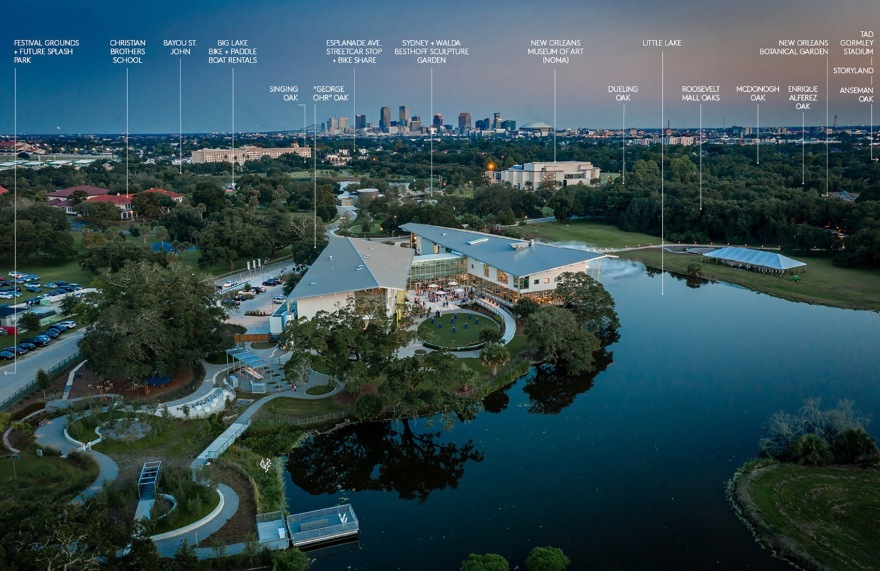
▲陆地与水体的交汇处:路易斯安那儿童博物馆坐落在城市公园丰富的自然和文化环境中,位于Pontchartrain湖和新奥尔良的边缘,Where Land and Water Mix: Louisiana Children’s Museum is situated in an abundant natural and cultural setting in City Park, at the edge of Lake Pontchartrain and New Orleans. © Photo by Kevin Barraco, Smart Media LLC
项目说明
PROJECT NARRATIVE
2005年卡特里娜飓风过后,路易斯安那州儿童博物馆(LCM)重新审视了自己的使命,作为教育成果常年排名美国第48位的州,路易斯安那州决定要从整体上解决儿童的健康和发展问题。与自然的连接对于儿童的健康与福祉至关重要,因此,博物馆从新奥尔良仓库区搬迁至泻湖旁的园区中,旁边则是当地几代人熟知的城市公园,公园内还坐落则其他博物馆和景点。充满自然的园区为儿童博物馆提供了全新的变革模式,将室内外学习机会与扫盲、育儿、幼儿研究和环境教育活动结合在一起,为儿童及其家庭创造一个全面且富有支持性的环境。
建筑和场地的设计旨在应对当地周期性的洪水,并缓解炎热潮湿的气候。综合设计优化了成熟的活橡树树荫,作为世界上最大的活橡树林,旁边又坐落着美丽的淡水泻湖,因此,场地被设计为当地的雨水接收区,缓解了市中心社区的洪水威胁。设计将家庭与这些基于自然的系统联系起来 —— 穿过活橡树林,穿过水面,通过沉浸式展览,进入庭院和感官花园。
以儿童为中心的游戏场地以简单的景观地形的形式呈现出来,象征了当地的橡树林、小山丘和山谷。在三角洲景观中,6英寸的地形变化就能形成完全不同的生态系统。这些细微的地形变化和剧烈的生态系统变化是设计理念的支柱。小丘和洼地的概念以多种方式在多个尺度上展开 —— 作为小型、中型和大型的项目和户外展览区,创造了不同的游戏体验,并建立了健康的栖息地。国际生活未来研究所授予该项目2021年Stephen R. Kellert亲生物设计奖。
Reggio Emilia的儿童发展理念是一种以儿童为中心的方法,强调多感官的自然游戏,这种理念指导了本项目对于体验和触觉元素的设计,这些元素投射出变化的阴影,激发了互动式雨水参与,同时体现了节能和雨水再利用。在疫情期间,博物馆转向接收附近一所特许学校的学前班和幼儿园学生(其中94%生活在贫困线以下)每天上课,为支持周边社区提供了关键服务。在此期间,学生们的考试成绩显著提高。
这座新博物馆改变了这座城市,甚至整个州。全州的月平均上座率增加了两倍。新奥尔良州长和市长以博物馆为示范点,增加了对儿童早期发展的财政支持。最近的一项区域经济组织调查表明,儿童早期发展已经成为了该地区的首要任务。作为系列项目的一部分,本项目的弹性绿色基础设施帮助该市通过2015年全国抗灾能力竞赛赢得了1.41亿美元的拨款。该项目的实际可持续发展表现和运营经验为其赢得了2022年AIA COTE十佳奖的认可。评审团评论说:“在饱受洪水威胁的地区,该项目体现了一种有弹性的生活方式。”

▲到达体验:停车场上的草丘和生物沼泽将游客引导至大型门廊,Inviting Arrival: Grassy mounds and bioswales in the parking plaza invite visitors to the big porch. © Photo by Kevin Scott

▲展示韧性:可淹场地支持了城市的水管理系统,获得了LEED金牌认证,是SITES的试点项目,Demonstrating Resilience: The floodable site supports the City’s urban water plan, is LEED Gold certified and was a SITES pilot project. © Image by Mithun
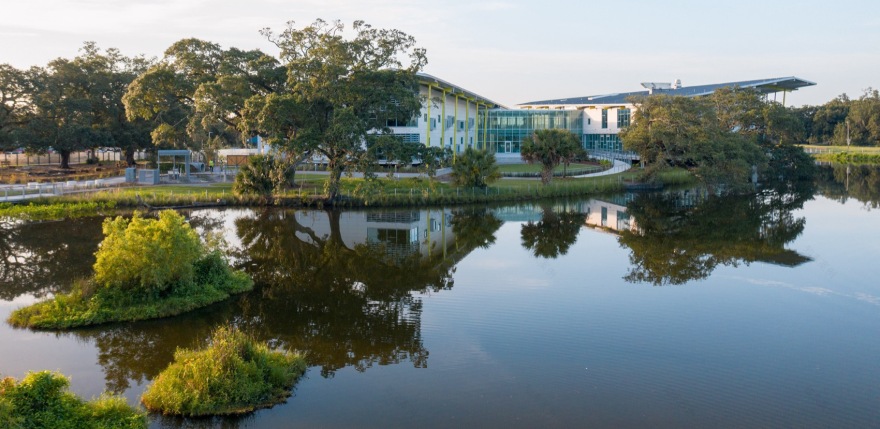
▲体验景观:由孩子们自己滑动的漂浮教室驳船上看漂浮的生物岛,An Experiential Landscape: View of floating bio islands from the floating classroom barge that moves by “kid power”. © Photo by Webb Bland

▲橡树、小丘和洼地:河口的自然景观造就了设计概念,Oaks, Hummocks and Hollows: The patterns of the bayou landscape form the design concept. © Diagrams by Mithun. Lower left photo of oak tree: Photo by Kevin Scott. Right two photos by Mithun.

▲一系列的游戏小丘:游戏小丘提供了一系列的感官活动,包括:打鼓,色彩训练、观鸟,以及跳跃和玩耍,A Series of Play Hummocks: The hummocks include a series of yaupon groves with sensory activities – playing drums, spotting colors or birds, and an invitation to hop and move. © Diagrams by Mithun. Photos from left to right: photos 1-3 by Kevin Scott, photo 4 by Mithun (Christian Runge).
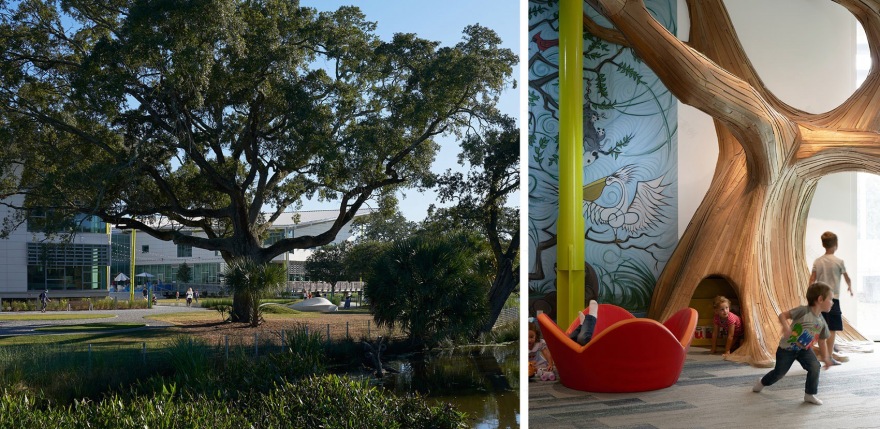
▲从室内和室外的游戏中学习:游戏教学法与大量的学习展览相互补充协调,Learning Through Play, Indoors and Out: The pedagogy of play was coordinated to repeat learning exhibit experiences. © Photos by Kevin Scott

▲食物和水之间的联系:一条溪水穿过种有可食用植物的小山丘,经过厨房和蔬菜园,到达小山丘的水闸,创造出有意义的游戏和学习体验,The Connection Between Food and Water: A runnel flows through the Edible Hummock, past the kitchen and vegetable beds to a sluice gate at the Hummock Hop—enticing active play and learning. © Photo by Mithun (Christian Runge)

▲在小丘之间的想象力游戏:孩子们可以在这里进行跳房子等富有想象力的游戏,Imagination Play at the Hummock Hop: The hummock hop attracts imaginative play. © Photo by Kevin Scott

▲从Bayou Sauvage到新奥尔良港的植物中汲取灵感:海拔的微小变化导致路易斯安那州生态系统的重大差异,植物的聚集使这些变化更加明显,Plant Inspiration from Bayou Sauvage to the Port of New Orleans: Small changes in elevation result in major differences in ecosystems in Louisiana. Plant massing makes these changes more visible. © Diagram and Photos by Mithun

▲建筑与场地的融合:建筑融入活像树林中,窗口形成了景观的画框,并在柱子中反映了马尾草的色彩,Integration of Building and Site: Integration characterizes the work—siting the building among live oaks, framing views, and reflecting the color of the horsetail in the columns. © Photo by Mithun (Christian Runge)
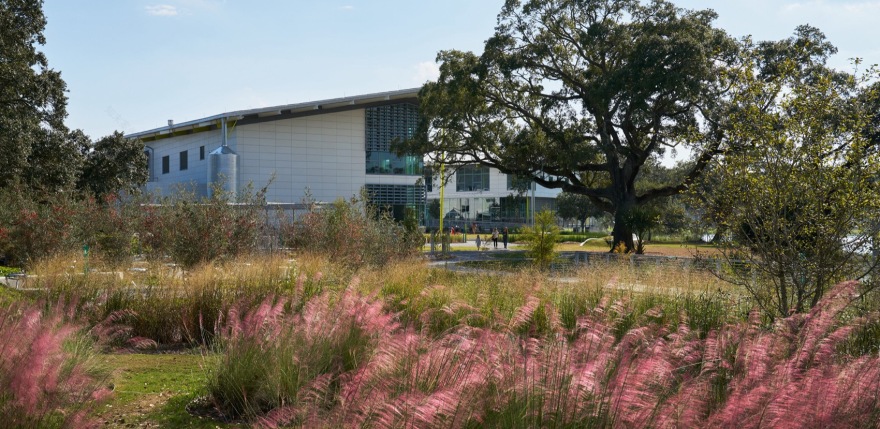
▲一个充满活力的地方:博物馆的景观和建筑融入了新奥尔良的生态、水文和文化,吸引了人、水和物种的动态流动,One Dynamic Place: The museum landscape and building blend into the ecology, hydrology and culture of New Orleans—engaging a dynamic flow of people, water and species. © Photo by Kevin Scott

▲纪念碑式的景观节点体现了对新奥尔良儿童的支持:场地装置是祖父母、父母和孩子坐下来玩耍和反思的社交场所,Memorial Honoring a Legacy of Support for New Orleans’ Children: This site installation is a socially engaging place for grandparents, parents and children to sit, play and reflect. © Diagrams by Mithun. Photos by Kevin Scott.

▲水带来的舒适感:Fujiko Nakaya创作的水雾装置与桥中平台相结合,吸引游客在水中玩耍,以疗愈暴风雨给人们带来的心理创伤,Comfort with Water: Fujiko Nakaya’s Fog installation integrated with the bridge arrival engages visitors in water play, a therapeutic way to address storm-related trauma. © Image by Mithun

▲开放后调查:博物馆开放后调查发现人们的体验与设计的原始原则和价值观之间存在一致性,Post Occupancy Survey: The post-occupancy survey found alignment between people’s experiences and the design’s original principles and values. © Charts by Mithun. Icon by Gan Khoon Lay / The Noun Project

▲总平面图:五英亩的博物馆场地免费向公众开放,Site Plan: Five acres of the museum grounds are free and open to the public. © Image by Mithun
PROJECT NARRATIVE
After Hurricane Katrina in 2005, Louisiana Children’s Museum (LCM) re-envisioned its mission to holistically address the health and development of children in a state that often ranks 48th in educational outcomes. The health and well-being benefits of intentionally connecting children with nature led the museum to relocate from an indoor-focused experience in New Orleans’ Warehouse District to a new campus encircling a lagoon alongside other museums and attractions in City Park, where families have been going for generations. The new campus presents a transformative model for children’s museums, one that weaves together indoor and outdoor learning opportunities along with literacy, parenting, early childhood research and environmental education activities to create a holistic and supportive environment for children and their families.
The building and site were designed to accommodate periodic flooding, and mitigate the hot, humid climate. The integrated design optimizes the shade of mature live oak trees, the world’s largest grove of live oaks, and the flow of a freshwater lagoon as a local stormwater receiving area that relieves flooding in downtown neighborhoods. The choreography of the visitor experience connects families with these nature-based systems—moving through groves of live oaks, across water, through immersive exhibits and into a courtyard and sensory gardens.
The magic of child-centered play is reinforced with a simple expression of the local landscape—the oaks, the hummocks and the hollows. In the delta landscape, a six-inch topographic change enables a wholly different ecosystem. These slight variations in topography and dramatic ecosystem change are the backbone of the design concept. The hummocks and hollows concept unfolds in multiple ways across multiple scales—as small, medium, and large program and outdoor exhibit areas create varied play experiences and build healthy habitat. The International Living Future Institute recognized the project with the 2021 Stephen R. Kellert Biophilic Design Award.
The Reggio Emilia child development philosophy—a child-centered approach that emphasizes multisensory nature play—guided the design of experiential and haptic elements that cast changing shadows and inspire interactive rainwater engagement while providing energy reductions and stormwater utility. During the pandemic, the museum pivoted to host preschool and kindergarten students (94% of whom are living under the poverty line) from a nearby charter school for daily classes, providing a critical service to support the surrounding community. Test scores during this time dramatically increased.
The new museum has changed the city and the state. Average monthly attendance from across the state has tripled. The Governor and the Mayor of New Orleans increased financial support for early childhood development citing the Museum’s example. And a recent regional economic group survey identified early childhood development as the top priority within the region. As part of a suite of projects, LCM’s resilient green infrastructure helped the City win a $141 million grant through the 2015 National Disaster Resilience Competition. The project’s exemplary actual sustainable performance and post-occupancy lessons earned recognition with a 2022 AIA COTE Top Ten Plus Award. The jury remarked, “This project exemplifies a resilient way of living with water in a place that is continuously challenged by its proximity to it.”
Project Credits
Pastorek Habitats, Local Landscape Architect
Schrenk Endom Flanagan, Civil Engineer
Biohabitats, Ecology and Permitting Advisor
Gyroscope Inc., Exhibit Design
Landscape Images, Adventure Play Area Design
ARUP, Site Lighting, MEP Engineer, AV & Acoustics
Mithun, Architecture, Interior Design
Waggonner & Ball Architects, Local Collaborating Architect
Roy Anderson Corp., General Contractor
RCI, Landscape Subcontractor
Thornton Thomasetti, Structural Engineer
Vanir Construction Management, Inc., Construction Manager
William Brown (WBLA), Irrigation Design
Fujiko Nakaya / MEE Fog, Site Art Installation
Mitchell Gaudet, Glass Artist (Mardi Gras beads, glass lens at Burrowing Hummock)
Studio Matthews, Environmental Graphics
Bayou Tree Service, Live Oak Specialist
Pastorek Habitats, Planting Design Consultant
南京喵熊网络科技有限公司 苏ICP备18050492号-4知末 © 2018—2020 . All photos and trademark graphics are copyrighted by their owners.增值电信业务经营许可证(ICP)苏B2-20201444 苏公网安备 32011302321234号
苏公网安备 32011302321234号客服
消息
收藏
下载
最近