

创作上传
VIP
收藏下载
登录 | 注册有礼
查看完整案例

收藏

下载

分享

翻译
Architects:GOA (Group of Architects)
Area:55400m²
Year:2024
Photographs:In Between,Chen Xi Studio
Manufacturers:AkzoNobel,Menphis,Mingyue
Landscape:CICADA,MEDG
Interior:Hirsch Bedner Associates,Gold Mantis
Category:Hotels
Construction Drawing:SCG Architecture & Urban Planning
Hotel Management:Banyan Tree
City:Suzhou
Country:China
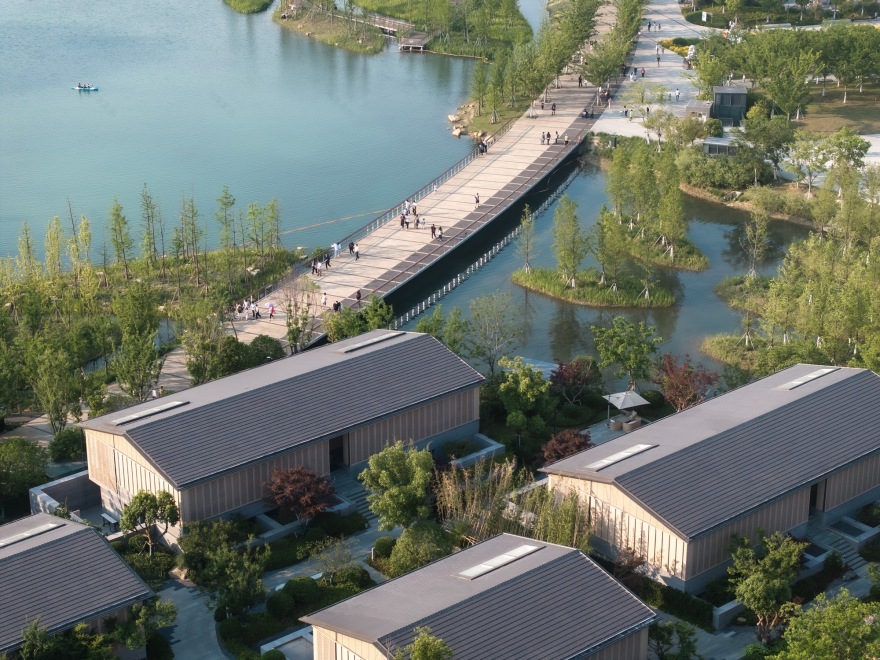
Text description provided by the architects. As a Suzhou proverb goes, "The Shishan (Lion) Mountain gazes back at Huqiu (Tiger) Hill," where its towering grandeur looks eastward toward the five peaks crowned by Huqiu Hill and the ancient city beyond. Urban expansion has encased this area within the downtown while preserving a piece of landscape within Shsihan Park. Surrounding this park, landmark buildings rise in harmony with nature. Nestled at the southern foot of the hill, the project stands bordered by the canal to the south and backed by mountains to the north.
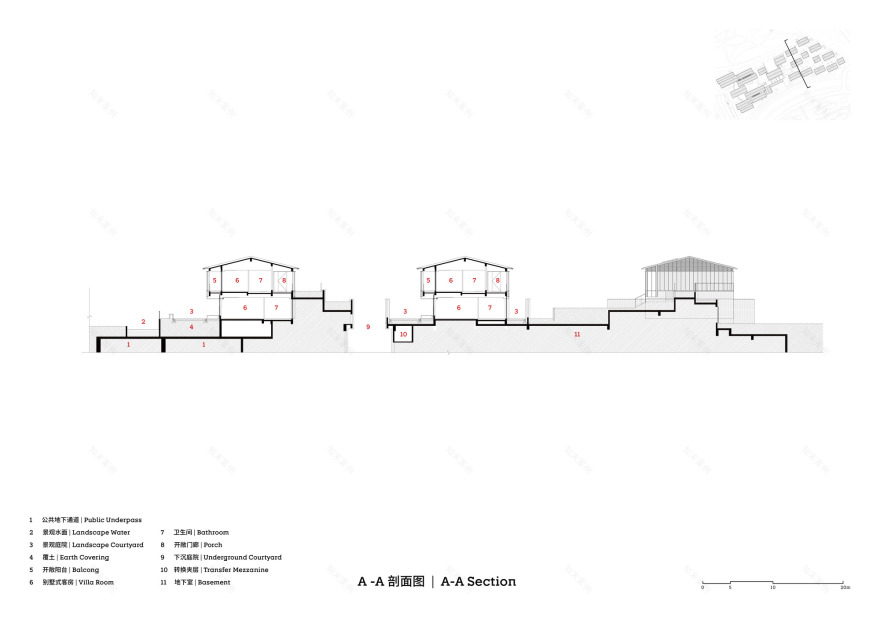
The site in a public park posed a primary challenge to the architects: to create a serene space within a highly visible location. Seeking inspiration from local vernacular, the architects abandoned enclosed walls. Instead, they elevated the entire complex to create topographic separation, deflecting direct sightlines from the surroundings. This raised platform base accommodates the most public functions of Banyan Tree and Angsana hotels. Above it, referencing the scale of traditional South China residences, the lobby, restaurant, and guestrooms are dispersed into smaller volumes with pitched roofs. Capped at 12 meters above ground, these structures merge into the landscape with restraint.
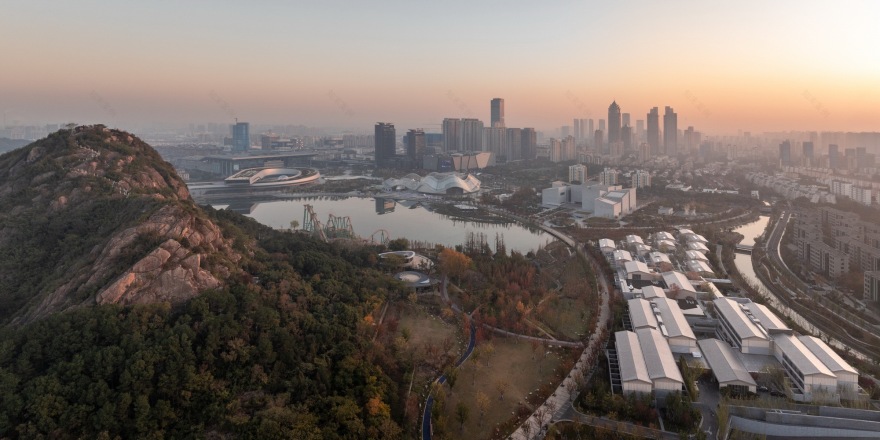

Flanked by the park to the north and the city to the south, the site demanded a layout mediating distinct textures. Varying-length volumes align east-west, adopting an arrangement that traces the contour of the lake. Along the central axis facing Shishan Mountain, an expansive openness unfolds, dotted with spaces like the main entrance, lobby, and dining. To either side, guest rooms of the Banyan Tree and Angsana hotels extend, their heights stepping down as a configuration dictated by functional needs while artfully hugging the hill topography.


Weaving Gardens Between the StructuresSuzhou is celebrated for its gardens. Within the ancient city, courtyards nestle amidst high-density urban fabric, while whimsical architectural vignettes scatter through the gardens themselves. At Shishan Park, the hotel emerges as a "structure within a garden"; yet at the project's own scale, interlaced landscapes between its buildings transform it into "gardens within the structure." This multi-scalar layering dissolves boundaries between building and landscape. Thus, the figure-ground relationship of gardens and structures intrinsic to Suzhou's classical paradigm is inverted.


While maintaining a uniform scale, the individual structures adopt distinct forms, allow garden-making through enclosure. In multiple courtyards, verdant vegetation permeates interstitial gardens, reaching the waterfront and connecting nested scenes—each frame a vista. The architects abstracted the motifs of landscape to explore modernity in design, sculpted three-dimensional courtyards that undulate like hills. Platforms rise from flat ground to form terraces, while depressions become valleys; a series of interconnected "terrace gardens" and "valley gardens" culminates in a singular landscape experience.


Reframing the Familiar SceneryInspired by Suzhou Gardens' ever-shifting scenography, the architects crafted multi-layered landscape experiences: Public areas including the banquet and gym, along the central axis, are concealed beneath the elevated base, allowing the lobby above to command unobstructed views of the park. The platform's tiered height differentials enable most guest rooms to draw mountain vistas as scenery, framing distant landscapes. Enclosed by buildings, courtyards emerge as a framed middle ground. Meanwhile, internal gardens flanking the villas deliver intimate landscapes within reach as a curated foreground experience.
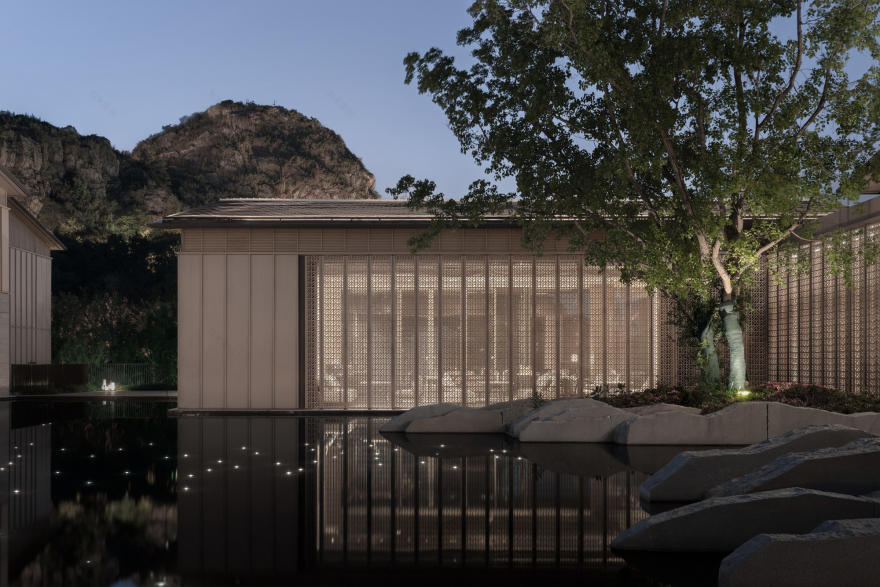

The architects translated cultural heritage through material choices. The wood-grain aluminum panel cladding pays homage to China's timber construction traditions. Meanwhile, lattice windows and terracotta walls echo The Craft of Gardens' adage: "Capture the refined, screen the vulgar." Their semi-translucency, mediating between solid walls and transparent glass, filters landscapes into view neither fully captured nor entirely concealed. Below, stone cladding emulates local brick walls; its somber texture contrasts with the upper section's ethereal transparency. At dusk, the façade transforms into a lantern-lit pavilion, where the balance of material weight yields stark dialogues of light and shadow.


In the Four Seasons of Landscapes scroll, Song dynasty painter Liu Songnian captured an ideal relationship between architecture and nature in scholarly life: a gabled retreat perched on a waterside platform, gazing toward distant peaks. A resort hotel at the urban-natural interface now reimagines this scene. The architects seek an equilibrium between traditional vocabulary and contemporary expression. Where ancient scholars once symbolized the boundless cosmos within their intimate domains, the project extends then subverts this tradition: vistas beyond the threshold remain visible, yet contained by window grids. Thus, the guest maintains a proximity to the world, pursuing self-actualizing activities, such as contemplating the universe.


Project gallery




南京喵熊网络科技有限公司 苏ICP备18050492号-4知末 © 2018—2020 . All photos and trademark graphics are copyrighted by their owners.增值电信业务经营许可证(ICP)苏B2-20201444 苏公网安备 32011302321234号
苏公网安备 32011302321234号客服
消息
收藏
下载
最近