

创作上传
VIP
收藏下载
登录 | 注册有礼
查看完整案例

收藏

下载

分享
项目介绍
Project Introduction
项目位于广州城区,是一套建筑面积为78㎡的小户型公寓.业主为一位对生活有着独特追求的互联网自由从业者,钟情于自由随性的生活节奏,不愿被固定的空间布局所禁锢。此前长期的租房经历,让业主不得不频繁适应不同房子的格局与设施,这使业主深切渴望拥有一个能契合自身生活需求、适应自己的居住空间。
The project is a small-sized apartment with a building area of 78㎡, located in Guangzhou.The owner, an internet freelancer with a unique pursuit of life, is fond of a free and casual lifestyle and doesn’t want to be restricted by a fixed space layout. Having rented houses for a long time, the owner has had to adapt to different house layouts and facilities frequently. This has made the owner deeply eager to have a living space that can meet his own living needs and fit his lifestyle.
▼室内空间一览,Overview of interior space©戴宇扬

项目理念
Philosophy of design
在有限的空间中去主动创造更自由的生活方式,而非被动适应既有的住宅结构。不再过度依赖“客厅”、“厨房”、“卧室”等传统空间标签的定义,而是着重思考如何构建一种真正贴合日常生活的空间节奏。原本的“盒子式”结构被打破,使不同功能之间建立起连续的视觉与动线关系。空间从原有的分隔状态中解脱出来,被重新塑造为一个具有流动感、开放性与弹性的居住空间。释放生活感,重新定义空间边界与生活秩序。
▼改造前后平面,before and after©傅俣迪设计工作室

In a limited space, we actively strive to create a more liberated lifestyle rather than passively adapting to the existing residential structure. We no longer overly rely on the definitions of traditional spatial labels such as “living room”, “kitchen” and “bedroom.” Instead, we focus on how to construct a spatial rhythm that truly suits daily life. The original “box-like” structure has been broken, enabling continuous visual and circulation relationships to be established among different functions. The space has been freed from its original segmented state and reshaped into a living space characterized by fluidity, openness, and flexibility. Release the sense of life and redefine the spatial boundaries and living order.
▼室内空间一览,Overview of interior space©戴宇扬

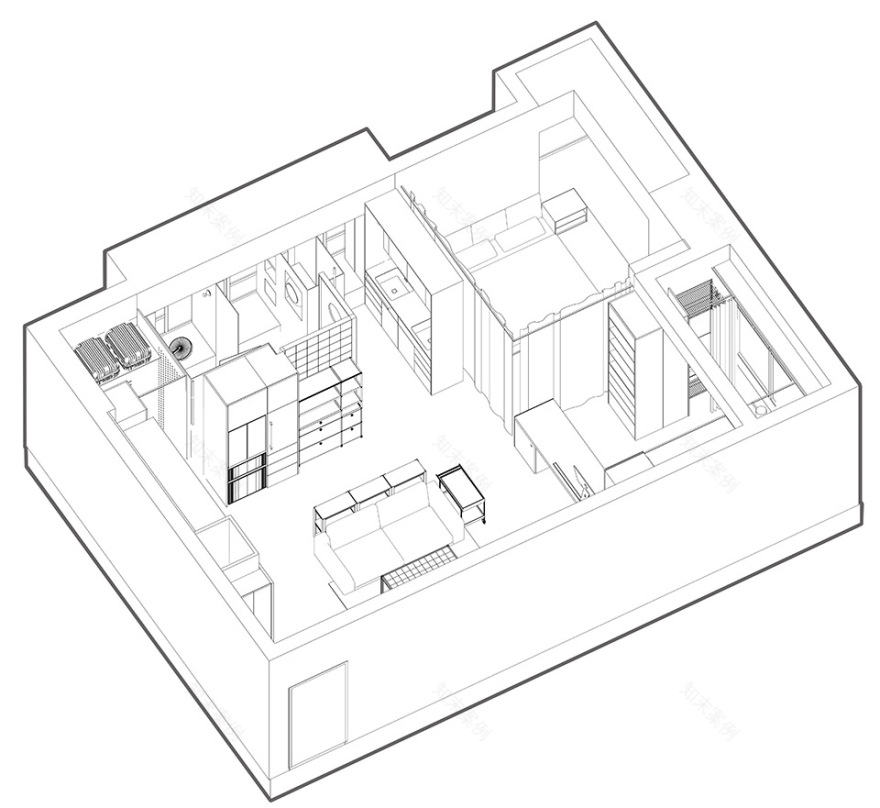
1.客餐厨功能整合:彻底打通入户 – 客厅 – 阳台 – 卧室,以开放式动线串联全屋,突破空间限制,增强了空间的通透感和互动性。
2.阳台改衣帽间:将原阳台改造成衣帽间,释放了主卧的收纳空间的压力,让卧室回归安静、纯粹的睡眠场所,同时提升了收纳的独立性。
3.卧室柔性隔断:卧室位于动线最末端,用布帘替代实体门形成轻柔隔断,提供柔性私密空间。
4.三分离卫浴系统:重新规划的三分离卫浴系统,将淋浴间、马桶间与双台盆独立分开,提升了功能性和舒适性。
▼轴测图,axonometric©傅俣迪设计工作室
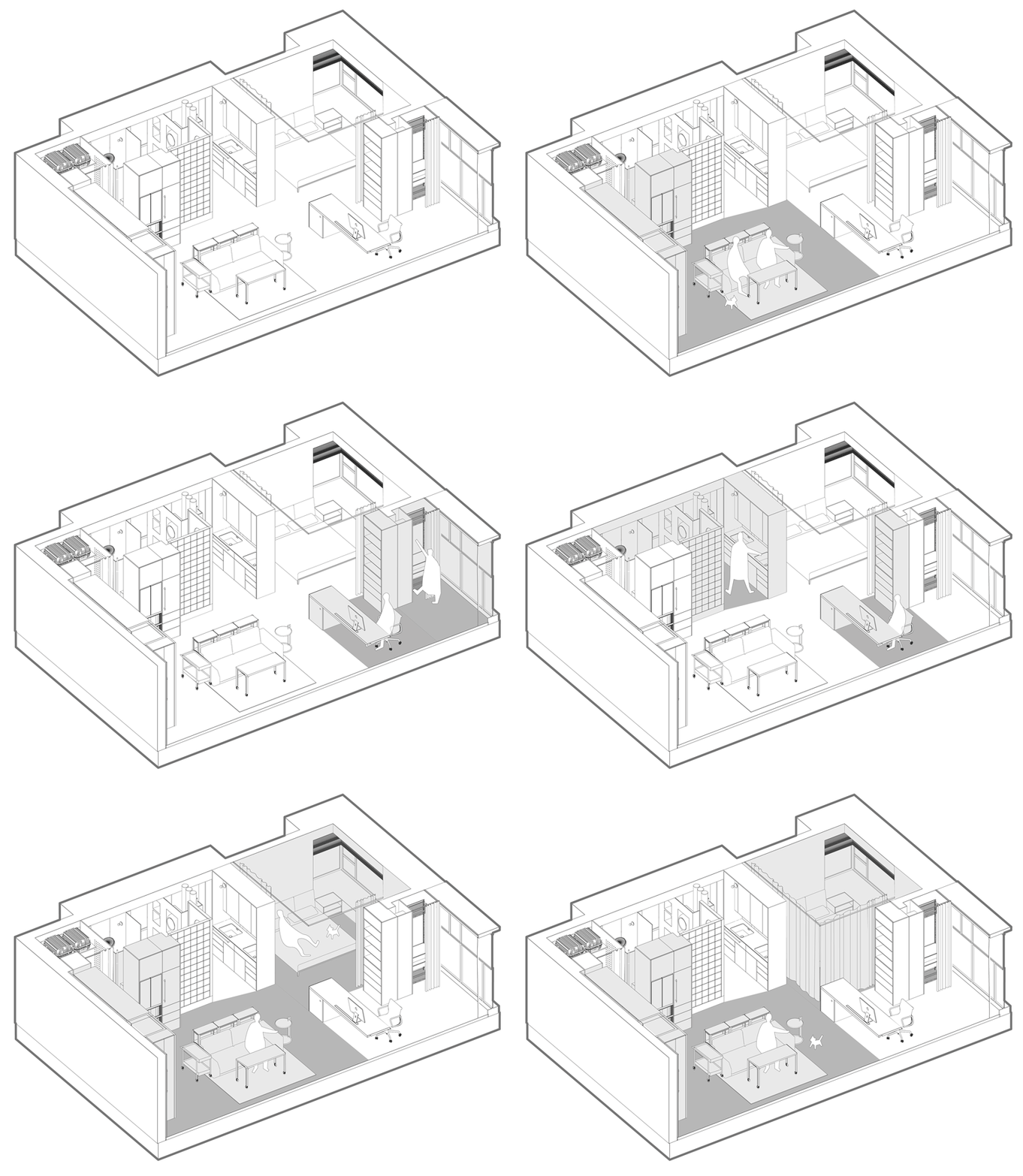
Integration of kitchen, dining, and living room functions: Thoroughly connect the entrance, living room, balcony, and bedroom to create an open – style circulation that links the entire house. This design breaks through the spatial limitations and enhances the sense of transparency and interactivity in the space.
Balcony converted into a cloakroom: The original balcony is converted into a cloakroom, relieving the storage pressure of the master bedroom and allowing the bedroom to return to a quiet and pure sleeping place. At the same time, it enhances the independence of storage.
Flexible partition in the bedroom: The bedroom is located at the end of the circulation line. A curtain is used instead of a solid door to form a gentle partition, providing a flexible private space.
Three – separated bathroom system: The re-planned three-separated bathroom system separates the shower room, toilet room, and double – sink area independently, improving functionality and comfort.
▼客厅一览,Living room©戴宇扬/孙歆玥

玄关
Porch
紧凑型玄关的设计,通过活动置物架的形式区分空间功能。玄关一体柜整合换鞋、储藏、展示的功能,极大提升空间的利用率。
The compact entryway is designed with movable shelves to differentiate functional zones. The integrated entryway cabinet combines shoe changing, storage, and display functions, greatly enhancing space efficiency.
▼玄关,Porch©戴宇扬/孙歆玥

▼玄关细部,Details of Porch©宋韵怡

客厅
Living room
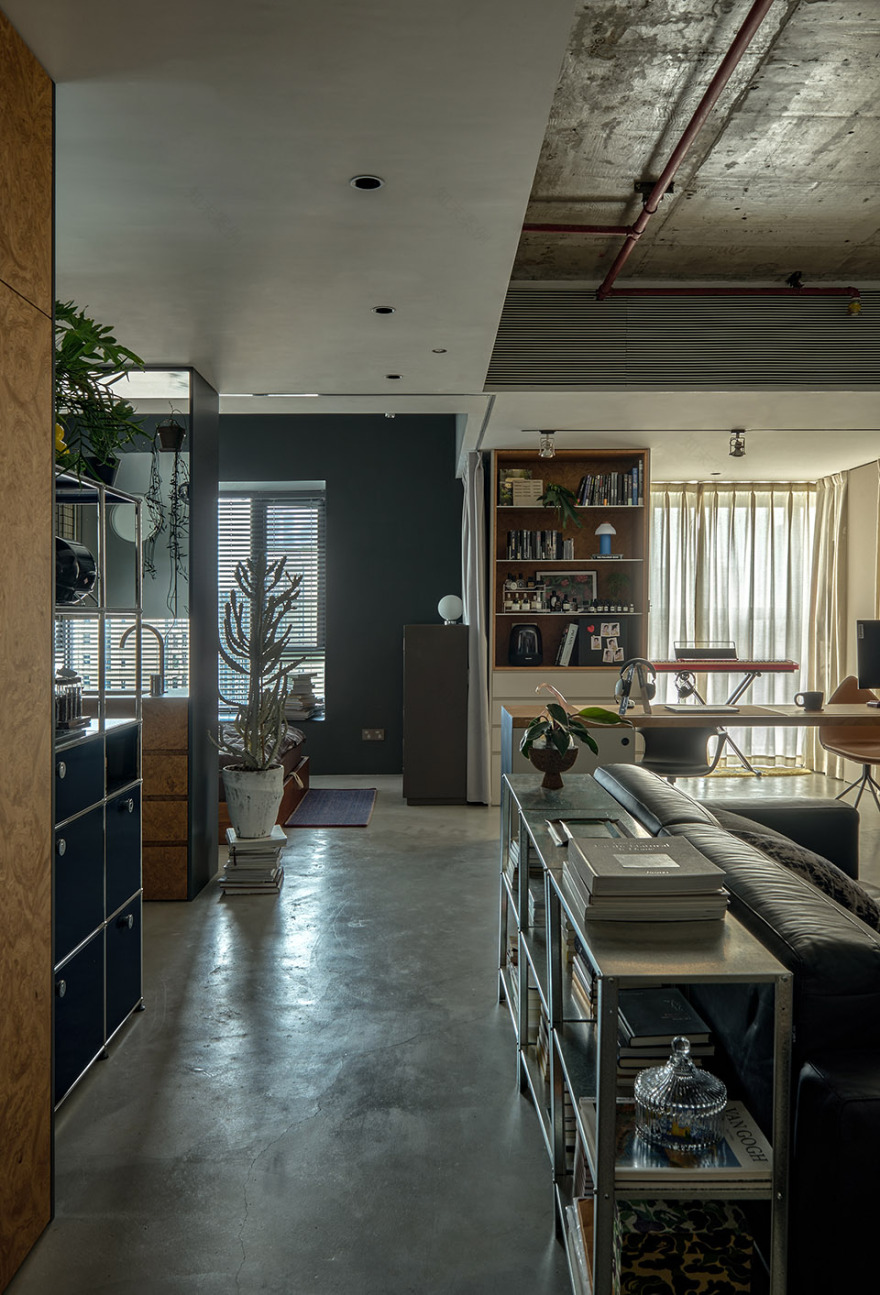
客厅保持宽松布局,摒弃传统餐桌设置。电视一侧玄关柜,兼顾日常使用与个性陈列。另一侧设有开放展示柜,用于手办、藏书、生活物件陈列,塑造个性表达的“缓冲层”。把客厅和餐厅合并功能空间:因为业主有坐沙发上就餐的习惯,所以我们订制了一张高茶几,这样的功能合并,释放了更多自由空间。
The living room maintains a spacious layout, eschewing the traditional dining table setup. There is an entrance cabinet beside the TV, which serves both daily use and personalized display purposes. On the other side, there is an open – style display cabinet for showcasing collectible figurines, books, and daily items, creating a “buffer layer” for personal expression. We combined the functions of the living and dining areas: since the homeowner prefers dining on the sofa, we customized a tall coffee table. This multifunctional design frees up more open space.
▼客厅,Living room©戴宇扬/孙歆玥


▼客厅细部,Living room detail©宋韵怡


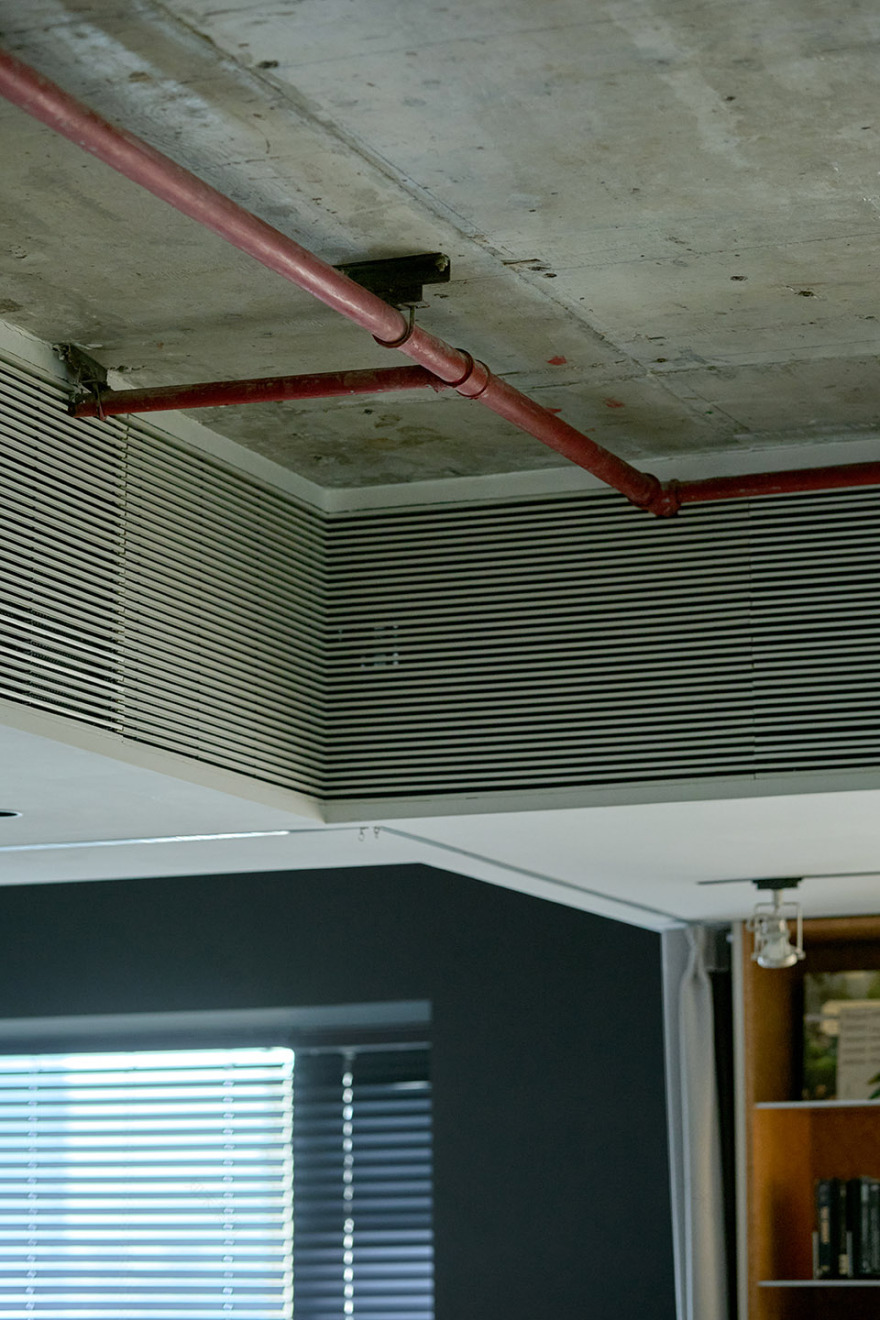
保留原始水泥裸顶并采用明装电路,将原始结构融入整体语言体系。这种设计弱化了风格的主导性,强调结构即语言。通过光滑与粗糙、金属与木材的碰撞,强化了空间的多元触感体验。
The original bare cement ceiling is retained, and exposed circuits are used, integrating the original structure into the overall language system. This design weakens the dominance of style and emphasizes that the structure is the language. Through the collision of smooth and rough, metal and wood, the multi – tactile experience of the space is strengthened.
▼客厅细部,Living room detail©戴宇扬/孙歆玥

厨房
Kitchen
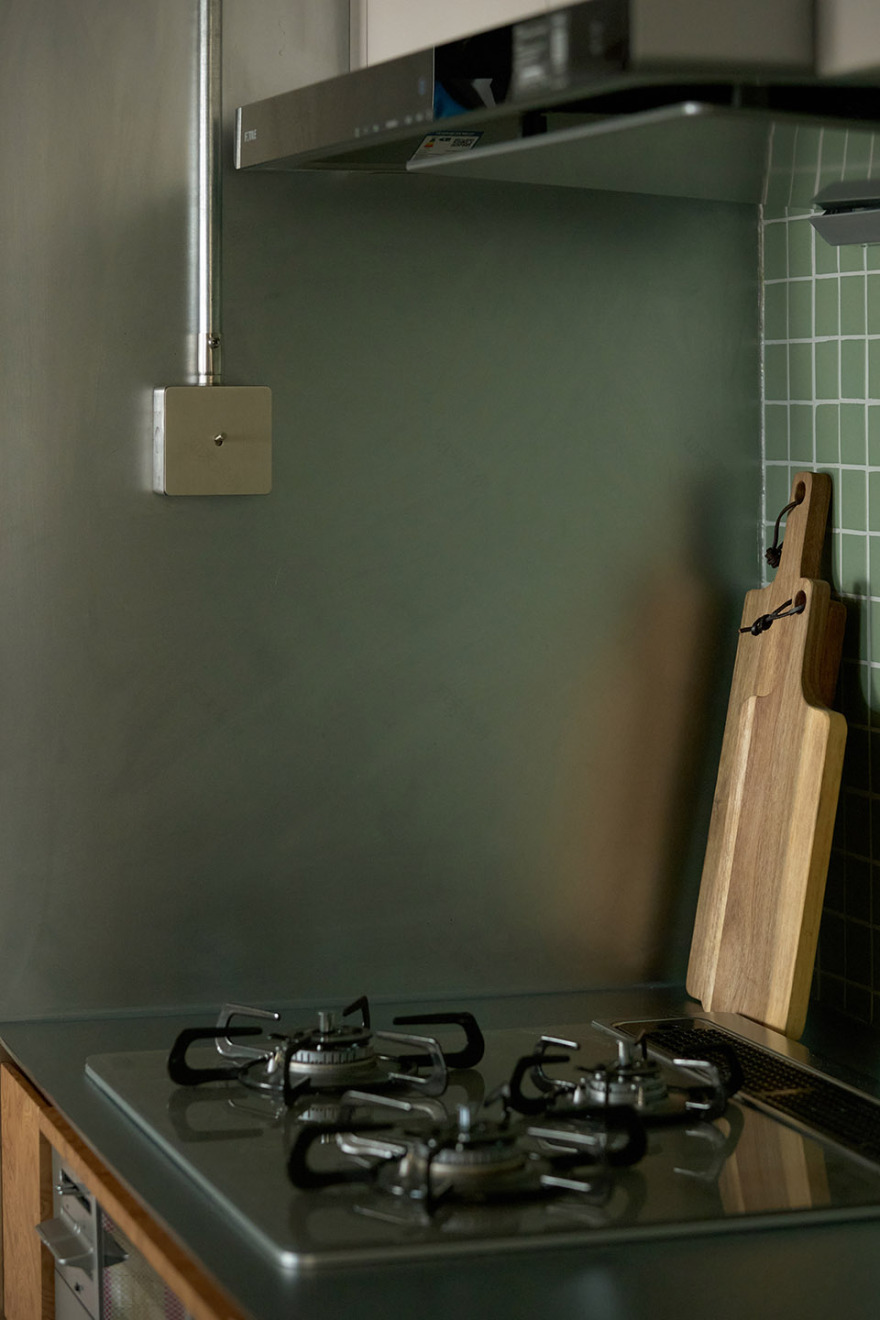
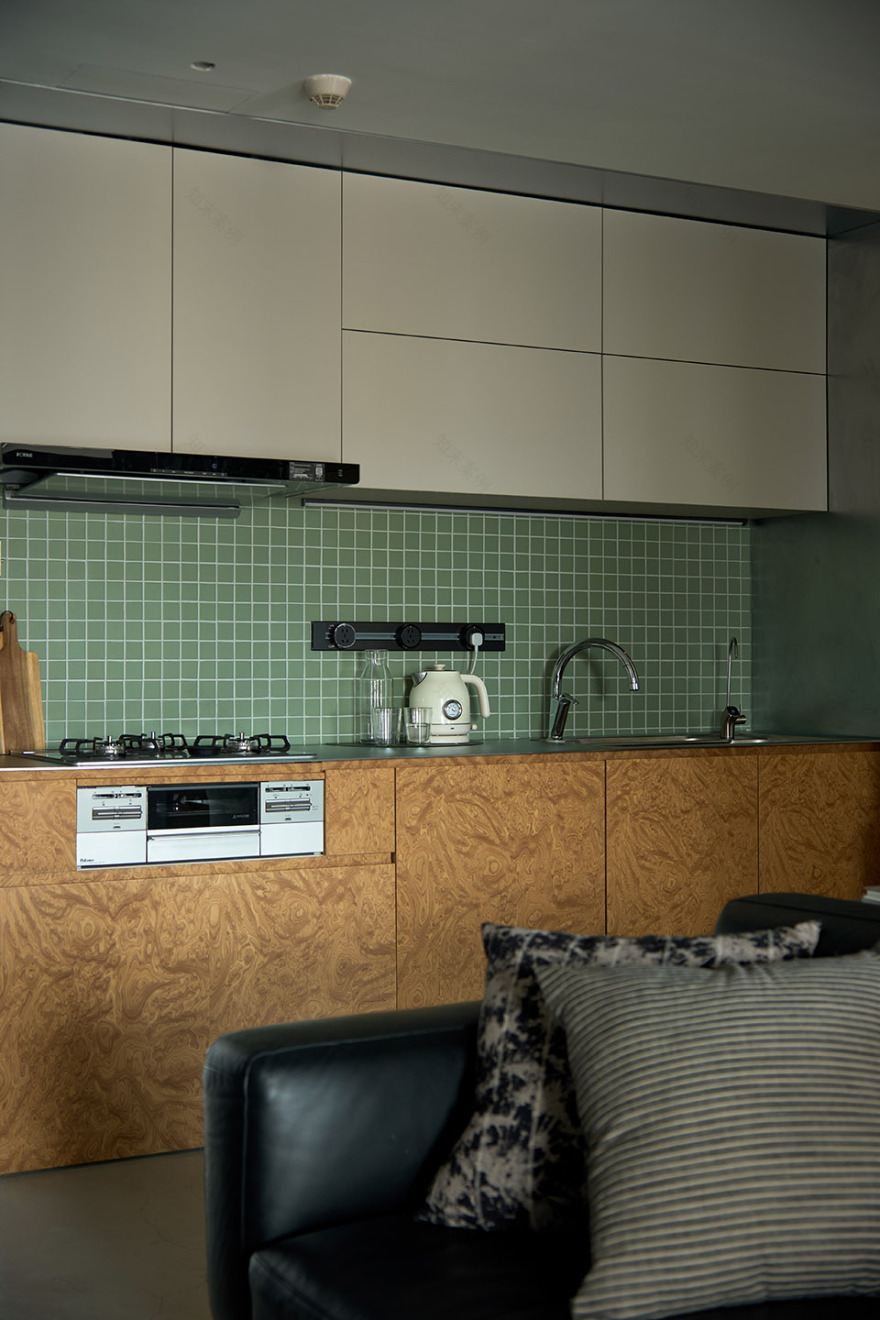
取消厨房隔墙,形成厨房—餐食—社交连续体。厨房台面拼接使用不锈钢、复古马赛克与树瘤木皮进行材质拼接,冷硬与温润材质在此形成并置,对比而不冲突。
Removing the kitchen partition wall creates a kitchen – dining – social continuum. The kitchen countertop is made by splicing stainless steel, vintage mosaic, and burl wood veneer. The cold and hard materials are juxtaposed with the warm and soft ones here, presenting a contrast without conflict.
▼厨房,Kitchen©戴宇扬/孙歆玥
▼厨房细部,Kitchen detail©戴宇扬/孙歆玥

主卧室
Master bedroom
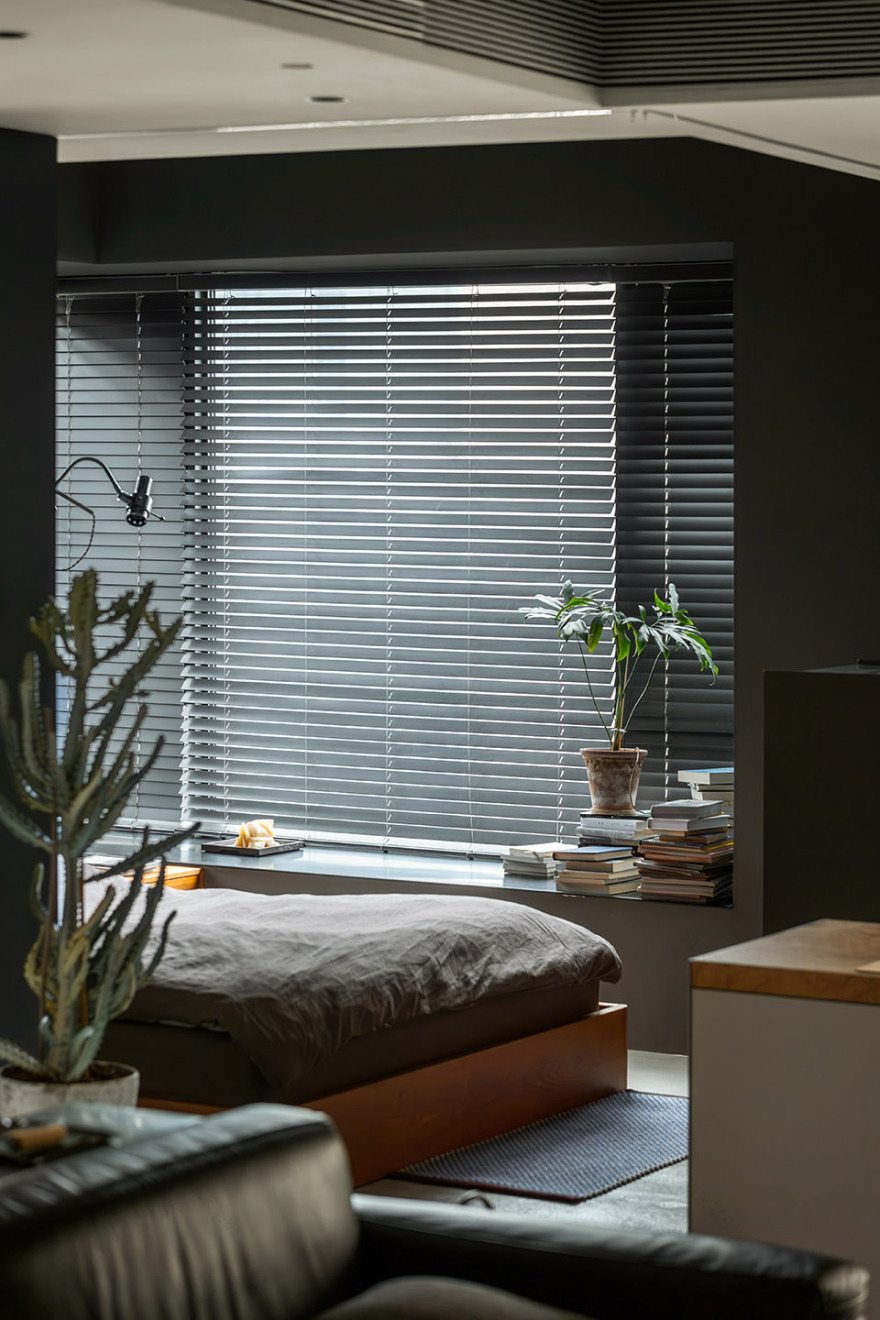
卧室位于动线最末端,转折动线和柔性遮挡增加卧室的私密性、减少外界干扰,为居住者增加安全感。深灰色墙漆的暗调空间,给予睡眠区沉静的安稳感。
The bedroom is located at the end of the circulation line. The winding circulation path and flexible partitions enhance the privacy of the bedroom, reduce external interference, and provide a sense of security for the residents.The dark-toned space created by the deep gray wall paint brings a sense of calm and tranquility to the sleeping area.
▼主卧室,master bedroom©戴宇扬/孙歆玥

▼主卧室,master bedroom©戴宇扬/孙歆玥
书房&衣帽间
Reading room & Cloakroom
原阳台区域重新规划为书房+衣帽间。2.7米的长书桌分割客厅与此空间,书桌朝向可以随心情调换。柔软的布帘替代衣柜门板,当光透过窗帘洒进室内时,让整体硬朗的客厅夹带着一丝温柔。
The original balcony area is re-planned as a reading room and a cloakroom.A 2.7-meter-long desk separates the living room from this space, and its orientation can be changed according to mood. Soft fabric curtains replace traditional wardrobe doors—when sunlight filters through the curtains, it adds a touch of softness to the otherwise crisp and structured living room.
▼书房&衣帽间,Reading room & Cloakroom©戴宇扬/孙歆玥


卫生间
Bathroom
原有卫浴空间封闭且拥挤,设计以“合理分离”的原则,将其划分为独立马桶间、2㎡淋浴房及双台盆的洗漱区,真正实现小户型中的“三分离”配置。功能明确又互不干扰,大大提升了日常使用的效率。
The original bathroom space was closed and crowded. The design divides it into an independent toilet room, a 2㎡ shower room, and a double – sink vanity area based on the principle of ‘reasonable separation’, truly achieving the ‘three-separated’ configuration in a small – sized apartment. The functions are clear and do not interfere with each other, greatly improving the efficiency of daily use.
▼盥洗区,The Washing Area©戴宇扬/孙歆玥

▼盥洗区,The Washing Area©戴宇扬/孙歆玥

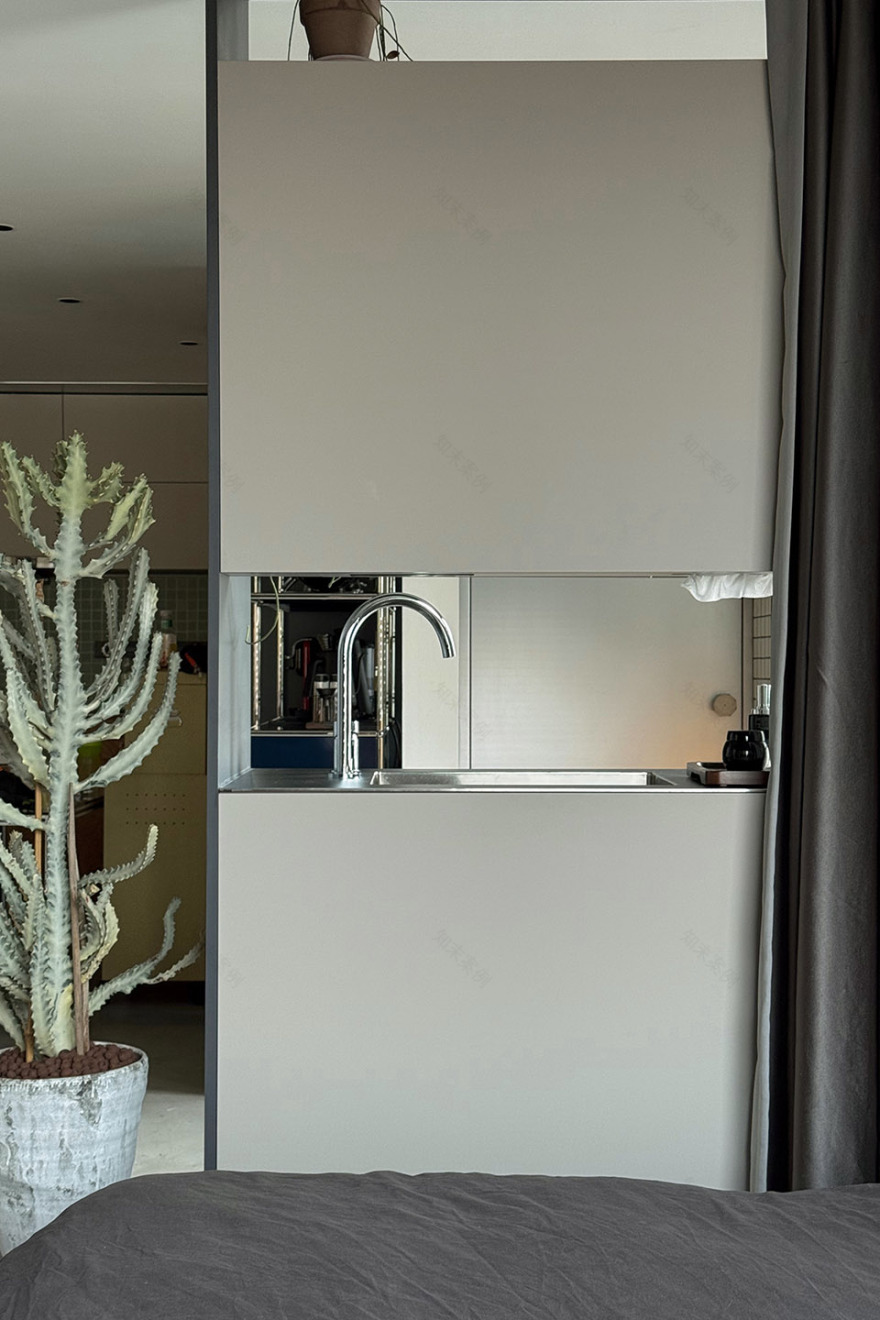
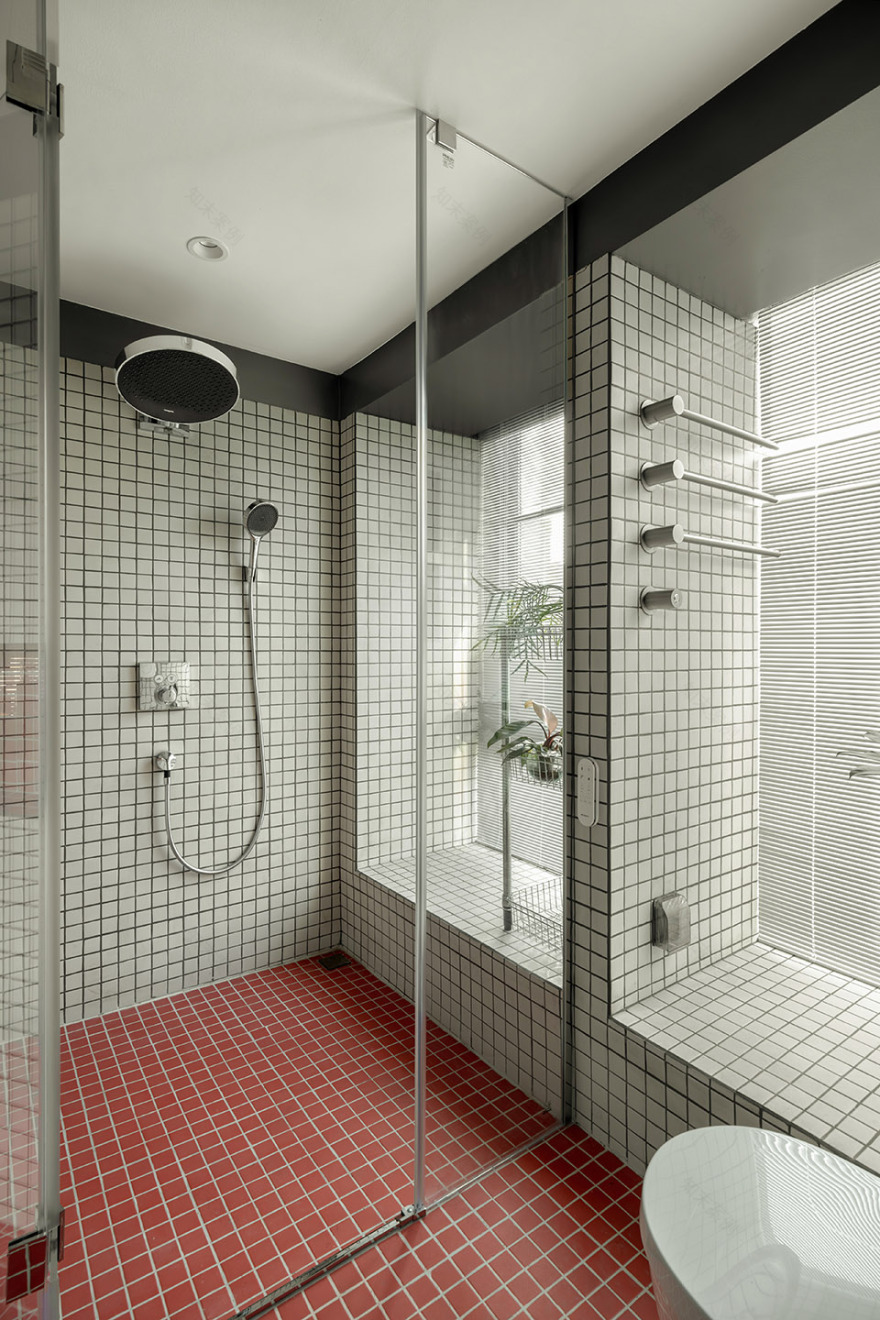
中空盥洗区分割卧室与卫生间,给空间增添了趣味性。盥洗区台面采用不锈钢一体焊接结构,镜柜悬挂于两侧侧板之间,整合照明与电线走位,减少视觉阻断,使功能一体化且视觉清朗。红白马赛克用于铺贴湿区,形成鲜明对比,强化了空间节奏感。
The hollow Washing Area separates the bedroom from the dry area of the bathroom, adding a playful touch to the space. The countertop features a stainless – steel integrated welded structure. The mirror cabinet is suspended between the side panels on both sides, integrating lighting and wiring, reducing (visual blockage and making the functions integrated and the vision clear. Red and white mosaics are used to tile the wet area, forming a sharp contrast and strengthening the spatial rhythm.
▼红白马赛克,Red and white mosaics ©戴宇扬/孙歆玥

在有限之中延展自由
Extending Freedom within Limits
这次的设计并非是对小户型空间的无奈妥协,而是一次明确的设计主动——摒弃风格的繁杂表象,专注于居住本质的秩序与惬意。通过空间结构与生活内容的重新梳理和编排,精准回应当代居住者对“小而清晰”居住环境的需求。设计关注的是空间的秩序感、功能的高效协同以及使用者的个人节奏,而非仅仅停留在风格的表面营造。在这样的空间尺度下,78㎡不再被功能框架所限制,而是成为一个可以不断生长的居住容器。
This design is not a helpless compromise for a small – sized space but a clear design initiative -abandoning the complex appearance of style and focusing on the order and comfort of the essence of living. Through the re – organization and re – arrangement of the spatial structure and daily living elements, the design precisely meets the contemporary residents’ demand for a “compact yet well – organized” living environment. The focus of the design lies in creating a sense of order in the space, achieving high – efficiency synergy of functions, and aligning with the user’s personal rhythm, rather than merely creating a superficial style. Within such a spatial scale, 78㎡ is no longer restricted by the functional framework but becomes a living container that can grow continuously.
▼轴测图,axonometric©傅俣迪设计工作室
项目名称:去风格化的空间重启:78㎡公寓室内改造
设计方:傅俣迪设计工作室
项目设计 & 完成年份:2025
主创及设计团队:傅俣迪/刘敏
项目地址:广州市 海珠区
建筑面积:78平方米
摄影版权:戴宇扬/孙歆玥
品牌 墙面涂料:芬琳; 瘤木:ALPI
Project Name: Flow Beyond Form: Interior Renovation of a 78㎡ Apartment
Designers: FUYUDI STUDIO
Project Design & Completion Year: 2025
Creative and Design Team: Fu Yudi/Liu Min
Project Address: Haizhu District ,GuangZhou City
Building Area: 78 square meters
Photography: Dai Yuyang/Sun Xinyue
Brand wall covering: Tikkurila;Burl Wood:ALPI






南京喵熊网络科技有限公司 苏ICP备18050492号-4知末 © 2018—2020 . All photos and trademark graphics are copyrighted by their owners.增值电信业务经营许可证(ICP)苏B2-20201444 苏公网安备 32011302321234号
苏公网安备 32011302321234号客服
消息
收藏
下载
最近