

创作上传
VIP
收藏下载
登录 | 注册有礼
查看完整案例

收藏

下载

分享
The White House in Viscri
Daniela PUIA

WHITE HOUSE IN VISCRI
text and photo: Daniela PUIA
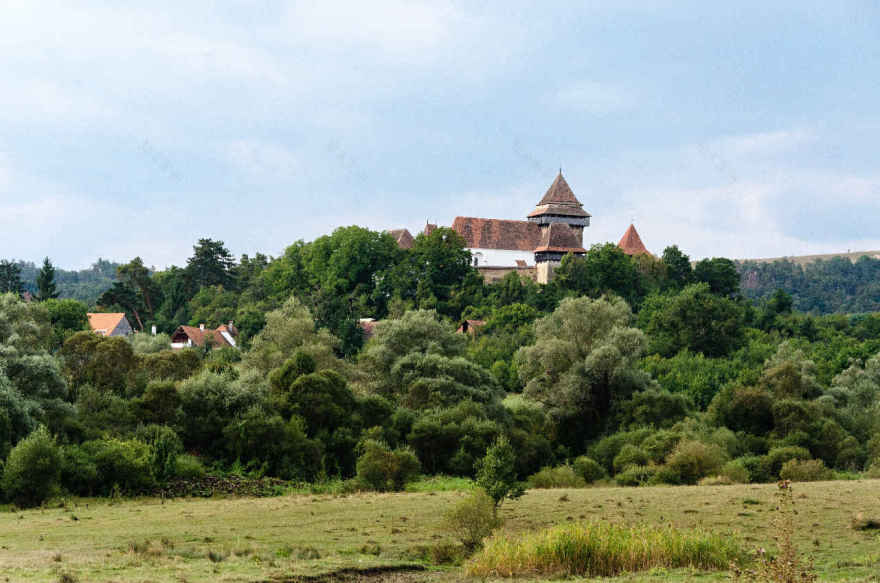
Viscri village , Photo:Daniela Puia
Viscri Village
Viscri is one of hundreds of villages developed by Transylvanian Saxon communities over more than eight centuries. A small village nestled in the hills, a few kilometers from the main road linking Brasov to Sighisoara, Viscri preserves the structure and elements of the traditional Saxon village: a predominantly linear development along the main street with long, strung out, houses positioned on the alignment and a closed front of high walls with generous gates. The impressive fortified church is testimony to the community spirit of the Saxons and the craftsmanship of the local craftsmen, but also to centuries of conflict-ridden history. All these qualities of the traditional Transylvanian Saxon villages were recognized and appreciated by UNESCO in 1993 and again in 1999, when six fortified churches and Saxon villages in Transylvania, including Viscri, were inscribed on the World Heritage List.
By the 1990s, however, the Saxon communities had already dwindled considerably. A very large number of families gradually left the old settlements and emigrated to Germany. The legacy they left behind is exceptional, and the built heritage is only part of this heritage, which comprises a complex of social and cultural elements of inestimable value in the multicultural Transylvanian area.
In Viscri and other similar localities, numerous projects have been carried out over the last two decades aimed at recovering, restoring or revitalizing local buildings, customs and traditions. Exemplary is the work of the Mihai Eminescu Trust Foundation, which has carried out over 1,000 projects, 300 of them in Viscri alone, including the restoration of numerous buildings, paving roads or supporting local entrepreneurship.
Viscri is today a village intensively visited by tourists from all over the world, who come to learn about the history and customs of a traditional Saxon community, to admire the fortified church, the village streets and farms and the landscape of meadows and forests. There's a museum, a leather and felt workshops, inns, guest houses and traditional food. Village life has changed, but through all the efforts and interest, the memory and spirit of the place is still preserved in the village between the hills.

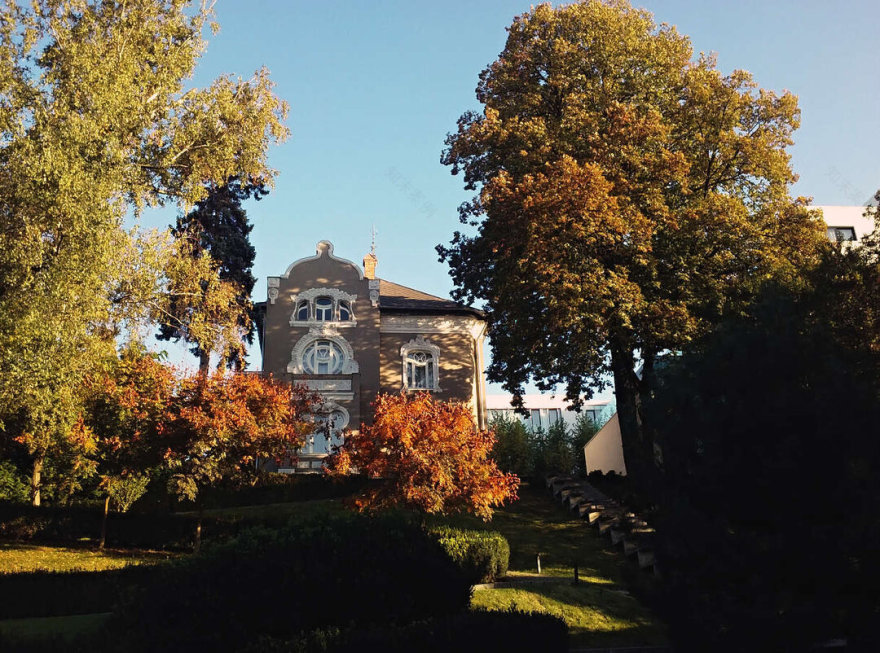
White House, Photo:Daniela Puia
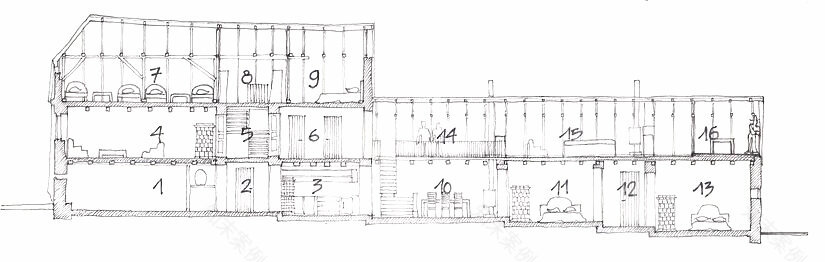
In the front house, the semi-buried cellar and the large room facing the street have remained unchanged. Today the large room is known as the historic family room and houses old pieces of furniture and traditional objects kept in the house. It is a place dedicated to the history of the house, with the dark and cool atmosphere of the room destined for centuries to represent the social status of the family and where the valuables, the good clothes, and the good crockery, and the loom were kept. In the continuation of the cellar, also semi-buried, was the kitchen, and upstairs, above it, a toilet and bathroom. In the high attic of the house there are two sleeping rooms.
In the back house, the area formerly used as stables now houses two sleeping rooms and a bathroom, all at ground level and with direct access from the courtyard. Above them, in the former open attic of the outbuildings, is a large open living room with a covered terrace to the rear.
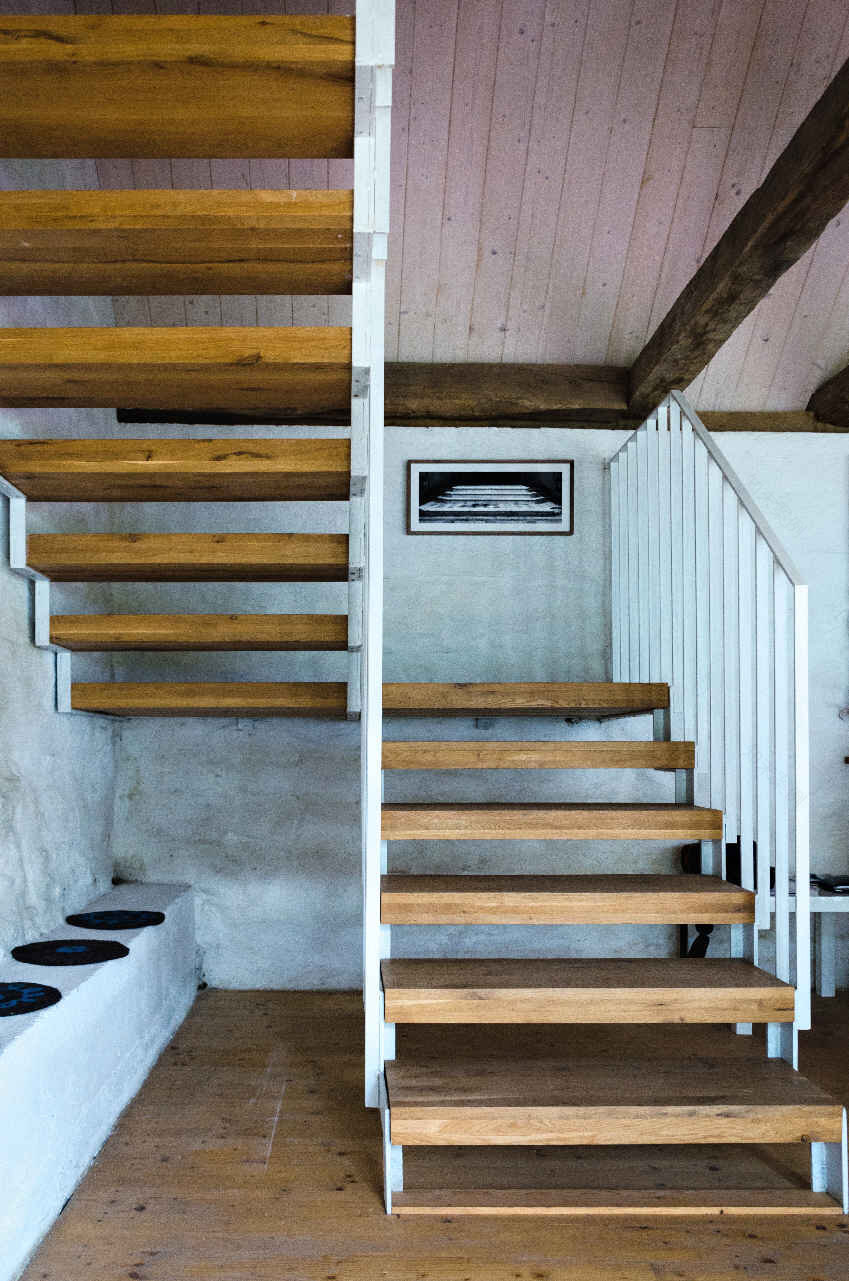
Between the outbuildings and the main house, there is an open space, protected by a roof, for the summer kitchen, open to the courtyard. The architect preserved the open opening under the roof of this space and converted it into a dining room, furnished with a generous dining table for 12 people. An upstairs passageway above the dining room connects the large room facing the street with the living room open to the rear. Through its central position and direct relationship with the walkway, the dining room becomes the central space of the house, connecting all the main and secondary rooms on all levels of the building.
The interior organization of the entire house is linear, with a longitudinal axis connecting all the interior spaces at the ground and first floor levels, which ensures a free flow of space and a direct visual relationship between rooms. At the same time, all the interior spaces have a particular relationship with the outside: the living room is open through a large glazed space to the garden, the ground floor bedrooms have direct access from the garden but small windows for privacy, the upstairs living room has a covered terrace, and the kitchen and cellar have direct protected entrances directly from the garden.
The architect strongly believes in the value of tradition and the spirit of the house and the place, considering tradition "a necessary element in contemporary life, which must live on through creation and innovation by the new generation. In order to be able to create and innovate, however, we need a deep understanding and acceptance of tradition and its incorporation into present-day life, not an accentuation of the contrast between the present and the past"2. These were the principles underlying the restoration project. Out of respect for the history and the spirit of the place, all elements of the building, such as masonry, beams or wooden doors were restored and reused. At the same time, all the restoration and refurbishment work was carried out with local materials, craftsmen and workers.

Front house
1 cellar
2 toilet
3 kitchen
4 historic family room (1796)
5 vestibule with staircase to the first floor
6 passage to the back house with toilet and bathroom
7 room with four single beds
8 staircase with built-in wardrobe
9 double-bedded room
Back house
10 dining room with dining table for 12 persons
11 room with double bed
12 shower room
13 room with double bed
14 gallery
15 lounge corner
16 covered terrace
3 Groep Planning was founded in Brugge in 1966 by Jan Tanghe, Jacques Pêtre, Ignaas Deboutte and Willy Canfyn. Werner Desimpelaere became a partner in 1975. In 1982 the group also opened an office in Brussels and since 1995 has expanded to include specialists in the fields of energy, environment, agriculture and horticulture, sociology, economics, geography and urban planning. Today, based on a complex interdisciplinary collaboration, the group is active in the field of scientific research and research by design through two organizations: SumReserch and SumProject, carrying out extensive architectural and urban planning projects.













南京喵熊网络科技有限公司 苏ICP备18050492号-4知末 © 2018—2020 . All photos and trademark graphics are copyrighted by their owners.增值电信业务经营许可证(ICP)苏B2-20201444 苏公网安备 32011302321234号
苏公网安备 32011302321234号客服
消息
收藏
下载
最近