

创作上传
VIP
收藏下载
登录 | 注册有礼
查看完整案例

收藏

下载

分享
Turenscape's 'floating forest' reshapes a former wasteland into a multifunctional urban landscape


Aerial view of Fish Tail Park. Image credit: Turenscape
Beijing-based landscape architecture firm
Turenscape
has completed the transformation of a former 126-acre dumping ground into a “dreamlike floating forest” in the eastern
Chinese
city of Nanchang.
The new Fish Tail Park operates a triple function as a habitat for wildlife, a recreational area for the city, and a stormwater regulator, creating what the design team calls a “replicable model of
designed urban nature
for regions with monsoon or variable climates that can address the multiple challenges of floods, habitat restoration, and recreational demands.”

To create the landscape, the team recycled coal ash previously dumped on the site, mixing it with dirt from fish pond dykes to create numerous islets. At the same time, a new lake was created to accommodate over 35 million cubic feet of stormwater inflow. In anticipation of
fluctuating water levels
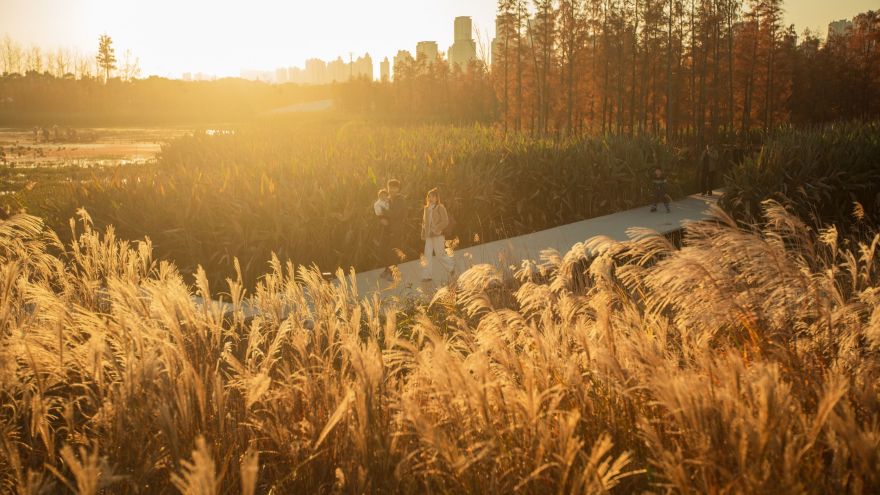
, a selection of native trees and wetland plants capable of surviving the varying conditions have been planted along the shorelines and island edges to create a “flood-adapted forest.”
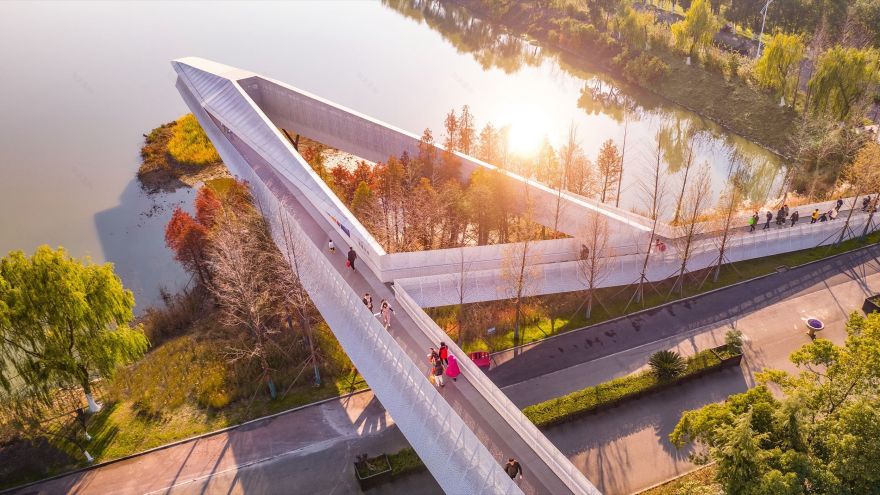

The central forest has been designed to give visitors a “messy” immersive marsh experience through annual monsoon floods. Meanwhile, the waterfront at the periphery of the park is designed to accommodate 20-year floods as well as a recreational program, including playgrounds, beaches, fountains, and lawns.
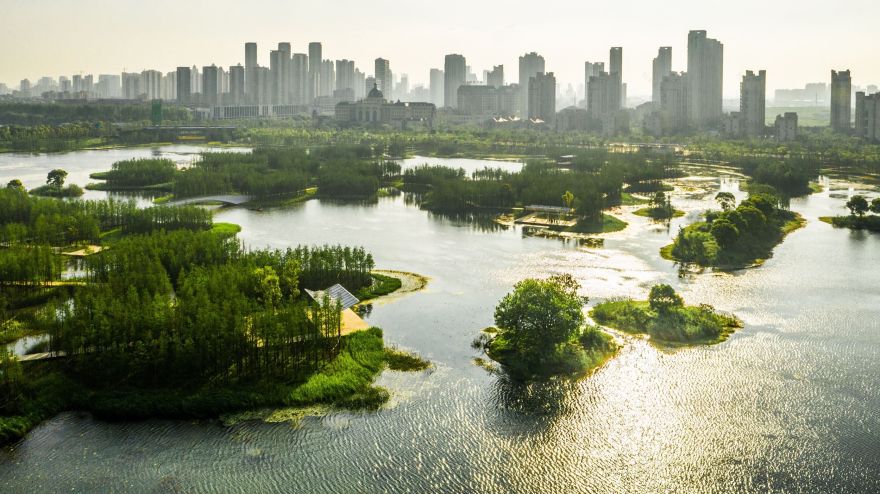
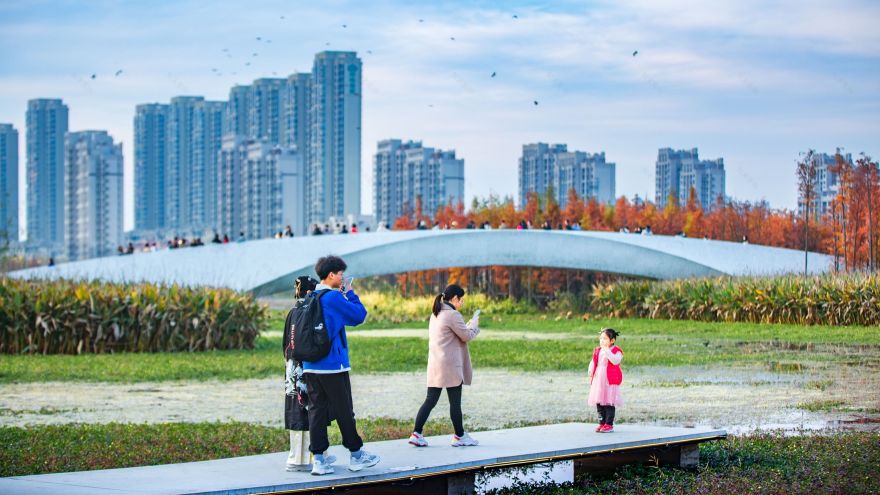
The most significant built additions to the landscape are a network of pedestrian paths and platforms surrounding the lake, allowing visitors to explore the forested isles. While the network of circular pedestrian and bike paths sits above the 20-year flood line, a series of boardwalks and platforms beneath the line is made of prefabricated concrete with aluminum furniture, allowing them to be washed clean after being submerged.

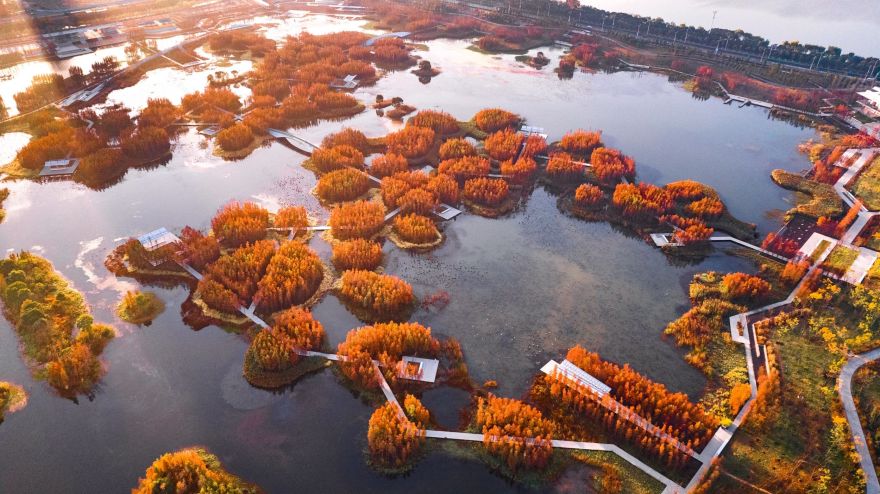
Throughout the landscape, a collection of bridges, platforms, pavilions, and viewing towers are carefully placed to serve as focal points for users. Designed in a contemporary style to give a sense of modernity and progress to the 2,000-year-old city, the structures’ material palette is dominated by perforated aluminum plates to create what the designers call an “arresting contrast with the natural setting.”







南京喵熊网络科技有限公司 苏ICP备18050492号-4知末 © 2018—2020 . All photos and trademark graphics are copyrighted by their owners.增值电信业务经营许可证(ICP)苏B2-20201444 苏公网安备 32011302321234号
苏公网安备 32011302321234号客服
消息
收藏
下载
最近