

创作上传
VIP
收藏下载
登录 | 注册有礼
查看完整案例

收藏

下载

分享
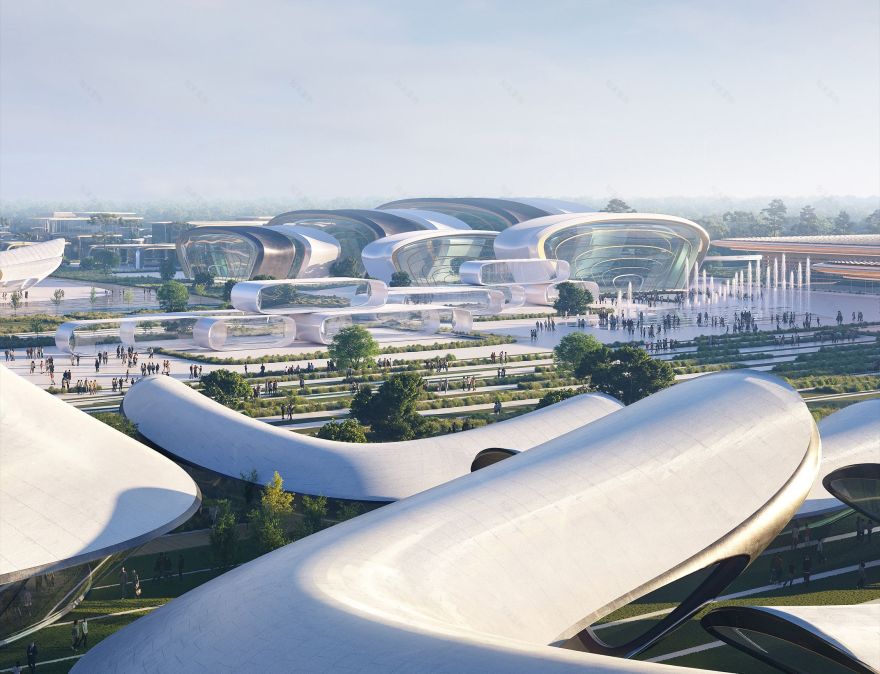
Zaha Hadid Architects designs Ukrainian Expo 2030 master plan with demountable and redeployable pavilions

Zaha Hadid Architects
has published details of its proposed master plan for the
Odesa
Expo 2030 bid. In seeking to secure the Expo 2030 contract for the southern
Ukrainian
city, the design team has presented a scheme composed of “demountable” and “
redeployable
” pavilions after the event has concluded.

“Future development in Ukraine will see a fundamental transformation of the country’s economy towards energy efficiency and low-carbon technologies,” the team said. “Zaha Hadid Architects’ design for ODESA EXPO 2030 targets the effective re-use of all facilities after the exhibition has closed, a challenge that all Expos share with major public events the world over; creating an Expo of the future where nothing is wasted.”

Located on former farmland close to the city center, the proposed expo site is anchored by a main axis that will provide access to a series of national
pavilions
toward the south and a coastal eco park to the north. At the heart of the master plan will be four central pavilions which, when combined with the national pavilions, will provide over 860,000 square feet of exhibition space.

After the event has concluded, the national pavilions are to be dismantled and reused as civic buildings throughout Ukraine while the site itself will be re-incorporated as wetlands in a coastal eco-park. To aid this approach, the expo will provide nations with a flexible,
modular
‘kit of parts’ to construct their pavilions, formed of recycled materials and debris.

“The bespoke approach to designing and constructing national pavilions of previous expos has often resulted in significantly increased construction costs and time, together with higher embedded carbon and reduced flexibility for any future use,” Zaha Hadid Architects explained. “This flexible modular system will provide participating nations many varying options to design their pavilion using practical, creative and visitor-friendly principles that enable each nation to individually reinterpret the over-arching theme of Odesa Expo 2030 via their country's unique cultural expression.”

News of the Expo 2030 proposal comes after Dubai recently hosted Expo 2020. You can learn more about that event by reading
our reflection
on how the conventional Expo format is arguably failing to meet its own touted sustainability principles.


南京喵熊网络科技有限公司 苏ICP备18050492号-4知末 © 2018—2020 . All photos and trademark graphics are copyrighted by their owners.增值电信业务经营许可证(ICP)苏B2-20201444 苏公网安备 32011302321234号
苏公网安备 32011302321234号客服
消息
收藏
下载
最近