

创作上传
VIP
收藏下载
登录 | 注册有礼
查看完整案例

收藏

下载

分享
The National Bonsai and Penjing Museum blurs the boundaries between landscape and architecture


The U.S. Commission of Fine Arts has approved a new Concept Design for the National Bonsai and Penjing Museum at the U.S. National Arboretum. Designed by
Reed Hilderbrand
and
Trahan Architects
, the new design builds on the concept of an immersive and cohesive garden experience, heightening the connectedness to the museum's extensive collection of some of the finest trees and viewing stones from across the globe.

The museum's program will be organized around a central court to orient the visitor to a network of paths that lead to the four exhibitions, expanded classroom, and administrative services. Instead of buildings, each exhibition was conceived as separate gardens that sit within the larger surrounding landscape of the museum.
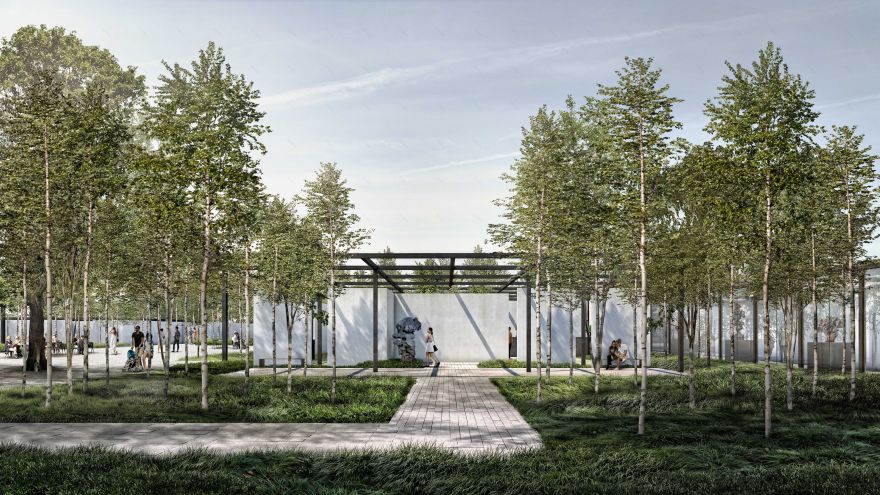
"The legacy of global cultural exchange through horticulture takes on an
important meaning today in Washington," said Founding Principal of Reed Hilderbrand Douglas Reed, FASLA, RAAR in a statement. "We have sought to elevate a world-class
collection, making it more accessible, where visitors can make a powerful connection
between a bonsai beech tree in the Museum and its full grown expression in the
National Arboretum woods."
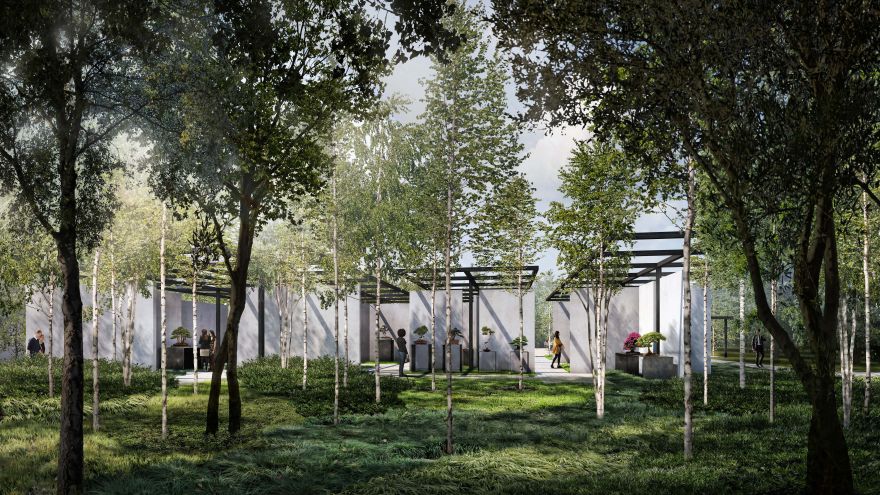
The National Bonsai and Penjing Museum is the first project within Reed
Hilderbrand’s Master Plan Update for the U.S. National Arboretum’s core, which the
U.S. Commission of Fine Arts also approved during Summer 2020.

"It’s about deferring to the power of the Bonsai and Penjing," said
Trey Trahan
, FAIA in a statement. "The architectural expression is subtle — composed of elemental components
that respond to the unique environmental conditions of the site. We wanted the visitor
to embark upon a journey that created a sense of mystery, where the boundaries
between the landscape and the architecture are blurred, inviting people to reflect
upon these unique cultural artifacts within a lush garden setting."

南京喵熊网络科技有限公司 苏ICP备18050492号-4知末 © 2018—2020 . All photos and trademark graphics are copyrighted by their owners.增值电信业务经营许可证(ICP)苏B2-20201444 苏公网安备 32011302321234号
苏公网安备 32011302321234号客服
消息
收藏
下载
最近