

创作上传
VIP
收藏下载
登录 | 注册有礼
查看完整案例

收藏

下载

分享
项目概况
Project Overview
场地位于地铁站上盖,场地的覆土和荷载有严格的要求,限制了新种乔木的种植位置和数量。加上场地有比较多的地铁设备用房及人防出入口,现状的高大乔木也需要保留,限制了场地的空间布局。如何衔接好地铁出入口的人流与文化公园大片区的慢行系统,同时规划出适用市民多种使用场景的弹性空间,并讲述文化公园的历史文化故事,成为该设计的挑战。
The project is located above the subway station at the southwest corner of Culture Park, one of the most historically significant areas in Liwan District, Guangzhou, covering an area of 15,826 square meters. Culture Park encompasses the historical site of the Thirteen Hongs of Guangzhou, which was once a vital hub for foreign trade, and it also housed the renowned South China Specialty Exhibition Hall. Over time, it has evolved into the well - known Culture Park that Guangzhou residents cherish today. The park hosts many important events throughout the year, such as flower fairs, lantern festivals, storytelling sessions, festive markets, and children’s carnivals, becoming an integral part of the city’s collective memory. Due to subway construction, the southwest section of the park requires a redesign to rejuvenate this historic urban park and inject new vitality into the old town.
▼夜览顶视,Night top view© 超越视觉

项目挑战
Project Challenges
由于场地位于地铁上盖,场地的覆土和荷载有严格的要求,限制了新种乔木的种植位置和数量。加上场地有比较多的地铁设备用房及人防出入口,现状的高大乔木也需要保留,限制了场地的空间布局。如何衔接好地铁出入口的人流与文化公园大片区的慢行系统,同时规划出适用市民多种使用场景的弹性空间,并讲述文化公园的历史文化故事,成为该设计的挑战。
As the site is located above the subway, there are strict requirements for soil depth and load-bearing capacity, which limit both the placement and quantity of newly planted trees. Additionally, the site contains numerous subway facility rooms and civil air defense entrances, and the existing large trees must be preserved, further constraining spatial planning. The design challenge lies in effectively connecting the subway entrances with the park’s pedestrian network while creating flexible spaces that accommodate a variety of public activities and narrate the cultural stories of the park.
▼历史分析图,historical analysis© 华南理工大学建筑设计研究院有限公司

设计策略
Design Strategies
1、空间布局的划分
Spatial Layout Division
设计调研了文化公园的多种使用模式。首先,文化公园常年承接多种大型集市展会的活动,节假日人流密集,需要有弹性使用的广场空间和人流集散场地。其次,现状市民需要儿童游乐、健身活动、棋艺扑克、盆景花展、休憩闲聊等固定空间。因此设计提出一心五区的设计布局,围绕中心广场展开一系列的市民使用空间。
The design team studied the various ways Culture Park is used. The park regularly hosts large-scale fairs and exhibitions, which require flexible plaza spaces and efficient crowd circulation. At the same time, residents need designated areas for children’s play, fitness activities, chess and card games, bonsai exhibitions, and casual gatherings. In response, the design adopts a “one core, five zones” layout, creating a series of community spaces centered around the main plaza.
▼现状分析,current situation analysis © 华南理工大学建筑设计研究院有限公司

▼空间布局分析,spatial layout analysis ©华南理工大学建筑设计研究院有限公司

2、弹性场景的切换
Flexible Scene Switching
应文化公园对举办春节花市、元宵灯会、中秋游园、花展盆景展、文艺集市会等各类不同主题的市民文化活动需求,设计团队研发了集照明、屏幕显象、智能音控、景观照明等多功能合一的木棉伞,配合各类活动的氛围背景。
In response to the cultural park’s needs for hosting various themed public cultural events, such as Spring Festival Flower Markets, Lantern Festivals, Mid-Autumn Garden Parties, Flower and Bonsai Exhibitions, and Cultural Fairs, the design team developed the multifunctional “Kapok Umbrella.” This innovative design integrates lighting, screen display, smart audio control, and landscape.
▼夜间灯光效果,Night lighting effects ©超越视觉
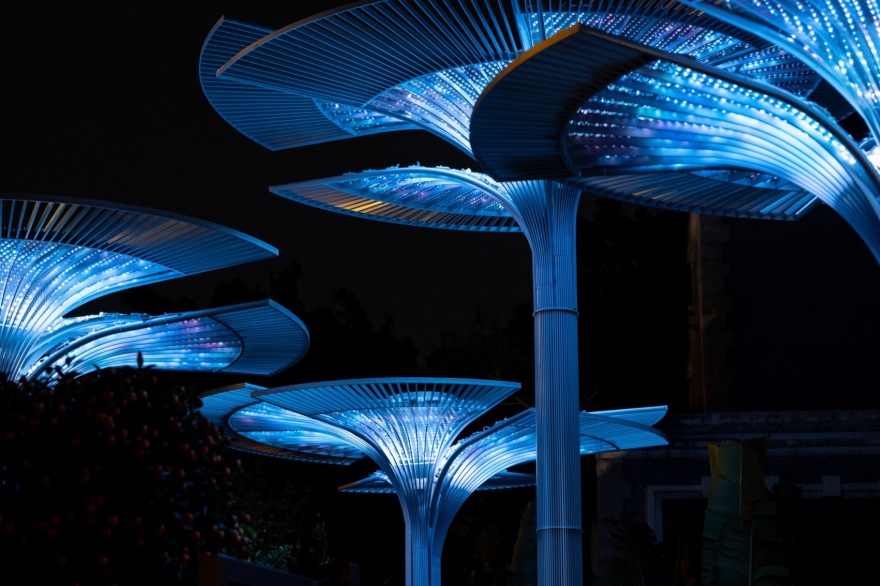
木棉伞成组团的穿插于场地因地铁上盖的限制不能种植高大乔木的地方,与中小乔木交相映衬,也成为场地周边特别是高架桥视野的标志性景观。
Positioned in areas where large trees cannot be planted due to subway restrictions, the Kapok Umbrellas complement the surrounding greenery and create a distinctive landscape, especially visible from nearby elevated roads.
▼与乔木交相映衬,Complemented by trees ©华南理工大学建筑设计研究院有限公司,超越视觉

3、历史故事的讲述
Telling Historical Stories
设计萃取场地的十三行的历史文化故事、华南土特产展馆时期的展会故事以及文化公园西南角作为广州第一个儿童游乐场的历史元素,创意性的融入场地的儿童游乐设备、健身器材、微缩景观、展廊景墙、互动灯光中,让市民在游玩中也了解到场地的发展历史,讲述了文化公园的文化故事。
The design creatively weaves the rich history of the Thirteen Hongs, the South China Specialty Exhibition Hall, and Culture Park as Guangzhou’s first children’s amusement park into the landscape. Elements of these stories are embedded in playground equipment, fitness stations, miniature landscapes, exhibition walls, and interactive lighting installations, allowing visitors to learn about the park’s heritage while enjoying their activities.
▼展廊景墙,Gallery wall © 超越视觉

十三行的历史文化场景
The Historical and Cultural Scenes of the Thirteen Hongs
十三行时期的广州是中国对外贸易交流的窗口,在历史上有举足轻重的地位。虽然十三行原址的格局现今在文化公园场地上已不复存在,但是根据留存的十三行时期的”外销画”中的市井商馆画,风雨连廊的展窗设计通过微缩景观还原了十三行时期市井商馆的繁荣景象,向市民展现了当时十三行时期的商贸文化场景。
During the Thirteen Hongs period, Guangzhou served as a vital gateway for China’s foreign trade and held significant historical importance. Although the original layout of the Thirteen Hongs no longer exists at the site of the Cultural Park, the design of the exhibition windows along the covered corridors recreates the bustling commercial scenes of the era. Drawing inspiration from preserved “export paintings” depicting lively marketplaces and trade halls of the Thirteen Hongs period, these miniature landscapes showcase the prosperity of the time and share the rich stories of the commercial and trade culture with the public.
▼展示墙设计,Gallery wall ©华南理工大学建筑设计研究院有限公司,超越视觉

文化公园的发展演变科普
Tracing the Development of the Cultural Park
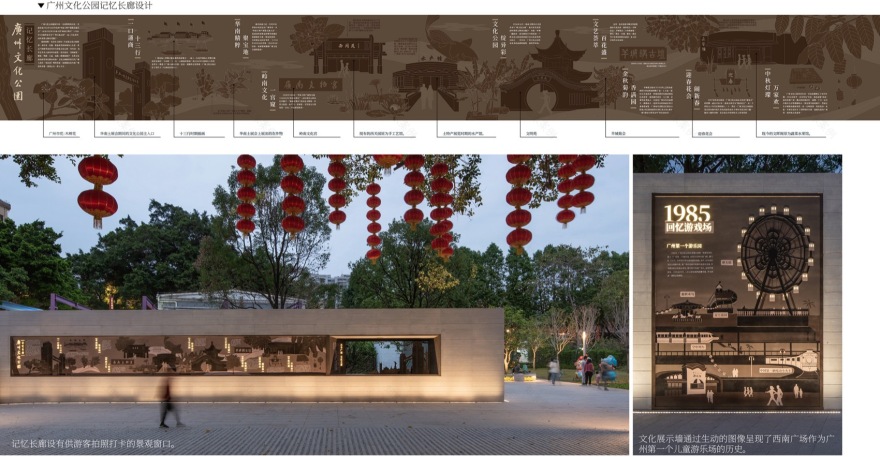
记忆长廊梳理了场地内各个时期的历史故事,从1684年十三行时期一口通商,到1951年华南土特产交流大会开展,再到1956年文化公园时期的各个高光时刻。设计用画廊的方式,向市民形象的讲述了文化公园的发展史。
The Memory Corridor chronicles the historical stories of the site across different periods, from the Thirteen Hongs’ monopoly trade system established in 1684, to the South China Native Products Trade Fair held in 1951, and the highlight moments of the Cultural Park era starting in 1956. Through a gallery-style design, it visually narrates the development history of the Cultural Park, bringing these significant milestones to life for the public.
▼记忆长廊设计,The Memory Corridor ©华南理工大学建筑设计研究院有限公司,超越视觉
华南土展会的文化元素融合
The Integration of Cultural Elements from the South China Native Products Trade Fair
为满足市民健身活动需求,在康体区域的健身器材的设计上创意性的结合了西洋镜动画、织布机、算盘等华南土特产交流大会时期的展会特色元素,寓教于乐。
To meet the fitness needs of residents, the design of fitness equipment in the wellness area creatively incorporates elements inspired by the features of the South China Native Products Trade Fair period, such as zoetrope animations, weaving looms, and abacuses. This innovative approach combines education and entertainment, offering a unique and culturally enriched fitness experience.
▼康体区域,Fitness equipment area©华南理工大学建筑设计研究院有限公司,超越视觉

广州第一个游乐场的历史文化故事
The Historical and Cultural Story of Guangzhou’s First Amusement Park
1985年广州文化公园建立了广州第一个游乐场。根据这段历史记忆,在场地内增加儿童活动空间,结合历史文化元素打造独具特色的游玩设施,让孩童在体验童年快乐的同时,了解文化公园的历史、广州的历史。
In 1985, Guangzhou Cultural Park became home to the city’s first amusement park. Inspired by this historical milestone, the site now incorporates dedicated children’s activity areas that blend play with cultural heritage. By integrating historical elements into the design of distinctive play facilities, the project enables children to experience the joy of childhood while gaining an understanding of the history of the Cultural Park and the broader cultural context of Guangzhou.
▼游玩设施,Recreational facilities © 超越视觉

▼游乐设施分析图,Recreational facilities analysis©华南理工大学建筑设计研究院有限公司,超越视觉

4、生态可持续的设计
Eco-Sustainable Design
在可利用的绿地空间结合雨水花园的措施收集地表泾流进行调蓄错峰,具有土壤湿度和降雨量感应功能的智能灌溉系统可以有效节约灌溉用水。木棉伞结合太阳能光伏板供能充电,降低市政电能消耗,助力降碳。
The project incorporates rain gardens to collect and manage surface runoff, while an intelligent irrigation system with soil moisture and rainfall sensors helps conserve water. The Kapok Umbrellas are equipped with solar panels to reduce reliance on municipal electricity and lower carbon emissions.
▼雨水花园,Therain gardens©华南理工大学建筑设计研究院有限公司,超越视觉

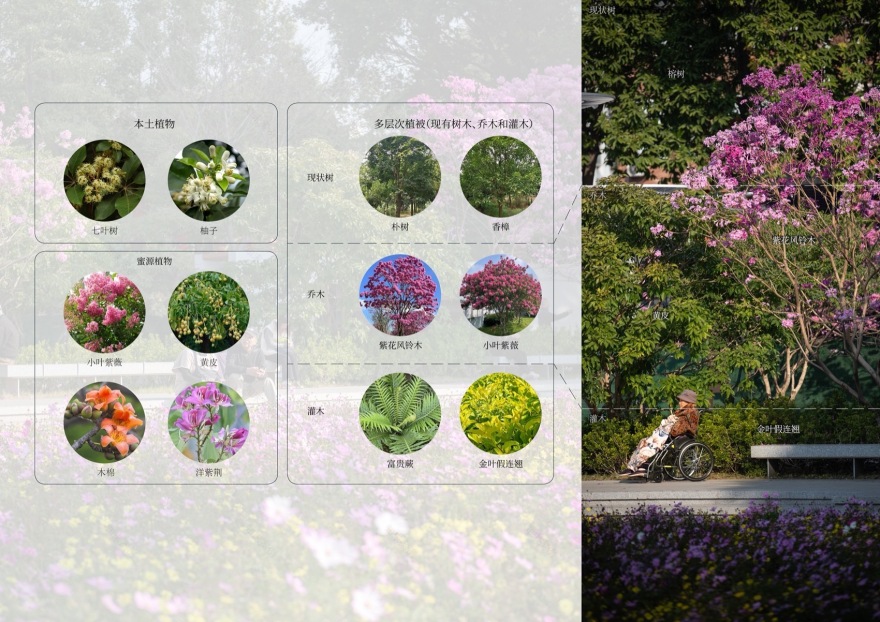
场地的原生乔木完全被保留,新种植物80%采用原公园品种及本土品种,保障了公园的生态延续性。
All original mature trees on the site are preserved, and 80% of new plantings are sourced from the original park species and local varieties, ensuring ecological continuity.
▼植物分析,Plant analysis©华南理工大学建筑设计研究院有限公司,超越视觉
结语
Conclusion
新生的文化公园西南广场诠释了对”文化”一词的全新解读。这种文化是属于广州市民在公园中形形色色的活动文化,设计本身只是做了一个文化的载体,也将新时代的活动场景与老的公园联系起来,带来了公园的新活力。
The revitalized Southwest Plaza of Culture Park offers a fresh interpretation of “culture”—a culture belonging to the diverse activities of Guangzhou’s residents. The design serves as a cultural carrier, seamlessly connecting new-age public activities with the heritage of the old park, bringing renewed vitality to this cherished urban space.
▼鸟瞰,Bird’s eye view© 超越视觉

项目名称:融合场地历史文化的景观载体——广州文化公园西南广场设计
项目类型:景观设计
设计方:华南理工大学建筑设计研究院有限公司
项目设计:2022年-2023年
完成年份:2024年
设计主持:何镜堂院士
景观设计团队:郑旸、陈思翰、卢铭、周国欢、林杰、陈成谦、黄灵杰、董健帆、史梦霞、陶浩贤、应子、卢玉洁、钟颖涛、张绮婷、杨石泉、赵笑寒、伍镇凯、陈添明、陈艳
泛光设计团队:清华同衡
深化单位:四川华体照明科技股份有限公司,广州市安创艺术科技发展有限公司
标识设计师:张之彦
项目地址:广东省广州市荔湾区西堤二马路37号,地铁6号线A或D出口
建筑面积:15826㎡
摄影版权:超越视觉
客户:广州文化公园
Project name:Landscape Carrier Integrating Historical and Cultural Elements of the Site :Design of the Southwest Plaza of Guangzhou Cultural Park
Project type: landscape
Design:ARCHITECTURE DESIGN & RESEARCH INSTITUTE, SOUTH CHINA UNIVERSITY OF TECHNOLOGY CO.,LTD
Design year:2022-2023
Completion Year:2024
Design Director:He Jingtang
landscape design team:He Jingtang, Zheng Yang, Chen Sihan, Lu Ming, Zhou Guohuan, Lin Jie, Chen Chengqian, Huang Lingjie, Dong Jianfan, Shi Mengxia, Tao Haoxian, Ying Zi, Lu Yujie, Zhong Yingtiao, Zhang Qiting, Yang Shiqian, Zhao Xiaohan, Wu Zhenkai, Chen Tianming, Chen Yan
Floodlighting design team:Tsinghua Tongheng Planning & Design Institute Co., Ltd., Beijing
Design development team:Sichuan Huati Lighting Technology Co., Ltd. ,Guangzhou Anchuang Art Technology Development Co., Ltd.
Signage Designer: Zhang Zhiyan
Project location: Guangzhou China
Gross built area: 15826㎡
Photo credit: Chaoyue Vision
Clients:Guangzhou Cultrual Park
南京喵熊网络科技有限公司 苏ICP备18050492号-4知末 © 2018—2020 . All photos and trademark graphics are copyrighted by their owners.增值电信业务经营许可证(ICP)苏B2-20201444 苏公网安备 32011302321234号
苏公网安备 32011302321234号客服
消息
收藏
下载
最近