

创作上传
VIP
收藏下载
登录 | 注册有礼
查看完整案例

收藏

下载

分享
Nendo unveils the Hyouri lanterns collection at the Life in Vogue virtual exhibition
Made from bamboo, washi paper and translucent silk, the Hyouri collection pays tribute to traditional Kyoto lanterns and comprises designs that “seem to swallow parts of themselves.”
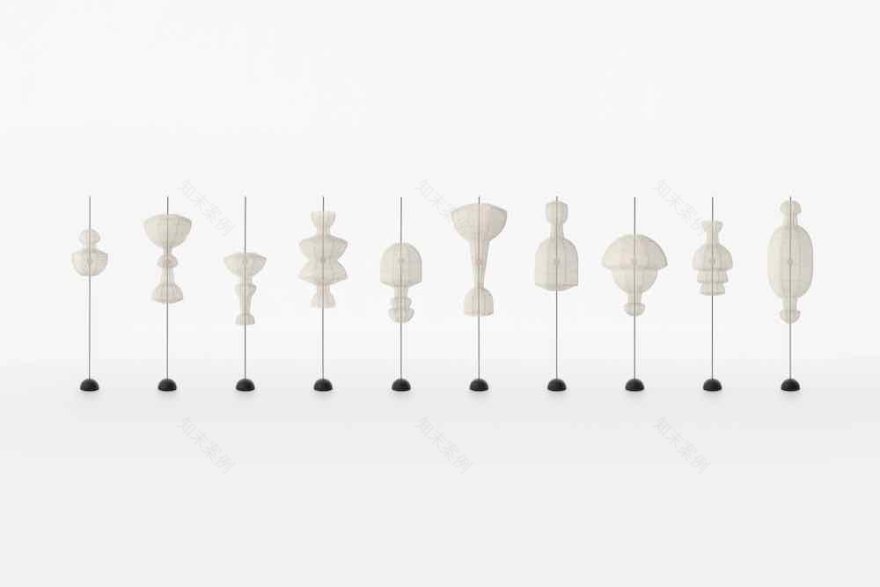
HYOURI lanterns collection by Nendo – Photos by Hiroshi Iwasaki unless stated otherwise.
– Japanese design studio
Nendo
unveils the
Hyouri
lanterns collection at the
Life in Vogue
virtual exhibition by
Vogue Italia
during
Milano Design City
, the hybrid event anticipating Milan Design Week which has been postponed in September.
The new series can be discovered in a virtual room on the 4th floor of a digital replica of Condé Nast Milan headquarters and can be explored
Just as the lantern Hyouri was created by combining traditional craft techniques and a new idea, the space was designed in the image of traditional Japanese wood and timber architecture in a digital world.
Oki Sato
, founder of Nendo.
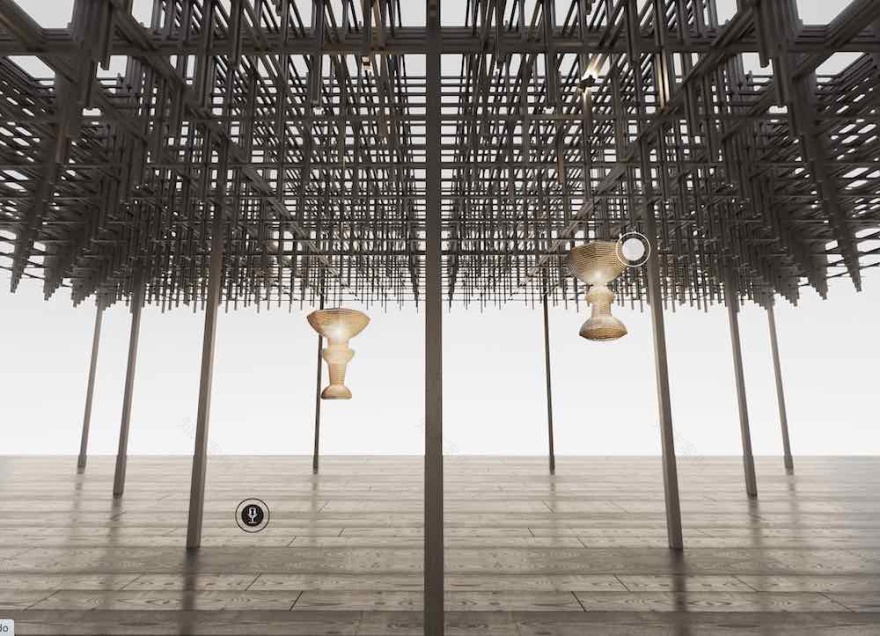
Nendo @ Life in Vogue – Photo by Vogue Italia.
Inspired by traditional Kyoto lanterns, the collection was developed by traditional Japanese lantern manufacturer Kojima Shouten and comprises 10 different designs. Known for their strength and durability, Kyoto lanterns are entirely handcrafted, from splitting bamboo to paper pasting.
Some lanterns seem to swallow parts of themselves, some triply nested, others reach inward to peak through the other side. Although Kyoto lanterns are often covered with thicker washi paper for outdoor use, Hyouri has instead a highly translucent silk lining to leverage its characteristics.


Each design features a ring-shaped bamboo frame functioning as the lantern’s bone. A single bamboo strip is shaped into a ring, and after the ends are fixed with washi paper, the loops are fitted into a wooden mold and connected together with thread.

With focus on this process, rather than binding the strips tightly to each other, leaving some slack between the strips and binding them with washi paper yielded mobility as if they were joints. Adding eight such joints in the circumference of one ring thus enabled the lantern to be turned inside out.

Photos by Hiroshi Iwasaki, unless stated otherwise – Courtesy of Nendo.

Sketch by Nendo.

南京喵熊网络科技有限公司 苏ICP备18050492号-4知末 © 2018—2020 . All photos and trademark graphics are copyrighted by their owners.增值电信业务经营许可证(ICP)苏B2-20201444 苏公网安备 32011302321234号
苏公网安备 32011302321234号客服
消息
收藏
下载
最近