

创作上传
VIP
收藏下载
登录 | 注册有礼
查看完整案例

收藏

下载

分享
Дворец Советов, 1933
Дворец Советов, Б.М. Иофан, В.А. Щуко, В.Г. Гельфрейх
3D Москва Авангарда
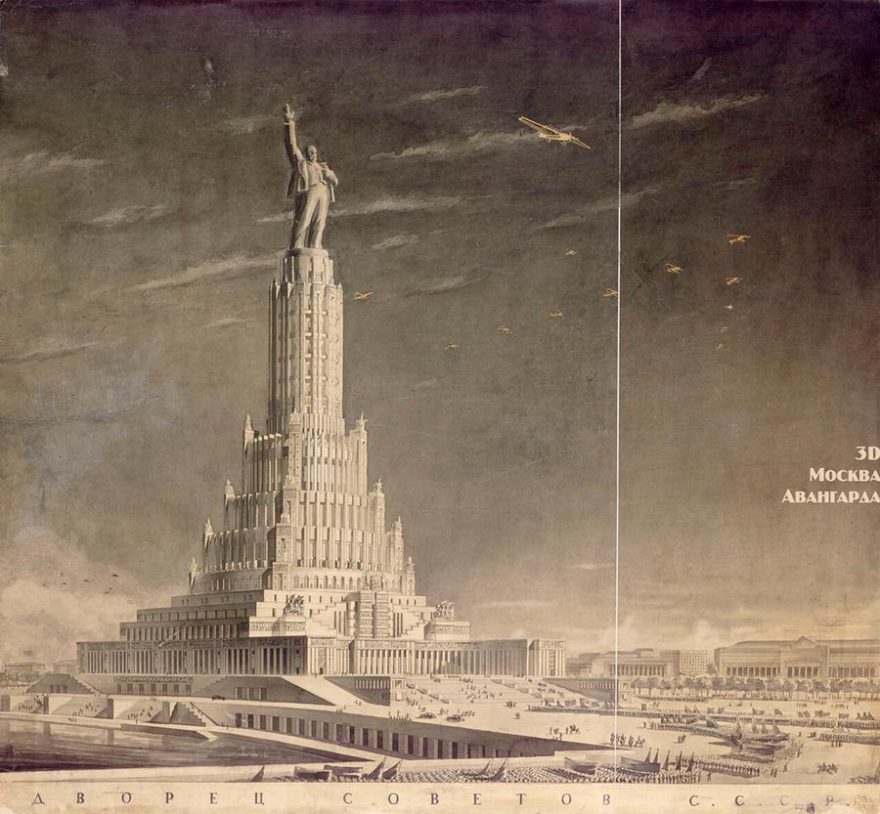
Неосуществлённый проект строительства высотного административного здания в Москве для проведения сессий Верховного Совета СССР и массовых демонстраций. По плану архитектора Бориса Иофана, высота Дворца Советов вместе с венчающей его стометровой статуей Владимира Ленина составляла 415 м. Дворец должен был стать центром новой советской Москвы и самым высоким зданием в мире, символизирующим победу социализма. Проектирование и начало строительства дворца ознаменовало переход к сталинскому ампиру в советской архитектуре.

Московский Дворец Советов — один из самых известных нереализованных архитектурных проектов в истории. Огромное (самое большое и самое высокое в мире) здание, которое должно было стать символом победившего социализма, символом новой страны и новой Москвы. Этот проект поражает воображение и в наши дни. Это здание воспетое во многих творческих произведениях строилось для того, чтобы после победы Мировой Революции в его стенах принять в состав Советского Союза … последнюю республику. И тогда весь мир будет одним Союзом Советских Социалистических Республик.
Дворец Советов Бориса Иофана — в 4 серии мини-сериала «
Москва, которой не было
».
В 1931 году на месте предполагаемого строительства Дворца Советов был взорван храм Христа Спасителя, подготовительные работы начались уже на следующий год. Фундамент дворца был завершён в 1939-м, но из-за начала Великой Отечественной войны проект заморозили. В 1941—1942 годах стальные конструкции Дворца Советов были демонтированы и использованы во время обороны Москвы для сооружения мостов.

В 1931 году был создан и специальный правительственный орган Совет строительства Дворца Советов (чтобы не повторять дважды одно и то же слово в одном названии его часто именовали просто Совет Строительства). При этом Совете был постоянный архитектурно-технический комитет, в который входили видные деятели культуры тех лет – Горький, Мейерхольд, Луначарский. Кроме того, в деятельности Совета принимал активное участие Генеральный Секретарь ЦК ВКП(б) И.В. Сталин.
Первый закрытый конкурс на проект дворца перед объявлением большого всесоюзного конкурса проходил с февраля по май 1931 года и носил предварительный характер. Всего было проведено 4 конкурса. Из 270 участников в итоге в финал конкурса вышли пять групп архитекторов, среди которых была и группа Бориса Михайлович Иофана. 10 мая 1933 года Совет наконец определил победителя. В этот день вышло следующее постановление:

«1. Принять проект тов. ИОФАНА Б. М. в основу проекта Дворца Советов.
2. Верхнюю часть Дворца Советов завершить мощной скульптурой Ленина величиной 50-75 метров с тем, чтобы Дворец Советов представлял вид пьедестала для фигуры Ленина.
3. Поручить тов. ИОФАНУ продолжить разработку проекта Дворца Советов на основе настоящего решения с тем, чтобы при этом были использованы лучшие части проектов и других архитекторов.
4. Считать возможным привлечение к дальнейшей работе над проектом и других архитекторов.»
Согласно постановлению XVIII съезда партии, возведение Дворца Советов должно было завершиться в 1942 году — к концу третьей пятилетки. Однако эти сроки оказались невыполнимыми из-за сложности и объёмов производимых работ. Дворец имел огромный вес — 1,5 млн тонн.

Укладка фундамента высотной части, главного входа и основания со стороны Волхонки закончилась к 1939 году. Для строительства дворца была изготовлена специальная марка стали — ДС, самая прочная на тот момент в СССР. Однако уже в сентябре — октябре 1941 года в период Великой Отечественной войны из подготовленных для монтажа металлических конструкций были изготовлены противотанковые ежи для обороны Москвы. Вскоре каркас здания пришлось разобрать совсем: после оккупации Донбасса в 1942 году стальные конструкции Дворца Советов были использованы для сооружения мостов на железной дороге, необходимой для снабжения северным углём центральных районов страны. В 1943 году 250 тонн металла из разбираемых конструкций Дворца Советов были направлены на строительство путепровода на Волоколамском шоссе, а в 1944-м стальные конструкции использовались для пролётных строений Керченского моста.
Palace of Soviets, 1933, B.M. Iofan, V.A. Schuko, V.G. Gelfreich
An unrealized project for the construction of a high-rise administrative building in Moscow for holding sessions of the Supreme Soviet of the USSR and mass demonstrations. According to the plan of the architect Boris Iofan, the height of the Palace of Soviets, together with the hundred-meter statue of Vladimir Lenin crowning it, was 415 m. The palace was to become the center of the new Soviet Moscow and the tallest building in the world, symbolizing the victory of socialism. The design and construction of the palace marked the transition to the Stalinist Empire style in Soviet architecture.

The Moscow Palace of Soviets is one of the most famous unrealized architectural projects in history. A huge (the largest and tallest in the world) building, which was supposed to become a symbol of victorious socialism, a symbol of a new country and a new Moscow. This project is amazing even today. This building, sung in many creative works, was built in order to accept the last republic into the Soviet Union after the victory of the World Revolution within its walls. And then the whole world will be one Union of Soviet Socialist Republics.
In 1931, at the site of the proposed construction of the Palace of Soviets, the Cathedral of Christ the Savior was blown up, preparatory work began the very next year. The foundation of the palace was completed in 1939, but due to the outbreak of World War II, the project was frozen. In 1941-1942, the steel structures of the Palace of Soviets were dismantled and used during the defense of Moscow for the construction of bridges.
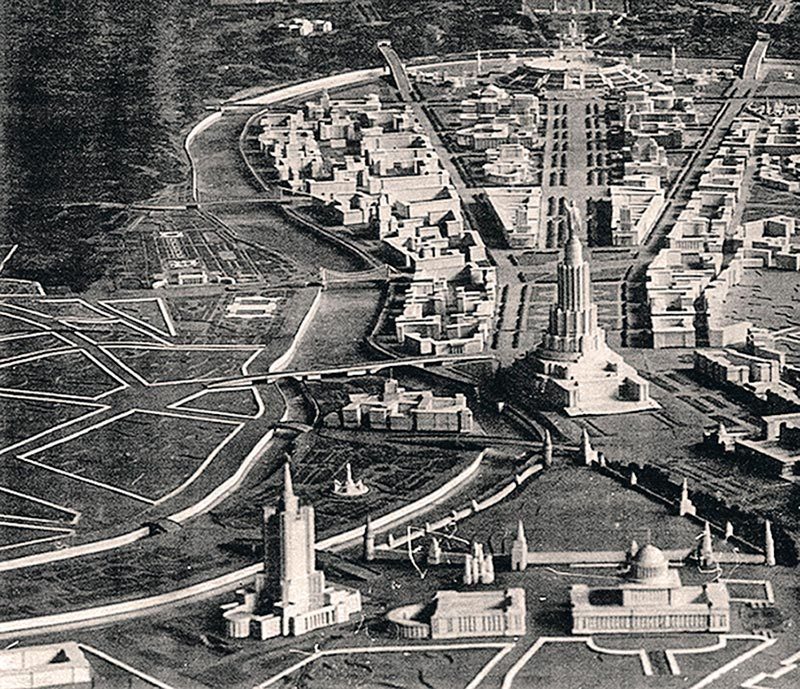
In 1931, a special government body, the Council for the Construction of the Palace of Soviets, was also created (in order not to repeat the same word twice in the same name, it was often called simply the Construction Council). This Council had a permanent architectural and technical committee, which included prominent cultural figures of those years — Gorky, Meyerhold, Lunacharsky. In addition, the General Secretary of the Central Committee of the All-Union Communist Party of Bolsheviks I.V. took an active part in the activities of the Council. Stalin.
The first closed competition for the design of the palace before the announcement of a large all-Union competition was held from February to May 1931 and was of a preliminary nature. There were 4 contests in total. Out of 270 participants, as a result, five groups of architects reached the final of the competition, among which was the group of Boris Mikhailovich Iofan. On May 10, 1933, the Council finally decided on the winner. On that day, the following decree was issued:

“1. Accept the project Iofan B.M. as the basis for the project of the Palace of Soviets.
2. Complete the upper part of the Palace of Soviets with a powerful sculpture of Lenin, 50-75 meters in size, so that the Palace of Soviets represents a kind of pedestal for the figure of Lenin.
3. Instruct comrade Iofan B.M. will continue to develop the project of the Palace of the Soviets on the basis of this decision so that the best parts of the projects and other architects are used.
4. Consider it possible to involve other architects in further work on the project.”
According to the decision of the XVIII Party Congress, the construction of the Palace of Soviets was to be completed in 1942 — by the end of the third five-year plan. However, these deadlines turned out to be impossible due to the complexity and volume of work performed. The palace had a huge weight — 1.5 million tons.
Дворец Советов — 12 конкурсных проектов
The laying of the foundation of the high-rise part, the main entrance and the foundation from the Volkhonka side was completed by 1939. For the construction of the palace, a special steel grade was made — DS, the strongest at that time in the USSR. However, already in September — October 1941, during the Great Patriotic War, anti-tank hedgehogs for the defense of Moscow were made from metal structures prepared for installation. Soon, the frame of the building had to be completely dismantled: after the occupation of Donbass in 1942, the steel structures of the Palace of Soviets were used to build bridges on the railway, which was necessary to supply northern coal to the central regions of the country. In 1943, 250 tons of metal from the dismantled structures of the Palace of Soviets were used to build an overpass on the Volokolamsk Highway, and in 1944 steel structures were used for the superstructures of the Kerch Bridge.

南京喵熊网络科技有限公司 苏ICP备18050492号-4知末 © 2018—2020 . All photos and trademark graphics are copyrighted by their owners.增值电信业务经营许可证(ICP)苏B2-20201444 苏公网安备 32011302321234号
苏公网安备 32011302321234号客服
消息
收藏
下载
最近