

创作上传
VIP
收藏下载
登录 | 注册有礼
查看完整案例

收藏

下载

分享
Tsinghua Architecture School extension in Beijing, China by Li Xiaodong Atelier
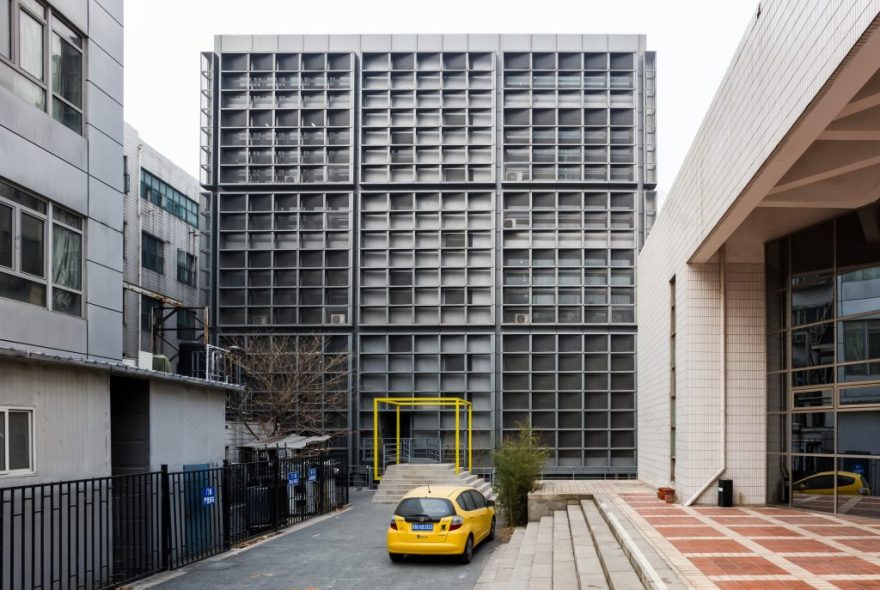
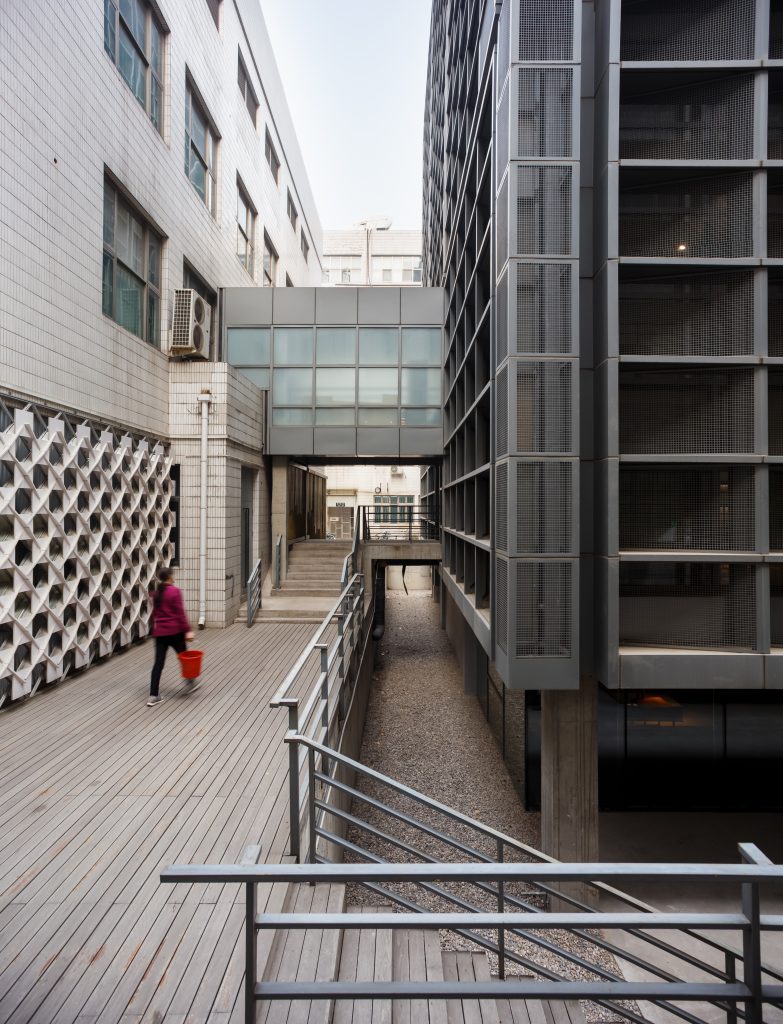


Within strict space and budgetary constraints, the simplicity of Li Xiaodong’s Tsinghua University extension belies its experimental integrity
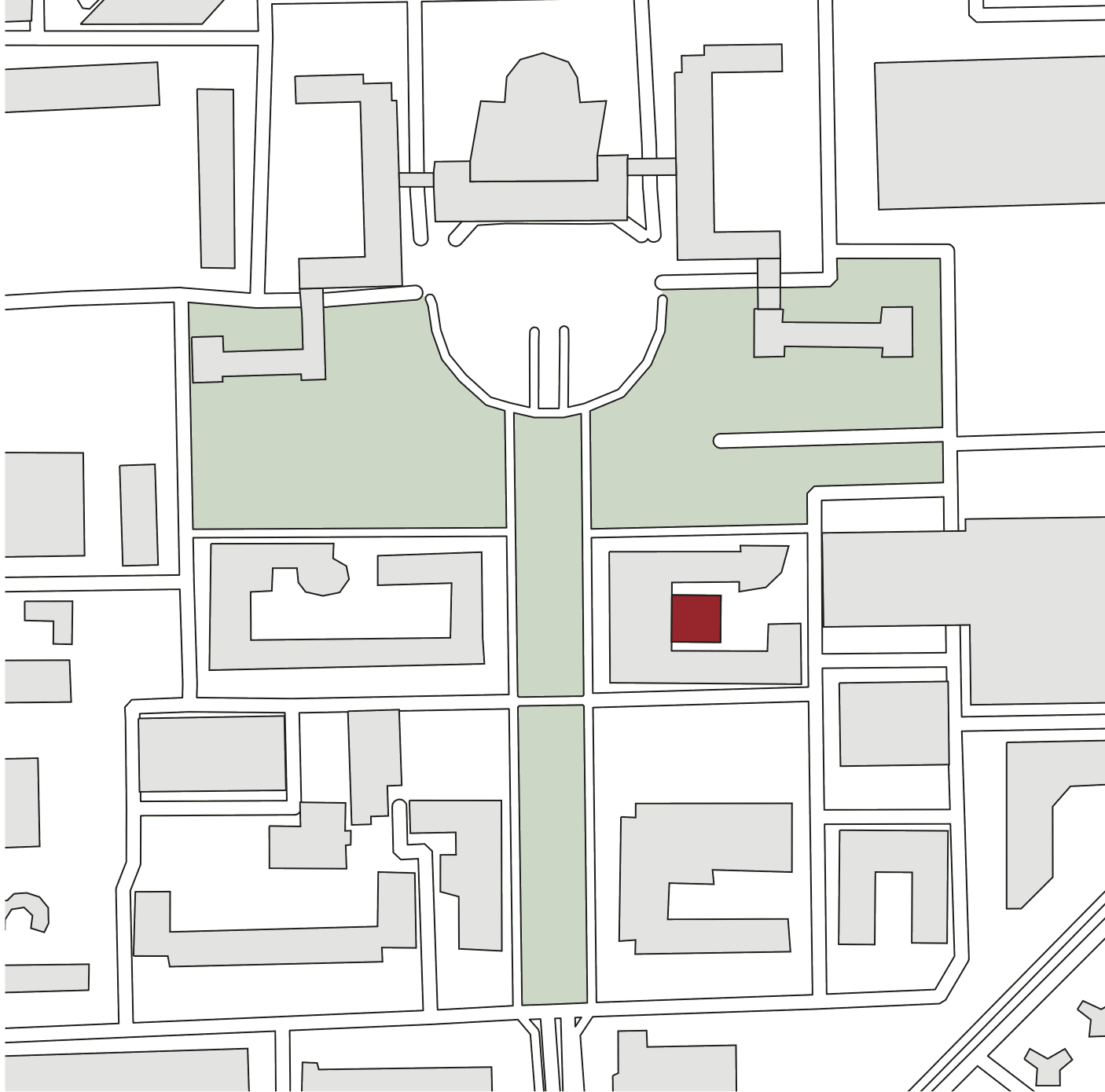
Tsinghua University is one of the top universities in the world; an oasis of calm in one of the more gritty parts of north-west Beijing. Within the sprawling American-style gated campus, the Architecture School is located in a leafy corner of the grounds with a heavy, Postmodern frontage overlooking the manicured quad lawns and boulevards. The rear, however, faces a rather messy accumulation of buildings: a congested car park, bike racks and the accretions of time.
The department is blighted by limited studio and presentation space. Architect Li Xiaodong describes the building as ‘all corridors with no sense of an identity as an architecture school’. The brief resolved to provide that much-needed sense of cohesion while expanding the studio and display spaces for a growing student body.
‘In many ways, this extension designed itself’, he says. It’s a self-effacing comment hinting that the building was effectively generated by the constraints of the site, the size of the budget, the strictures of local regulations and stringent user requirements. It modestly suggests that its design was a foregone conclusion driven by factors outside the control of the architect. The enclosed site limited its height, width and depth, giving rise to a concrete-framed building, a grid, a modest palette of materials and straightforward detailing. It’s a box.
It is also an architecture department designed by a member of that department on land owned by the university. With all this in mind: design simplicity, a friendly client and optimised decision-making, why did it take more than 12 years from inception to completion? After all, it’s a box built in Beijing, the epicentre of speedy construction where architects churn out projects, aided by the relentless 24-hour, seven-days-a-week construction industry. Masterplans are often demanded within three days, project renderings within a week, and full plans within 10 days. In many Chinese Design Institutes (the equivalent of local authority architects’ departments), the architects are paid by the square metre of project drawn.
It is a hugely pressurised industry where fanciful drawings are often required before any project has been agreed to, or any money raised, or any land found. However, the aspect seldom acknowledged in this oversimplified picture of rapid construction in China, is what is called the ‘faffing about’ period by clients. This is where our story starts.
The initial idea for this project was formed around 2006 and comprised a generous proposal to demolish the original buildings and to redevelop the entire site. Schematic designs were prepared but two years later, when another site became available, a second detailed proposal was demanded (with both schemes accruing zero architectural fees). With a much reduced budget and forced to settle for the original site, the second scheme was dropped and a new design was worked up in 2011, finalised in 2013 and the construction completed in 2015. Fit-out and variations took a little while longer.
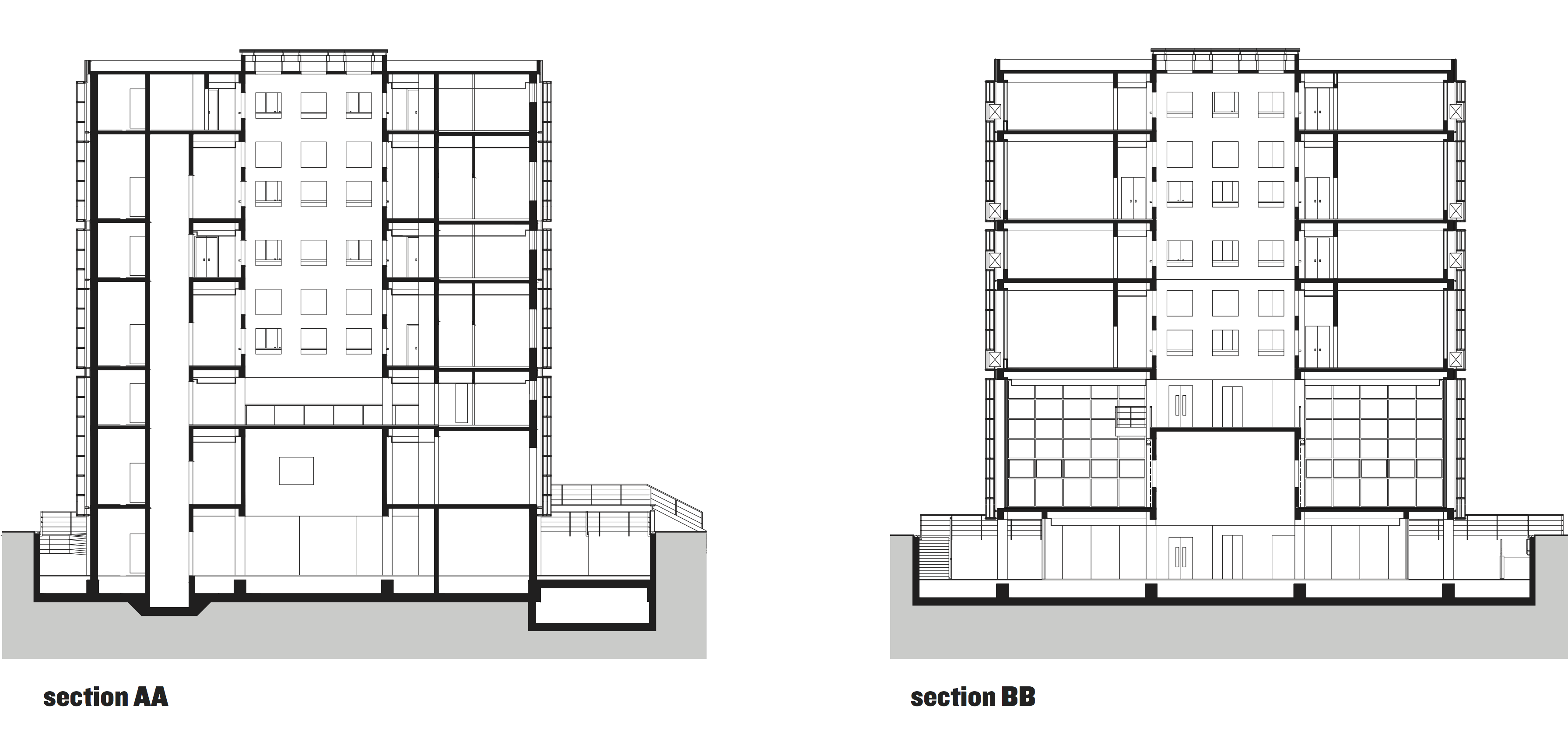
The Tsinghua extension is in a 30 x 30 metre rear yard, hemmed in on three sides. Once the access, fire access, escape routes and service areas have been taken into account, there is a 22.5m plan space available which, coincidentally, is the same as the height restriction. Breaking up the structure further, Li describes it as a ‘Rubik’s Cube of 7.5 metre grid boxes’ in both horizontal and vertical directions. On plan, some of the nine squares are given over to stairs, lifts and exits and what is left neatly divides itself into two rows of usable squares with a central space. The external elevations comprise smaller regular window grids masked by angled, steel-mesh brise-soleil.
Grand ideas had to be put to one side as the finances barely covered the cost of construction, forcing Li to use concrete for the main structure – a material that he tends to avoid. In section, steel beams and floor thicknesses subdivide the height further and just manage to achieve 3 x 2.5 metre floor-to-floor separations within each 7.5 metre box. (I had to duck a few times as a concrete beam loomed into view at about 1.8 metres height, but these were confined to less public areas.)
Driven by such restrictions, the concept evolved into what Li describes as an ‘Ikea store’: a stacking system containing studio spaces in which 10-12 students would be grouped on each level in intense working quarters. In these low-ceilinged stacked spaces, a tutor would take students off the shelf for discussions.
Unfortunately, this high-density working environment was a step too far for the authorities and the regulatory restrictions that had driven the project finally scuppered it. The fire service refused to allow such a congested working environment, the stacking concept was rejected and the crowded studio environment cancelled. The result is that an extension to the architecture department that was originally planned to provide a better student working environment has now become an office block for the teaching faculty. Students are relegated to the exterior public spaces, the sunken café/bar and the open plan ground floor.
The basement enclosure provides a semblance of public space and is intended to draw students in, to encourage sociability and ownership. The principal entrance is announced by a bright yellow cube on the easterly elevation with access gained by means of a steel bridge and concrete feature staircase (both helping to mask the drainage connections). Unhelpfully, the security man keeps the main door locked so that he only has to monitor one point of entry.
Above the basement is a display area and crit space and the floors above comprise perimeter offices around a central void that extends up the full height of the building, capped off with an ETFE roof. This atrium acts as a passive ventilation chimney to encourage a free flow of air drawn up through the basement but also across the offices through trickle ventilation in the internal steel doorframes.
For many commentators, this new concrete, steel and glass structure is not what they had expected from Li Xiaodong’s stated desire to integrate new buildings with the local environment. He is better known for his vernacular creations such as his twig-covered Liyuan library and his bamboo bridge school in Fujian, and so the photograph of him posing in an Aldo Rossi-esque atrium came as something of a shock to many. In fact, what looks like Modernist concrete elevation is in fact a facade of timber studs and plasterboard. As a project built on the cheap it is a testament to the architect in that it still displays flourishes of ingenuity and spectacle.
The architecture department was founded in 1946 by the ‘father of modern Chinese architecture’ Liang Sicheng, who was renowned for his search for the language of Chinese buildings, often described as ‘the national style’. In many respects, Li carries on that tradition in his search for an identity of place. Liang spent 20 years researching the ancient
A more contemporary reference for Li is Kenneth Frampton’s
which has been widely read and disseminated in present-day China. Li’s variation is ‘Reflexive Regionalism’ – a rejection of the ‘modern-vs-traditional’ duality preferring to search for appropriate solutions that embody what he calls the ‘coalescence of man and nature’. Critical of dogmatic perspectives, Li claims to apply a cosmological view to his work, seeking out ‘issues’ to resolve, specific to local context and current requirements rather than becoming trapped by ‘style’. He doesn’t believe that buildings should predict the needs of the future but that they should simply be designed for the present, allowing successful buildings, where deserved, to become classics.
With such a culturally attuned ‘identity-driven’ aesthetic position, it is odd that the ‘issues’ he identifies often seem remarkably mundane and ubiquitous. For this building, for example, the issues include passive ventilation and sun-shading; for Liyuan it was local materials and indigenous craftsmanship; for others it has been landscaping, natural materials, community regeneration, minimising the growth of cities and a dislike of cars. These are hardly essentialist items of Chinese regionalism but rather the standard litany of global sustainability. The list of issues identified in his Tsinghua extension, for example, includes ‘very tight constraints, space efficiency, a developed and recognisable architectural attitude, consistency, a coherent image, and gradients of public and private spaces’. Outside a Chinese cosmological framework, in the West we might simply call that a common sense brief.
What is undeniable, though, is Li’s intellectual engagement with architecture. His books
Tsinghua Architecture School extension
Architect: Li Xiaodong Atelier
Project team: Li Xiaodong, Li Ye, Zhang Ye, Lian Xiaogang, Liu Lixun
Photographs: Billy Bolton
南京喵熊网络科技有限公司 苏ICP备18050492号-4知末 © 2018—2020 . All photos and trademark graphics are copyrighted by their owners.增值电信业务经营许可证(ICP)苏B2-20201444 苏公网安备 32011302321234号
苏公网安备 32011302321234号客服
消息
收藏
下载
最近