

创作上传
VIP
收藏下载
登录 | 注册有礼
查看完整案例

收藏

下载

分享

翻译
Architects:Roman & Dmytro Seliuk
Area:256m²
Year:2025
Photographs:Dmytro Seliuk
Category:Hospitality Architecture,Cabins & Lodges
Design Team:Roman & Dmytro Seliuk
City:Kyiv
Country:Ukraine

Text description provided by the architects. Modular Housing System for Hospitality. The idea - Create small houses that can easily be located between trees in gardens, parks, and forests. Image - The project is inspired by memories of first going on holiday in a tent (Namety) or a simple, small shelter made of sticks and branches collected in the forest as a child.


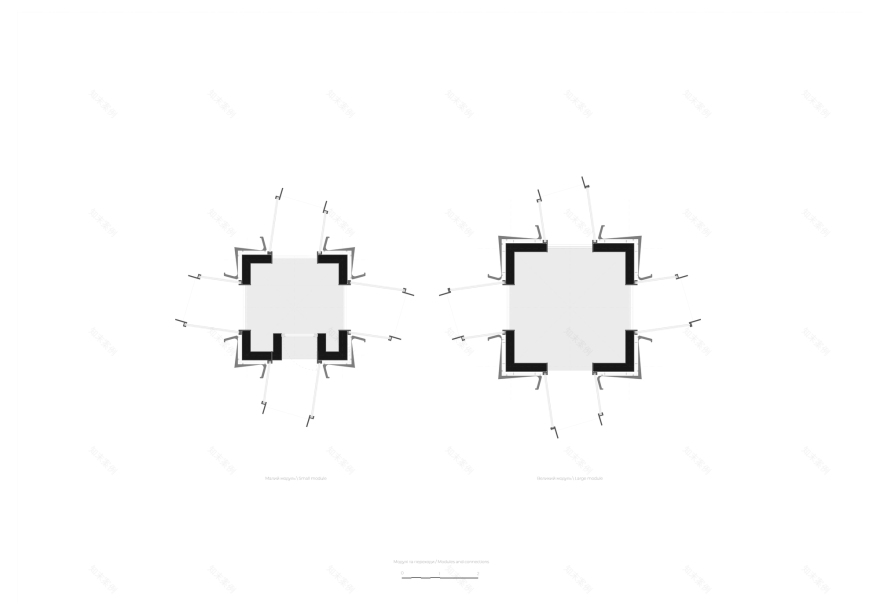
Structure - The planning structure follows two principles: mono-function and variation. Mono-function is expressed as spaces with a single use. The modules are designed to be as minimal as possible for their intended function. One module, one function. Accordingly, there is a difference in size between smaller and larger modules. The ability to create any combination of these two modules and adjust them to the limited space of the site is what makes them so versatile.


Connection - The method of combining modules prioritises the artistic image of the project, highlighting the tent as the main unit. The transition between the modules, the third element of the modular system, is completely transparent, with glass floors, walls, and ceilings. This transition enriches the composition of each finished combination by the angle of connection, which allows each module to shift and rotate relative to the neighbouring one, creating the effect of randomly placed tents in a forest.
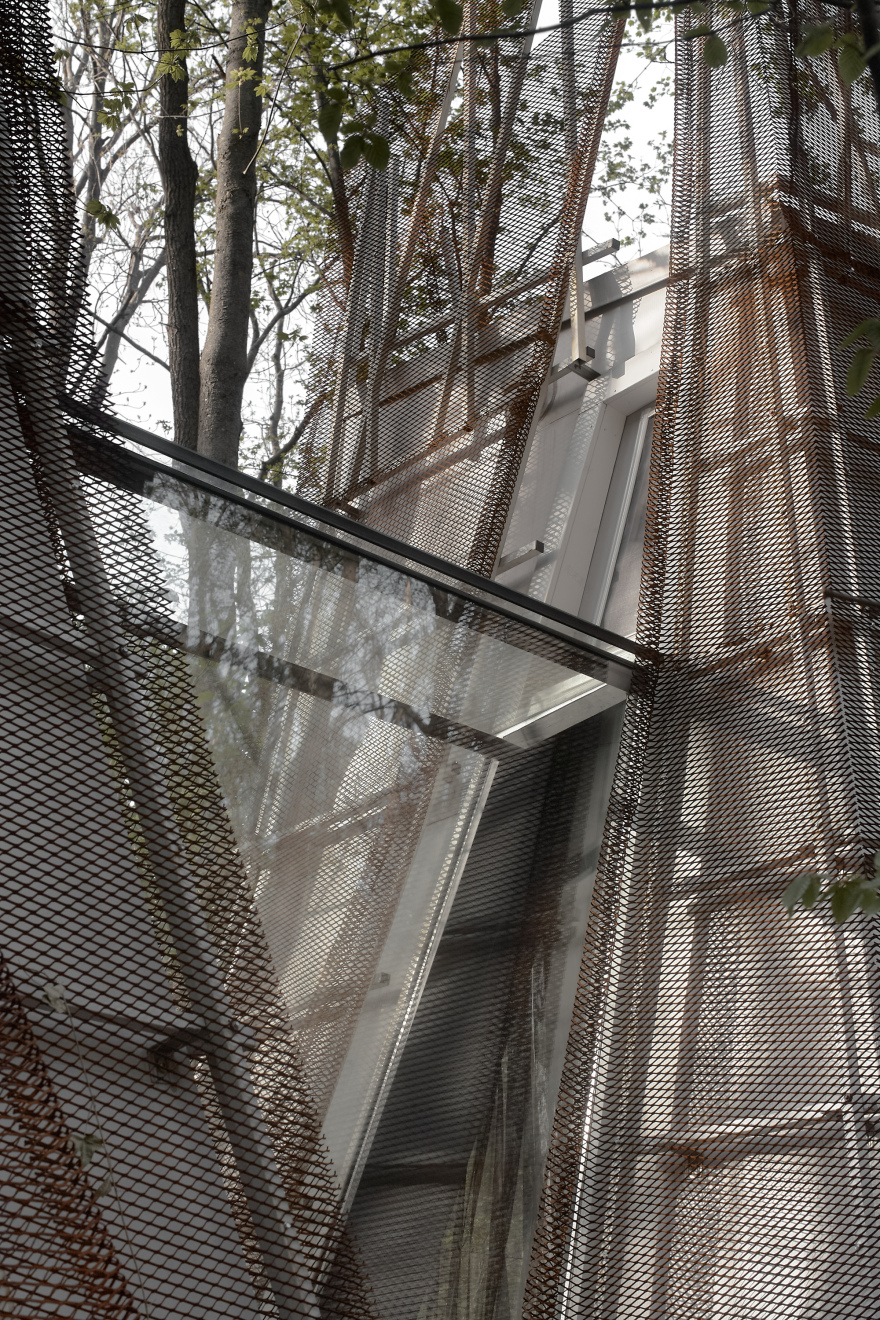


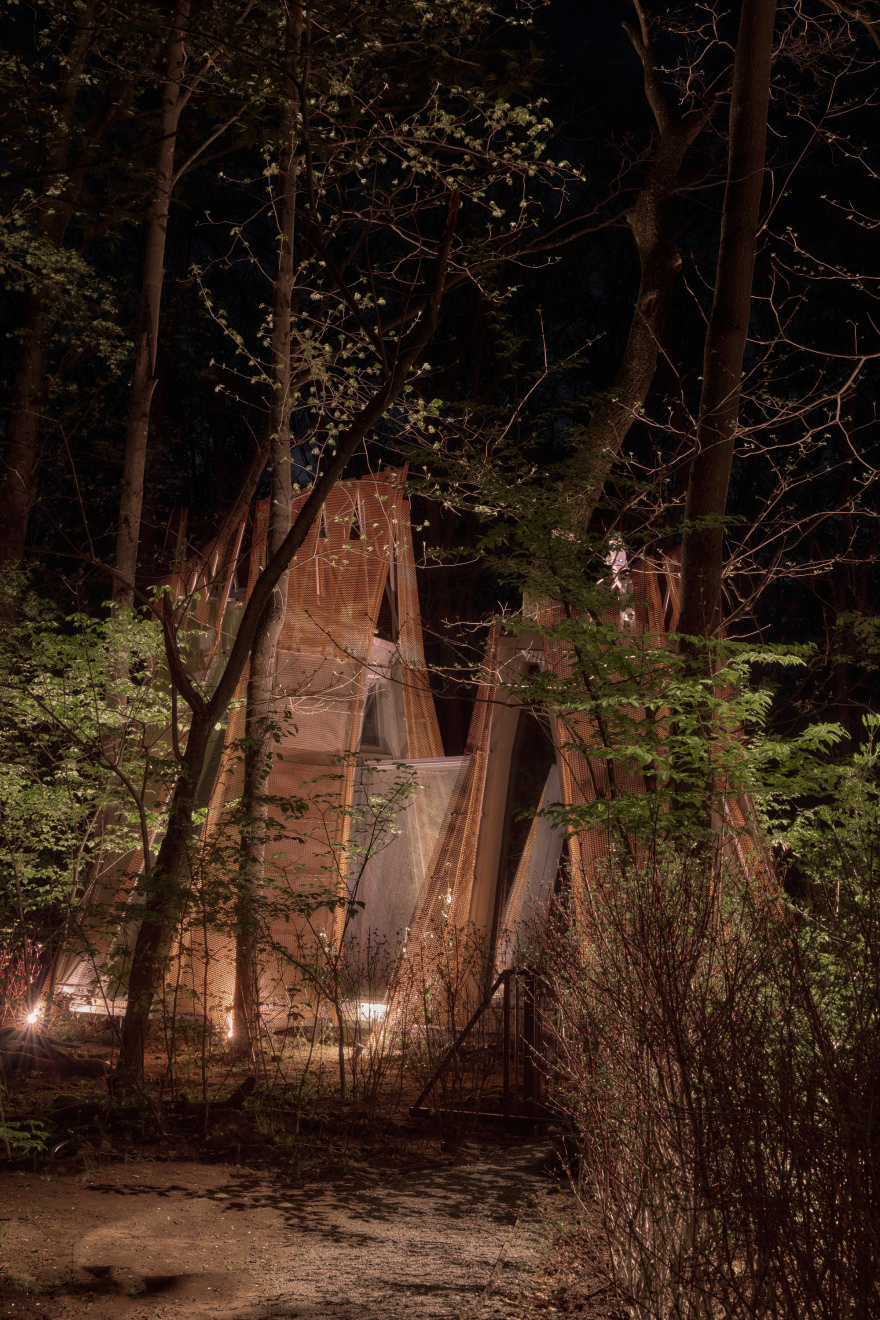
Architecture - It is based on the contrast between theses and the unity of a holistic artistic image, which becomes an integral part of the environment. The first contrast in terms of sensuality is between memories and dreams. Past events and the experience of self-made micro-spaces are contrasted with dreams of futuristic spaces. The second thesis in the material embodiment concerns materials that contrast with the environment, thereby achieving unity with it. Depending on the season or time of day, this light-coloured tent shell reflects the surrounding colours. It also enhances the night-time image created by the outer translucent corten steel mesh. The tent appears to glow from within, shifting the emphasis from the windows at night to the volume of the smooth 'fabrics'. During the day, the second shell performs several functions. It resembles the fabric of an imaginary tent that has been blown open around the entrances, windows, and transitions from module to module by the wind. The grid rises above the main volume of the building on thin frames resembling branches and sticks, creating a smooth transition of silhouette between the architecture and the environment. The trapezoidal shape of the windows follows the theme of rolled-up tent fabric. Each module has windows on four sides, allowing for various combinations, as well as a roof window. This creates a feeling of openness in the interior, contributing to the sensation of being in nature.

Location - The first modular park hotel was installed in the park area of the exhibition complex in Kyiv. The hotel consists of twelve separate combinations with various compositions and contents. The complex is located amongst dense tree planting, demonstrating careful integration into the natural environment.

Project gallery






南京喵熊网络科技有限公司 苏ICP备18050492号-4知末 © 2018—2020 . All photos and trademark graphics are copyrighted by their owners.增值电信业务经营许可证(ICP)苏B2-20201444 苏公网安备 32011302321234号
苏公网安备 32011302321234号客服
消息
收藏
下载
最近