

创作上传
VIP
收藏下载
登录 | 注册有礼
查看完整案例

收藏

下载

分享
-style bungalow in Maharashtra’s Amravati blends heritage with modern charm
Mind Manifestation Design gave this bungalow in Maharashtra a Cycladic-inspired twist while honouring its traditional
wada
roots.

Keeping with tradition is often the default in matters of faith and family, but not exactly convenient—or necessary—when attempting to trail-blaze a career in alternative home design. Architects Chetan Lahoti and Anand Deshmukh of Pune-based Mind Manifestation Design don’t consider themselves traditional—which makes it all the more intriguing that their latest project, a
Wada-style
bungalow in Maharashtra for a family of six, has one foot firmly planted in the past. "To be fair, the other one’s right here," chuckles Deshmukh, alluding to the modern slant of the home’s Maharashtrian-style architecture. And sure enough, it is—manifesting, in turn, through the Stygian lines of the
chauk
(central courtyard), the stillness of the
osari
(verandah), and the Cycladic arches of the roofline—ever respectful of heritage, ever evolving with the present.

The cycladic curves of the facade are a curious antithesis to the interior’s wada soul.

A large wooden door with intricate carvings leads into the osari, a semi-open verandah that serves as both the heart and the prelude to the home.
The osari is open to the elements, yet shaded from the sun.
It wasn’t easy—this tightrope walk between what was and what will be. “The client was set on a traditional
wada
but also wanted a home that felt warm, grand, and functional. At the same time, we wanted to create our own architectural style, inspired by traditional concepts. For us, great architecture stays connected to its roots while pushing forward with fresh ideas,” reflects Lahoti. The fresh ideas in question included vaults, bridges, and balconies—very un-
wada
, yet undeniably cool. To the architects’ minds, one thing was clear: if they were going to upend the rulebook for this bunglaow in Maharashtra, they might as well go all the way. The grandeur of the wada style was great, but it needed to be reimagined through a modern, minimal prism—one defined by an earthy, clutter-free aesthetic lexicon, with natural textures, imperfect finishes, and warm tones. What followed was an exercise in tactful restraint: yellow satin stone was laid to lend the floor a golden glow, just as cobblestone was emblazoned in the courtyards and outdoor areas to act as miracle sun catchers. Many walls were left nude, the brick underneath exposed, as if weathered by the elements and worn by time.

The seating arrangement in the living room is unfussy, characterised by handcrafted wooden furniture, woven cane chairs, and soft handloom cushions. Large openings promote natural ventilation and offer a seamless connection to the osari and courtyards.

The living room sits just off the osari.
It's no wonder, really, that Deshmukh and Lahoti—whose team included architect Rushikesh Dhotre—christened the project
Osari
, after the verandah or semi-open platform in a
wada
-style house. “It is the standout for sure,” avers Lahoti of the shaded retreat that acts as the home’s centerpiece while harking to the natural surroundings. “More than just an architectural element, the
osari
embodies the spirit of the home—a space for pause, interaction, and reflection, staying true to the essence of a traditional Maharashtrian
wada
while catering to contemporary lifestyles,” says Deshmukh. And while the appeal is modern, the visual hallmarks—including robust wooden columns, a sloping tiled roof, and stone flooring—are inspired by the past yet designed for the future. “They not only enhance the traditional charm but also provide climate responsiveness by keeping the space cool and breezy,” Lahoti notes, citing the interplay of light and shadow and the ability of the interior, courtesy of its earthy palette, to effortlessly echo the landscape.

Classic meets contemporary in the living area, where a double-height volume, exposed wooden rafters, a luminous skylight, and brick walls lend warmth and texture.

The kitchen follows a simple, open-plan layout that spills into the osari. Traditional brass and copper utensils on the shelf double as decor.
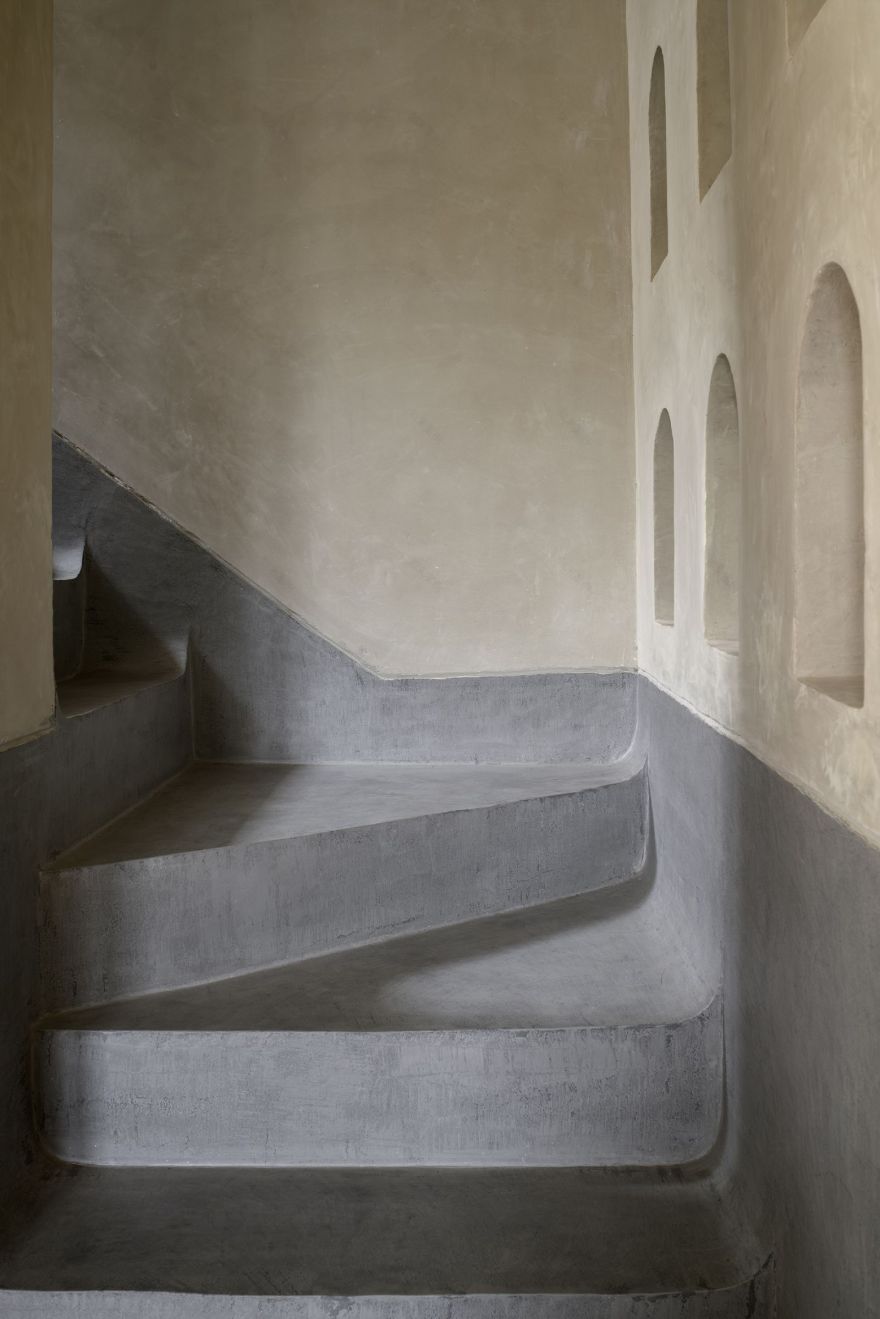
The stairs to the upper floor are sculptural monoliths.
It’s one thing to design a space in the same city as your contractors, labourers, and craftsmen, but quite another when your site is over 600 kilometres away. “Since the project was in a remote location, our biggest challenge was keeping things on track and making sure progress stayed aligned with the plan,” reflects Deshmukh. Not that it deterred him or Lahoti. The pair kept their noses to the grindstone, planning the home as one might have done 400 years ago. Here appeared a
dewadi
(storeroom), there was born a
baithak
(living space). An open-plan
swayampak ghar
(kitchen), complete with polished stone countertops, wooden cabinets, and exposed
brick
walls, was ornamented with traditional brass and copper utensils. The result is a home that seamlessly bridges past and present—one that honours the grandeur of traditional Maharashtrian Wadas while embracing contemporary sensibilities. More than just a residence,
Osari
stands as a testament to the idea that architecture, at its best, is not just about buildings but about the lives, stories, and traditions it preserves and reinterprets for the future.

Designed for maximum comfort, the bedrooms are peaceful havens containing wooden beds, handwoven rugs, and natural fabric curtains. Exposed brick and yellow satin stone cover the walls and floor respectively.

A castellated beam bridge connects the home’s two sides.

One of the fresh ideas the architects brought to the project was the incorporation of bridges in the bungalow.

A simplistic verandah overlooks the backyard.
南京喵熊网络科技有限公司 苏ICP备18050492号-4知末 © 2018—2020 . All photos and trademark graphics are copyrighted by their owners.增值电信业务经营许可证(ICP)苏B2-20201444 苏公网安备 32011302321234号
苏公网安备 32011302321234号客服
消息
收藏
下载
最近