

创作上传
VIP
收藏下载
登录 | 注册有礼
查看完整案例

收藏

下载

分享
This glorious heritage hotel in Udaipur basks in the glow of the City Palace
Noorein Kapoor brought the 300-year-old Amet Haveli into the present with thoughtful interventions that stay true to its past.
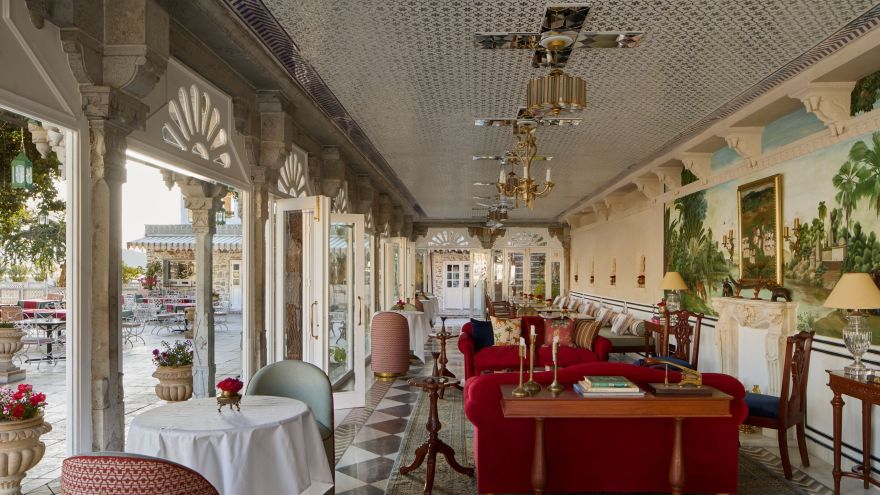
Formerly an open courtyard, Kapoor enclosed part of the outdoor space to create a baradari, or a pavilion with twelve doors. She integrated the original pillars, glass thikri ceiling, and chequerboard flooring while doing so. “This addition was crucial for accommodating guests comfortably during both rainy and summer seasons,” says the designer, who turned the heart of the room into a lounge.
and a heritage hotel, no matter how briefly, would know that there are some landmarks that qualify as a true tourist as having truly experienced the city. Amet Haveli, built during the rule of Emperor Maharana Jagat Singh II between 1734 and 1752, falls firmly in that category, although travellers may recognise it by another name: Ambrai, the restaurant that has made it a bona fide Instagram icon. Nestled on the banks of Lake Pichola and airily ensconced between the City Palace and the Taj Lake Palace, the almost 300-year-old haveli has a past as storied as its royal neighbours.

A legend from the haveli’s glorious history comes to life through a colourful fresco by Rajasthani artist Bhupendra Singh Shekhawat, which surrounds a framed photograph of an Amet forebear.
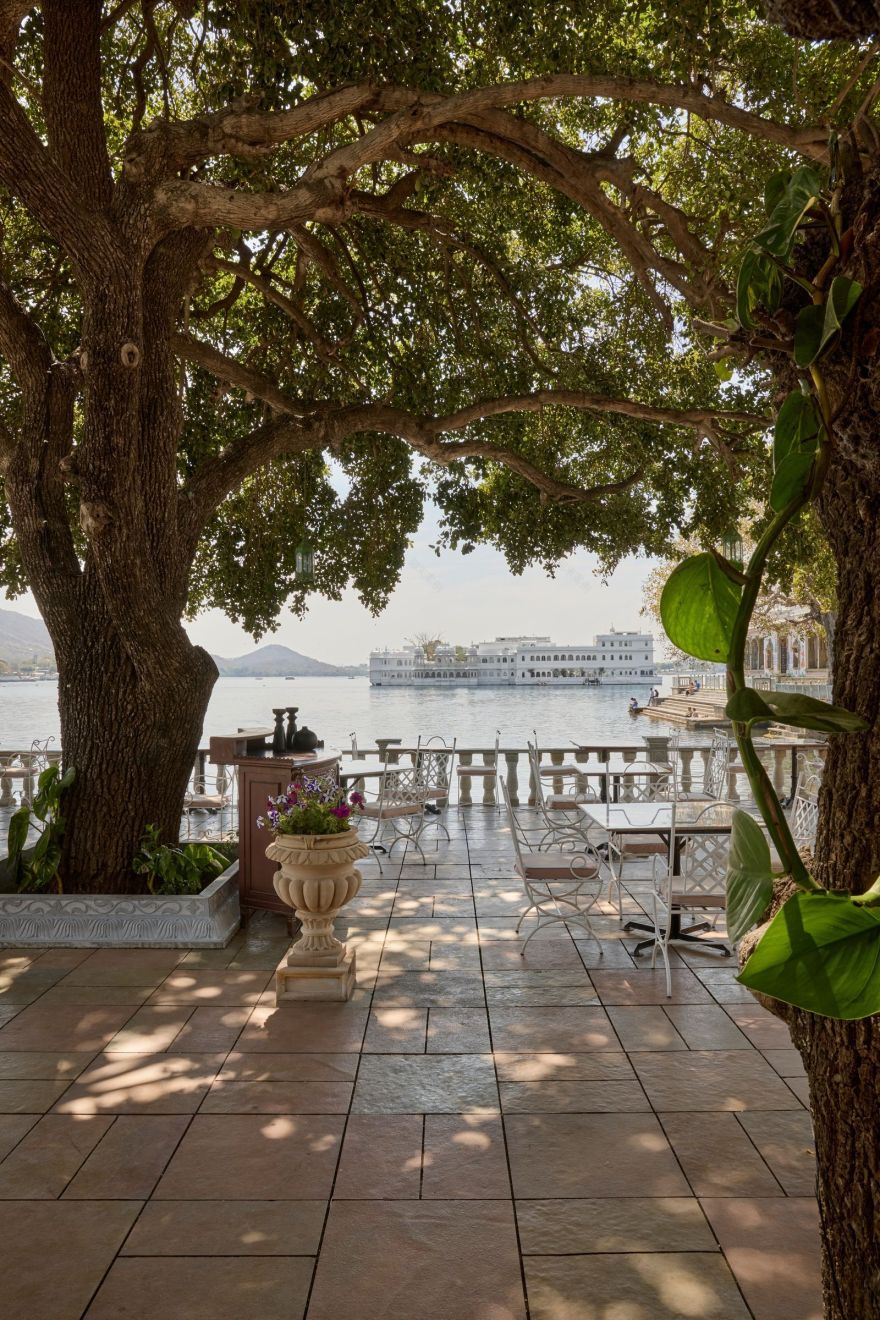
The patio flooring is a mellow smorgasbord of Kota stone in shades of yellow and pink.

“It blends into the cityscape and the landscape surrounding the City Palace,” says Kapoor.
Originally used as an imperial pied-à-terre, the manor—whose garden palace was designed by the same architect who created those of the
Palace and City Palace—was handed down from emperor to emperor before ultimately finding life as a boutique heritage hotel under the patronage of its present owners, Jaivardhan Singh and Aparna Jodha, in 1998. The place ran marvellously, with feverish footfalls all year round—
marvellously that, in due course, Singh and Jodha were prompted to pivot. With help from interior designer Noorein Kapoor, they decided to add their own idiosyncratic stamp to the elegant structure, to not only make it their own, but also to bring it into the present.

Kapoor arranged the tables to highlight the lake views. Smaller tables were placed along the glass facades, while larger ones were designated to the walls.
When Kapoor stepped in for the redesign, there was, as she explains, “nothing terribly wrong with the place.” At first, anyway. “But then we noticed water from the lake had seeped through in places, and of course, some of the layouts needed optimising,” reflects the founder and principal of Mumbai-based Noorein Kapoor Design, who was entrusted to revitalise the lower level of the restaurant, the al fresco patio and bar, as well as the rooms by rotation. What didn’t need optimising, mind you, was its character, which, as she saw it, was her job to keep. “We did extensive research into
’s royal history, visiting a number of heritage properties to gain a deeper understanding of the architectural styles and cultural nuances. We were able to ensure that our restoration stayed true to the original grandeur and authenticity of the haveli,” she notes, the “we” in question being herself and assistant designer Harshith Bedre. Honouring the original architecture was one thing, but honouring those who made it possible, including the local artisans and craftsmen, was quite another. Kapoor took great strides to achieve both.

Kapoor carved out a bar area from a previously unused kitchen space. The counter is integrated around existing pillars and arches, and the display shelf combines modern functionality with heritage design elements.

Made of black and white marble, the bar unit doffs its hat to the chequerboard flooring. The hand-painted flora and fauna on the wall is the work of artist Bhupendra Singh Shekhawat. The marble hound statues by the bar nod to the owners' beloved pet dogs.
Kapoor considered the City Palace her lodestar, mirroring its geometric patterns and exquisite artwork with marble and line paintings on the floor and walls respectively. The bid to bring back the past wasn’t limited to art alone; it also extended to objects and furniture. “Everything got a second life. We refurbished, repolished, reused, reclaimed, and repurposed things until we could no more,” she shares, citing the wrought iron chairs on the patio, whose pristine powder-coated sheen belies their fine vintage. When Kapoor set out to take cues from the surroundings, she didn’t just do so architecturally. “The sunsets here are quite something,” she avers. “We had the chance to elaborately study the shades of the sun and the sky, particularly how they reflect off the water onto the exterior walls of the City Palace.” The colours of dusk helped set the stage for the palette, inspiring the
in shades of yellow and pink on the restaurant patio and the sunny lime plaster application on the walls indoors. “The tones harmonise with the cityscape—it’s really cool to watch,” says Kapoor.

A view from the outside.
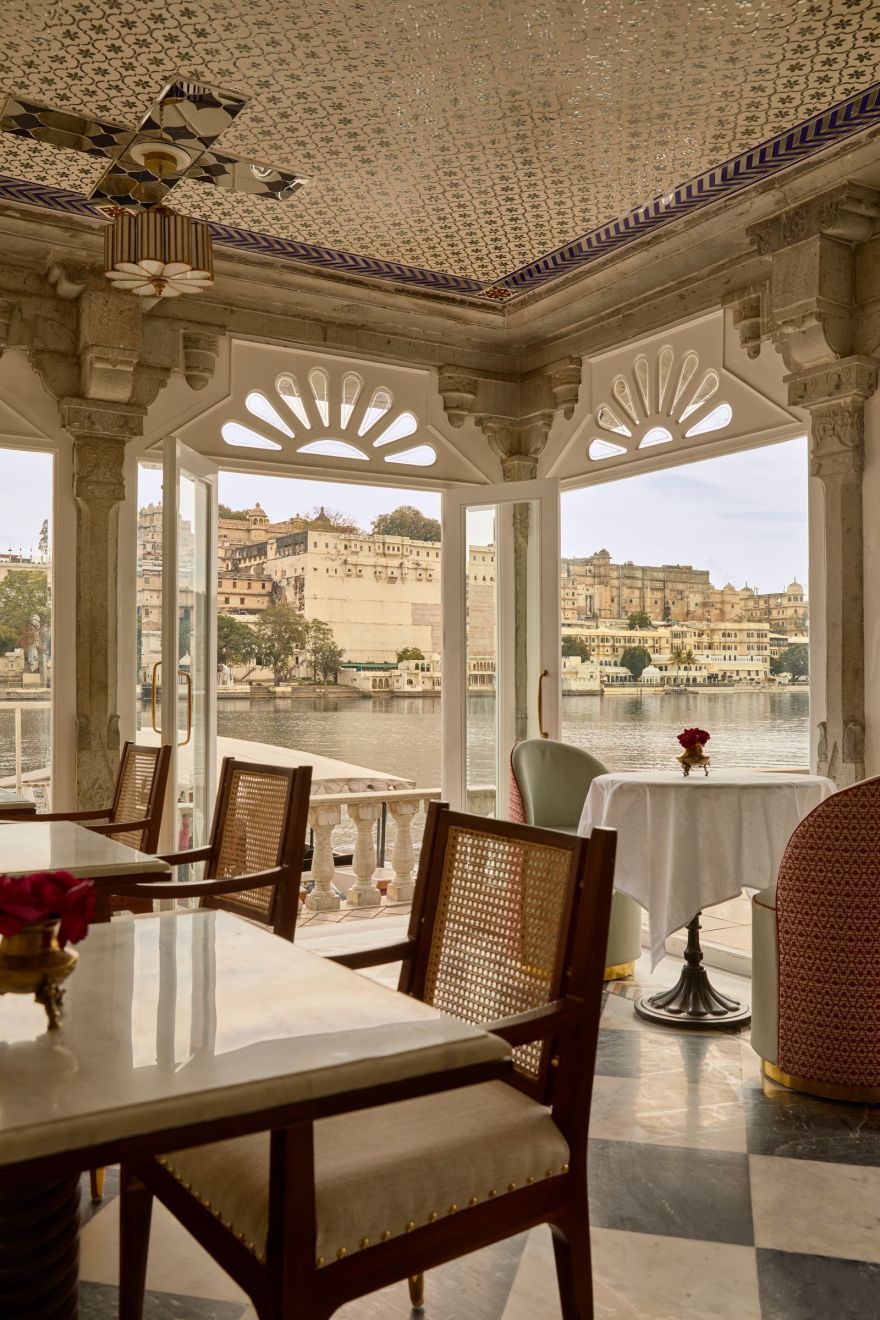
A corner of the baradari, overlooking Lake Pichola and the City Palace beyond.
or pavilion with twelve doors (there are three doorways on each side of the square-shaped room). Formerly an open courtyard, Kapoor installed full-length doors to turn it into an indoor seating area with unfettered views of the lake, one that glows like a jewel box come sundown. “This addition was crucial for accommodating guests comfortably during both rainy and summer seasons,” says the designer, who enlivened the haveli’s glorious history through a colourful fresco by Rajasthani artist Bhupendra Singh Shekhawat centred around a framed photograph of an Amet forebear. She also retained the existing pillars, glass
ceiling, and chequerboard flooring by parlaying all but one into the outdoor bar, which features a marble monolithic counter that looks like it could have been there since the 1700s.

“When designing the rooms, we carefully selected colours, fabrics, and flooring that would complement the historic elements,” says Kapoor. She steeped one room in a calming shade of blue to hold a mirror to the lake beyond. The bed and chairs, repolished in dark brown, are original to the haveli.

“We chose to give it a bold look,” says Kapoor of another suite, whose furniture she enlivened in scarlet and whose original hallmarks, such as the arches and ceiling, she respectively highlighted with wainscoting and white paint. A wallpaper by Kalakaari Haath serves as a calming backdrop to the bright furniture.
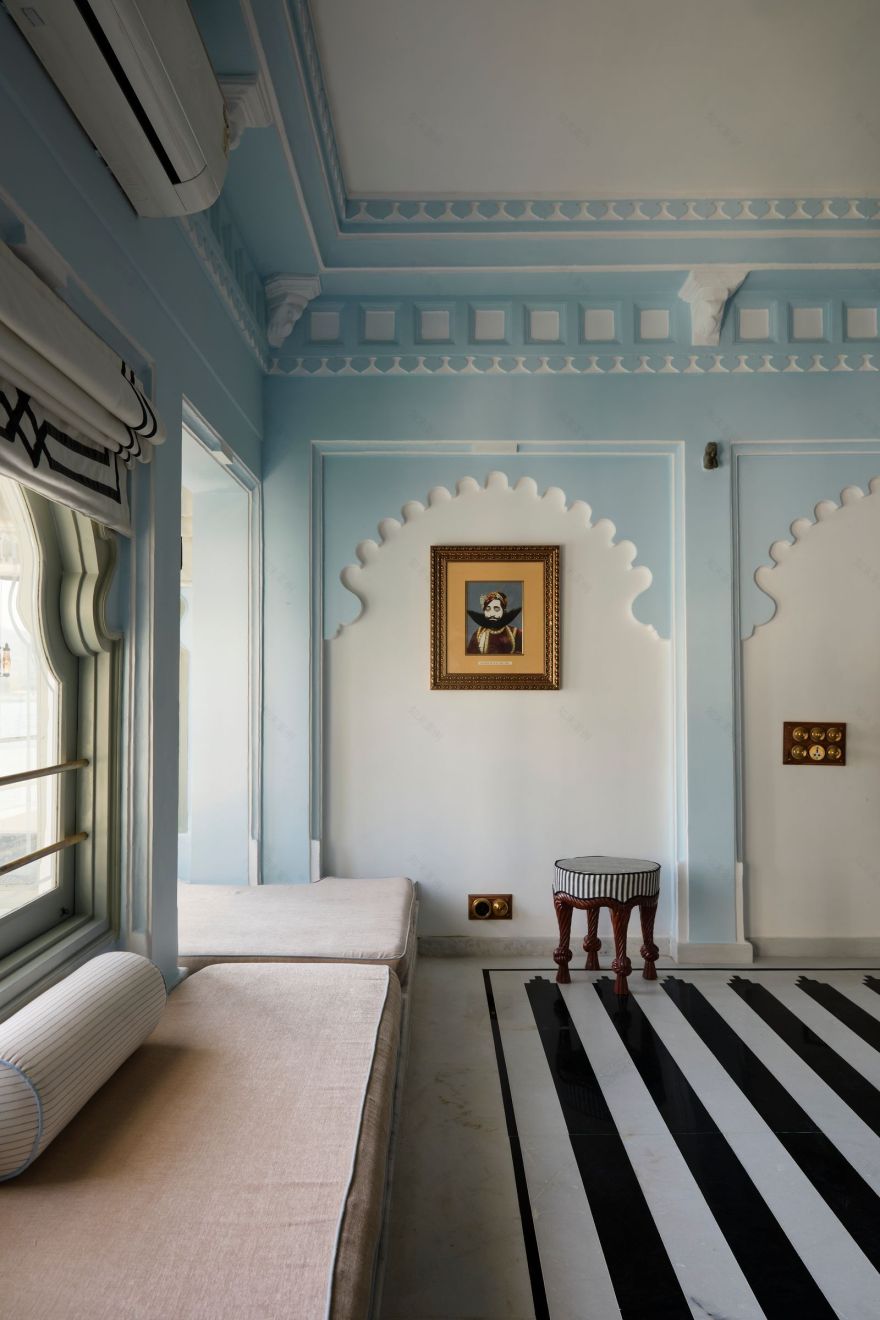
The City Palace Room, named for its likeness to the eponymous palace. Striped marble flooring and soft blue arches serve as serene antidotes to one another.

All the rooms boast views of Lake Pichola. Kapoor describes this particular one as “a warm hug on a summer afternoon,” thanks to the yellow walls that rival the soft Udaipur sunshine. The ceiling (not pictured) was designed and painted to mimic a striped fabric used in tents.

With blush pink walls and rose-toned furniture, this room is a blushing haven that strikes a contrast to the views.
This is the mise-en-scène on any given day of the year: some guests reposing in their rooms, others swanning around the patio, a few dining (and delighting) at Ambrai, and still more exploring the intricate corridors and lush gardens of the haveli. Which is why, for Kapoor, designing the space all at once was an impossibility. “Because there’s a constant influx of guests at the property, we designed five prototype rooms, which we plan to mirror across other suites,” she reveals. Surely it was a challenge to work on a revolving-door schedule? “A bit,” concedes Kapoor, “mainly because we were working on a running restaurant where customers were present at all times, so it definitely impacted our timelines.” But there was a silver lining. “Because it was stretched out this way, it allowed me to visit Udaipur countless times. It’s a city of lakes—and of peace. As designers, we are always running behind perfection, behind completion, behind detailing. This journey has taught us to celebrate the nuances and intricacies, turning imperfections into distinctive features that breathe life and character into the project.”
南京喵熊网络科技有限公司 苏ICP备18050492号-4知末 © 2018—2020 . All photos and trademark graphics are copyrighted by their owners.增值电信业务经营许可证(ICP)苏B2-20201444 苏公网安备 32011302321234号
苏公网安备 32011302321234号客服
消息
收藏
下载
最近