

创作上传
VIP
收藏下载
登录 | 注册有礼
查看完整案例

收藏

下载

分享
在日朝鲜人与朝鲜学校 Koreans living in Japan and Korean schools
“在日朝鲜人”指的是1910年日韩合并后从朝鲜半岛移居日本的人群及其后代。朝鲜学校是这些在日朝鲜儿童了解自身根源、学习母语的重要场所。目前,日本各地共有51所朝鲜学校。其中,川崎朝鲜初级学校创立于1946年,是一所规模较小的学校,设有学前班与小学部,学生总数约为40人。
The term Koreans living in Japan refers to people who immigrated from the Korean Peninsula to Japan after the Japan-Korea Annexation in 1910, or their descendants. Korean schools are the places where Korean children in Japan have learned about their roots and their mother tongue. There are currently 51 Korean schools scattered throughout Japan. One of these, Kawasaki Korean School, opened in 1946 and is a small school with a total of about 40 students, with an primary school and preschool attached.
▼学校概览,overview of the school©Kenya Chiba


▼设有小学部和学前班,with an primary school and preschool attached ©Kenya Chiba
作为校园延伸空间的阶梯式露台
Stepped terrace as an expansion space of the schoolyard
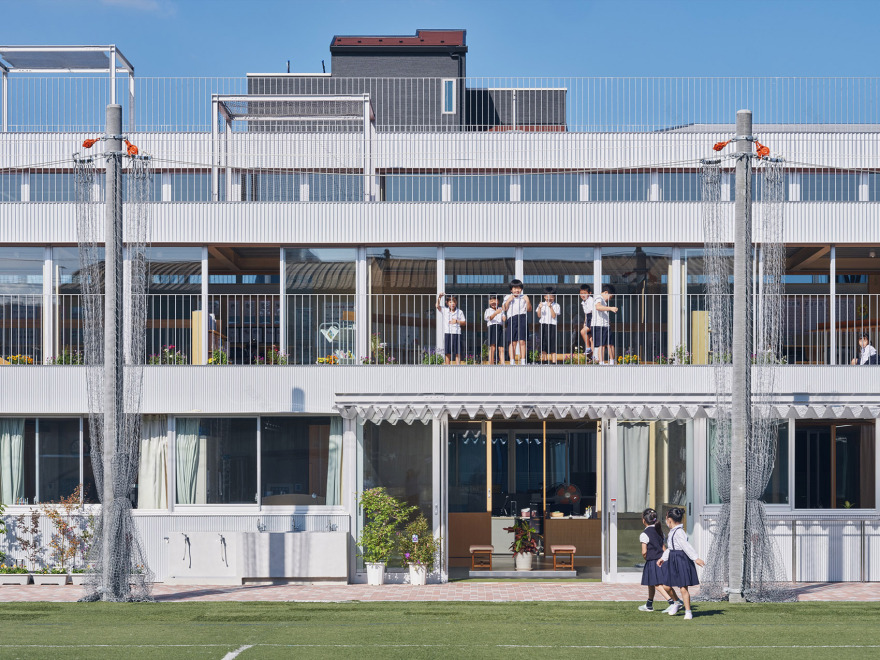
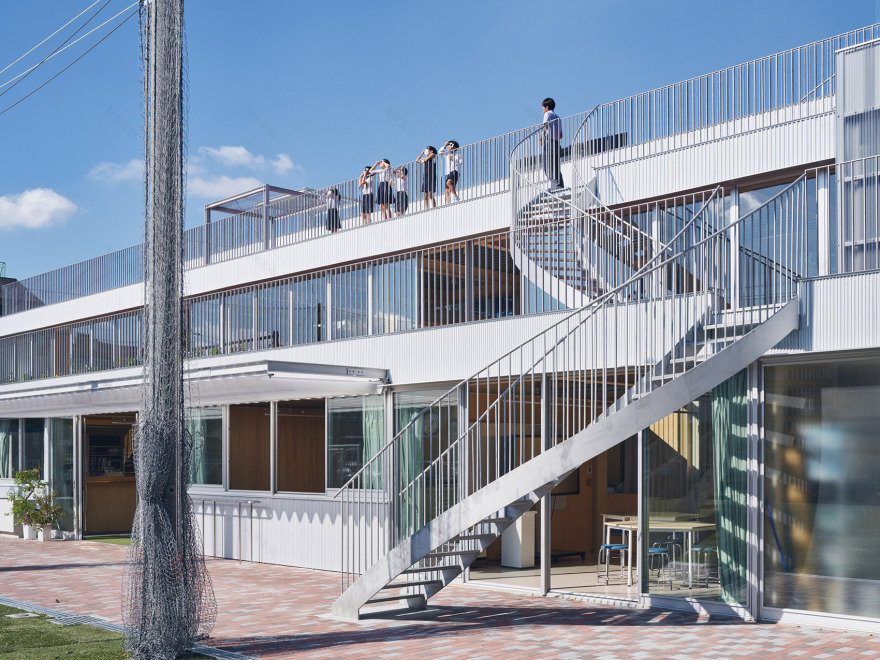
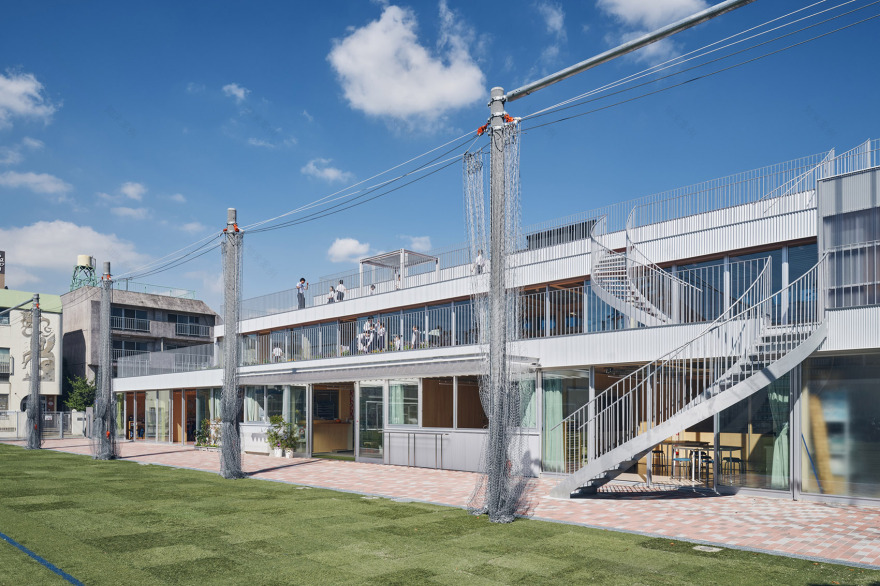
由于新校舍建设所需资金,学校出售了部分用地。因此,初期曾担忧土地面积缩减会限制孩子们的活动空间。对此,我们调整了两层建筑的体量,并提出了与操场连续的三层阶梯式露台,使孩子们可以在此自由奔跑、玩耍。
▼剖透视,perspective section©Taiga Kasai + Chong Aehyang Architecture

The part of the land of the school was sold out to earn budget for a new school building. Hence there was a big concern in the beginning that selling part of the land would narrow the children’s opportunities for activities. In response to this, we adjusted the volume of the two-story building and proposed an open three-tiered terrace that continues into the schoolyard, where children can play.
▼三层阶梯式露台,an open three-tiered terrace©Kenya Chiba


▼使孩子们可以在此自由奔跑、玩耍,where children can play©Kenya Chiba


▼使孩子们可以在此自由奔跑、玩耍,where children can play ©Kenya Chiba

成为地方风景中的“舞台”
A stage in local scenery
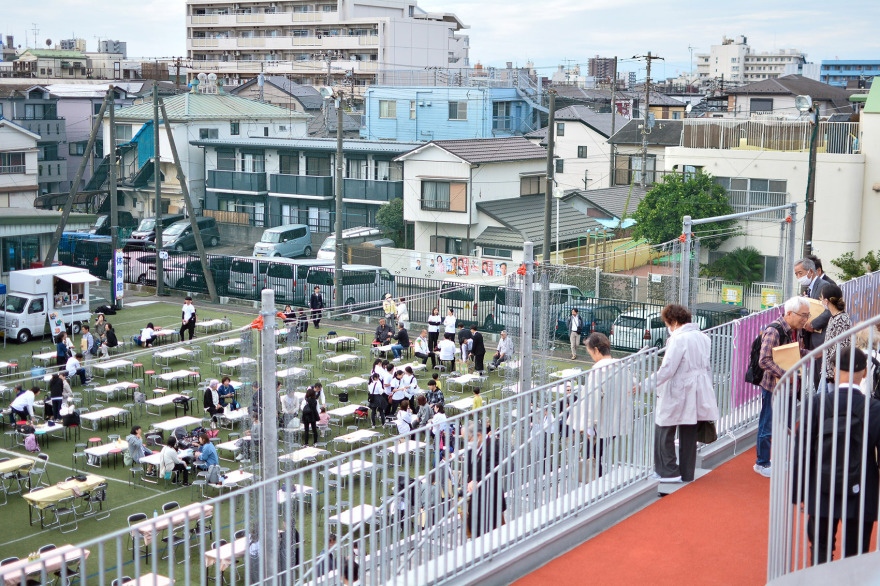
在延续朝鲜学校历史的同时,“向周边开放”成为本次项目的核心议题,回应在日朝鲜人长期面对的社会歧视。阶梯露台上的活动可被街道上行人看见,露台宛如一座面向城市的舞台,孩子们在其上奔跑、玩耍的日常画面也逐渐融入地方风景。我们希望通过这种互动性,让朝鲜学校真正成为社区生活的一部分。
Openness to the surrounding is main theme of new Korean school beyond the history of their discrimination in Japan. Since the activities at the terrace can be seen from streets, the three-tiered terrace becomes a stage of the town. The sight of children running and playing on the terrace becomes a daily scene for the local community. Activities on the terraces are interactive with the surrounding area, and we were conscious of making the Korean school a part of the local scenery.
▼向街道打开的界面,interface open to the street©Kenya Chiba


▼让学校真正成为社区生活的一部分,making the Korean school a part of the local scenery©Kenya Chiba

地基置换工法与轻质钢结构
Ground replacement method and lightweight steel frame construction
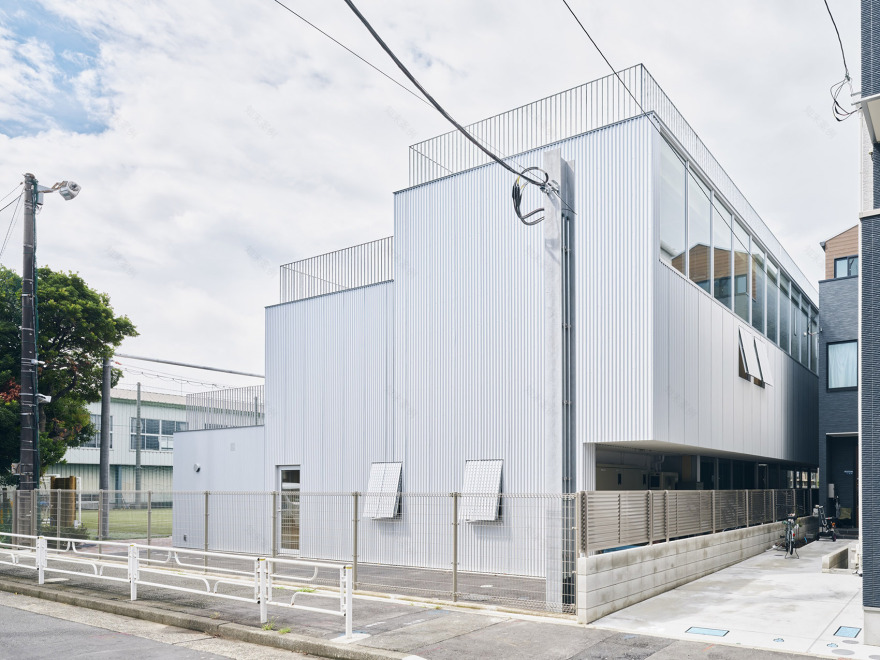
项目地处川崎港近岸填海区域,地基极为松软。为了避免因地质条件导致不均沉降,我们未采用传统长桩,而是使用“地基置换工法”:将开挖出的土方重量与建筑物本体重量相平衡,从而降低施工成本。在地下混凝土板下填埋聚苯乙烯泡沫以调整重量,实现整体平衡。为了配合该工法,我们尽可能减少结构构件数量,以减轻钢结构重量。
The site is close to a reclaimed land on the coast of Kawasaki Port, and ultrasoft ground. Instead of using long piles, we adopted a ground replacement method that prevents uneven settlement by making the weight of the excavated soil equal to the weight of the building, reducing the construction cost. The balance weight is adjusted by burying polystyrene foam under the underground concrete slabs. In order to make this method possible, the amount of components was reduced as much as possible to make the steel structure lighter.
▼轻钢框架结构,light steel frame structure©Kenya Chiba


▼清晰的空间框架,a clear rigid frame©Kenya Chiba


▼清晰的空间框架,a clear rigid frame©Kenya Chiba

开放的刚性框架结构
Open rigid frame structure
建筑采用钢制刚性框架结构,并局部集中设置支撑构件。在调整结构部件尺寸的同时,我们更重视通过清晰的空间框架获得整体的灵活性,以应对未来可能出现的多种用途变化。各教室之间采用可完全开启的隔断门,既可单独使用,也可与公共区域联通,充分利用有限空间。
▼剖面图,section©Taiga Kasai + Chong Aehyang Architecture

The steel frame structure is a rigid frame structure with braces that partially aggregates the brace area. While adjusting the size of the structural components, we prioritized the flexibility obtained by making the spatial composition a clear rigid frame. We considered the flexibility to respond to various uses and changes in use that are expected in the future. The doors that divide the rooms are fully openable, allowing classrooms to be connected or used as a single unit with the common areas, making effective use of the limited space.
▼清晰的空间框架,a clear rigid frame©Kenya Chiba


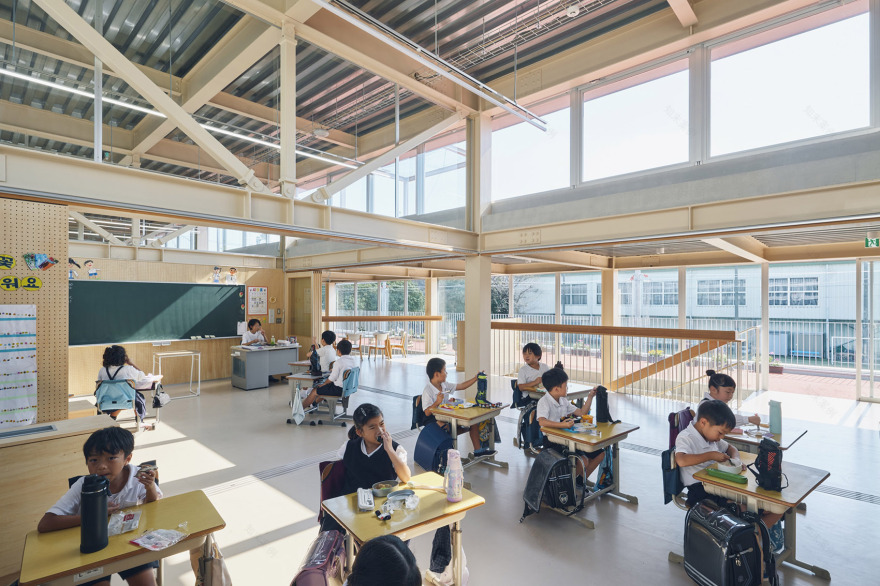
▼各教室之间采用可完全开启的隔断门,the doors that divide the rooms are fully openable©Kenya Chiba


▼教室与公共区域联通,classrooms are connected to common areas©Kenya Chiba


▼灵活的框架结构以适应未来的需求,flexible framework structure to accommodate future needs©Kenya Chiba


开放性的象征
A symbol of openness
我们希望这座从操场延伸至教室的阶梯式露台,能成为连接在日朝鲜人与地方社会的桥梁,成为朝鲜学校走向开放与共融的新象征。
We hope that the tiered terrace that continues from the schoolyard to the classrooms will serve as a bridge between Korean living in Japan and local community, becoming a new symbol of openness for the Korean school in Japan.
▼从露台俯瞰操场,view of the playground from the terrace©Kenya Chiba
▼校园夜景,campus at night©Kenya Chiba


▼场地平面,site plan©Taiga Kasai + Chong Aehyang Architecture

▼一层平面,ground floor plan©Taiga Kasai + Chong Aehyang Architecture
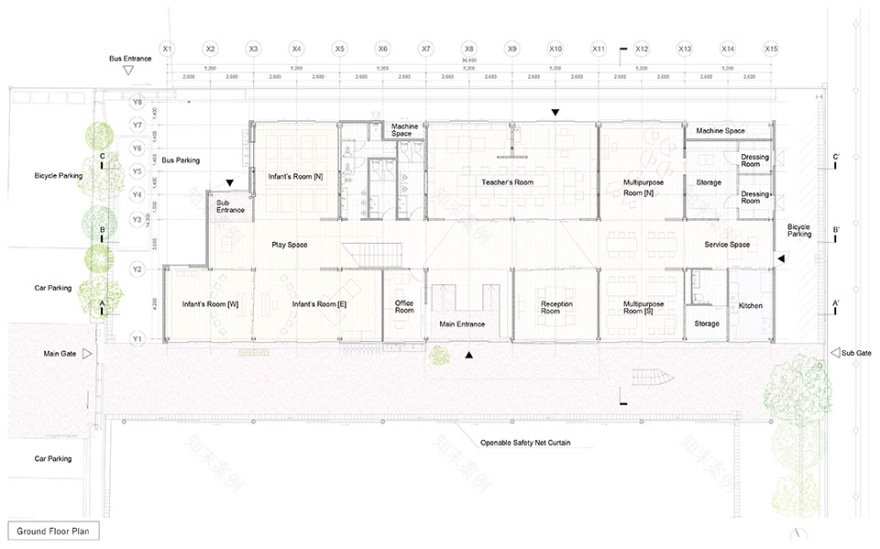
▼二层平面,first floor plan©Taiga Kasai + Chong Aehyang Architecture

▼三层平面,second floor plan©Taiga Kasai + Chong Aehyang Architecture
▼屋顶平面,roof plan©Taiga Kasai + Chong Aehyang Architecture

▼南北立面,South & North elevation©Taiga Kasai + Chong Aehyang Architecture
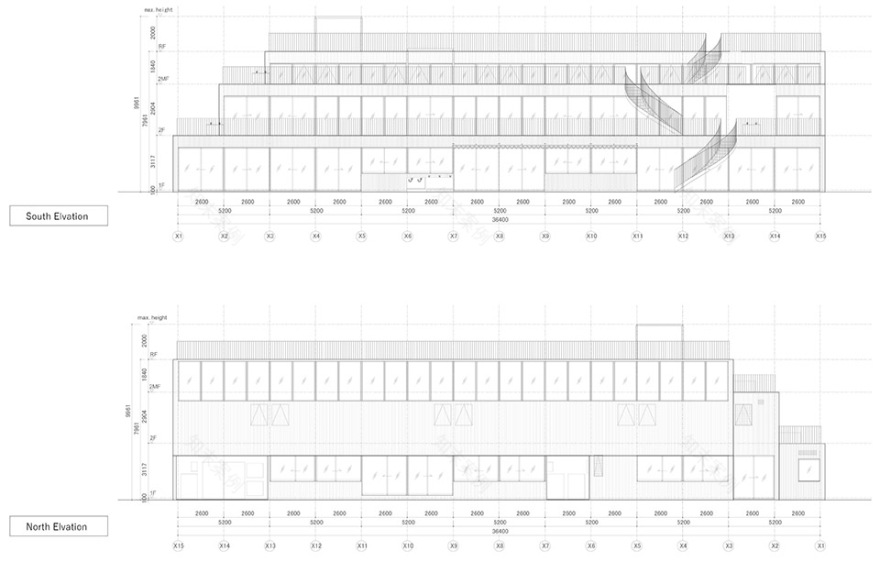
▼东西立面,East & West elevation©Taiga Kasai + Chong Aehyang Architecture

▼剖面,section©Taiga Kasai + Chong Aehyang Architecture


Office Name: Taiga Kasai + Chong Aehyang Architecture
Social Media Accounts:
Firm Location: #2B Devant, 1-6-9 Takaban, Meguro-ku, Tokyo JAPAN 152-0022
Completion Year: September 2024
Gross Built Area (m2): 785.97 m2
Building Area (m2): 520.54 m2
Site Area (m2): 3,678.29 m2
Project Location: 2-43-1 Sakuramoto, Kawasaki-ku, Kawasaki-shi, Kanagawa, Japan
Program / Use / Building Function: Primary School + Preschool
Structural System: Steel Structure
Number of stories: 2
Construction Period: October 2023 – September 2024
Lead Architects: Taiga Kasai + Chong Aehyang Architecture/ Taiga Kasai, Chong Aehyang
Structural Engineering: Graph Studio/ Yuko Mihara
MEP Engineering: Setubikeikaku/ Shinobu Watanabe, Hisayuki Sarai, Aya Fukui
Construction Management: Tansei Kensetsu
Photo Credits: Kenya Chiba
info@kenyachiba.jp




南京喵熊网络科技有限公司 苏ICP备18050492号-4知末 © 2018—2020 . All photos and trademark graphics are copyrighted by their owners.增值电信业务经营许可证(ICP)苏B2-20201444 苏公网安备 32011302321234号
苏公网安备 32011302321234号客服
消息
收藏
下载
最近