

创作上传
VIP
收藏下载
登录 | 注册有礼
查看完整案例

收藏

下载

分享
1985 - 2012
Jordi Bonet i Armengol
Antoni Gaudí i Cornet
Contributors:
Ceràmica
Jordi Aguadé i Clos
Escultura
Domènec Fita i Molat
Etsuro Sotoo
Francesc Carulla i Serra
Francesc Fajula i Pellicer
Jaume Cases Martínez
Joan Puigdollers i Olm
Joan Seguranyes i Redorta
Josep Maria Subirachs i Sitjar
Manuel Cusachs i Xivillé
Montserrat García Rius
Núria Tortras i Planas
Ramon Cuello i Riera
Orfebreria
Joaquim Capdevila Gaya
Vitralleria
Joan Vila-Grau
Continuation of Work on the Sagrada Familia Expiatory Temple









C. de la Marina, 253
Barcelona
Building
Religious Spaces / Places of Worship
BPH (Béns del Patrimoni de la Humanitat)
BCIN (Bé Cultural d'Interès Nacional)
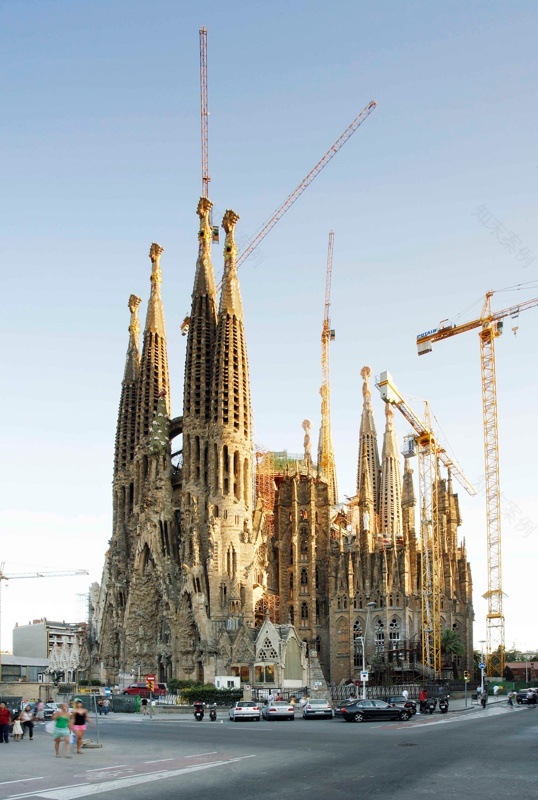
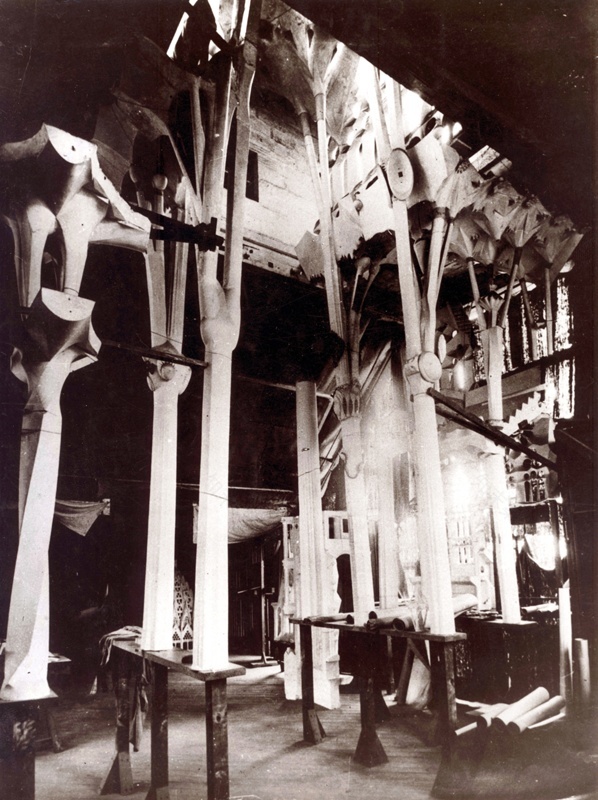
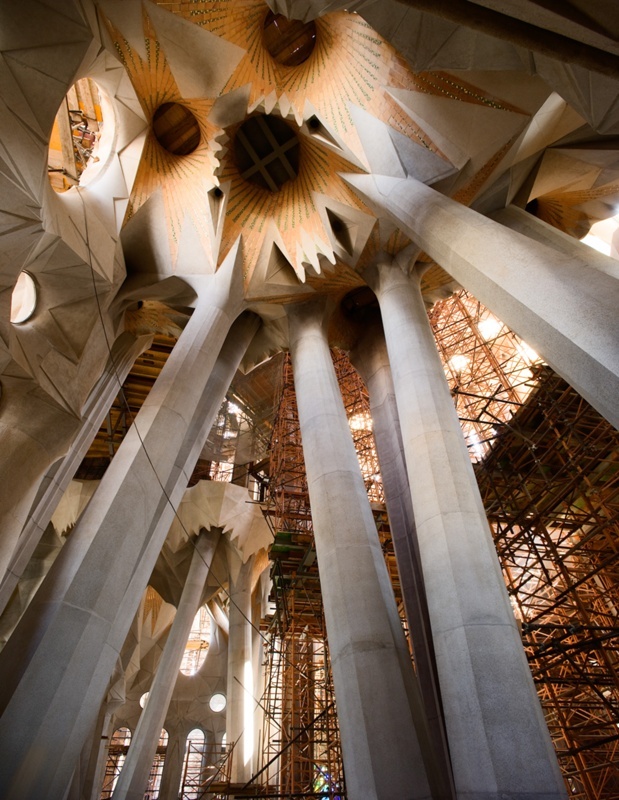
Jordi Bonet i Armengol was appointed chief architect in 1985. The work focuses on the detailed study and construction of the interior space of the temple (main nave, transept, apse and crossing), applying the defined procedures and geometries done in detail by Gaudí in the 1:10 scale plaster models.
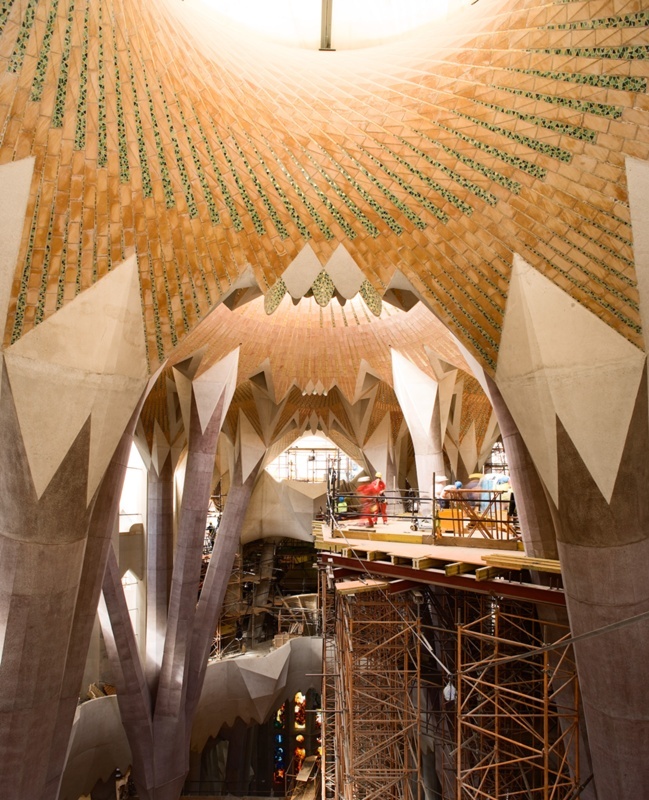
At this stage, the geometry and proportions that govern the original models are studied in detail, and 3D computer modeling is introduced for the development of the project and the production of stone pieces. In the construction field, the Catalan vault is introduced for the vaults of the central nave’s interior, following the generators of the regulated geometry, and the incorporation of Venetian glass in accordance with the symbolism.
The interior of the basilica, which is dedicated to the Holy Father Benedict XVI on November 7, will be closed in 2010. In the same year, the Temple of the Sagrada Família’s nave done by Antoni Gaudí was awarded the Ciutat de Barcelona prize in the category of architecture and urbanism. Under his direction, Josep Maria Subirachs was in charge of the execution of the sculptural ensemble of the Façade of the Passion and the stained glass windows of the naves by the artist Joan Vila-Grau.
Once the naves were finished, the work focused on the construction of the Sacristy, which, according to Gaudí, would become the model the towers of the central dome would follow.
Fundació Junta Constructora del Temple Expiatori de la Sagrada Família
Josep Maria Bocabella i Verdaguer founded the Spiritual Association of Devotees of Saint Joseph in 1866, at a time when the phenomenon of de-Christianisation was being driven by the Industrial Revolution and social change.
From 1874 onwards, the association considered the construction of a new expiatory temple, following the trend of other religious associations that were erecting temples in Europe, such as those in Rome (Sacro Cuore de Gesù, 1870) or Paris (Basilica of the Sacred Court of Montmatre, 1873). The temple was to be a copy of the Basilica of Loreto (Marche, Italy), including a reproduction of the Holy House of Nazareth, which is where the Holy Family lived and to whom the Temple is dedicated.
To build such a monumental work, the association commissioned the project from the diocesan architect Francisco de Paula del Villar y Lozano. The renowned architect does not agree to make a copy of an existing project and carries out a neo-Gothic style with a Latin cross project with considerable dimensions (44x97m), a large dome above the transept and a tower above the main façade, with heights of 80 and 100 metres respectively. These dimensions show us that it was not a conventional church, as the project surpassed the cathedral of Barcelona itself in terms of height, where the current subsequent dome only reaches 70 meters.
On March 19, 1882, Saint Joseph's day, the patron saint of the association, work began on the crypt and at the beginning of the following year, when the walls were halfway up, discrepancies arose over the construction system. The Josephine association wanted to execute it in a more economical way, which eventually led to Villar's resignation.
THE TEMPLE’S BEGINNINGS AND GAUDÍ’S PROJECT
After the resignation of Villar, Joan Martorell, who advised the Josefina Association and was one of the most prestigious architects of the time, proposed Antoni Gaudí as a continuation of the works begun. At the time, Gaudí was a young architect, with 31 years of age, and he accepted the position of managing director on November 3, 1883.
Gaudí continued the works designed by Villar and, as he gained prestige as an architect - and at the same time the confidence of the Josephine association -, he gradually transformed the initial project to the point of reaching a large, monumental temple around 1890. The new conception of the building is no longer limited to a typical Latin cross church. It increases the scale and projects a main body of five naves with a transept of three, and a monumental façade at each end, dedicated to the Nativity - east transept -, the Passion - west transept - and the Glory, located at the foot of the main nave. To join the three façades, there is a perimeter cloister, which surrounds the nave and the surrounding island, with a building on each corner dedicated to sacristies, a baptistery and a chapel of the Sacrament and Penance.
The new building has a great symbolic value as a manifestation of the Christian faith - which is inseparable from art and architecture - and gains in verticality. The three façades contain four towers each, about 100 metres high, dedicated to the twelve apostles. In the centre of the transept is a large dome, consisting of six towers even taller than the previous ones, dedicated to the Virgin Mary - on the apse -, the four Evangelists - one on each corner of the transept - and the large central tower of Jesus Christ, about 170 feet.
Gaudí devoted the rest of his life to the design and construction of the Temple, and exclusively from 1914, when he ceased his professional activity outside the Sagrada Família.
During Gaudí’s lifetime, the crypt, the façade of the apse and much of the Nativity Façade were built.
After Gaudí’s death, the architect Domènec Sugrañes oversaw the direction of the works. He was Gaudí’s main collaborator at the time and he directed the works on the Façade of the Nativity - of which Gaudí had only seen a bell tower completely finished - which were completed before the outbreak of the Civil War.
Mentally affected by the destruction of the Sagrada Familia workshop at the beginning of the Civil War, Sugrañes passed away in 1938.
After the end of the war, Francesc de Paula Quintana, who had been Gaudí’s assistant architect, and later Sugrañes, took over the position of chief architect.
Once the war was over, the new Temple board focused on the restoration of the affected areas (crypt, lower part of the apse and the Nativity Facade and the schools) and the recovery of Gaudí's workshop and project, collecting photographs and plans - published before the fire in Gaudí's biographies and books on the Sagrada Família - and recovering the plaster models damaged during the war, generated by very precise geometries.
The construction of the Façade of the Passion began in 1954, which Gaudí described in a very detailed elevation plan, and which he had explained to his disciples.
In the transept of the Passion, Quintana he erected the double-turn column dedicated to the diocese of Barcelona, following the geometric procedure devised by Gaudí, which was the first column inside the temple and served as a model for the rest.
The architects Isidre Puig Boada and Lluis Bonet i Garí, who had regularly visited Gaudí in the last stage of his life and had worked on the development of the work under the direction of Francesc de Paula Quintana, became the successors after the death of the latter.
At this stage, the architectural part of the Façade of the Passion is completed, except for the upper porch, and a large part of the documentation and models that will allow the continuation of the works is collected and studied.
Francesc de Paula Cardoner i Blanch, who had worked under the orders of Puig Boada and Bonet Garí on the construction of the Façade of the Passion, became the principal architect between 1983 and 1985. Under his direction, the construction of the windows in the sides of the naves began.
In addition to construction, Cardoner devoted many years of his life to the study of the original models of the project -including previous versions of the project that Gaudí ruled out-, establishing an important classification of the pieces that have later served the generations to deepen the knowledge of the project.
Premi Ciutat de Barcelona
Award-Winner / Winner. Category: Architecture and Urbanism
Among the works of art, we can highlight the Façade of the Passion’s sculptural ensemble, made by Josep Maria Subirachs and declared BCIN in the category of Historic Monument in 2019, together with the rest of his work in the Temple.
In 1986, Josep Maria Subirachs i Sitjar was commissioned to create the sculptural program for the Façade of the Passion. The sculpture of Subirachs was to express the rawness of the Passion and Christ’s Death, in line with the naked and angular architecture designed by Gaudí on this façade, and in contrast to that of the Nativity. Subirachs developed the sculptural ensemble of the façade located in the porch - including the bronze doors with the Gospels - and the sculptures of the four apostles located in the bell towers up until 2005.
The artist's work is completed with the seven bronze doors on the façade of the Glory -with the full text and the seven requests of the Our Father-, the Saint George inside the basilica, and Gaudí’s bust, made until 2011.
Jordi Bonet i Armengol was appointed chief architect in 1985. The work focuses on the detailed study and construction of the interior space of the temple (main nave, transept, apse and crossing), applying the defined procedures and geometries done in detail by Gaudí in the 1:10 scale plaster models.
At this stage, the geometry and proportions that govern the original models are studied in detail, and 3D computer modeling is introduced for the development of the project and the production of stone pieces. In the construction field, the Catalan vault is introduced for the vaults of the central nave’s interior, following the generators of the regulated geometry, and the incorporation of Venetian glass in accordance with the symbolism.
The interior of the basilica, which is dedicated to the Holy Father Benedict XVI on November 7, will be closed in 2010. In the same year, the Temple of the Sagrada Família’s nave done by Antoni Gaudí was awarded the Ciutat de Barcelona prize in the category of architecture and urbanism. Under his direction, Josep Maria Subirachs was in charge of the execution of the sculptural ensemble of the Façade of the Passion and the stained glass windows of the naves by the artist Joan Vila-Grau.
Once the naves were finished, the work focused on the construction of the Sacristy, which, according to Gaudí, would become the model the towers of the central dome would follow.
Jordi Faulí i Oller has been working as an assistant architect under the direction of Jordi Bonet and has been its managing director since 2012.
The construction of the Sacristy is continued, defined by large parabolic surfaces according to the original plaster model, and the concepts defined by Gaudí in the project of the six towers that form the central dome, 138 metres high located on the apse and dedicated to the Virgin, are applied; as well as the four evangelists, 135 metres high, located at the four corners of the transept and the central tower of Jesus Christ, 172.5 metres high. The towers are crowned with the symbols that represent them: the crown and the star in the case of the Virgin Mary, the winged tetramorph in the evangelists, and a large four-armed cross in the tower of Jesus Christ.
From a structural and constructive point of view, the stone system is developed to be able to build large towers with reduced thicknesses - and therefore reduced weight. This technique, which consists of inserting stretched stainless steel bars, allows to build towers about 60 meters high with a thickness of solid stone between 50 and 35 centimetres. The system has also facilitated construction with large stone panels, pre-assembled in an external workshop.
27:42
Cròniques de Barcelona - La Sagrada Família, l'últim projecte de Gaudí - betevé
南京喵熊网络科技有限公司 苏ICP备18050492号-4知末 © 2018—2020 . All photos and trademark graphics are copyrighted by their owners.增值电信业务经营许可证(ICP)苏B2-20201444 苏公网安备 32011302321234号
苏公网安备 32011302321234号客服
消息
收藏
下载
最近