

创作上传
VIP
收藏下载
登录 | 注册有礼
查看完整案例

收藏

下载

分享
Earthern wear: mud cities in Hadramut, Yemen
The ancient mud structures of Hadramut in Yemen are under threat due to both age and the relentless onslaught of the civil war, but rescue attempts are under way
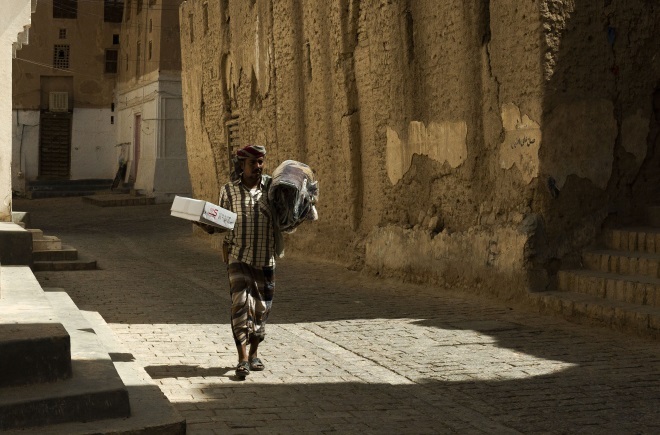
In the ancient city of Shibam, mud-brick high-rise buildings are clustered in a walled mass that exudes the genius of Yemeni earth architecture. Once the commercial capital where caravans assembled on the Arabia trade route, Shibam is one of three major urban centres in Wadi Hadramut, along with Sayʾun, the capital of the interior, and Tarim which lies to the east.
Due to its architectural composition and stunning setting, Shibam was included on the UNESCO World Heritage List (1982–84). In 2007 it received the Aga Khan Award for Architecture, which was a great boost for the inhabitants, although neither they nor their city benefited directly from it. Shibam’s fabric and infrastructure had been on a steady course of deterioration for at least two decades: attempts to assist with the city’s urban development – through UNESCO expertise in the 1980s, as well as through the German Technical Development (GTZ) Project between 2000 and 2007 and with some channelled funding from the Social Fund for Development – have miserably failed to make a difference to the quality of life in the city.
There is no definite date for the original construction of Shibam, although it is locally dated back to at least 300 BCE. Villagers claim that the central Jami mosque was constructed during the reign of the Abbasid caliph Harun al-Rashid (786–809AD). A recently restored carved
from this mosque was dated to the ninth century AD. Inhabitants believe the older housing to be 200-300 years old, but it is an established fact that these buildings have been repeatedly reconstructed over the centuries, which has sustained the architectural mass and volume of the city.
Different house types occur in the different areas and towns of Hadramut, partly as an expression of socio-economic status, partly out of a need for security. The vertical expansion of the housing was informed by the topography, with horizontal expansion being restricted by proximity to arable land (this is the case in Shibam) or by locations pitched high on the flat plateau of mountains (for example, the village of Hajarayn). Larger towns were walled for defensive purposes, leaving limited space for expansion inside.

The striking village of Haid Al-Jazil in Dawan was built seemingly precariously above a valley to optimise water sources
In terms of interior organisation, the ground floors of Hadrami houses were almost always taken up with grain and staple food storage. In Shibam, the ground and first floors have dark, lofty and narrow depots with few openings for ventilation. Sheep and goats are kept in adjacent rooms and terraces on the first floors at night. The second and third floors were designed as several living rooms (
) used by the men, while the fourth and fifth floors contained living areas used by the women, along with kitchens, washrooms and toilet facilities. The sixth and upper floors were used by the children or reserved for newly wed couples of the extended family. Terraces placed at the upper levels compensated for the absence of open courtyards in the house.
Between 2009 and 2014, further public and private buildings were renovated, three in Wadi Hadramut – Sah, Aynat and Shibam; and two in Wadi Dawan – Rabat and Qarn Majid. Again, the implementation of the repairs was impeded due to the war. The political unrest in Yemen and the dire economic situation since 2011 made security an issue in the country. The logistics of working in Hadramut became increasingly precarious and difficult. However, the support and modest funding received ensured the restoration and reconstruction of the few distinguished landmarks and buildings that have impacted on the urban fabric and communities there.

The domestic spaces for women – the harem – often had a humble front door placed next to the much more dramatic entrance
In December 2017 a new project in partnership with the Cultural Emergency Response of the Prince Claus Fund in the Netherlands was initiated. Following a bomb detonated near the city gate in 2015, work began in January 2019 to repair the damaged city gateway, adjacent palace and
(city wall) in collaboration with the General Organization for Preservation of Historic Cities in Yemen (GOPHCY) Shibam office.
Despite the relative calm in Hadramut province since 2017, the work was delayed with the continuing war in the rest of the country. The precarious security situation resulted in difficult logistics, bringing together the project team from Mukalla and master builder from Tarim, travelling on damaged roads between the cities in Hadramut. Following preparations early in 2019, the first phase of the building, structural reinforcement and restoration was implemented and finalised between March and May 2019. This phase included reinforcing the old walled city’s south gateway, Shibam Palace’s western rampart, and an adjacent house.
The projects were initiated by Dawan Mud Brick Architecture Foundation that was set up in the autumn of 2007 in response to the need to create a base and institutional framework for working on the earth architecture and urban heritage of Wadi Dawan and Hadramut. The projects involved interventions and the implementation of emergency measures to mitigate danger in threatened buildings that had partially collapsed or were severely damaged due to a spate of flash floods that occur in the
during the monsoon season.


Reinforcing the structures of damaged earth buildings is a much more sensitive, precarious and complex job than erecting new constructions – a more straightforward and more predictable process. However, it is also refreshing and very important to renew buildings and reinforce these structures in the established techniques and methods of the region, sustained by the versatility that earth, as an integral and renewable material, provides. It is a way of ensuring that traditional building methods, materials and skills are passed down the generations, thus generating local work while also reducing environmental impact.
The landscape of Yemen is peppered with buildings of architectural value. Neglect and dilapidation abound in the absence of professional or civic institutions that recognise the importance of investing in the traditional architecture or in the natural materials and resources that constitute the fundamental wealth of the country’s historic topography and remarkable terrain. The situation has since been exacerbated beyond apprehension or equal accountability, reference or recourse, as the open-ended lists of damaged, destroyed and bombed-out cities continue to be compiled. Each lost site becomes a deep scar etched on the face of the silent country.
Since 2015, targeted urban destruction has had a deleterious effect on Hadramut. The extent of the damage there has been marginal, however, when compared with other provinces. For example, in the principal cities of Aden, Saada, Sanaa and Taiz, the continuing war has destroyed and badly damaged historical architectural landmarks, residential quarters and archaeological sites.

The need for an emergency national policy for postwar reconstruction that can respond to the human tragedy that has befallen entire communities cannot be denied or understated. The success of such a policy is wholly contingent upon incorporating the sensitive and complex components of the architecture, urban fabric and a balanced ecological environment, taking into account the country’s archaeological sites and its classified natural reserve. Furthermore, it must contain and validate the ingenious design and construction discipline, using the knowledge of the keepers of this legacy: the inhabitants, master builders and craftsmen of Yemen.
In December 2018, the British Council and Cultural Protection Fund (CPF) approved a grant for a project on ‘Postwar Reconstruction and Rehabilitation in Yemen’ which will be managed and implemented by the Dawan Mud Brick Architecture Foundation in partnership with the Office of the Governor of Hadramut. The project concerns reconstructing cultural sites and landmarks in Hadramut that have been targeted in the war. Five sites were selected: the Dome of Shayk in Yaqub in Mukalla, the Dome and Shrine of al Habib Hamad bin Salih, the Domes and Shrine of Ismail Mosque, and Shaklanza Mosque in Shihr. Contributing to the regeneration and safeguarding of cultural sites is significant and reassuring at this particularly testing time for Yemen. It is an important initiative in sustaining the fragile fabric of the inhabitants and communities while confirming the enduring value and impact of the architectural resources extant in Hadramut and the Yemen.
南京喵熊网络科技有限公司 苏ICP备18050492号-4知末 © 2018—2020 . All photos and trademark graphics are copyrighted by their owners.增值电信业务经营许可证(ICP)苏B2-20201444 苏公网安备 32011302321234号
苏公网安备 32011302321234号客服
消息
收藏
下载
最近