

创作上传
VIP
收藏下载
登录 | 注册有礼
查看完整案例

收藏

下载

分享
BIG's waste-to-energy ski slope, Amager Bakke, is now open

Photo: Laurian Ghinitoiu.
The
BIG
day has arrived for the Danish firm's long-awaited, waste-to-energy ski slope
Amager Bakke
, which was inaugurated and fully opened to the public today. At 41,000m2, the year-round ski plant — also dubbed “CopenHill” — was the
winning proposal
of a 2011 competition that was designed by BIG in collaboration with SLA, AKT, Lüchinger+Meyer, MOE, and Rambøll. After a major setback
in 2011
, the project broke ground in 2013, and was partially open to visitors over the last two years.
The 100-meter-tall ski plant aligns with
Copenhagen
's mission of becoming the world's first carbon-neutral city by 2025. Designed for the Amager Resource Center (ARC), the project is located on the industrial waterfront of Amager, which has become a site for extreme sports.

Photo: Dragoer Luftfoto.
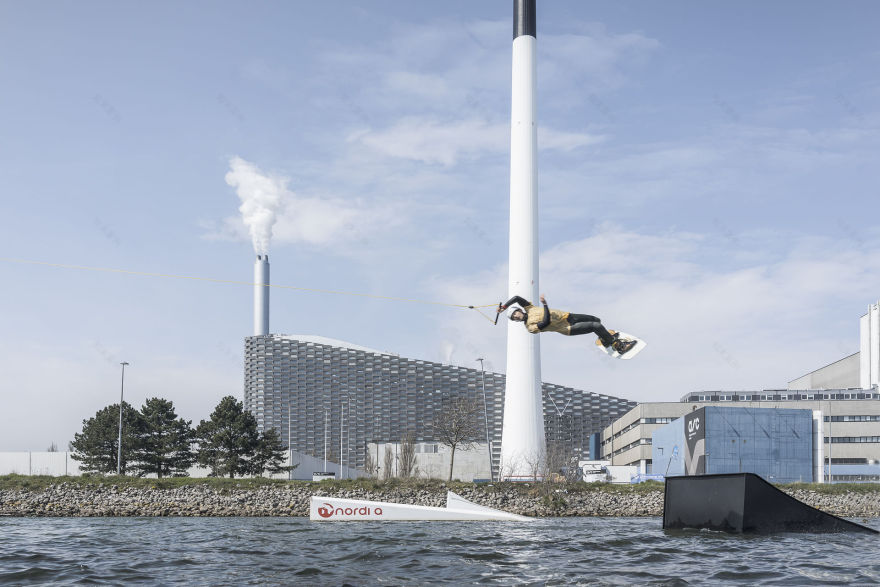
Photo: Aldo Amoretti.
CopenHill's new facilities integrate the latest waste treatment and energy production technologies, while also inviting thrill-seekers and recreational sports enthusiasts. Skiers have access to the 9,000m2 ski terrain, including the Olympic half-pipe-length ski slope, freestyle park, or timed slalom course. As skiers ascend the park from the platter lift, carpet lifts, or glass elevator, they can peek inside the energy plant's 24-hour operations.
Non-skier visitors can enjoy the rooftop bar, crossfit gym, climbing wall, or take in sights from the highest viewing plateau in the city before descending the 490-meter landscaped hiking and running trail designed by
SLA
.

Photo: Rasmus Hjortshoj.

Photo: Rasmus Hjortshoj.

Photo: Laurian Ghinitoiu.
Inside CopenHill, furnaces, steam, and turbines will convert some 440,000 tons of waste every year into enough clean energy that can provide electricity and heat for 150,000 homes, according to BIG. The ARC team occupies 10 floors of administrative space, which also includes a 600m2 education center for academic tours, workshops, and sustainability conferences.

Photo: Søren Aagaard.

Photo: Søren Aagaard.
CopenHill's facade consists of 1.2-meter-tall and 3.3-meter-wide aluminum bricks that are stacked like gigantic bricks overlapping each other. Glazed windows in between the bricks allow daylight into the facility, while larger openings on the southwest facade illuminate workstations on the administrative floors. According to BIG, the energy plant's 10,000m2 green roof absorbs heat, removes air particulates, and minimizes stormwater run-off.

Photo: Aldo Amoretti.
“As a power plant, CopenHill is so clean that we have been able to turn its building mass into the bedrock of the social life of the city – its façade is climbable, its roof is hikeable and its slopes are skiable,” Bjarke Ingels said in a statement. “A crystal clear example of Hedonistic Sustainability – that a sustainable city is not only better for the environment – it is also more enjoyable for the lives of its citizens.”
Find project drawings and a drone video below.

CopenHill / Amager Bakke by BIG | Bjarke Ingels Group. Video courtesy of BIG.


南京喵熊网络科技有限公司 苏ICP备18050492号-4知末 © 2018—2020 . All photos and trademark graphics are copyrighted by their owners.增值电信业务经营许可证(ICP)苏B2-20201444 苏公网安备 32011302321234号
苏公网安备 32011302321234号客服
消息
收藏
下载
最近