

创作上传
VIP
收藏下载
登录 | 注册有礼
查看完整案例

收藏

下载

分享
The grounds of this pre-primary school in Vijayawada blend playfully with nature
A pre-primary school at Bloomingdale International School in Vijayawada breaks new ground with playful design by Jwalant and Kanika Mahadevwala.

Challenging the conventional norms of educational spaces, Cocoon, a pre-primary extension at the Bloomingdale International School in Vijayawada, stands out for its inventive design. Designed by Jwalant and Kanika Mahadevwala of andblack Design Studio, the avant-garde school, with its open layout and thoughtful design, is an ideal learning ground for unshackled young minds.
Known for their research-led approach, the architects have previously made waves with projects like Toddlers Den (in Ahmedabad) and have incorporated the learnings at Cocoon. Jwalant explains, “The learning from our earlier project on our workflow and approach to constructing a parametric form became a lot more efficient this time.”
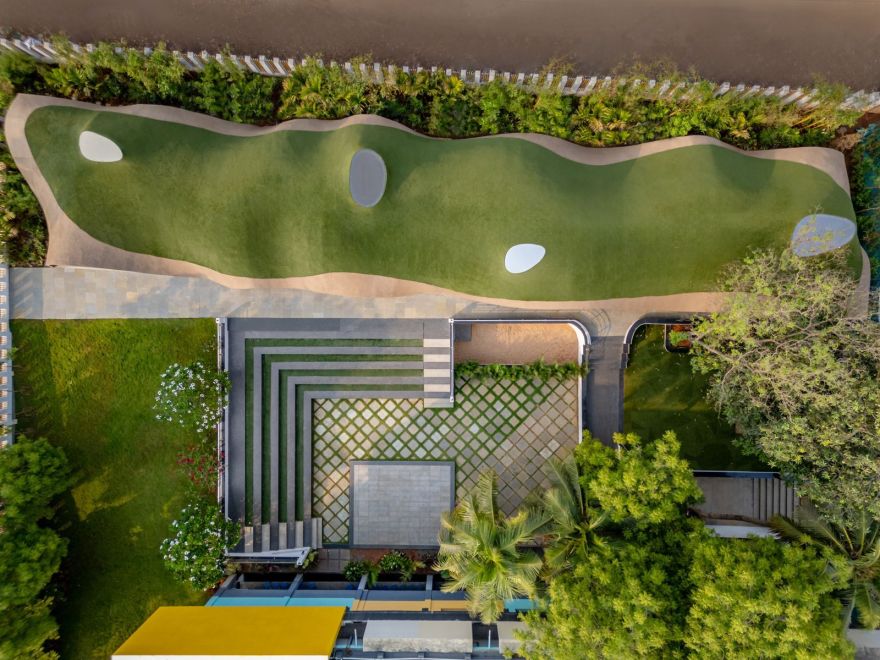
To reduce solar gain from the southern facade of the structure, the roof edge is designed to be closer to the ground and control heat gain from direct sunlight through the insulated glass facade; with skylights oriented towards the north to avoid harsh sunlight.
Upon visiting the site, the architects envisioned a floating, landscape-like surface that would coexist harmoniously with the existing school building. Using a sunken courtyard to connect the two buildings, they created a comforting soliloquy of the old and the new. The resulting design of the school seamlessly blends form and function.
As the existing school was renovated multiple times to add more spaces, the resulting school building lacked a defined architectural style or language. The idea was not to challenge that with another block but to add a soft surface that sits next to it and adds value to the overall campus.

Viewed from a distance, one can immediately catch glimpses of the landscape beyond, making the building seem like a part of the scene itself. A closer look reveals the real ingenuity of the design: kids inhabiting the building, as if protected within a cocoon.
“The premise was to provide an unorthodox space for education that is unconventional by standards and goes beyond what other pre-schools in the region provide. We wanted the design to reflect a paradigm shift in early education through thoughtful architectural design,” Kanika recalls.
The site of the school was a narrow, long rectangular patch of land between the south-side compound wall and the existing school building. To respect the tight site conditions and avoid constructing another conventional block, the architects designed a rectangular structure crowned with an undulating roof. This striking roof gives the illusion of a fluid form that obscures the rigidity of the rectangular base.
The roof's construction is a marvel in itself. Prefabricated bent metal sections form the structural core, with built-up beams directed along the X and Y axes. The roof's curvature is achieved by varying the heights of these beams at pre-calculated junctions. This complex structure with draped turf on the roof infuses an element of playfulness in its design.
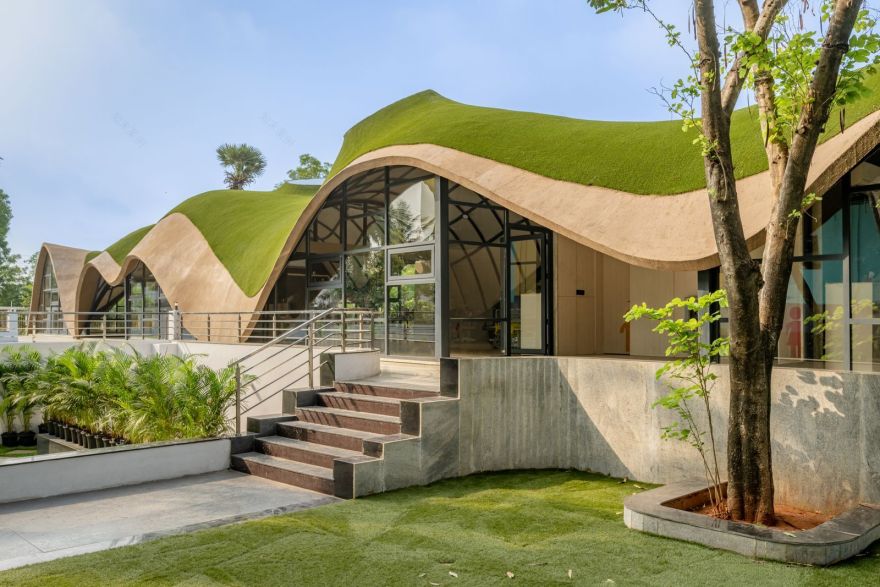
Interconnected spaces allow for ease of access to the entrance foyers.

This elevated site arrangement offered a unique opportunity. A sinusoidal wave is perceived along the facade, inspiring curiosity and intrigue.
Jwalant was inspired by the energy and enthusiasm of young children while designing the roof. He expounds, “Dips and highs in the waves of the roof create a scale relevant to the child’s experience and encourage a dialogue with their daily surroundings. We chose to emphasize form in a way that communicates lively energy through the building’s architecture.”
The wave-like roof is not just an aesthetic choice; it is integral to the building's interaction with its young occupants. The parametric approach elevates the design while being functional, and the gentle waves whisper endless possibilities. The turf finish on the roof merges with the surrounding landscape, further blurring the lines between the built environment and nature.
The undulating 3,000-square-foot indoor space is divided into four classrooms and two sets of washrooms. Two of the classrooms are connected by a sliding, folding partition, allowing for a flexible, open-plan layout that encourages free movement and interaction.
Inside, the classrooms are finished with wood plank flooring, while service areas are finished with hardy granite stone that is easy to maintain. Glass is used extensively throughout the structure, creating a continuous connection between the indoors and the outdoors.
The design palette aligns with the goal of breaking down barriers and fostering a sense of openness among the children. Apart from bringing in light, glass allows the bountiful greens to peek in and envelop the space in their comforting aura. The careful integration of natural elements, such as the presence of trees, creates an inviting atmosphere, making the school feel like an extension of the outdoors.

Unique spatial experience is enhanced by full-height glass panels in place of walls and skylights in the roof. The design eliminates visual thresholds, with Miyawaki Plantations as an extension of the built space.
Taking into consideration the humid weather of Vijayawada, multiple tweaks are in-built into the design. To reduce solar gain from the southern facade of the structure, the roof edge is designed to be closer to the ground, and dense plantations on the southern side (from beautiful frangipanis to a stately Arjuna tree, among others) of the building also help in reducing heat. Skylights oriented towards the north provide ample natural light without the harshness of the direct sun, creating a pleasant and energy-efficient learning environment.

Skylights intrigue users as light travels within the classroom throughout the day.
The open spaces around the school are designed at multiple levels to match the different heights of the school campus. This offers multifunctional outdoor spaces for engaging children. Kanika notes with a smile, “We have noticed kids running and rolling on the contoured grass, jumping on the steps, or just running around on the flat platforms between the steps.”
The underlying premise of this project was to bring about a paradigm shift in early education through distinctive architectural design. This vision is executed in every corner and curve, in ways small and big, from the dynamic roof to the open, flexible classrooms. Nestled within this innovate sanctuary, this school in Vijayawada truly cocoons its young learners, allowing them to soar on the wings of their imagination.
南京喵熊网络科技有限公司 苏ICP备18050492号-4知末 © 2018—2020 . All photos and trademark graphics are copyrighted by their owners.增值电信业务经营许可证(ICP)苏B2-20201444 苏公网安备 32011302321234号
苏公网安备 32011302321234号客服
消息
收藏
下载
最近