

创作上传
VIP
收藏下载
登录 | 注册有礼
查看完整案例

收藏

下载

分享
Zaha Hadid Architects’ new Uzbek cultural centre pays tribute to the country’s traditional music and literature
ZHA’s Uzbek Cultural Centre features a weaving brick facade and uses passive design strategies to optimise cooling and minimise consumption.

Uzbek Cultural Centre by Zaha Hadid Architects in Tashkent – Render by Norviska, courtesy of ZHA.
Zaha Hadid Architects
has revealed the design for a major Uzbek cultural venue in Tashkent. Named after Alisher Navoi, a 15th-century poet, linguist and statesman, the 29.000 sqm project is inspired by vernacular architecture, traditional music and literature.

Render by ZHA.
Alisher Navoi International Scientific Research Centre
will comprise the
Navoi State Museum of Literature
, a 400-seat auditorium, the
International Research Centre
, and a residential school for 200 students. It is part of a 25,000-hectare master plan designed by Cross Works to regulate the rapid urban development of Uzbekistan’s capital.
The centre’s arched facades and interiors will be crafted from bricks produced in Tashkent’s local kilns, echoing the curvilinear geometries of Uzbekistan’s acclaimed traditional architecture
The cultural centre reinterprets traditional building techniques defined by passive architectural principles. Inspired by wind towers often found in the region, the facade’s hollow flower-like arches draw ventilation into the building and provide “
optimal conditions for visitors, staff, and students with minimum energy consumption

Render by Norviska, courtesy of ZHA.
During the most torrid months, the hollow structures create a pressure gradient that extracts hot air upwards. This produces a thermal chimney that allows warmer air to escape through the openings at the top of each arch.
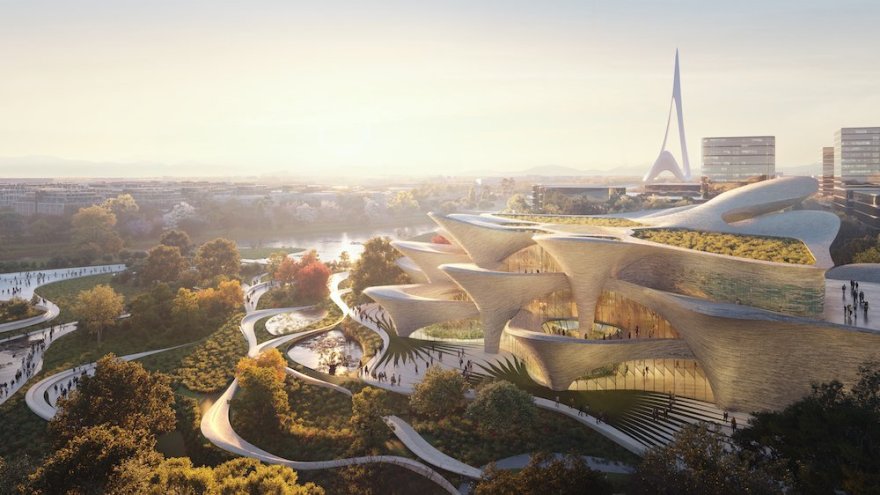
Render by Norviska, courtesy of ZHA.
Courtyards, another defining feature of the region’s vernacular tradition, bring natural light into the heart of the centre, creating a variety of outdoor gathering spaces and areas for private contemplation
.” Deep roof overhangs effectively shade the façades in summer and permit winter sun to warm the interiors.
The centre’s outdoor spaces, inspired by the dynamic performances of traditional Shashmaqom music, create a setting where the city’s artists and the wider community come together. They consist of landscaped terraces with open-air amphitheatres and gardens with shaded pavilions for impromptu performances.
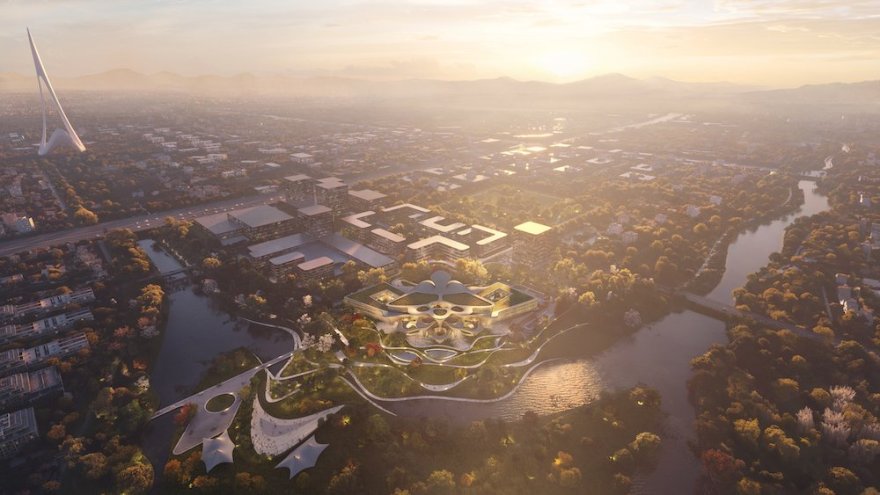
Render by Norviska, courtesy of ZHA.
Exterior renders reveal a large glass facade and entrance sheltered by the building’s sweeping brick forms. Inside, spacious foyers are defined by equally dynamic forms and lit by expansive openings and skylights.

Render by ZHA.
The renders are by Norviska and Zaha Hadid Architects.

Plans by ZHA.
南京喵熊网络科技有限公司 苏ICP备18050492号-4知末 © 2018—2020 . All photos and trademark graphics are copyrighted by their owners.增值电信业务经营许可证(ICP)苏B2-20201444 苏公网安备 32011302321234号
苏公网安备 32011302321234号客服
消息
收藏
下载
最近