

创作上传
VIP
收藏下载
登录 | 注册有礼
查看完整案例

收藏

下载

分享
Party and public service centre in Yuanheguan Village, China by LUO Studio


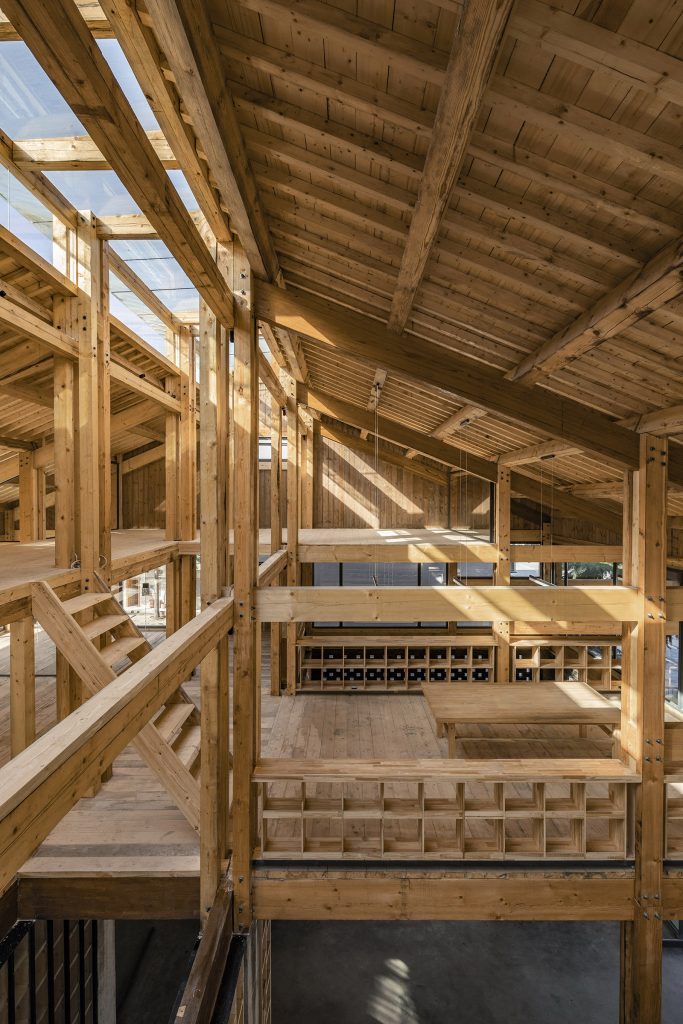


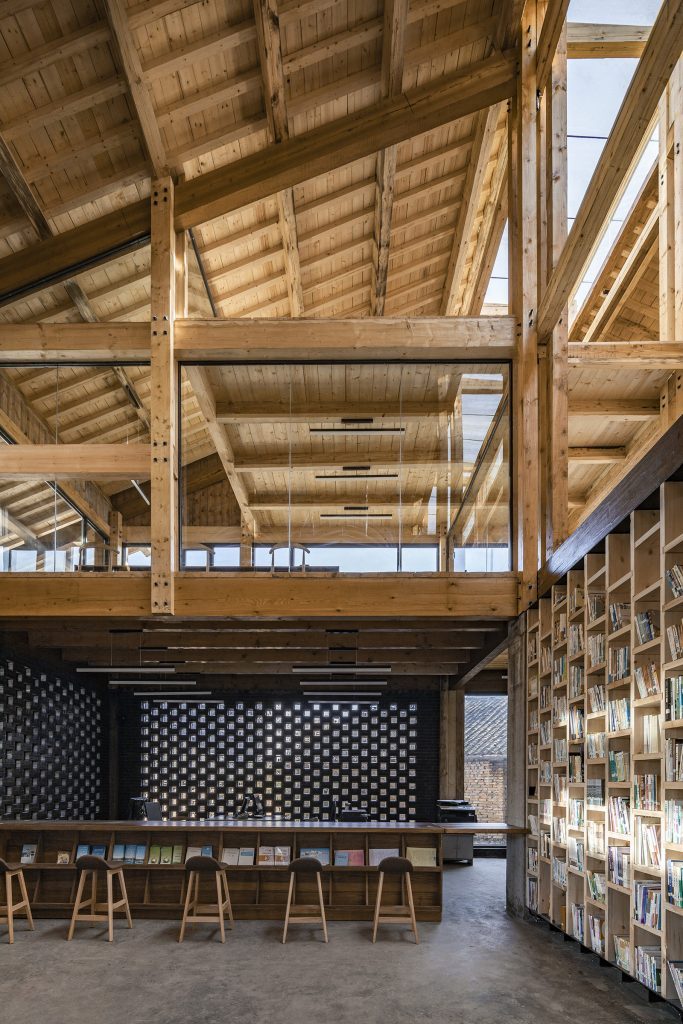


AR New into Old awards 2021 shortlisted: LUO Studio’s discovery of an existing concrete grid from a stalled house construction project laid the foundations for a new community centre
When the Second Automobile Works first arrived in Shiyan City in 1969, it was said that the villagers were still using mules for transport, and water buffalo to support their subsistence on the rocky landscape. Once labelled the ‘Detroit of China’, the automotive industry was established in remote Shiyan as part of Mao’s Third Front, and as a result the unlikely small village filled with rice paddies grew into a dominant industrial player within the country. The history of the city unfolds in a way that is not dissimilar to Detroit. Confronted with better connected places – Shiyan is 600 miles inland from Shanghai – it was ultimately unable to keep up with increasing competition, leading to an inevitable withdrawal of the car plants to more profitable locations.
With the flight of capital came depopulation. Vacant spaces left in the city signalled a promise for future use. In recent years Shiyan has seen tourism as a potential saviour, a plan for remaking the province that lies on the so-called ‘poverty belt’ in the north-west of Hubei Province. This is no surprise looking at the impressive landscape of the Wudang Mountains, which runs east–west through Shiyan – the central asset of the recently assembled Wudang Tourism Economic Zone. Palaces and temples scattered among the mountains were established as a Taoist centre during the early Tang Dynasty, and these – together with picturesque architectural ensembles and ancient complexes of later dynasties – are being heavily marketed by the region to attract visitors.
Shiyan City is a long contiguous swathe of development that itself traces the area’s interesting topography, gently bulging at its urban centre. Along its eastern tapering trails – close to the entrance of the Wudang Mountain Scenic Area – lies Yuanheguan Village, one of many small towns feeling the changes brought about by economic shifts in the region. A new hotel planned on the site of the village’s former community centre initiated a time-sensitive project for the centre’s relocation, a task undertaken by Chinese architecture firm LUO Studio.

Their incisive observation of some abandoned foundations of a stalled house construction project, near to the original community centre, provided an obvious and compelling site. Reusing the six-year-old irregular grid of concrete columns was a welcome time-saver, and, being situated at the intersection of two important roads in the village, provided an opportunity to ‘reshape the built landscape along the streets and activate the dilapidated western area of the village’, states LUO Studio.
The constraints of working with an existing grid is a pleasing challenge for an architect, forcing ingenuity to spring from limits. The structure of the new community centre had to be light enough for the existing columns to support, so the studio worked with wood to complete the construction, with dark grey perforated brick to enclose the ground floor level. New spaces arise from the abandoned foundations with an ease and a grace that makes the building seem conceived in its entirety. Internally, the building is kept very open. Glass stretches from floor to ceiling where upper levels need to be sealed, allowing the elegant wooden ‘clustered columns’ to be perceived throughout, which gives complexity to the experience of the space. The quality of openness was a central driving concept to the project: ‘The open space we created in this new community centre not only offers the village committee an open working atmosphere, but also makes the building thoroughly reusable’.
Externally, the building is generous. Long benches that run the length of some of its walls create places for visitors to pause under the shelter of the extended roof – a humble but not insignificant public offering. At night, the building makes it presence delicately known, glowing through its long rooflight and open facades. Its presence is a promising one. An elegant architectural addition to the village, and, most importantly, a comfortable space for the community.
南京喵熊网络科技有限公司 苏ICP备18050492号-4知末 © 2018—2020 . All photos and trademark graphics are copyrighted by their owners.增值电信业务经营许可证(ICP)苏B2-20201444 苏公网安备 32011302321234号
苏公网安备 32011302321234号客服
消息
收藏
下载
最近