

创作上传
VIP
收藏下载
登录 | 注册有礼
查看完整案例

收藏

下载

分享
Exploring Waste and Material Scarcity: WallMakers’ “3-Minute Pavilion” at Sharjah Triennial 2023
By
Zahi Haddad
“3-Minute Pavilion” by WallMakers at the Sharjah Triennial 2023 addresses global waste and resource scarcity through innovative design. Built from 1,425 discarded tires and filled with desert sand, the pavilion showcases the “Tire Masonry and Unstabilized Sand” technique. Covered in mud plaster, the structure demonstrates how waste materials can be repurposed into durable, thermally insulated buildings. The pavilion symbolizes the massive amount of daily waste and highlights sustainable alternatives for construction. Part of the Triennial’s theme, The Beauty of Impermanence: An Architecture of Adaptability, the project explores architectural responses to material scarcity and environmental conditions, aligning with the event’s focus on adaptive design from the Global South.
The Sharjah Architecture Triennial began on November 11, 2023, under the theme
The Beauty of Impermanence: An Architecture of Adaptability
. Curated by Tosin Oshinowo, the event emphasizes the Global South and the alternative architectural models it can offer for the future. As part of the Triennial, WallMakers’ “3-Minute Corridor” pavilion examines global waste issues and explores innovative approaches to material reuse.


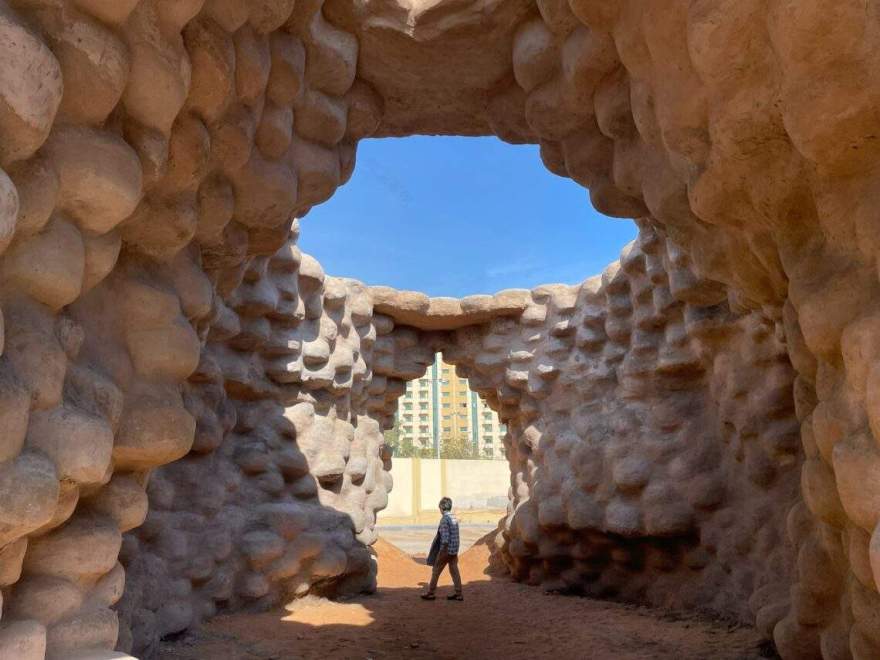


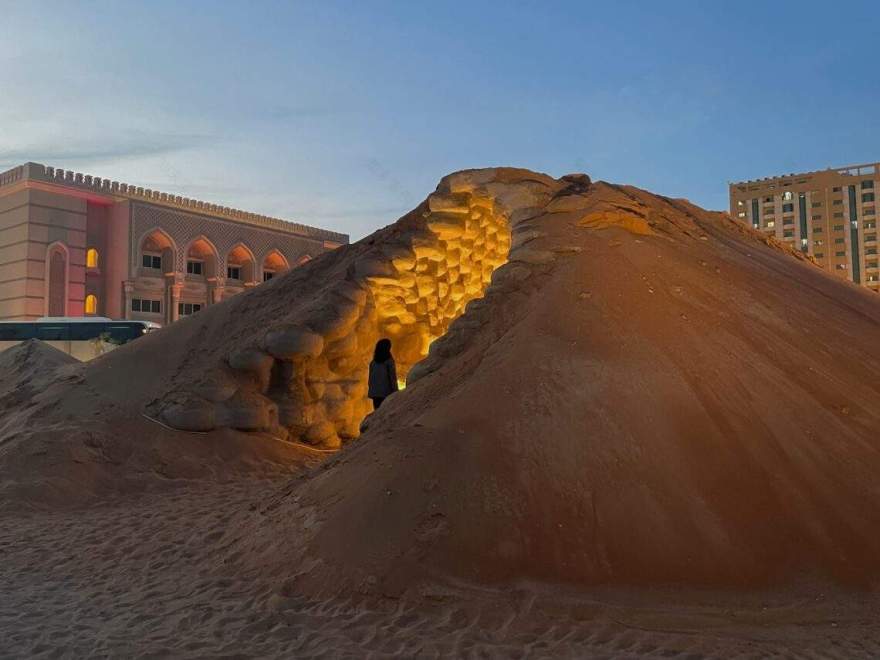
The accumulation of waste in our ecosystems, affecting both land and oceans, is a global issue. Tires, which account for around 2% of global waste, are particularly hazardous. Of the approximately 280 million tires discarded worldwide each year, only about 30 million are recycled or reused. WallMakers’ “3-Minute Pavilion” proposes repurposing these tires in construction using the “Tire Masonry and Unstabilized Sand” technique. When covered with mud plaster, this method demonstrates the potential of tires as a durable building material, offering an alternative amid the growing shortage of construction resources.
The dome-shaped structure is a visual representation made from discarded tires. It encourages reflection on the vast amount of waste humans generate daily—roughly equivalent to 684,931 tires. Constructed from 1,425 tires, the pavilion symbolizes both the immense daily waste production and the potential for repurposing such materials into livable spaces.
The pavilion is built from tires sourced from various disposal sites in Sharjah, filled with desert sand—a widely available resource often considered unsuitable for construction. This innovative masonry technique aims to create thermally insulated spaces, demonstrating the potential of these materials for building structures. Moreover, the pavilion addresses Sharjah’s arid climate, suggesting that these material solutions can provide thermal comfort without the need for active cooling systems.
Emphasizing the concept of impermanence, approximately 95% of the pavilion is designed to dissolve back into the desert after use. This aligns with the Triennial’s theme,
The Beauty of Impermanence: An Architecture of Adaptability
, and aims to create a platform for architecture and urbanism across West Asia, South Asia, and Africa.
Location
Address:
Sharjah, United Arab Emirates
Location is for general reference and may represent a city or country, not necessarily a precise address.
Zahi Haddad
Tech enthusiast dedicated to advancing
architectural publishing
and optimizing
social media management
. With a strong passion for
industrial design
and
engineering innovation
, I’m committed to exploring the latest technology trends and applications.
南京喵熊网络科技有限公司 苏ICP备18050492号-4知末 © 2018—2020 . All photos and trademark graphics are copyrighted by their owners.增值电信业务经营许可证(ICP)苏B2-20201444 苏公网安备 32011302321234号
苏公网安备 32011302321234号客服
消息
收藏
下载
最近