

创作上传
VIP
收藏下载
登录 | 注册有礼
查看完整案例

收藏

下载

分享
A new lease of life: 18 homes for older people in Rixheim, France by Lacaton & Vassal





Lacaton & Vassal’s housing
for older people, at Rixheim, France, creates a greenhouse for living in
Sitting on one of the lonely armchairs in the ground-floor reception, a woman catching her breath tells me ‘I should have just said it was the building with the very large windows’. She is one of the first tenants to have moved in at Les Châtaigniers, a new residence for older people situated on a street of the same name, but not yet added to the map of Rixheim. The ambulance drives past once before going around the block a second time. Between a
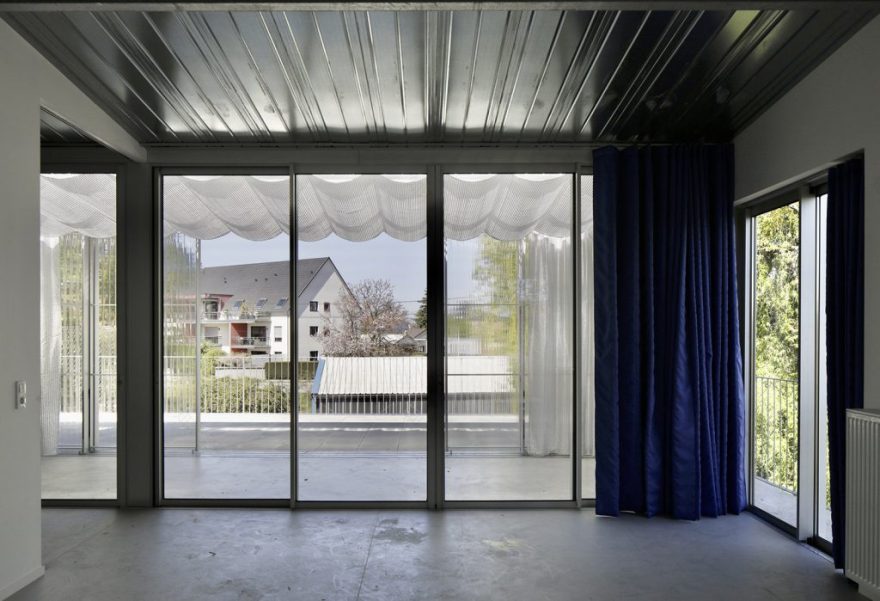
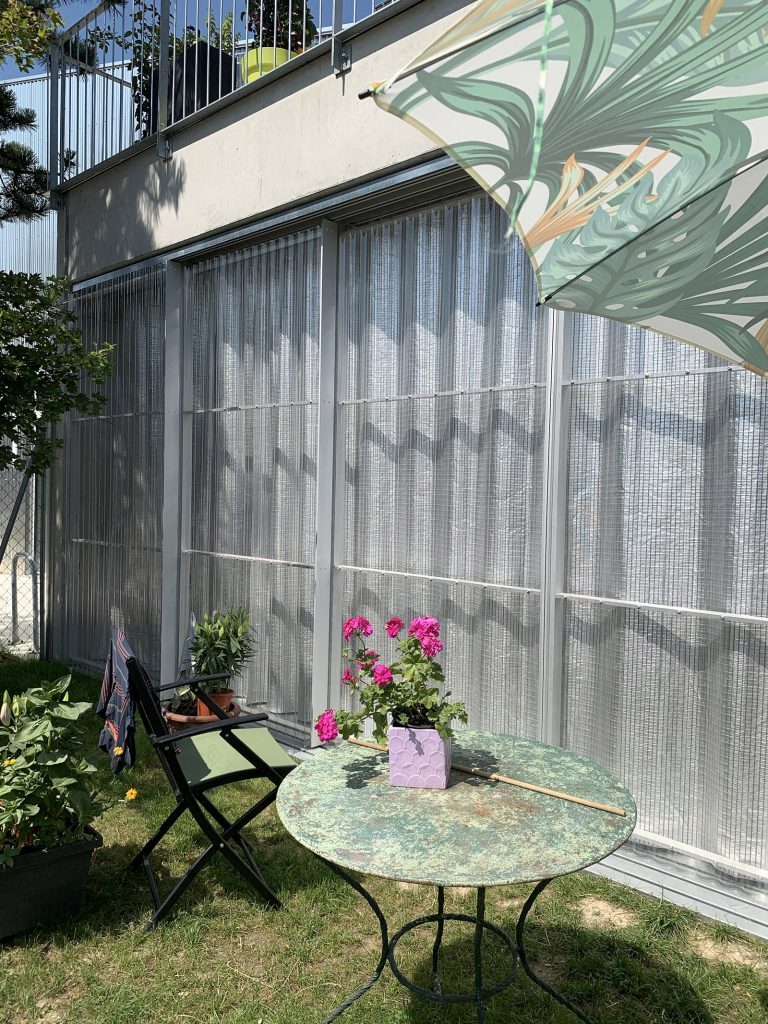
There are no windows as such – Lacaton & Vassal don’t do windows – but the rhythm of the elevation is provided instead by steel poles and sheets of corrugated material, by wall-to-ceiling jambs and the frames of sliding glass doors, by the soft ripples of curtains and the slim balcony railing. Like sheet music, the building is held together by its structural rigour and rhythmic regularity, while being open and luminous. Its layered skin is translucent, offering glimpses of what happens inside, until the vertical streaks of corrugated polycarbonate sheets are replaced by the vertical streaks of corrugated aluminium sheets.

The overlapping grids are brought to life by belongings, colourful paraphernalia dotted around, visible behind see-through envelopes. Once inhabited, the architecture recedes, a mere backdrop to everyday life. There are 18 units in the residence, each with one bedroom and a large living room (some 52m
Rethinking the ethics of housing – and social housing in particular – forced the architects to reinvent its aesthetics. ‘Good housing is open’, believes Anne Lacaton, ‘open to life and open to enhance freedom, where anyone can do what they need to do.’ To them, floor area is more important than finishes, so industrial materials, suitable for the creation of large volumes at low cost, become the obvious choice; Lacaton & Vassal built their reputation on using the least amount of material to produce the most space and bring in as much daylight as possible. ‘Light is what differentiates a hovel from housing’, says Anna Iwaniukowicz, architect at the Société Mulhousienne des Cités Ouvrières (Mulhouse Society of Workers’ Cities, or SOMCO), who initiated and commissioned the Rixheim residence. Having already worked on two social housing projects in Mulhouse with the architects, ‘long before they won the Pritzker’, this third collaboration is aimed at those who are older but able-bodied and autonomous. To be eligible to live at Les Châtaigniers, tenants must be retired and satisfy the income criteria for social housing (rent and bills add up to between €440 and €540 a month, not including individual gas heating) but other than the accessible showers and presence of a lift (not mandatory on a two-storey block comprising just 18 units), the residence is designed as housing for everyone, guided by the same principles that Lacaton and Jean-Philippe Vassal remain committed to.

Rather than being imposing, their architecture strives to feel familiar, at the service of the life that will unfold within it. The radicality of their approach and material palette seeks to encourage freer ways of living. Recalling a visit to the Cité Manifeste in Mulhouse, another of their projects commissioned by the SOMCO, Vassal speaks fondly of a tenant who lived like ‘a nomad’ in his own apartment, ‘taking pleasure in changing, according to the seasons, where he would sleep or have his breakfast’. While the industrial rawness of their building in Rixheim might seem a bolder choice for its intended residents, Iwaniukowicz insists that ‘tomorrow’s older people include us, they include those of us who aren’t scared of raw concrete and aspire to live in loft-like units’.
The consistency of Lacaton & Vassal’s architectural language is one of the practice’s most distinctive features. They confess they ‘stay away’ from programmatic concerns, which are better kept ‘at arm’s length’. Built with off-the-shelf products and stripped of specific functions, seen to restrain when they seek to liberate, their architecture strives to be generic.
‘Lacaton & Vassal built their reputation on using the least amount of material to produce the most space and bring in as much daylight as possible’
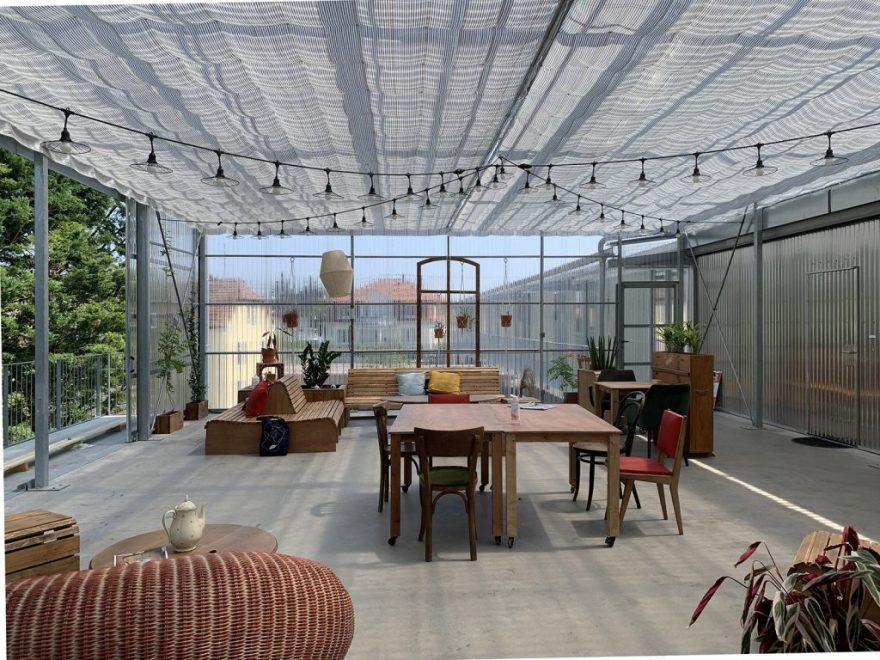
The structures and technologies of greenhouses, transposed into their residential projects as construction systems (at the Cité Manifeste but also for a house in Coutras and 23 dwellings in Trignac), have helped them to break away from standard typologies, to think in volumes rather than in plan. The specificity of the greenhouse as a space to grow vegetables may not be applicable, but its principles remain relevant: enabling humans to monitor internal conditions and providing optimum environments for life to thrive. At Rixheim, the greenhouse on the upper level is the heart of the building: in terms of geometry, it is the hinge around which the building’s two arms are articulated, and in terms of inhabitation, it is the large communal living room where residents can run into neighbours, feed the birds, have a drink, play Scrabble or look at the view (existing trees were all retained, and the waste collection site that lies behind them should be relocating within two years). From afar, the opened flaps atop the greenhouse’s vaulted ceiling look like delicate wings, as if a fragile construction has just landed on the roof – an invitation to come closer, to look at the sky, to take a deep breath.
The generous, shared living room is clad in polycarbonate sheets so that, as Cedric Price wrote of the Fun Palace: ‘Any time of day or night, winter or summer it really doesn’t matter. If it’s too wet, the roof stops the rain but not the light.’ Whether grafted on to the facade of existing blocks to provide ‘more’ (the promise of more space, more light, more air) or integrated from the beginning into the buildings Lacaton & Vassal draw up from scratch, winter gardens are a recurring motif in their work, a natural evolution from their interest in greenhouses as intelligent, versatile and economical structures. And since it does matter whether it’s winter or summer, they become buffer spaces that help regulate the internal temperature. As the diaphragm contracts and relaxes, the layered moving parts – including (from inside to outside) the thick thermal curtains, the sliding glass partitions, the lightweight fabric and the sliding polycarbonate sheets – are opened and closed to stop the cold and to hold and release the heat. While post-occupancy studies of other projects in their portfolio testify to suitable thermal regulation in apartments thanks to these winter gardens, most residents present in Rixheim when I visited in July had their front doors wide open to summon in the breeze. One of the residents said, ‘from 2.30pm I have to close everything off, it gets a bit dark but it’s the only way to try and keep the temperature down’ – the sun was scorching that day, but at least all units are double-aspect and the air can flow.
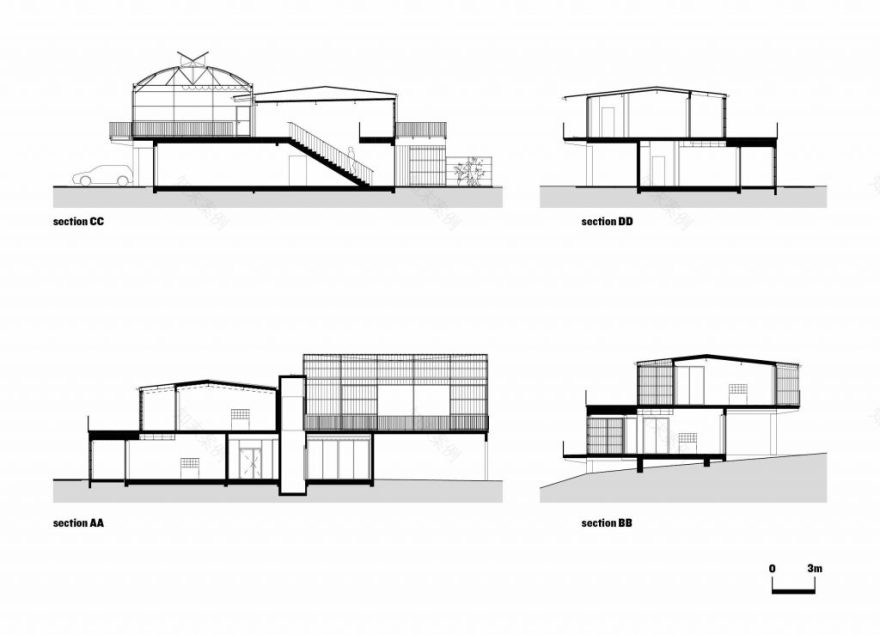
To absorb and accommodate the everyday, in all its spontaneity and its unexpectedness, Lacaton & Vassal’s architecture relies on the contribution and active participation of the user – the SOMCO is making the time to explain to future residents how to inhabit and appropriate these unusual new homes. Assembled with monkey wrenches, their construction is in concert with the building’s relatively limited life expectancy; everything can be taken apart or easily replaced because experience in adaptive reuse has shown them that ‘the more constraining they are, the more difficult it is to intervene in buildings’. Explaining their preference for slab-and-post structures over load-bearing walls, Vassal adds that ‘the discussion about lightness and poetry cannot be separated from high efficiency, rigour and economy’.
Stripped back, their architecture has a certain nakedness; there is nowhere to hide, even for a little while, and nowhere to store the vacuum cleaner – ‘it’s all tidied but it doesn’t look tidy’, regrets one of the Rixheim residents. With everything laid bare and exposed, it bespeaks a beauty derived from simplicity and necessity, a beauty that does not shy away from the mess of everyday life.

南京喵熊网络科技有限公司 苏ICP备18050492号-4知末 © 2018—2020 . All photos and trademark graphics are copyrighted by their owners.增值电信业务经营许可证(ICP)苏B2-20201444 苏公网安备 32011302321234号
苏公网安备 32011302321234号客服
消息
收藏
下载
最近