

创作上传
VIP
收藏下载
登录 | 注册有礼
查看完整案例

收藏

下载

分享
Elephant centre in Krapho, Thailand by Bangkok Project Studio
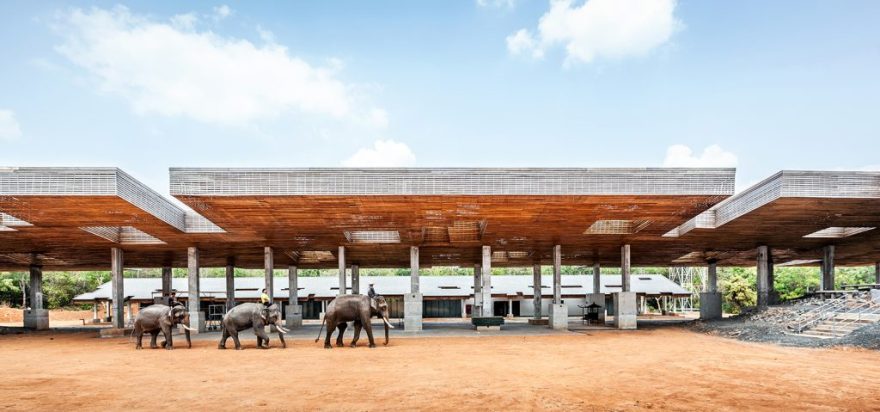
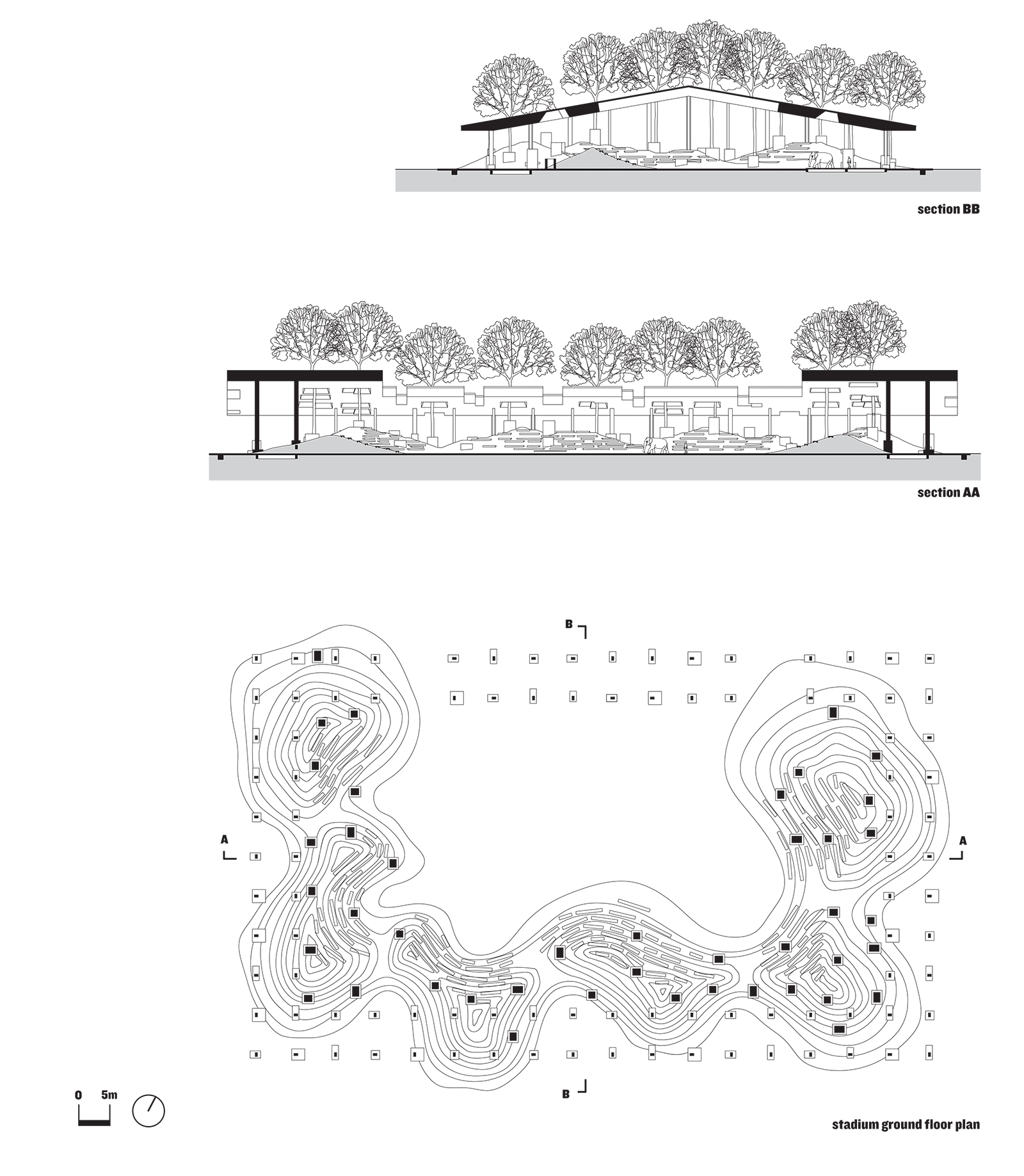
The largest building on-site is a 70 x 100m stadium-like space, named the ‘cultural courtyard’, to host religious ceremonies and other cultural events
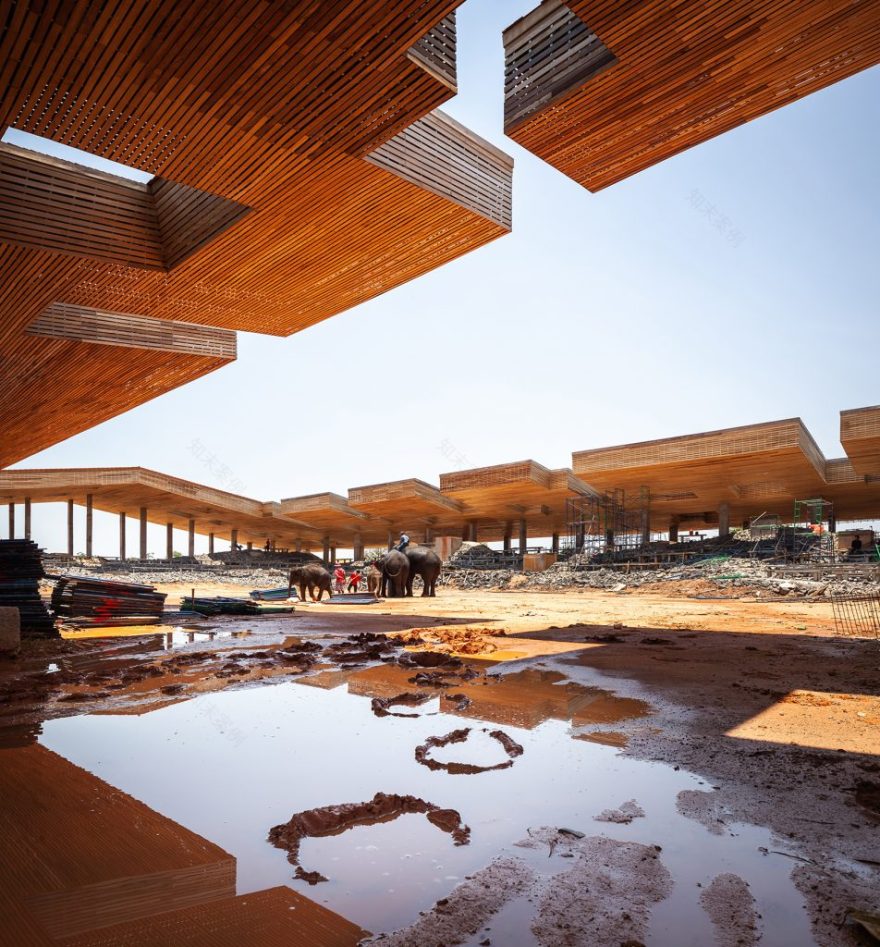
Under the 1.5m-thick perimeter roof, three sides are filled with mounds of soil excavated just a few metres away to create a large water reservoir – the 200 elephants living here require more than 8,000 cubic metres of water per month – and stabilised by basalt rocks sourced nearby

Benches for visitors are scattered across this artificial landscape, while elephants enter the central space through the fourth, unobstructed side

The artificial mounds are reminiscent of the rolling soil in which elephants romp around to cool their body temperature and protect themselves from insects.Behind these mounds lies a large open space where elephants and mahouts parade on special occasions


In Kuy villages, humans and elephants live side by side, with umbrella-like structures consisting of a sturdy log and two corrugated sheets providing shade for the thicker skinned creatures


The site includes a museum, which is intended to stretch beyond the remit of a traditional historical museum. The architect considers the whole site, ‘including the local landscape’, a museum of sorts – something to be ‘preserved and to slowly grow’


The museum’s four galleries, library and two water pools are nestled within its maze-like structure, its gently sloping walls meeting the ground to frame entrance points. Exhibitions can be displayed in the interior or on the open-air corridors where elephants, mahouts and visitors are encouraged to cross paths


As the last structure on the visitor’s route, the observation tower also marks the edge of the forest. Designed at the human rather than elephant scale, it rises above the museum, stadium and surrounding landscape


Like the museum, the observation tower has been built by locals with fired clay bricks made by hand from loam found in the area. In a region with few employment opportunities, the construction process creates jobs and income for the locals while increasing the value of the often‑overlooked local material


Since 1973, Pa Ar Jiang temple has been a cemetery for both Kuy people and elephants, located in the Dong Phu Din National Forest Reserve. As the spiritual heart of Kuy people and elephants in Surin Province, it receives daily visits. One of the temple’s main buildings, Sala Erawan is used for many ceremonies, including Thailand’s annual National Elephant Day celebrated on 13 March
Structures designed for both elephants and people tower above human heads, leading us to reconsider our importance in the world
Lying some 400 kilometres away from Bangkok, Thailand’s Surin Province feels disconnected, both physically and culturally, from the rest of the country. It has historically struggled to attract resources from the government or visitors from the global tourist flow and, in recent years, has been suffering from floods and severe droughts, with no willingness or strong preventive programme to remedy them.
Situated in the lower north-east region of Thailand and sharing its border with Cambodia, Surin Province is home to the Kuy ethnic group, renowned as skilled
(elephant caretakers and trainers). Since ancient times, elephants roaming freely in the forest have been corralled and captured by the Kuy, and domesticated to transport logs. The ban on logging concessions from 1989 left the Kuy
unemployed while deforestation deprived them and their elephants of access to food and medicines. A new elephant industry then emerged – tourism – and elephant camps for tourists mushroomed around the country. The situation forced
and their elephants to migrate to these camps to earn a living, causing the number of elephants in Surin Province to decrease drastically. Since 2006, a national government initiative has been striving to bring elephants back to the area to drive the development of tourism while benefiting the local community. So far, it has subsidised more than 200
with decent stipends to live in the area of Baan Ta Klang village (the country’s hub for training and trading elephants and a popular stop on the tourist track), close to the Dong Phu Din National Forest Reserve.
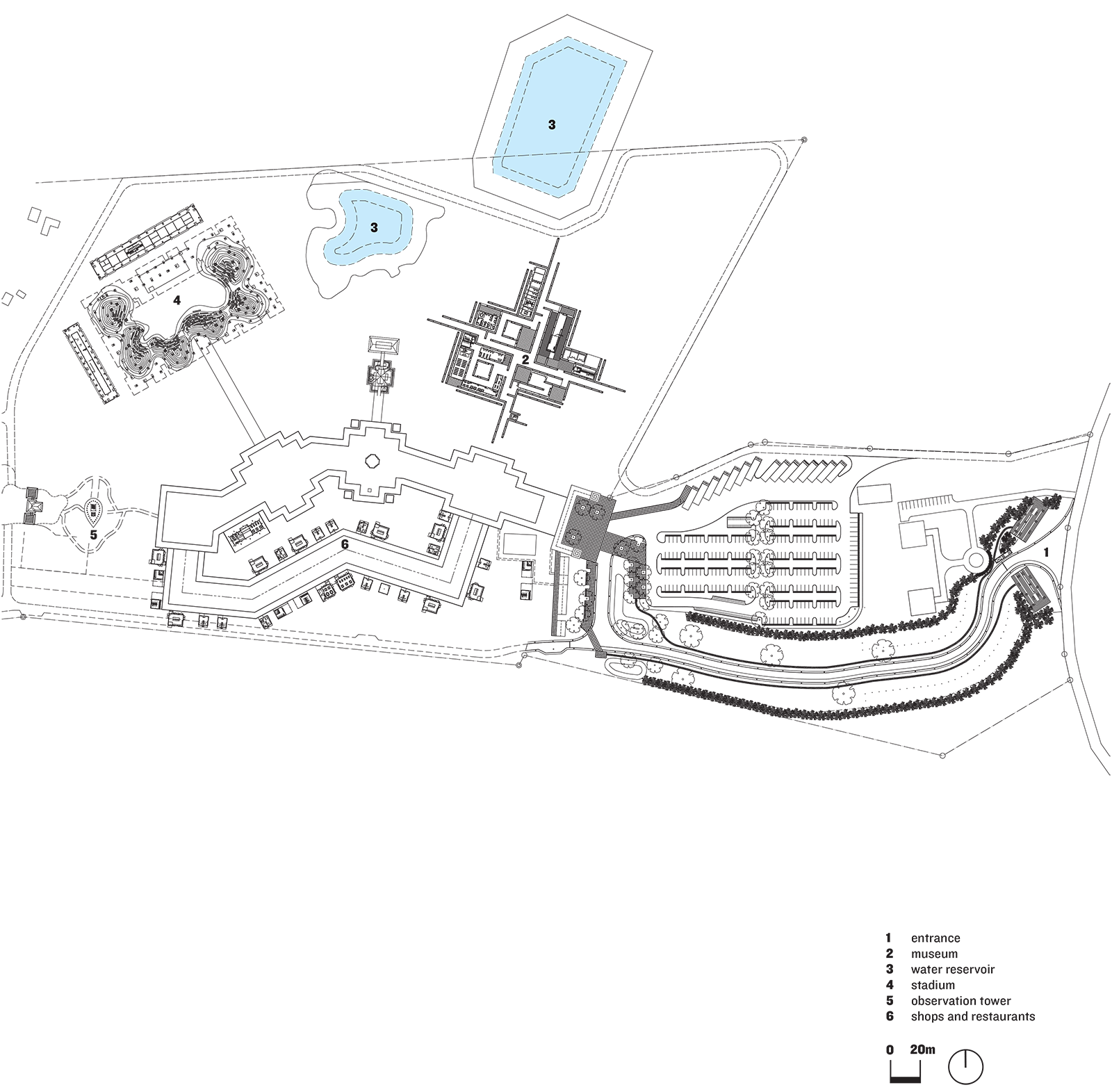
Building on the success of elephant camps and villages for the tourism industry, in 2011 a masterplan by the Provincial Government and the Zoological Park Organisation proposed the creation of a site where the everyday activities of Kuy mahout families would be on display: a
of the community aiming to become a new tourist attraction in Thailand’s north-east. Seven years ago, architect Boonserm Premthada and his team at Bangkok Project Studio were commissioned to turn this project into an ‘Elephant Study Centre’ (now called ‘Elephant World’). They revised the original masterplan and, although they kept the original functions of the three buildings (a museum, a stadium and an observation tower), they reinterpreted them; while the central government’s project was thinking for the elephants, Premthada attempts a shift towards thinking
‘The Kuy people and the elephants have no voice,’ says the architect. And, despite being labelled as ‘culture and conservation’, government policies and projects often continue to silence them. Premthada believes architecture can be a tool to start a dialogue, discuss the way they live and engage them in the design process. Circumventing the stubborness of top-down bureaucracy, the project seeks to address social and ecological issues (the effects of deforestation and the lack of opportunities for unskilled labourers) and gather architectural, human and non-human subjects into different stages of the process, placing Kuy people’s symbiotic identity with elephants at the centre.
For Kuy people, the elephant is kin, holding no different status from the mahout’s sons. Premthada started the project by observing the cohabitation between man and elephant in the Kuy community: an elephant-proportioned veranda surrounds the central living area of the house so that elephants can sleep close to their
and elephants extends beyond their shared household, perpetuated though traditions and rituals; during capture, the mahout loops a lasso made of buffalo leather called a
Pakam
is both a technical tool and a sacred object embodying the local animism – the spirits of Kuy ancestors and guardians as well as wisdoms and magic are essential to Kuy culture – and connecting the entire community. Rituals with
keep the
’ traditions alive; they are used in celebrations on the birth date of an elephant calf, blessing-rites for matured calves before they leave their villages to work in another city, and in the Kuy family and village’s mourning for an elderly elephant’s death.
If the deep historical bond between Kuy people and elephants is rooted in this tradition, the architect cultivates another common root for them to stay alive and connected in the contemporary world. The premise of the project is a space of cohabitation that is not limited to the boundary of the Kuy homes but extends to public space for leisure activities. The first building past the site’s entrance is the museum. Instead of being reduced to a traditional museum recounting stories through objects, the museum is a gathering place for Kuy people, elephants and visitors to meet one another. The alleys of its maze-like cluster of walls are wide enough for elephants to walk through, and chance encounters among it seek to encourage new oral stories. ‘The whole complex, including the local landscape, is a sort of museum,’ explains Premthada. ‘I want it to be preserved and to slowly grow.’ The two pools adjoining one of the museum’s exhibition rooms remind visitors of the importance of water for Kuy people and elephant culture. Yet the screens and installations on display when I visited were, unfortunately, more informative than experiential, failing to embrace the idea of a museum as lively and memorable, rather than purely pedagogical.
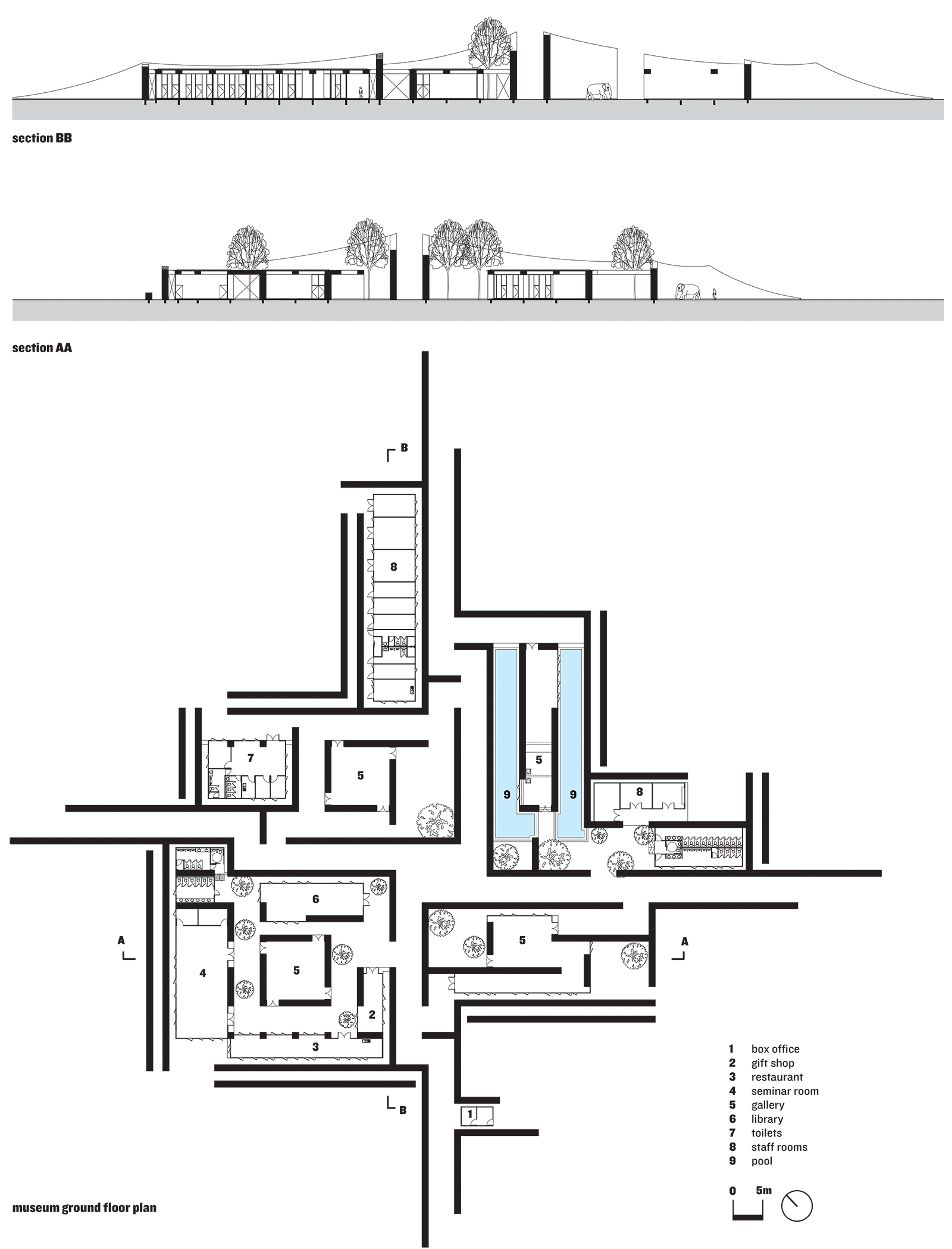
The next building on the visitor’s route is the largest of all: a stadium-like structure serving as a theatre for elephant performances in front of an audience of up to 800 people. While daily elephant shows are held for visitors, larger events take place just once or twice a month. Numerous interviews were carried out, with Kuy people, community leaders,
, artists, local YouTubers, veterinarians and school teachers, to better understand cultural needs and spatial possibilities. The contours of the audience area are designed to keep the elephants at a safe distance using basalt rocks – upon which the elephants do not like to walk. Wandering through the site, some of the walls and columns first appear to be out of scale, oversized for small human figures. Negotiating the differences between species, Premthada’s architecture makes us feel small; removing the human from the centre make us reconsider our place in the world and ‘learn from our differences’.
The museum, stadium and two water reservoirs between them show a considered and holistic approach to the landscape. While the southern half of the site (with the entrance, parking and area with restaurants and shops) remains controlled by government parties, the sequence of buildings on the northern half follows the pattern of elephants’ trails across the site. As the last building on the visitor’s route, the tower is designed solely for humans rather than for both people and elephants. While the museum and stadium are vast and horizontal, the tower is geared down to a human scale and is much smaller in footprint, but it is the tallest of the three. Its 28-metre height offers a momentary link between humans and the landscape; the Kuy village lies to the south while the sacred Pa Ar Jiang temple (‘Pa’ means forest while ‘Ar Jiang’ means elephants) rises above the green canopy to the north.
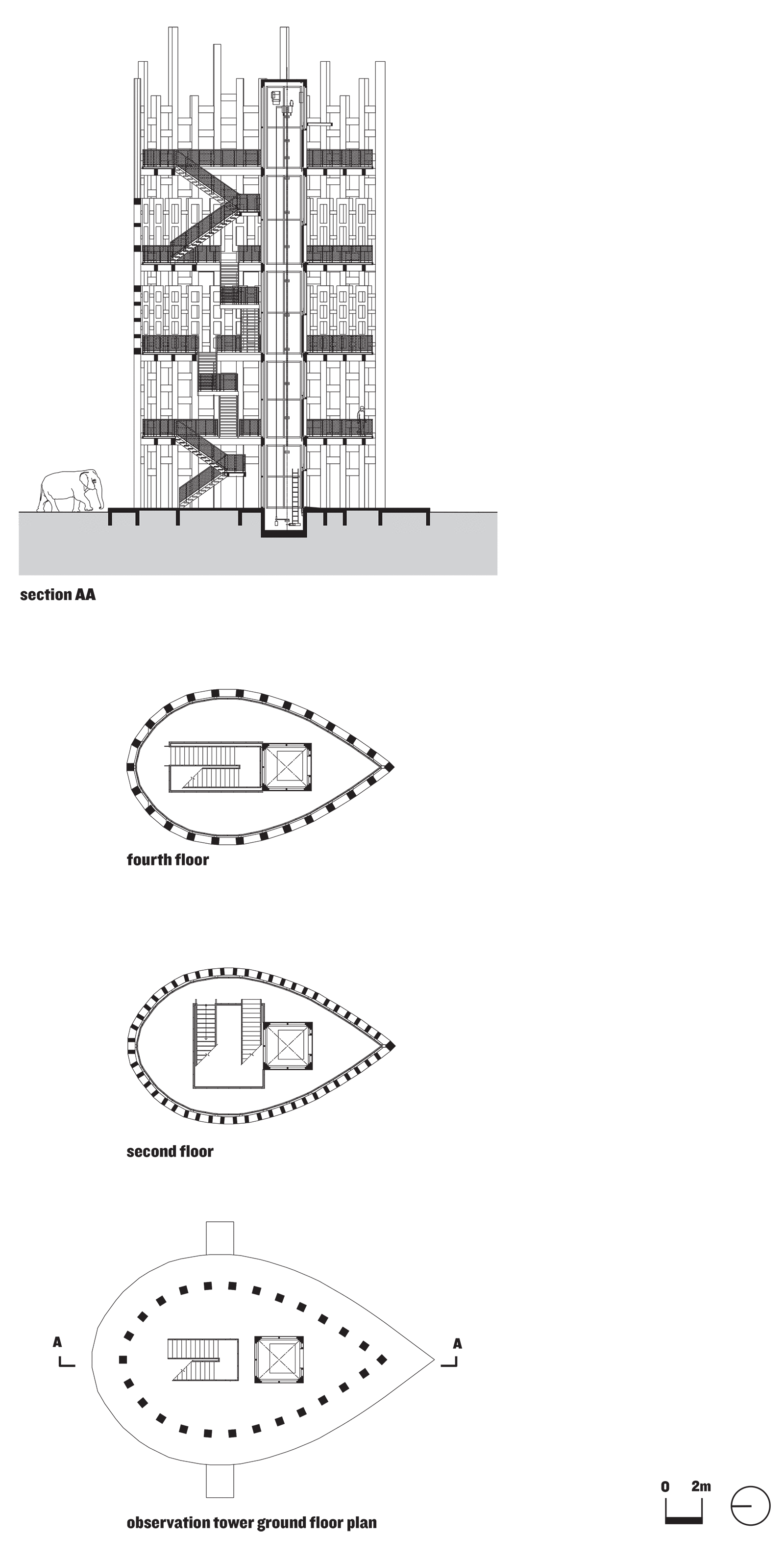
The design, material and construction methods were intended to provide an opportunity for local, unskilled farmers – seasonally unemployed – to take part without requiring any sophisticated training. The museum bricks were produced in Surin Province, while those for the observation tower came from Dan Kwian village, a three-hour drive away. Most of the construction work was provided by the local community. The size of bricks used in the museum is based on the standard size available in the area, with each brick weighing 3 kilograms – a weight deemed manageable for all workers on the site to safely carry them and work on a high wall. While the three buildings display a visible rawness and roughness, Premthada feels averse to the culture of precision in contemporary construction, leaving little room for approximation. ‘My work is half-finished,’ he says, ‘I do half, leaving another half to be adjustable for the workers’ conditions.’ He pragmatically admits that architecture cannot be expected to become
and solve all problems at once. At 50 baht, the entrance cost to Elephant World is likely to preclude locals, but the site does provide employment opportunuities for them. The architecture serves as an initial step, a way to improve the living conditions of Kuy people and their elephants, and inject cultural relevance into touristic sites. To borrow Donna Haraway’s words, ‘the patterning of possible worlds and times’ can provide new routes for cohabiting with one another.
南京喵熊网络科技有限公司 苏ICP备18050492号-4知末 © 2018—2020 . All photos and trademark graphics are copyrighted by their owners.增值电信业务经营许可证(ICP)苏B2-20201444 苏公网安备 32011302321234号
苏公网安备 32011302321234号客服
消息
收藏
下载
最近