

创作上传
VIP
收藏下载
登录 | 注册有礼
查看完整案例

收藏

下载

分享


JOURNEY’S END
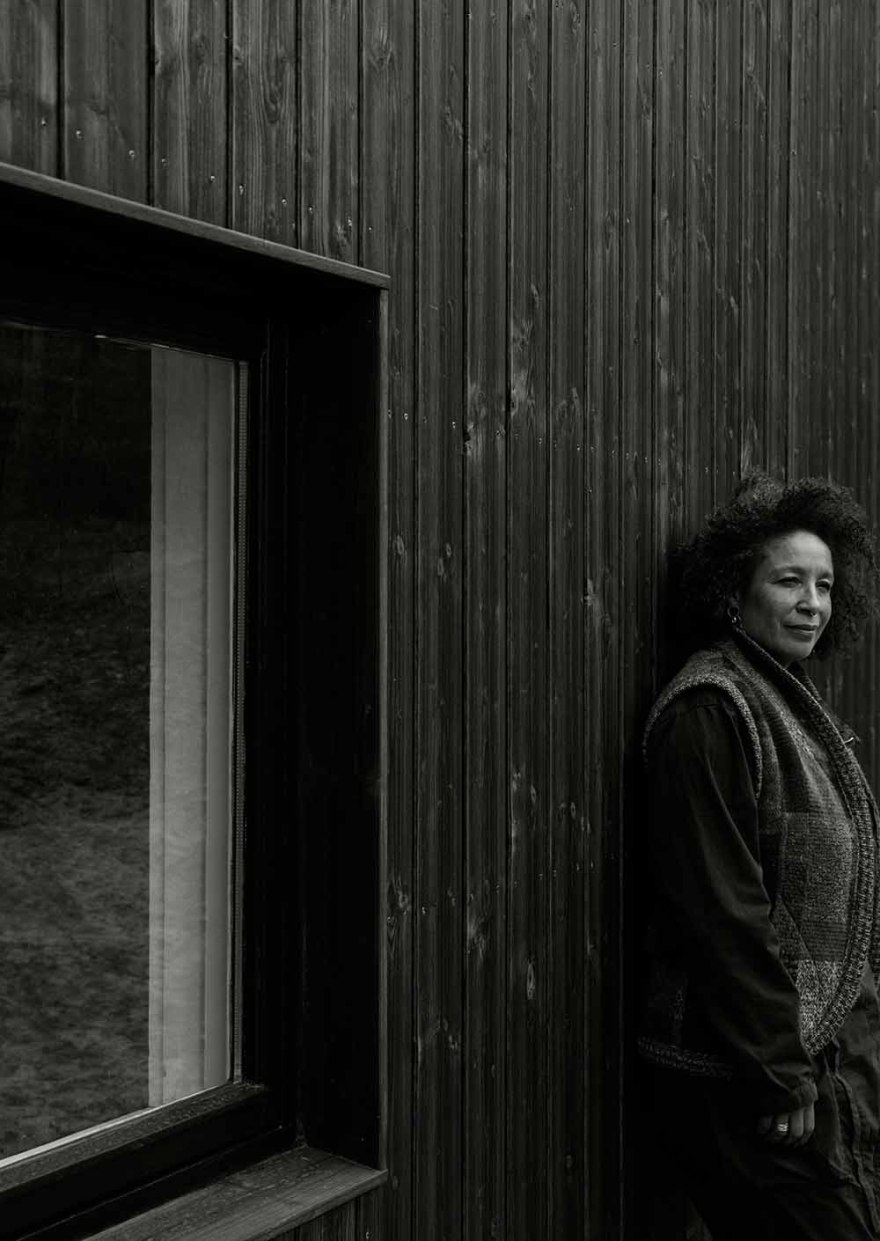
A 90s portable church has found its home on a secluded hill in the forest, becoming a contemporary respite for creation and reflection for Josephine Akvama Hoffmeyer.
Danish vandrekirker or wandering churches, were built across the country in the 19th and 20th centuries. In anticipation of a permanent house of worship, prefabricated churches were assembled, then disassembled and relocated to a next new parish. Few have survived.
Josephine Akvama Hoffmeyer, director of paint and tile studio File Under Pop, and her husband architect Peter Bur Andersen, were searching for a tranquil space outside Copenhagen and they stumbled on one of these plywood buildings, ascetic and made of humble materials. She was immediately smitten: “The simple, almost Japanese approach to form was something I fell in love with – its sheer simplicity.”
The couple stripped the interior to its bare essentials, rebuilding with high-quality materials, adding their own sense of personal history and taste. New cladding using the traditional Japanese shou sugi ban technique – charring wood to preserve it and enhance its texture – along with a sleek, two-layer tar paper roof, created a uniform black exterior that contrasts
with the lush deep green surroundings.
“With the six metres to the ridge and the vast windows up high, we have the most incredible natural light,” Hoffmeyer explains. The interior maintains a balance between minimalism and warmth. Hoffmeyer, known for her atmospheric and colour-drenched environments, admits
the house’s subdued hues might surprise some.
The open living space is divided into functional zones for contemplation and relaxation, free from unnecessary clutter and detail. The mezzanine provides a concentrated space for work and rest, grounded in a tatami room inspired by Hoffmeyer’s travels to Japan, and the ceiling is lined with bamboo. Various artisans, including Archival Studies, contributed elements such as
intricate wooden doors with Japanese-inspired joinery.
This careful consideration of both form and function defines the house’s character. The wandering house has settled on a secluded hill, a site seemingly made for calm and immersion in the very elements of nature.
WORDS
ALISA LARSEN
PHOTOGRAPHY
HEIDI LERKENFELDT
STYLING
PERNILLE VEST
JOURNEY’S END
A 90s portable church has found its home on a secluded hill in the forest, becoming a contemporary respite for creation and reflection for Josephine Akvama Hoffmeyer.
Danish vandrekirker or wandering churches, were built across the country in the 19th and 20th centuries. In anticipation of a permanent house of worship, prefabricated churches were assembled, then disassembled and relocated to a next new parish. Few have survived.
Josephine Akvama Hoffmeyer, director of paint and tile studio File Under Pop, and her husband architect Peter Bur Andersen, were searching for a tranquil space outside Copenhagen and they stumbled on one of these plywood buildings, ascetic and made of humble materials. She was immediately smitten: “The simple, almost Japanese approach to form was something I fell in love with – its sheer simplicity.”
The couple stripped the interior to its bare essentials, rebuilding with high-quality materials, adding their own sense of personal history and taste. New cladding using the traditional Japanese shou sugi ban technique – charring wood to preserve it and enhance its texture – along with a sleek, two-layer tar paper roof, created a uniform black exterior that contrasts
with the lush deep green surroundings.
“With the six metres to the ridge and the vast windows up high, we have the most incredible natural light,” Hoffmeyer explains. The interior maintains a balance between minimalism and warmth. Hoffmeyer, known for her atmospheric and colour-drenched environments, admits
the house’s subdued hues might surprise some.
The open living space is divided into functional zones for contemplation and relaxation, free from unnecessary clutter and detail. The mezzanine provides a concentrated space for work and rest, grounded in a tatami room inspired by Hoffmeyer’s travels to Japan, and the ceiling is lined with bamboo. Various artisans, including Archival Studies, contributed elements such as
intricate wooden doors with Japanese-inspired joinery.
This careful consideration of both form and function defines the house’s character. The wandering house has settled on a secluded hill, a site seemingly made for calm and immersion in the very elements of nature.
WORDS
ALISA LARSEN
PHOTOGRAPHY
HEIDI LERKENFELDT
STYLING
PERNILLE VEST
南京喵熊网络科技有限公司 苏ICP备18050492号-4知末 © 2018—2020 . All photos and trademark graphics are copyrighted by their owners.增值电信业务经营许可证(ICP)苏B2-20201444 苏公网安备 32011302321234号
苏公网安备 32011302321234号客服
消息
收藏
下载
最近