

创作上传
VIP
收藏下载
登录 | 注册有礼
查看完整案例

收藏

下载

分享
Memorial service: Belarusian Memorial Chapel in London by Spheron Architects


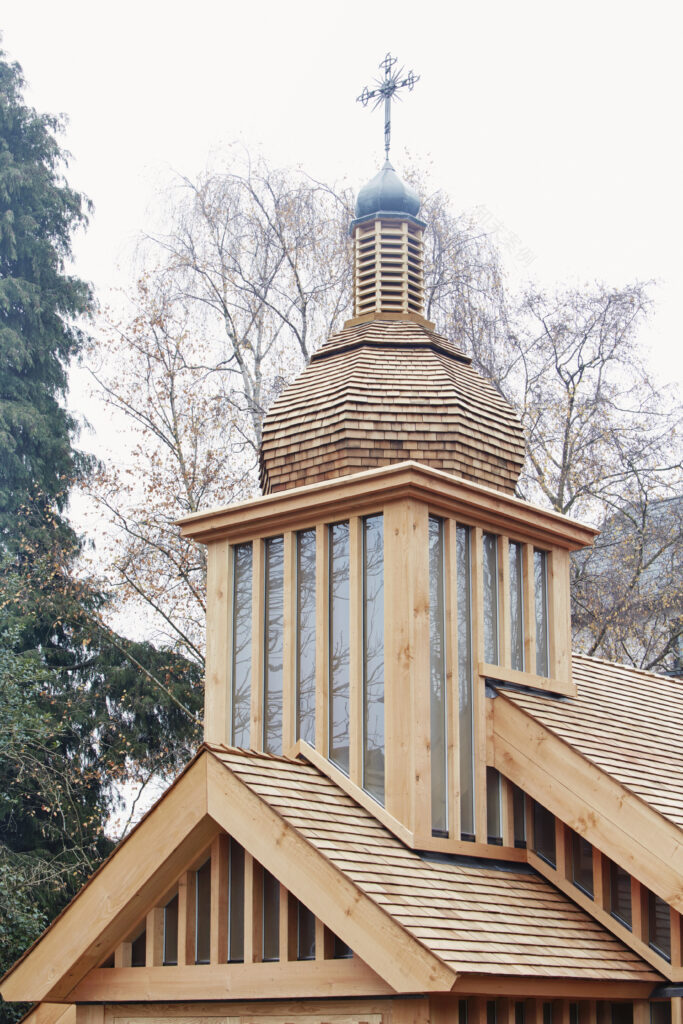


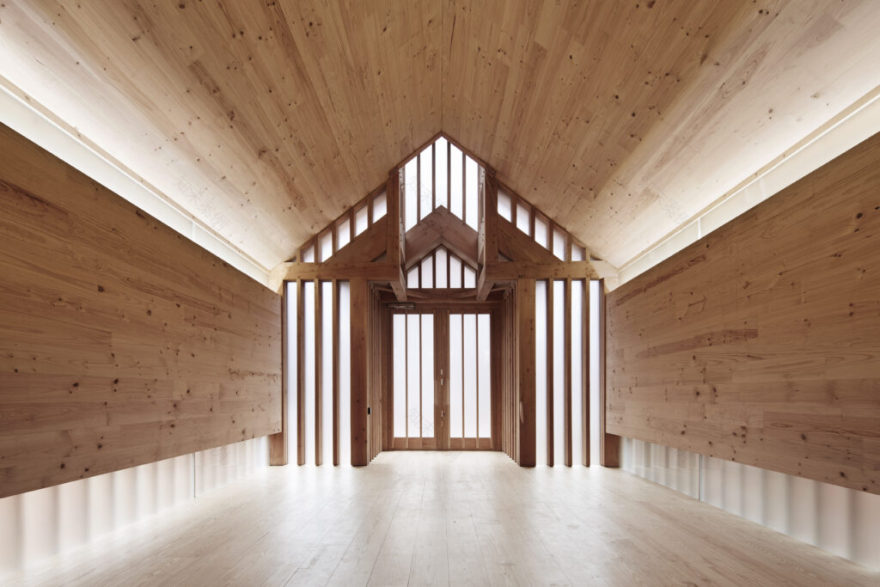
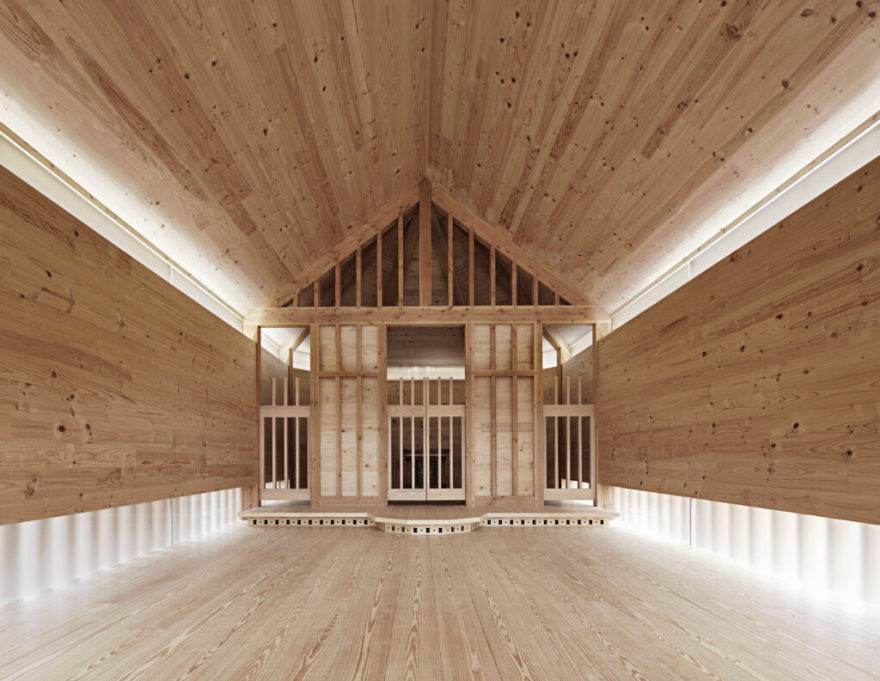


Spheron Architects’ Belarusian Memorial Chapel is the first wooden church to be built in London since the Great Fire of 1666
On 26 April 1986, the Number 4 reactor at the Chernobyl Nuclear Power Plant exploded, releasing a hundred times more radiation than the atom bomb at Hiroshima and contaminating much of Western Europe. Around 70 per cent of the radioactive fallout landed in Belarus, contaminating a quarter of the country: the devastated power plant is less than 20 kilometres from the Belarus-Ukraine border.
Thousands of people were forced to leave their homes in rural Belarus and resettle across the world including in the UK, with many more Belarusians displaced by the country’s turbulent past of economic upheaval and the ravages of the Second World War. The north London suburb of Woodside Park near North Finchley, christened ‘the Belarusian village’, has since become the centre for the Belarusian diaspora in London. Marian House, a community and cultural centre for the Belarusian Greek Catholic Church in London, was established in 1948 followed by the Francis Skaryna Library and Museum in 1971 – the only library outside the home country to specialise exclusively in Belarusian studies.
Belarusian memorial chapel plan
Marian House is a handsome Victorian villa nestled in the leafy suburbs of north London. Cradled in the villa’s tree-lined garden, the first timber church since the Great Fire of London in 1666 has been built in memory of the victims of the Chernobyl disaster, designed by London-based Spheron Architects. Glimpsed through the lime trees from the street, the chapel incorporates all the essential ingredients of a traditional Belarusian church, studied first-hand by the architects in the country’s forests. The use of timber is a tribute to the predominantly timber homes and churches of the rural villages abandoned in the aftermath of the Chernobyl explosions. Learning from the country’s traditional local craftsmanship, the British Douglas Fir carcass was made by carpenters just up the road in Hemel Hempstead and assembled on site in a matter of days. A bell donated by the monks of Chevetogne Abbey in Belgium rings from the bell tower, historic icons are set into a timber iconostasis, and the chapel is crowned with a cedar-shingled onion dome.
The hand-clad roof hangs from a CNC-cut structural frame: a marriage of the traditional and the contemporary. The lead-domed lantern capping the cupola is in fact a louvred passive-ventilation stack. A more explicit departure from traditional church design are the undulating ribs of the external flank walls, like a gently billowing timber veil. Inside, the chapel is a warm wooden cocoon. The timber structure and pine CLT panels are left raw and unfinished, while the timber floor and doors are lightly lacquered. The panel housing the chapel’s icons is a simple raw timber screen, more like a Japanese paper shoji than a typically ornate gold-leafed iconostasis. A crisp and minimal alternating pattern is punched into the step of the chancel – a nod to the vegetal patterns adorning traditional Belarusian
rushnyk
and even the national flag.
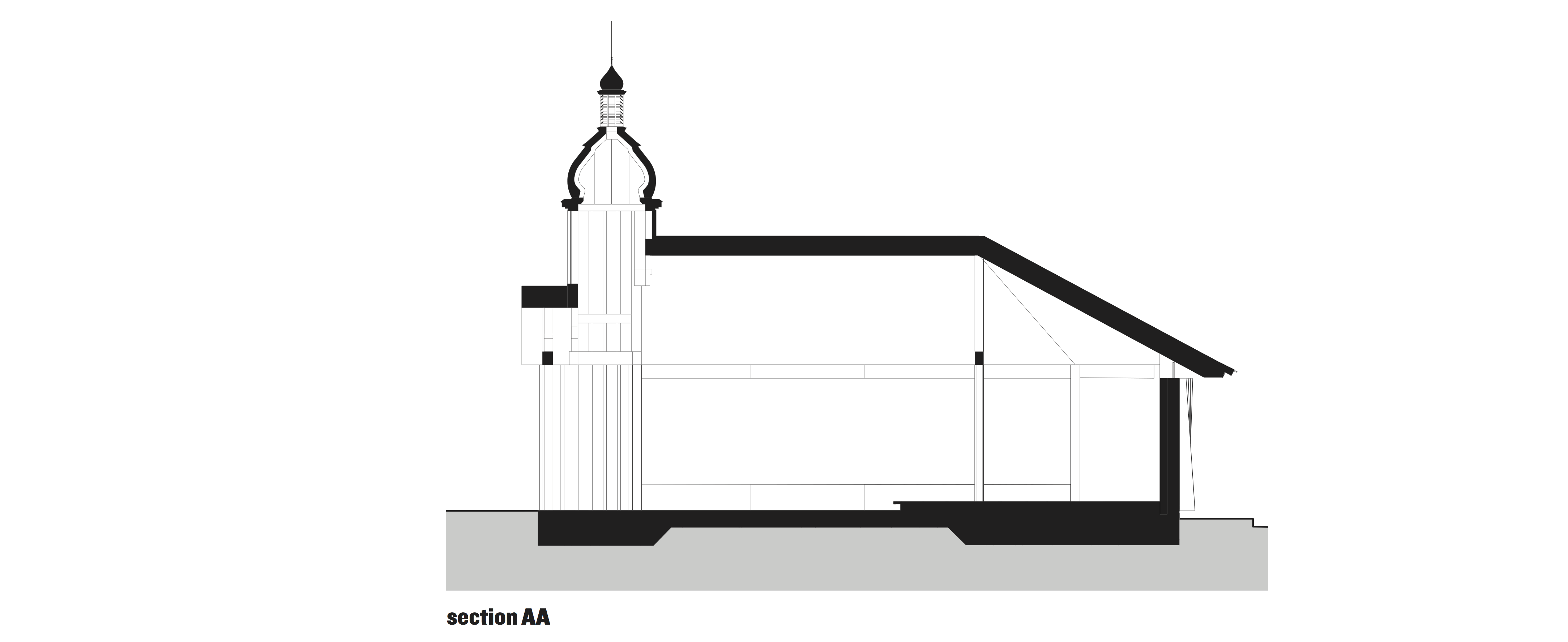
Belarusian memorial chapel section
The chapel is illuminated by bands of milky diffused light from a clerestory and a strip of low-level translucent glazing, the external ribs casting a ghostly rhythmic shadow against the glass. At night, the chapel becomes a glowing beacon, eerily conjuring the wooden churches torched in the atrocities of the Second World War, during which Belarus lost a quarter of its population – the largest percentage of any country during the conflict.
Commissioned and funded by the Holy See, this new chapel has set a precedent for contemporary ecclesiastical architecture. After donating the bell to the chapel and visiting, the monks of Chevetogne Abbey have asked Spheron Architects to design a new mortuary chapel for their Benedictine monastery in Belgium.
The Belarusian Greek Catholic Church has its own devastating history of persecution and suppression during the Tsarist rule of the 19th century and again during Soviet-enforced ‘state atheism’. Its new timber chapel, sitting unsuspectingly in a north London garden, brings a touch of home to its adopted corner of London.
Belarusian Memorial Chapel
Architect : Spheron Architects
Structural engineer: Timberwright
Environmental / M&E engineer: Arup
Photographs: Joakim Borén, Hélène Binet
南京喵熊网络科技有限公司 苏ICP备18050492号-4知末 © 2018—2020 . All photos and trademark graphics are copyrighted by their owners.增值电信业务经营许可证(ICP)苏B2-20201444 苏公网安备 32011302321234号
苏公网安备 32011302321234号客服
消息
收藏
下载
最近