

创作上传
VIP
收藏下载
登录 | 注册有礼
查看完整案例

收藏

下载

分享
This 3,000-square-foot Bengaluru home is contemporary, culturally rich, and pet-friendly
Bengaluru-based Studio Stimulus crafts an earthy sanctuary where inspirations from Chennai, Mysore and Indonesia are woven in with contemporary conveniences.

For a design practice founded on the concept of crafting responsive spaces personal to how people live, work, play and be, this Bengaluru home came with a heartwarming brief. It was perfect for Lavanya Akarsh, lead designer at Studio Stimulus, and carried all the tenets that go with carving out a new, personal sanctuary—a space that radiates warmth and embraces one with coziness, a palette of rustic, earthy tones creating a serene atmosphere, and functional, uncluttered spaces bathed in natural light. The few personalised additions of their own (that their heritage should reflect in the spaces and that the space becomes a well-rounded home for their furry companions too) only served to make things more interesting. Under Akarsh’s hand, for whom reflecting the end users’ personality is paramount, this 3,000-square-foot Bengaluru home presents a timeless charm that gently nods to the cultural richness of
Indonesia
,
Chennai
and
Mysore
.

The existing vitrified tile flooring in the foyer and living spaces is replaced with a combination of leather-finished Kota stone and patterned terracotta tiles in evocative shades of deep blue (from Ceramique), ensuring a pet-friendly surface.
To create a sanctuary far from the urban chaos meant embracing a sort of visual quietness. Akarsha achieves this through sober, muted colours, minimalist decor and calming textures that exude peace. The richness that comes from elements drawn from the homeowner’s heritage, although detailed in nature, blend into the subtle elegance of the home, such as the patterned tiles that anchor the design narrative in both the foyer and the formal living room. Pet friendliness also serves as one of the primary guiding principles, including scratch-resistant flooring, easy-to-wash upholstery and open, unhindered spaces for the pets to roam freely.

Bathed in natural light flowing in from floor-to-ceiling windows, the formal living room is furnished with a carpet from Jaipur Rugs and furniture from Magari and Dtale Modern.

Modern yet organic, as Akarsh describes it, the spaces flow into one another, organised along a central corridor that functions as the guiding axis. To one end, formal and informal living zones seamlessly transition into balconies that flood the interiors with natural light, leading from shared spaces (such as the entertainment room) to the private quarters of the home. To the other end, the dining area and kitchen create an identity of their own, peppered with well-designed transitional spaces (a semi-foyer, an informal living room) that create a pause in the ordered configuration while catering to a number of functions.


The South Indian columns-inspired totem from Creatomy is one of the focal points of the design and a favourite of Akarsh, customised in wood by local artisans. The live-edge dining table celebrates the organic charm of imperfect wood.

A semi-foyer adjacent to the dining features a bespoke bench, which celebrates the natural grain of its hammered wood. Above, a stunning, large-scale customized painting depicting one of the rooms of the ever-elegant Mysore palace resides. The artwork, customised by Bombay-based Artiquès by Pooja Bhansal and framed within an intricately-designed wooden jharokha, serves as a focal point and offers a tribute to South Indian heritage.
Throughout the space, Akarsh eschews physical boundaries in favour of implied ones to segregate spaces. The structural columns and beams introduce a level of order and rhythm to the design, and they gave Akarsh the opportunity to integrate some statement pieces that visually divided different zones. This is vividly apparent in the striking totem installation placed at the boundary of the semi-foyer-like transitional space and the open dining-and-kitchen zone.

Reminiscent of the warmth of old, lived-in homes, all walls feature a smooth, plaster finish. In the informal living room, the brick cladding on the corner-wall becomes a pivotal accent, complementing the charm of the wooden swing.
Compact in size, the design of the kitchen presented Akarsh with a unique challenge, who decided on an open layout to maximise the flow of natural light and add a sense of openness. The hues here are inspired from the living spaces to maintain visual cohesion, while still bringing in a distinct identity. A similar approach was adopted for the home theatre—a space designed to serve multiple functions, whether it be to unwind with family or to entertain guests. The room plays with depth to bring in a sense of separation, divided into two distinct areas with a level difference that instantly carves out a cozy seating area.
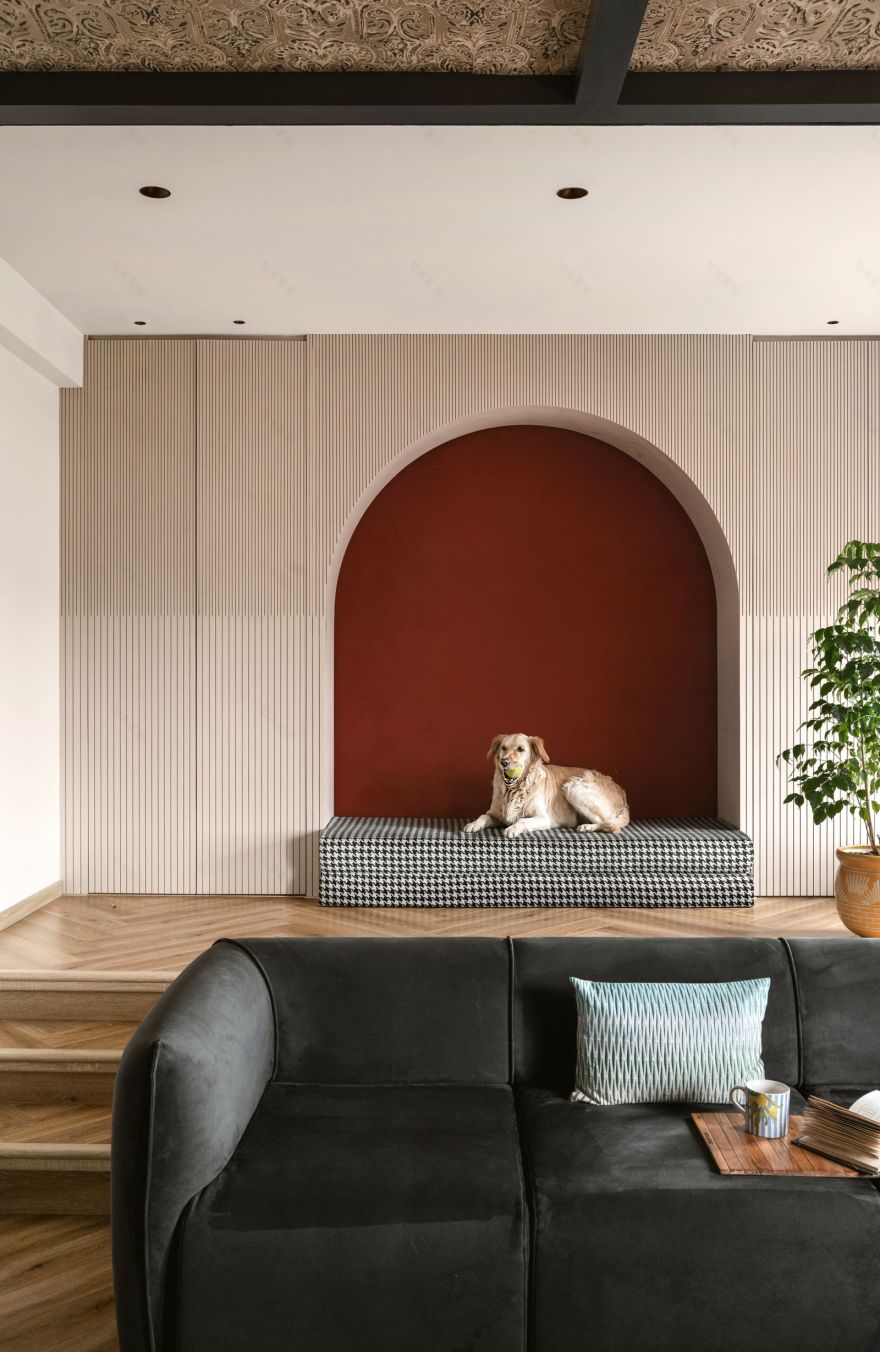
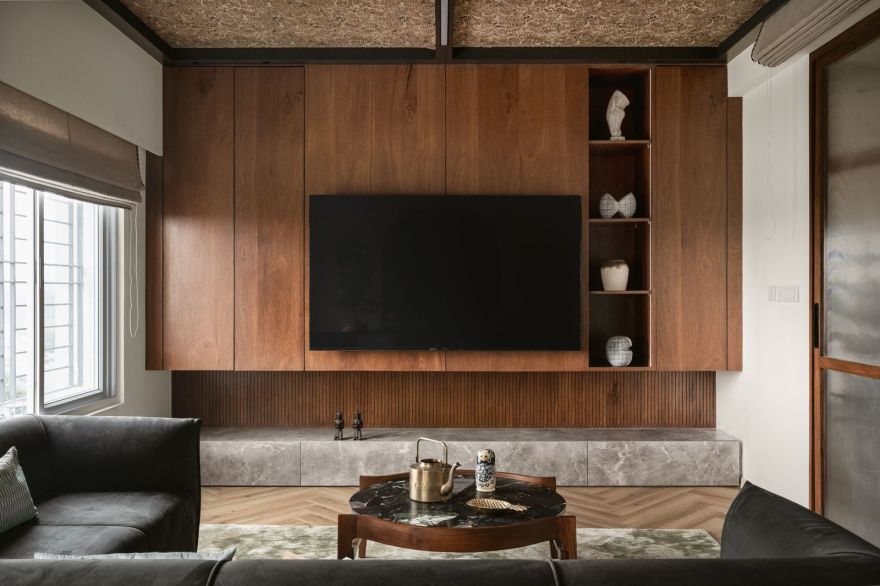
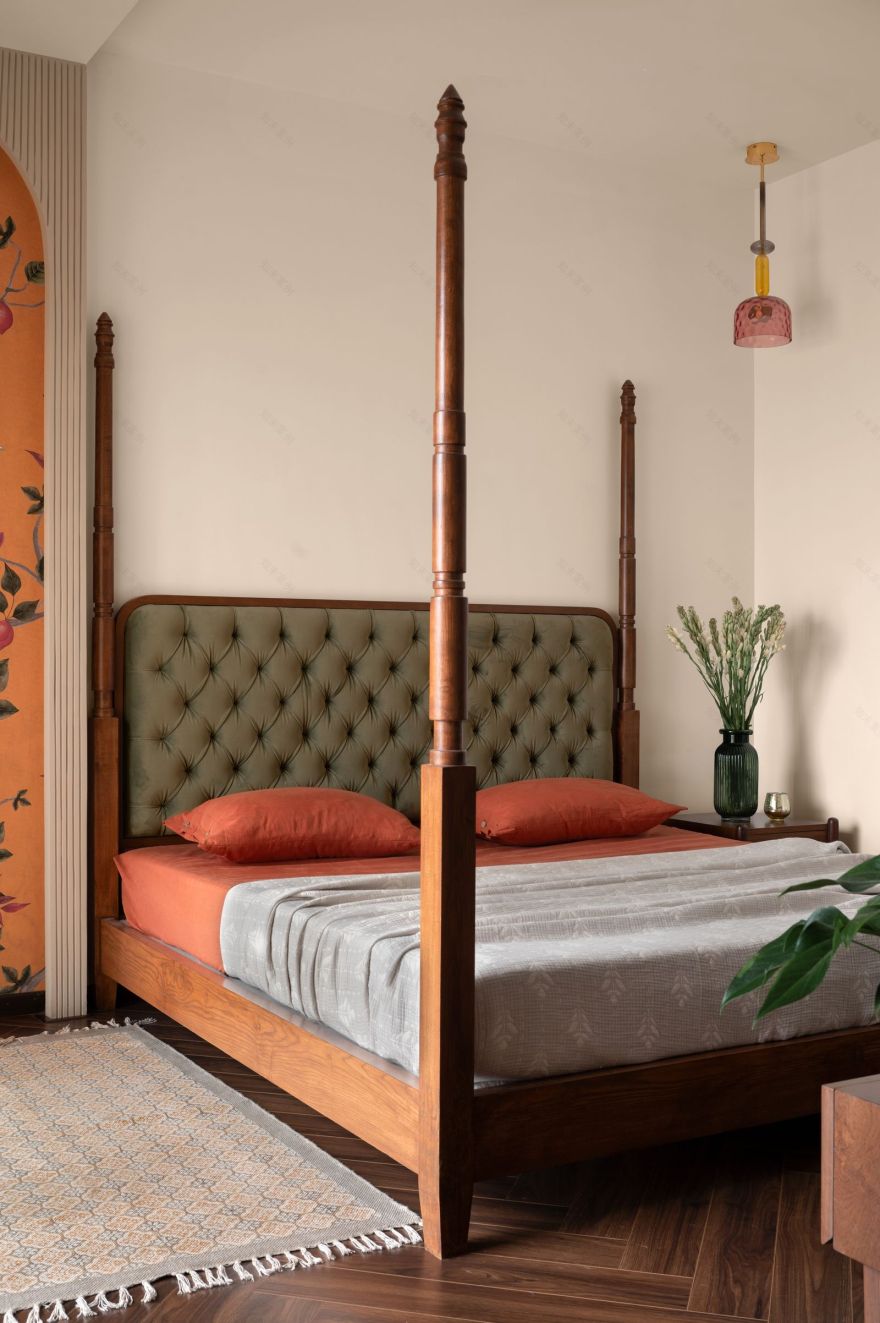


Arched motifs recur, be it in the wall niche of the entertainment zone, the small niches with memorabilia in the living room or in the form of the evocative brick cladding appearing in the informal living room. Particularly close to Akarsh’s heart, this brick cladding becomes a visual anchor, positioned to guide the eye towards the open dining and adjacent semi-foyer. The bedrooms follow the tenets of modern minimalism as well, while tactile surfaces, earthy tones and a dreamy interaction of sunlight with natural materials aims to create an immersive experience that espouses tranquility.
For someone who designs contemporary spaces with transitional influences, Akarsh—who straddles and layers modern functionality, inspiration from cultural roots and an earthy aesthetic here—thoroughly enjoyed creating this deeply personal home. As Akarsh puts it, the design’s charm lies in its ability to weave a story of harmony between tradition and modernity.
南京喵熊网络科技有限公司 苏ICP备18050492号-4知末 © 2018—2020 . All photos and trademark graphics are copyrighted by their owners.增值电信业务经营许可证(ICP)苏B2-20201444 苏公网安备 32011302321234号
苏公网安备 32011302321234号客服
消息
收藏
下载
最近