

创作上传
VIP
收藏下载
登录 | 注册有礼
查看完整案例

收藏

下载

分享
Cowshed in Devon, United Kingdom by David Kohn Architects

Middle Rocombe Farm has evolved since Peter Redstone and Suzanne Blank Redstone moved in in 1974, becoming the UK’s first organic ice cream producer in 1987, then the base for The Art Barn in 2000. In the last decade, the farm has begun its transition into
a residential community, overseen by David
Kohn Architects

The generous proportions of the existing cow barn proved to be suitable for
a large-scale art studio, with diffused north light filtering through the glazed facade

The original blockwork walls of the humble shed have been absorbed into the house’s new walls
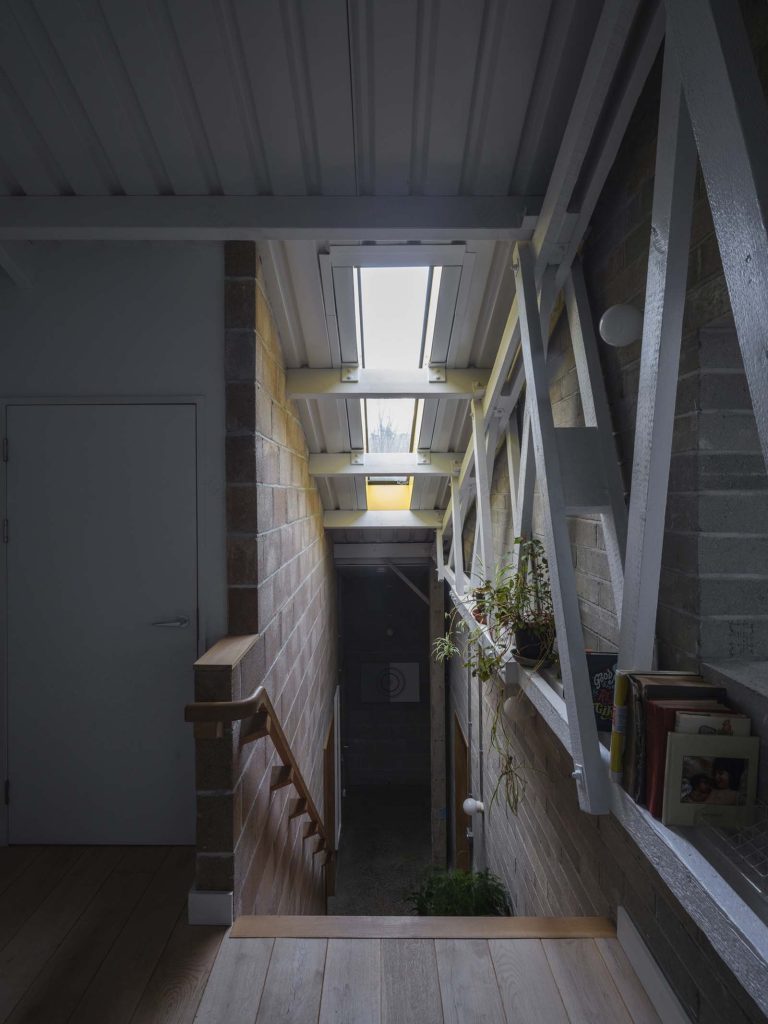
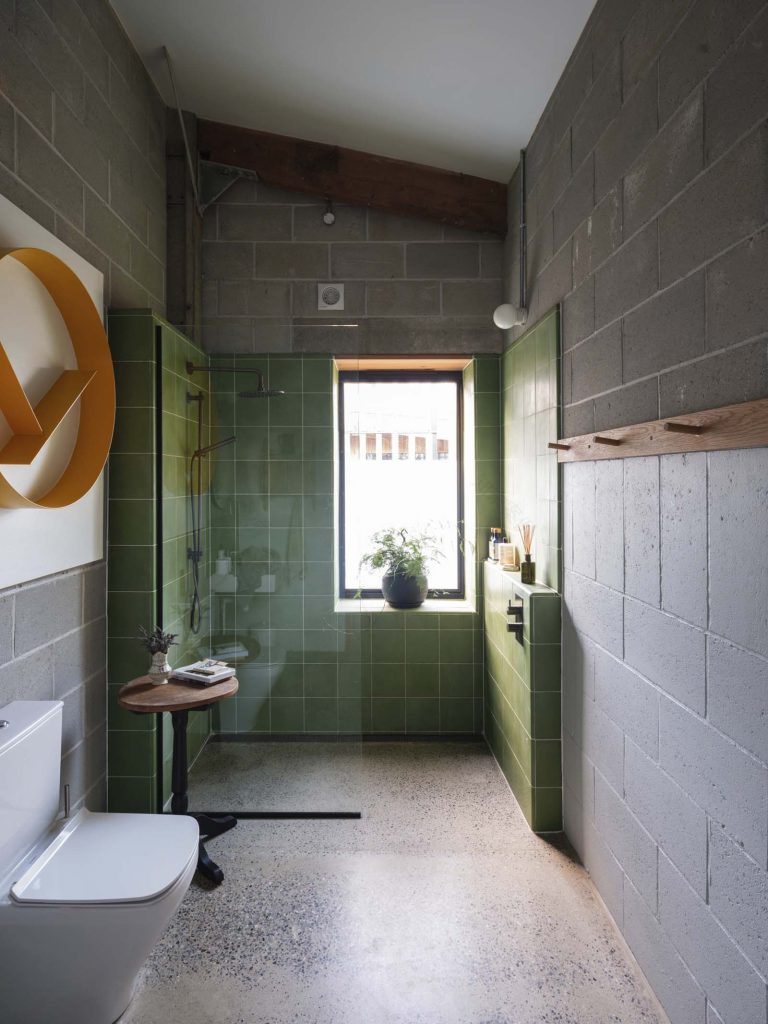
The house is future‑proofed, with
a focus on ground-floor bedrooms and bath and shower rooms (next)

Additional bedrooms are tucked up the stairs

The barn’s lean-to also accommodates a generous kitchen, with a large semi-circular window looking out over the original cow path
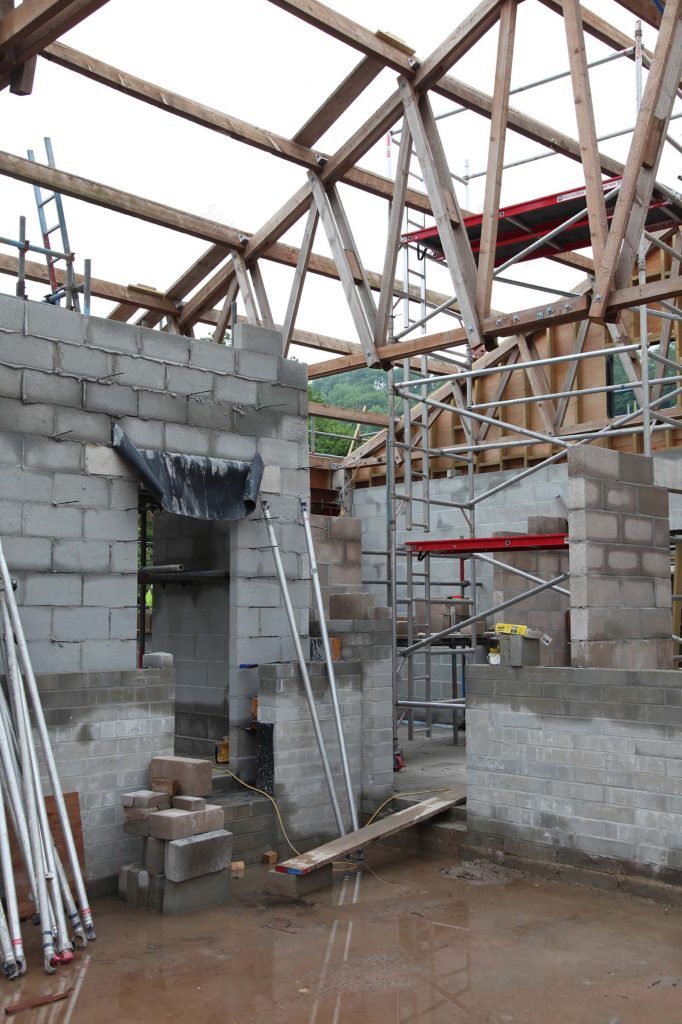
The conversion of a barn into a home and studio by David Kohn Architects is the last puzzle piece in the transformation of Middle Rocombe Farm into a residential community
This project has been commended in the 2023 AR New into Old awards: read about the full shortlist
In a fold between close‑knit Devon hills exists a livelihood first recorded in the Domesday Book of 1086. Middle Rocombe’s most recent residents include Peter Redstone and artist Suzanne Blank Redstone, who have worked the farm since 1974. Until recently, their old farmhouse and adjacent cottage co‑existed with workaday structures including a milking parlour, a cowshed constructed in 1979, and a small plant for the manufacture of ice cream.
Small farming is in steep decline across the UK and, in common with many smallholdings, Middle Rocombe’s story is one of continual, inventive diversification. Among the first farmers to gain organic accreditation in 1986, the couple sought to take their produce direct to new markets, resulting in the UK’s first organic ice cream. When the ice cream business was sold to dairy giant Yeo Valley in 2000, the couple reinvented their holding as The Art Farm – a community‑focused annual art festival that made use of redundant barn space to develop local artist networks. Only recently did the pair’s thoughts turn to a succession plan. Rather than upping sticks, they decided to stay put and reinvent their holding as a small residential community.

Despite permitted development rules, planning wasn’t a shoo‑in. With local council sentiment running counter to rural infill development, inevitably the spotlight would fall on the design. The couple came across David Kohn Architects (DKA) through their son, curator Elias Redstone, whose interest in the architectural outcomes of the
development model – a legal framework supporting architects to develop housing for multiple investors – of cities like Buenos Aires, chimed with theoretical preoccupations Kohn was exploring as a teacher at schools including London Met. Models such as custom build, where an architect‑developer outlines a proposition before building to individual order, offered the promise of architectural agency in return for managing risk.
Drafting Middle Rocombe’s next chapter, the DKA masterplan reinvented the farmyard as a community courtyard, retaining the spirit of a working farm. In favour of children’s play and neighbourly get‑togethers, parking was relegated to a separate site. Shared infrastructure such as a bio‑digester was introduced along with a new language of rough‑hewn walling in the vibrant local red sandstone, echoing the hue of the soil. The psychology of neighbourly proximity is managed by the plan’s astute principle of semi‑guarded, wall‑like courtyard frontages to some of the converted buildings, which on the reverse open out freely to surrounding landscape. The freehold plots with planning permission were marketed through agents including The Modern House, with covenants preventing holiday and Airbnb lets, a proviso Peter Redstone describes as ‘a statement of intent’.

The first site to be sold was the Ice Cream Factory, with DKA also commissioned by the purchasers to significantly extend the single‑storey cob structure. Establishing a benchmark of architectural quality, the building, completed in 2018, creates a discreet rural idyll for a furniture‑designing couple – a sophisticated essay on ordinariness and the simple life, with apparently run‑of‑the‑mill materials worked hard to attain the status of art. DKA also worked with the purchasers of one of the barn freeholds, with a further two plots developed by local architects.
Middle Rocombe is now populated by a total of seven households, among their ranks 11 children – some old enough to attend local schools – a local hospital doctor and several designers. While a development such as this is not going to solve the affordability crisis of rural housing in a county with a median income well below the national average and where rural poverty levels are a matter of concern, or halt the inexorable march of the mega farm, it does posit the interesting idea that people in the countryside might live more collectively.
In anticipation of the sale of their farmhouse home, the semi‑derelict milking parlour at the south‑east corner of the courtyard had been earmarked for the couple. But during protracted sales negotiations planning law changed, introducing the possibility of converting the inadvertently long‑life, loose‑fit and low‑energy cow barn into a home and studio.

For anyone with a passing appreciation of the place‑time continuum of English rural life, the phrase ‘barn conversion’ is likely to strike dread and visions of emasculated buildings, gravel and equestrian fencing. The Cowshed is different: more Gordon Matta‑Clark than middle England, it suggests a new adaptive reuse of industrial‑scale sheds commonly added to farms in the late 20th century. Constructed over 14 months and successive lockdowns, DKA’s new house shines out across a rake of original concrete cow path. A patched and reinforced gable‑end truss reads as a skeletal pediment and the archetypically agricultural broken‑gable roofline is emphasised by the thick black underline of a galvanised steel fascia board. The lean‑to, re‑walled in local concrete blockwork, is punched with a large semi‑circular window – a clear signifier of ‘design’.
The footprint of the new house was straightforwardly dictated by budget, with the result that 296m
of inhabitable space is set back beyond an L‑shaped loggia, forming a tall southerly front porch and an outdoor sculpture yard to the west. The vibe might be
circa 1968 but in plan the house reads like a Roman
: a central atrium of a double‑height, glazed art studio surrounded by the loggia and two wings of living accommodation. The underlying ethos is accessible single‑floor living, with future‑proofed extra‑wide door openings, accessible bathrooms and ramp alternatives as standard, but two guest bedrooms reached via a stately timber stair have also been tucked under the eaves.
Daylight is introduced into the deep plan by a sequence of skylights in primary shapes, including a giant circular opening angled above the studio. In a rumination on artist Blank Redstone’s preoccupations with light, colour and perception, and calling to mind Josef Albers and the Bauhaus, the punched reveals are picked out in bright hues so that on sunny days spaces are suffused with extraordinary colour‑inflected light.
‘The phrase “barn conversion” is likely to strike dread and visions of emasculated buildings, gravel and equestrian fencing’
Through the combination of an improved thermal envelope and the energy generation of a ground source heat pump and photovoltaics, the house achieves operational energy of 27kWh/m
/year, meeting the RIBA’s 2030 Climate Challenge (less than 35kWh/m
/year). By using the existing structure and new locally grown cedar cladding (which also offsets through sequestered carbon), the total embodied carbon is 623kg per square metre.
Kohn explains he is interested in ‘messing with the register’, and this building’s pragmatism does indeed strikingly contrast with the ‘high culture’ of its multiple layers of ideas and motifs. In the manner of Colin Rowe’s
– or perhaps Isaiah Berlin’s Fox who ‘knows many things’ – the Cowshed is invested with the ability to spark a multitude of architectural connections that veer from Vitruvius to Venturi via Bo Bardi. But you can take your pick – what to one person will be a Diocletian window referencing Louis Kahn, to another will simply be a friendly shape. Some will see the familiar farmyard staple of breeze blocks, others the influence of Aldo van Eyck or Herman Hertzberger. Of his polysemic approach, Kohn says: ‘It’s the idea that quality in architecture might actually lie in the breadth of enjoyment: a democratic model without barriers to entry.’

Despite the masterplan, the definitive placemaking move at Middle Rocombe turns out to be its final one – at least for now. Articulating the spirit of a place where farming has co‑existed with art practice over the course of half a century, the Cowshed faces the future straight on, demonstrating how inventive adaptations of hardworking, flexible structures should be par for the course in rural contexts too. The house is the first thing you see on arriving at the hamlet. In opening up its primary elevation to the activity of making art, it broadcasts and celebrates the continual change that unites a small farm with civilisation as a whole – hinting at the importance of creative industries to future rural economies, and communicating, like the covenants of sale, every intention of a positive future.
南京喵熊网络科技有限公司 苏ICP备18050492号-4知末 © 2018—2020 . All photos and trademark graphics are copyrighted by their owners.增值电信业务经营许可证(ICP)苏B2-20201444 苏公网安备 32011302321234号
苏公网安备 32011302321234号客服
消息
收藏
下载
最近