

创作上传
VIP
收藏下载
登录 | 注册有礼
查看完整案例

收藏

下载

分享
Common sense: Marmalade Lane in Cambridge, UK by Mole Architects

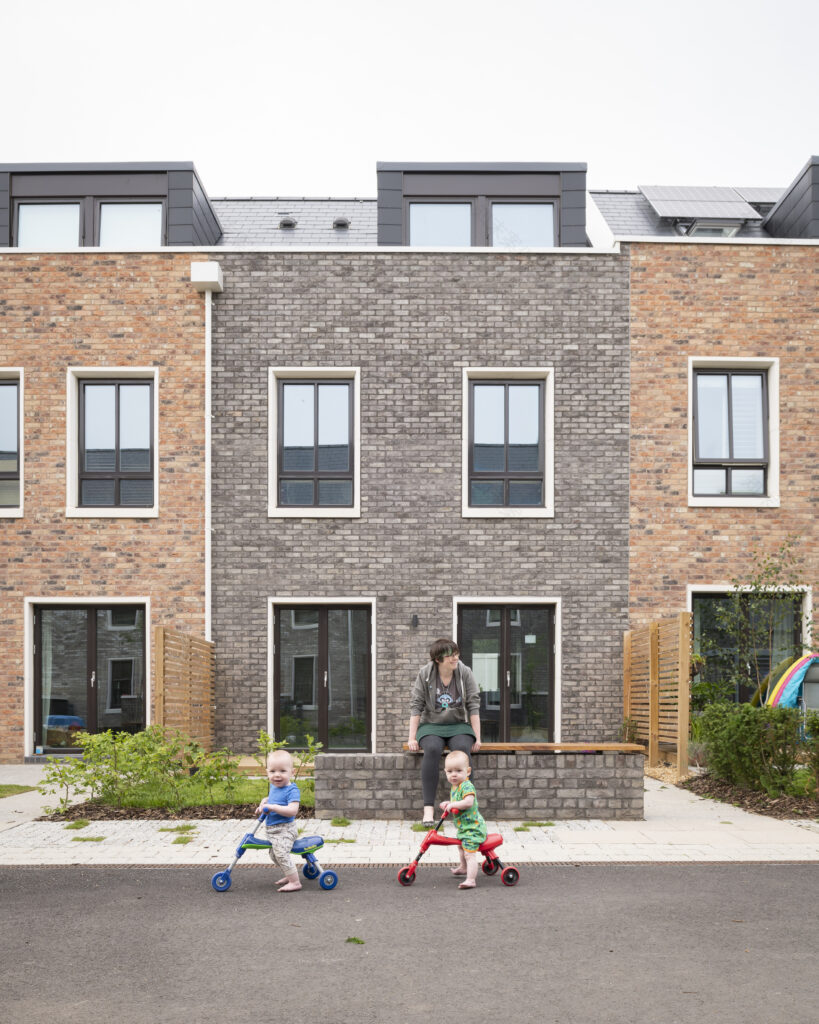
The lack of repressive boundaries is a principal feature of the housing


Central to Marmalade Lane, the double-height Common House is light, spacious and overlooks a shared garden


Marmalade Lane by Mole Architects -- a net zero carbon development of 42 homes in Cambridge, England

The three house types – which can be customised with a range of layout options – are supplemented by an apartment building, adjacent to the Common House

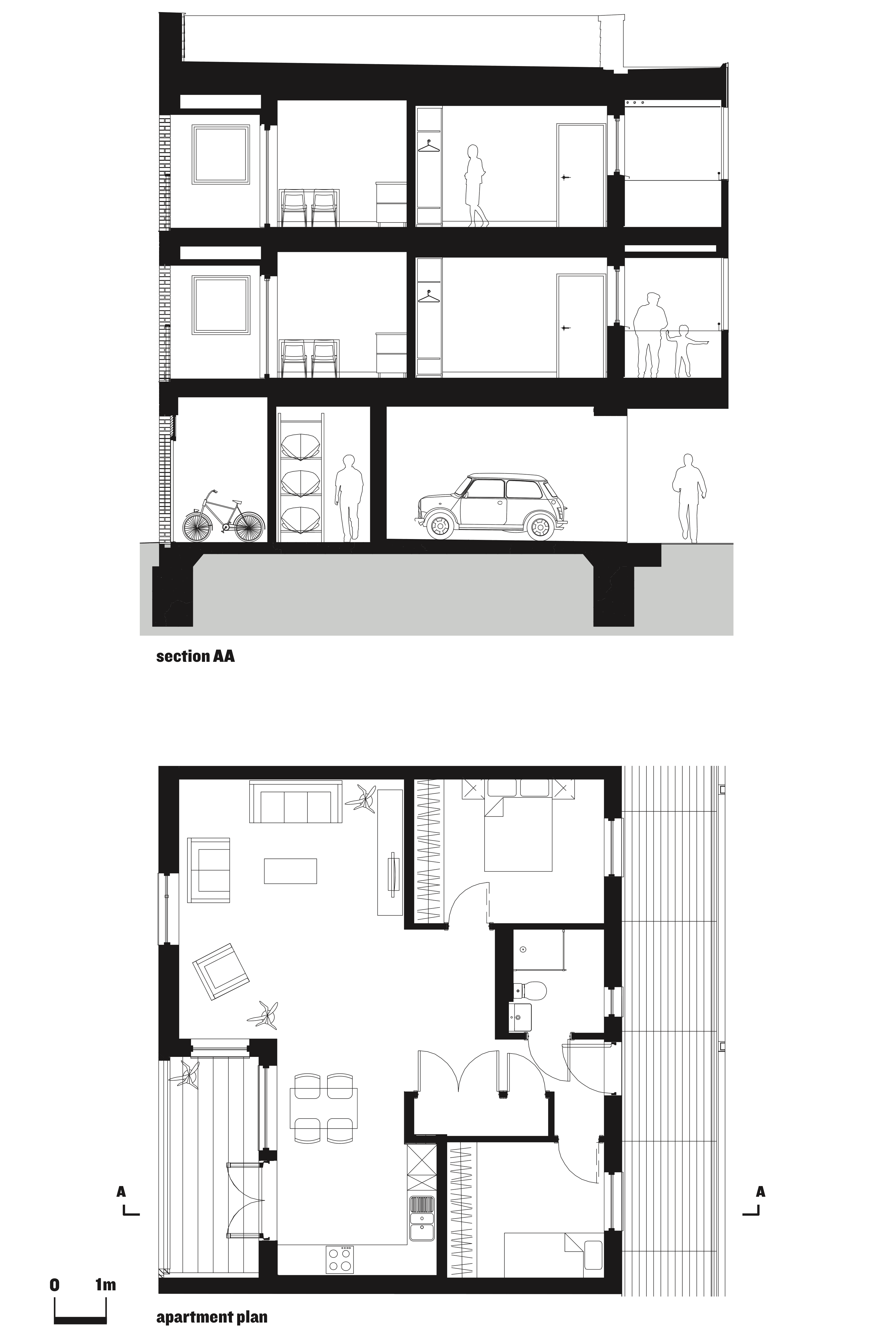
The apartments are accessed by long communal balconies, with private loggias to the rear


Shortlisted for the MJ Long Prize for Excellence in Practice 2020: Mole Architects’ Alice Hamlin skilfully delivers four dwelling types in Marmalade Lane, Cambridge, in a rare British example of co-housing
There’s a by now fairly well-worn cliché that whenever a new unorthodox housing project is finished, the reports all ask: ‘could this be the solution to the housing crisis?’. But beyond the tabloid trope, the answer is almost always ‘no’, for all the usual reasons of land scarcity, development control, policy constraints and the obscene cost of housing in general. But it testifies to the general desperation for something to break the deadlock that we hope that each new scheme might be the one.
Marmalade Lane in Cambridge is one such candidate for hyperbole, although one might not know it from first appearances. However, since its completion in December 2018, it’s been showered with awards and has featured across the media as a shining example of what it’s possible to achieve in the production of British housing. Designed by Mole Architects, it’s a small development of 42 homes, a mixture of houses and a few flats, laid out in an unobtrusive semi-suburban arrangement of terraces. The timber structures are clad in a relaxed variety of bricks, contributing to a gentle picturesque quality, clearly modern yet careful to stay on the right side of tradition: windows are vertical, and behind the gables are pitched roofs.

The most obviously innovative feature of Marmalade Lane is its distinctly un-British co-housing set up. Spatially this is manifest in a ‘Common House’ at the centre of the community, which contains a generous hall, shared kitchen, social and play spaces, spare bedrooms, shared workshops and storage, and a far more generous communal arrangement of open space than is the norm. Every household in the development is a part of the co-housing company who hold the freehold for the land, meaning they have a direct stake in the running and upkeep of these shared facilities.
Co-housing is reasonably common in mainland Europe, particularly in places like Switzerland where it is a model supported by the state, and comprises almost a quarter of the housing stock in Zurich. But in Britain, where any sense of mutual obligation tends to stop at a family’s front door, and where the right to profit from land is sacrosanct, the possibilities for this kind of tenure are often vanishingly small, with only around 20 co-housing schemes so far built in all of the UK.
One of the more remarkable things about Marmalade Lane is that the project was created by working within the British development industry, rather than attempting a radical break outside it. Typically for co-housing, Marmalade Lane began with a small number of enthusiasts coming together to form a group, with the aim of finding a site in Cambridge, and attracting funding to make it all happen. But where that often leads to decades of waiting for the right moment, the 2008 crash gifted them an opportunity when a developer’s purchase of a greenfield housing site fell through. A sympathetic ear in the council agreed to give the co-housing group the right to develop. They were then able to seek out a developer willing to take it on, with the understanding that the units would be sold directly to the members of the co-op.
‘The project wasn’t as unorthodox as it first appears’, says Alice Hamlin, the project architect. ‘The involvement of an experienced developer gave us confidence that sensible decisions were being made at the right time.’ The issue isn’t that co-housing groups are incapable, but self-build is very difficult, and the endlessly risk-obsessed British system finds it impossible to do anything that even remotely deviates from their normal way of working: ‘Until community-led housing becomes more familiar the air of normalcy can be helpful’, says Hamlin.

A sense of radicalism encroaching on normalcy is everywhere at Marmalade Lane: the gardens lack extensive boundaries, opening directly to the shared green space, at the centre of which lies a fragment of ancient boundary wall from when the land was once orchards. Inside the common spaces, there’s an almost uncanny sense of overlap, as the elements of domesticity – couches, rugs, favourite books – co-exist with furniture of public buildings, such as fire escape signs, door closers and interior lighting. The main common room might feel like a community or church hall, but has a fireplace around which the residents can congregate. There is a professional stainless-steel kitchen which nonetheless has scribbled shopping lists on a board on one door. For a psyche resigned to there being no collective space between the home and the crowd, it’s almost eerie in places: intimate yet impersonal, essentially warm but profoundly odd.
One benefit of having future occupants involved in the project from the very beginning is that a great deal of variation has been built into the houses. Beyond the differing brick types chosen by each household, there is substantial variation in house types, floor plans and fittings. The requirements and specifications of the communal house were likewise subject to discussion and negotiation with the members. ‘The custom-build element gave the residents choice in a way that was manageable to deliver’, says Hamlin, ‘and by incorporating homes of different types and sizes into the scheme, has supported the group in attracting the diversity of people that is valuable for strong communities to form.’
With co-housing members boasting expertise in law as well as experience of climate justice campaigns, it isn’t surprising that the manual that governs the ways in which decisions are made at Marmalade Lane encompassing a mixture of leasehold documentation and the consensus decision-making familiar from Quaker meetings or the Occupy camps. ‘Managing the complexity of the project required commitment from everyone involved’, Hamlin agrees. ‘The residents’ group were very well organised, and understood the need for decisions to be made in good time.’
The occupants of Marmalade Lane are homeowners – properties are bought at market rate, which presents as much of an issue of access as any other development. But the level of enthusiasm and maturity required to take part, to regularly cook communal meals, to clean and maintain, to attend the meetings and make communal decisions, means that it’s a particular kind of person who tends to sign up. In Marmalade Lane’s case, it seems to be largely educated professionals, and it being Cambridge this means academics and tech workers are highly represented.
‘One thing that is clear from talking to the residents at Marmalade Lane is the value of the shared resources in supporting their burgeoning community’, says Hamlin. ‘Especially in their ambition to live more lightly on the planet.’ This ties in well with Mole’s work in general, which is consistently ambitious in its attempts to move forward with energetically sophisticated architecture. At Marmalade Lane the houses are built with the Trivselhus system, a prefabricated timber method that approaches Passivhaus standards, along with a variety of other systems for reducing energy demands, while the community are pushing this along by purchasing shared electric vehicles, growing food on site, and even looking after endangered hedgehogs.
At a time when there are a lot of new ideas and radical thoughts floating around but looking for an outlet, it is fortunate to work on a socially ambitious project that is now a built exemplar of doing things differently, and there is the hope that Marmalade Lane can set a precedent that makes it easier to create more. By proving that a project like this can be not just socially successful but low in financial risk, developers and other players in the construction industry may well begin to take it seriously as part of the housing mix.
But, is Marmalade Lane the solution to the housing crisis? Clearly not, although it is ambitious and heartening, and its residents certainly have found something that they were searching for. It is a little sobering to leave the community and pass through the surrounding landscapes of the furthest edge of Cambridge, surrounded by cynical post-2000s housing developments, humdrum business parks, and the swathe of somewhat neglected yellow brick low-rise council estates that make up so much of the local landscape.
There’s a long way to go to change the housing situation and the challenges are huge, but every possible opportunity needs to be taken, and Marmalade Lane is an impressive achievement. ‘I would love to work on another co-housing project’, says Hamlin, ‘and I’m interested in learning more from processes used by the Marmalade Lane group that enable them to work together effectively.’
Marmalade Lane, Cambridge, UK
Architect: Mole Architects
Project architect: Alice Hamlin
南京喵熊网络科技有限公司 苏ICP备18050492号-4知末 © 2018—2020 . All photos and trademark graphics are copyrighted by their owners.增值电信业务经营许可证(ICP)苏B2-20201444 苏公网安备 32011302321234号
苏公网安备 32011302321234号客服
消息
收藏
下载
最近