

创作上传
VIP
收藏下载
登录 | 注册有礼
查看完整案例

收藏

下载

分享

Urban forest instead of concrete. This is how Paris’s Place Catalunya came to life
Mateusz Markowski
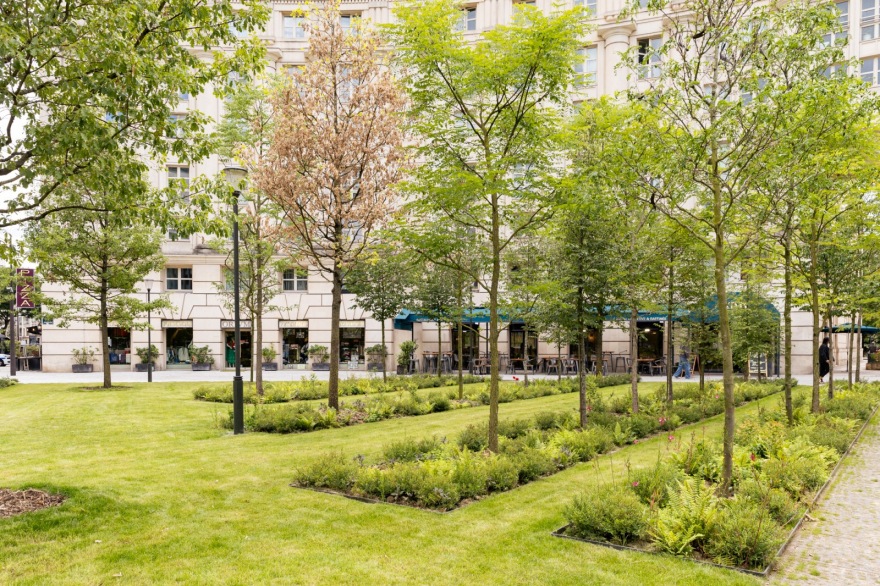
Paris is implementing one of the most ambitious projects of recent years. In 2022, the municipal authorities announced the start of the greening of the capital, with the aim of achieving climate neutrality by 2050 and covering more than half of its surface with vegetation. The first effects are already visible. In the winter of 2023 to 2024, Catalan Square underwent an impressive metamorphosis, transforming from a concrete roundabout into an urban forest. As part of this project, 470 trees were planted, of which 270 were large and medium-sized specimens and 200 were young trees between 2 and 4 years old. As a result, concrete paving gave way to more than 4,000sq m of greenery. The cost of the investment was €10 million.
Urban forest in Catalan Square – benefits
The newly created urban forest draws inspiration from the natural forests of the Île-de-France region. The trees planted are dominated by native species such as hornbeam and oak. Species more resistant to climate change have also been introduced, such as holm oaks, mossy oaks and Montpellier maples. By using a variety of vegetation layers, including large and small trees, as well as shrubs and ground cover vegetation, a complete ecosystem has been created to encourage biodiversity. The creation of an urban forest has numerous benefits for both the environment and residents. The vegetation helps to lower the ambient temperature, reducing the urban heat island effect by up to 4°C, which significantly improves living comfort on hot days. In addition, trees act as natural air filters – they absorb carbon dioxide and other pollutants, helping to improve air quality. The new green space also helps to increase biodiversity, creating favourable conditions for the growth of many plant and animal species, thus strengthening the urban ecosystem.

Place Catalunya as a new space

Plan of the new square. Photo paris.fr
Carbon reduction and future plans
In order to reduce the carbon footprint of this development, a number of green solutions have been used. Most of the seedlings are sourced from local nurseries, reducing the emissions associated with transporting them. In addition, logistics were optimised, reducing the number of trucks used to transport materials. The project also relies on recycling, with up to 60% of the kerbs and 25% of the granite slabs coming from recycled sources. The urban forest project in Place Catalunya is part of a larger strategy to green Paris. In the near future, the infrastructure will be extended to nearby areas, including rue du Commandant René Mouchotte, where a forest promenade is being created.
Catalan Square past and present. Photo: Google Maps and Guillaume Bontemps/paris.fr




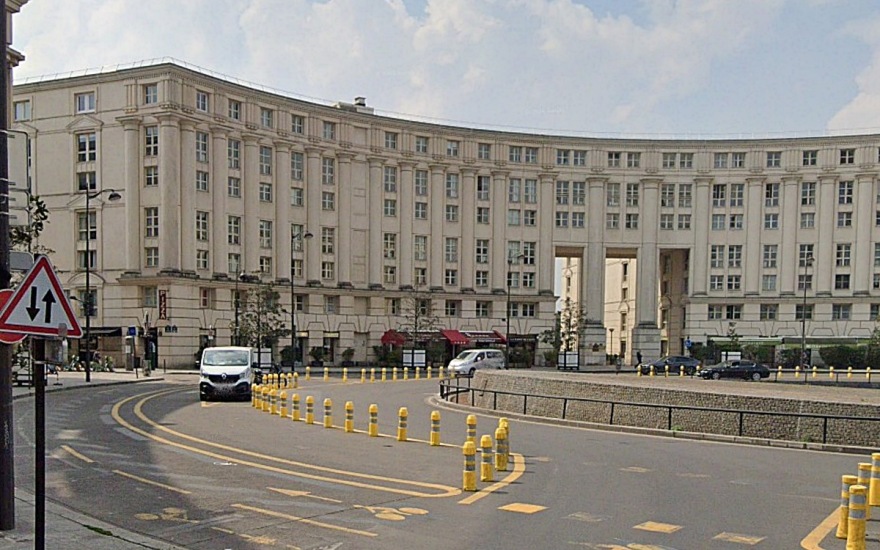
SQUARE BEFORE REDEVELOPMENT


SQUARE AFTER RECONSTRUCTION




南京喵熊网络科技有限公司 苏ICP备18050492号-4知末 © 2018—2020 . All photos and trademark graphics are copyrighted by their owners.增值电信业务经营许可证(ICP)苏B2-20201444 苏公网安备 32011302321234号
苏公网安备 32011302321234号客服
消息
收藏
下载
最近