

创作上传
VIP
收藏下载
登录 | 注册有礼
查看完整案例

收藏

下载

分享

翻译
Architects:CHAWOOCHAWOO
Area:212m²
Year:2024
Photographs:Jaewoo Lee,Jangsup Cha,CHAWOOCHAWOO
Lead Architects:Yoonji Cha, Jihyo Woo
Category:Library,Houses
Lead Team:Jihyo Woo
City:Gangneung-si
Country:South Korea

Text description provided by the architects. Haksanjae is a private library designed to accommodate approximately 10,000 volumes. In addition to the collection space, it includes a workspace for writing and lecturing, as well as a modest residential component for occasional stays. The client, a former university professor of history, sought a space in which to house an extensive personal book collection following retirement.

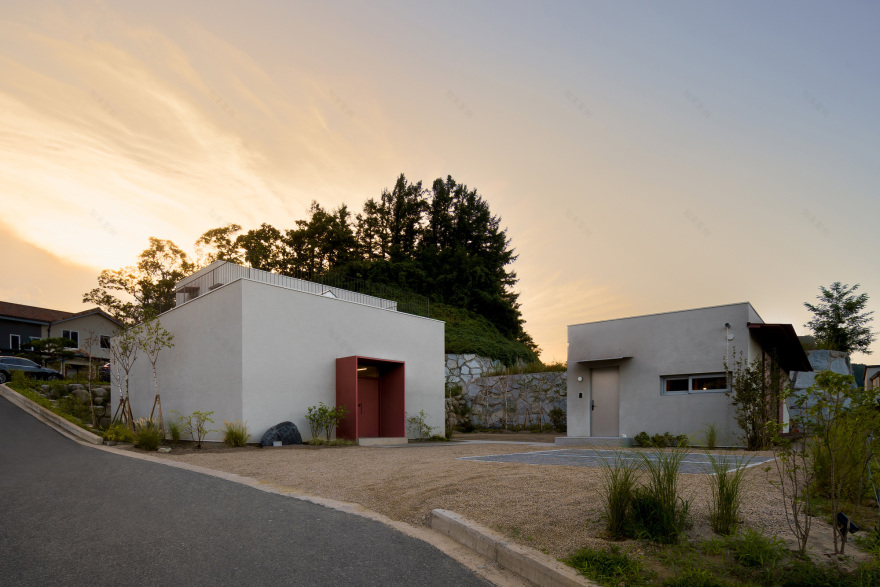
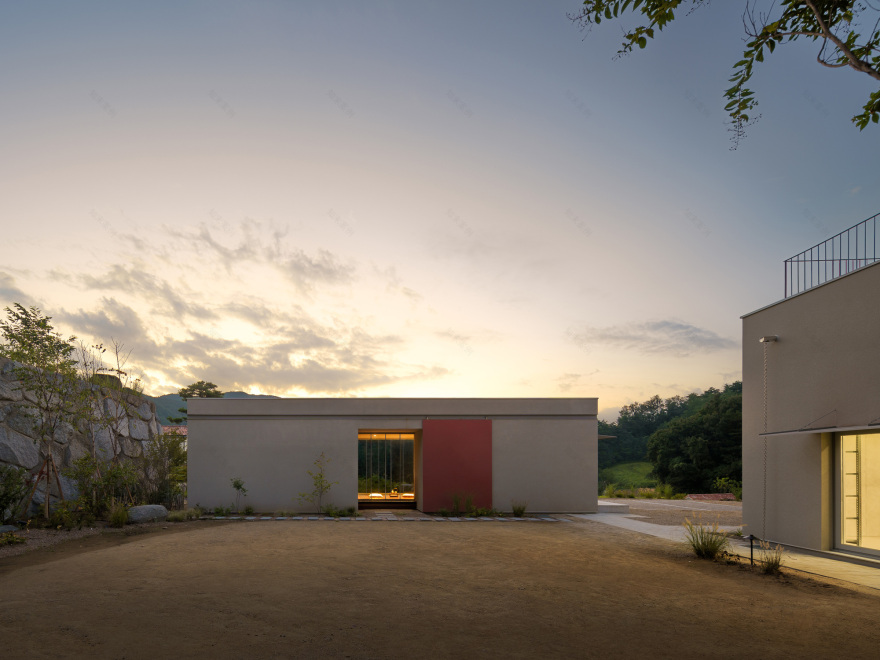
Two sides of the site are surrounded by high retaining walls, while the eastern and southern peripheries open toward a dramatic natural backdrop of mountains. The buildings are arranged along the perimeter, framing a central courtyard that feels both protected and secluded. This inward-facing configuration, combined with the enclosing topography, generates a quiet atmosphere—shielded from external view yet open to sky and nature.


The building designated for intellectual work is named Sarangchae, while the residence is referred to as Anchae, terms rooted in traditional Korean Hanok architecture. Consistent with their traditional typology, the two volumes are physically separated, with no enclosed connection between them. This spatial separation honors the principle of privacy and mutual respect embedded in Hanok design. Furthermore, this arrangement offers the client a moment of pause—a daily encounter with the outdoors, that fosters a deeper connection to the site's natural rhythms.
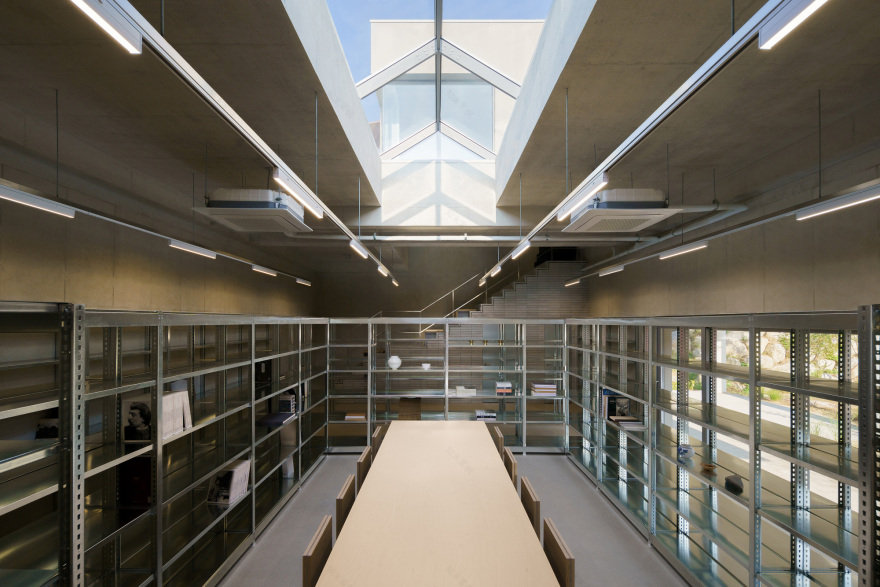


In the Sarangchae, the collection of ten thousand books served as the central design premise. To reduce potential damage from direct sunlight, fenestration was limited to the north façade—facing the courtyard—and skylights. The space was designed with a high ceiling to preserve a sense of vertical and volumetric openness, even when densely lined with bookshelves. The stairway to the second floor incorporates built-in seating elements, offering visitors a moment of rest or quiet reading within the circulation space.


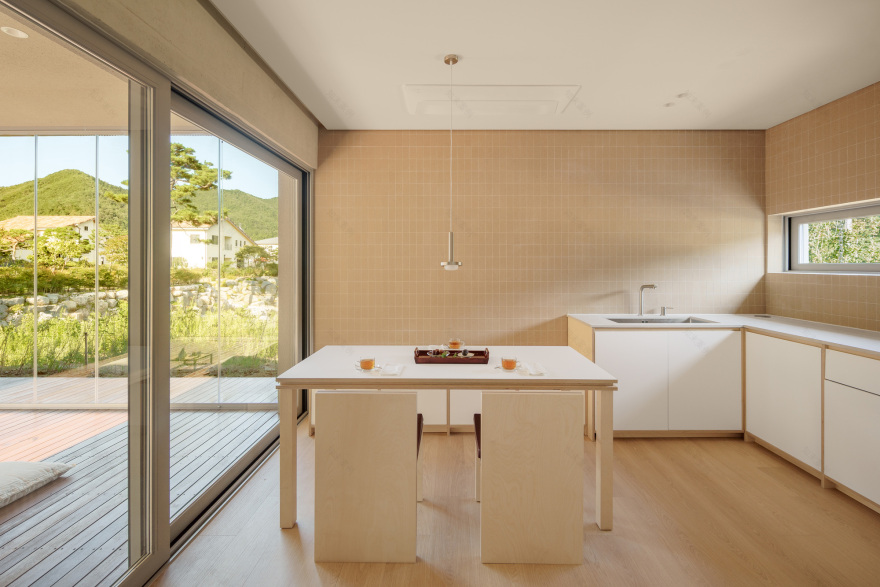
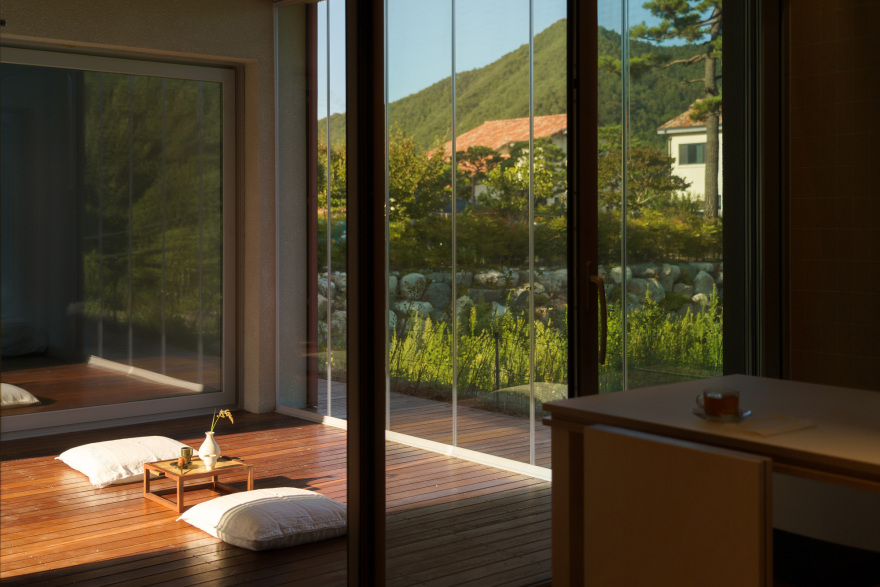
In the Anchae, a semi-outdoor transitional zone, reminiscent of the daecheong in traditional hanok architecture, was introduced between the kitchen/living area and the bedroom to embrace natural ventilation. The absence of fencing and the openness of the site posed concerns about privacy. As an alternative, the space was oriented inward toward the daecheong to optimize airflow and daylight penetration while maintaining enclosure. A continuous toenmaru (narrow wooden veranda) was installed along the eastern façade of the Anchae, facing the mountains to establish a contemplative, landscape-oriented edge. With red corrugated steel and spatial gestures recalling the client's former home, Haksanjae presents a familiar yet contemporary retreat for post-retirement life.

Project gallery






南京喵熊网络科技有限公司 苏ICP备18050492号-4知末 © 2018—2020 . All photos and trademark graphics are copyrighted by their owners.增值电信业务经营许可证(ICP)苏B2-20201444 苏公网安备 32011302321234号
苏公网安备 32011302321234号客服
消息
收藏
下载
最近