

创作上传
VIP
收藏下载
登录 | 注册有礼
查看完整案例

收藏

下载

分享

翻译

Australian studio Second Edition has completed the Love Shack, a flexible extension to a family home in Sydney made almost entirely from salvaged and repurposed materials.
Located on a triangular site in Bondi, the extension is designed by Second Edition to provide its client with a space that can function as a guest bedroom, study or lounge.
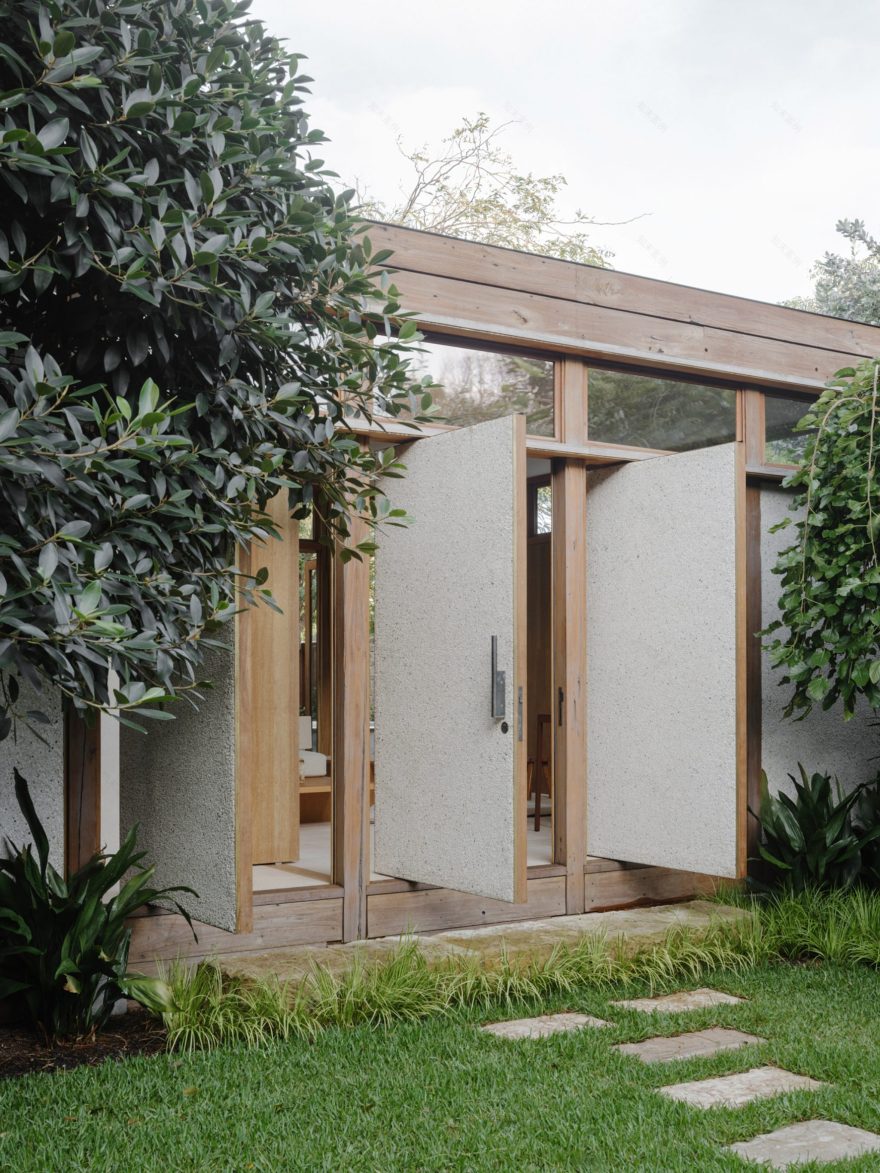
It opens out onto the surrounding leafy garden through a facade of rotating timber screens.
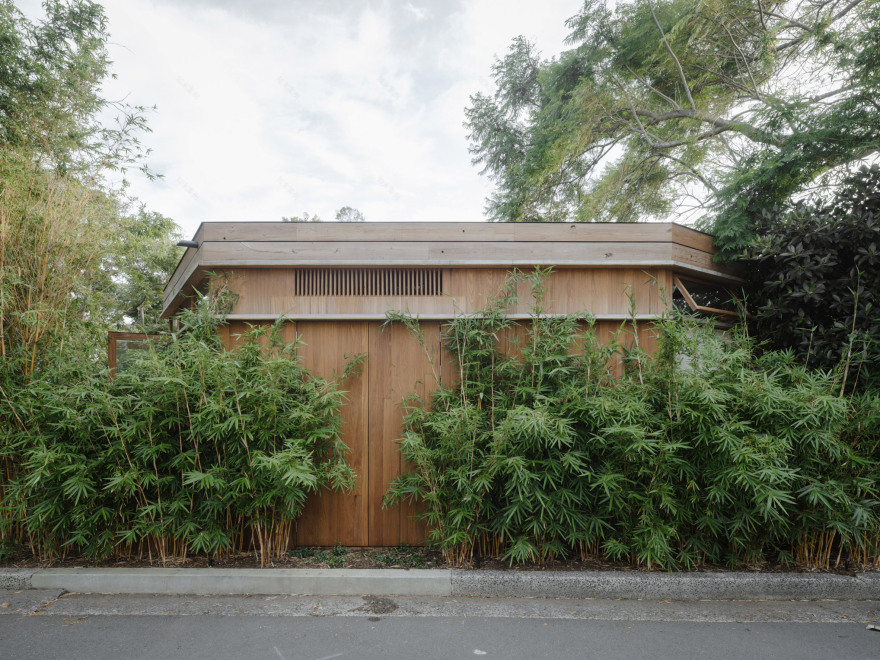
Second Edition has completed an extension to a family home in Sydney
Research-based practice Second Edition designed the project in an attempt to "reframe predetermined conceptions of how salvaged materials should look and perform".
"The construction process prioritised locally supplied and manufactured resources, ensuring that materials and skilled labour are sourced from within the greater Sydney metropolitan area," Second Edition co-founder Shahar Cohen told Dezeen.
"By keeping procurement local, the project reduces transportation emissions and strengthens the regional economy by supporting small businesses, tradespeople, and makers," she added.
Reclaimed materials are used throughout the project
Love Shack is elevated on foundations of over-poured concrete to mitigate the risk of flooding and framed by a 1.2-metre timber grid.
The grid's size was informed by standard timber sizes, and is assembled with mechanical fixings to facilitate easy removal or relocation in future.

A timber grid defines the extension
A close connection to the garden was one of the client's key requests, and so Second Edition flanked the flexible space with two rows of rotating timber screens.
Facing the garden, these rotating screens are glazed to provide views even when closed, while facing back towards the main home, they are solid to allow for privacy.

Rotating screens connect the interior to the garden
Externally, portions of the facade are rendered with crushed marble waste, and internally, reclaimed tallowwood floorboards have been repurposed as wall linings.
Timber off-cuts were also used to fashion bespoke light sconces, and all of the timber joinery and storage surrounding the bed was designed to be a "loose piece of furniture" that could be easily reconfigured or reused.
"Key materials were acquired through alternate procurement methods, including reclaimed roof rafters sourced via Facebook Marketplace and locally salvaged and crushed marble in Camden, which was repurposed for the render panels," Cohen said.
"Every detail, from remilled window hardware to handcrafted lighting from timber flooring offcuts, celebrates material history and craftsmanship," she added.

Crushed marble waste is used as a render on the exterior
Second Edition was founded by Cohen alongside Amy Seo. Their focus is on addressing the large amounts of construction waste that end up in landfills in Australia.
Other residential projects with a focus on material reuse include Shor House in Canada, designed by Measured Architecture as a "test bed of recycling", and a pair of semi-detached homes in the Netherlands, designed by V8 Architects to demonstrate how circular design principles can be applied to housing.
The photography is by Hamish Mcintosh.
南京喵熊网络科技有限公司 苏ICP备18050492号-4知末 © 2018—2020 . All photos and trademark graphics are copyrighted by their owners.增值电信业务经营许可证(ICP)苏B2-20201444 苏公网安备 32011302321234号
苏公网安备 32011302321234号客服
消息
收藏
下载
最近