

创作上传
VIP
收藏下载
登录 | 注册有礼
查看完整案例

收藏

下载

分享

翻译
Architects:Atlas Architects
Area:303m²
Year:2025
Photographs:Tess Kelly Photography
Category:Houses
City:Glen Iris
Country:Australia

Text description provided by the architects. Ripple is a sculptural, site-specific home designed as a forever residence for a couple approaching the next stage of life. The project challenges the constraints of suburban infill by embracing a bold, contextual response that combines sculptural form, aging-in-place functionality, and sustainable performance.

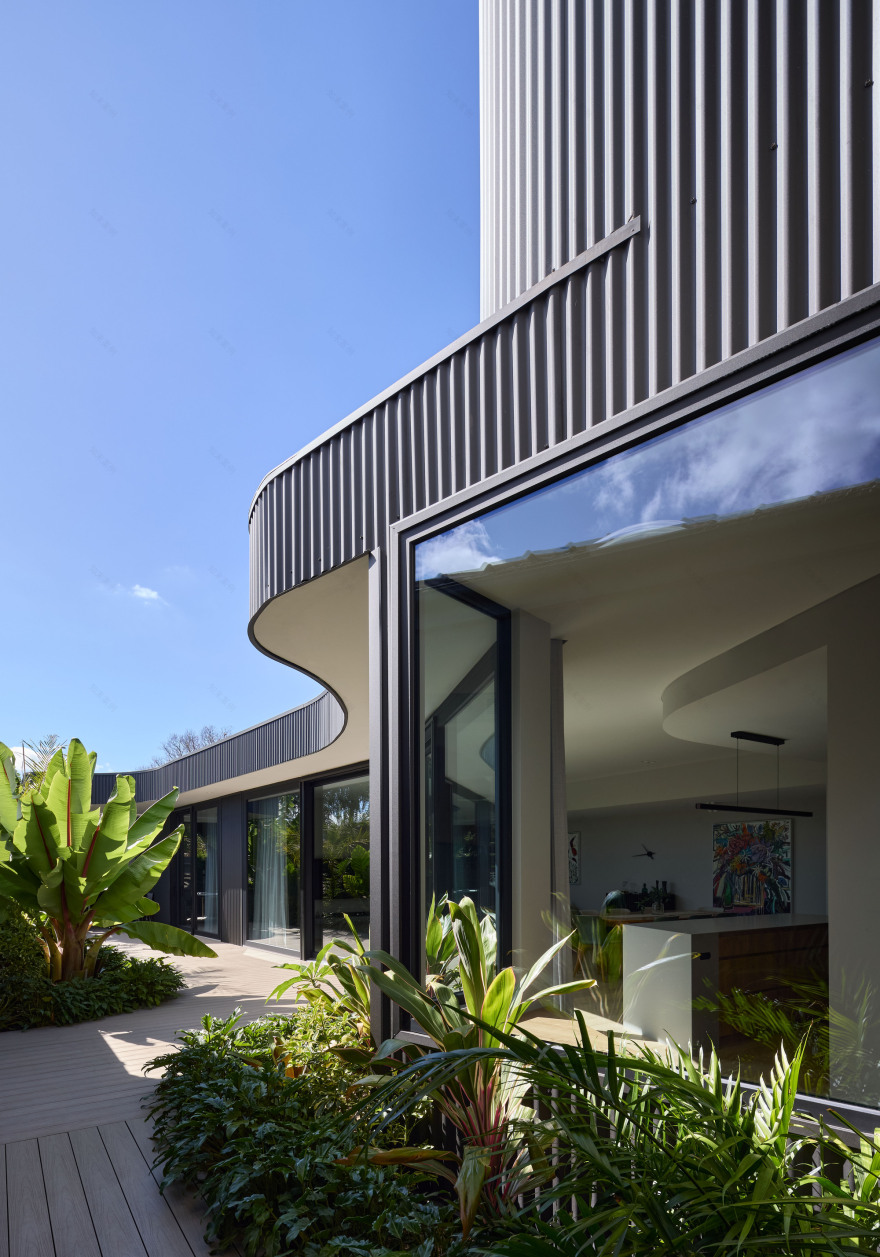
The brief called for a low-maintenance sanctuary where all essential living occurs on the ground floor, while the upper level accommodates guests or future live-in care. The architectural concept centres around a north-facing courtyard, with the plan bending gently to guide circulation and encourage visual connections between indoors and outdoors. This approach breaks from the long, narrow nature of the site, introducing moments of openness, calm, and privacy.
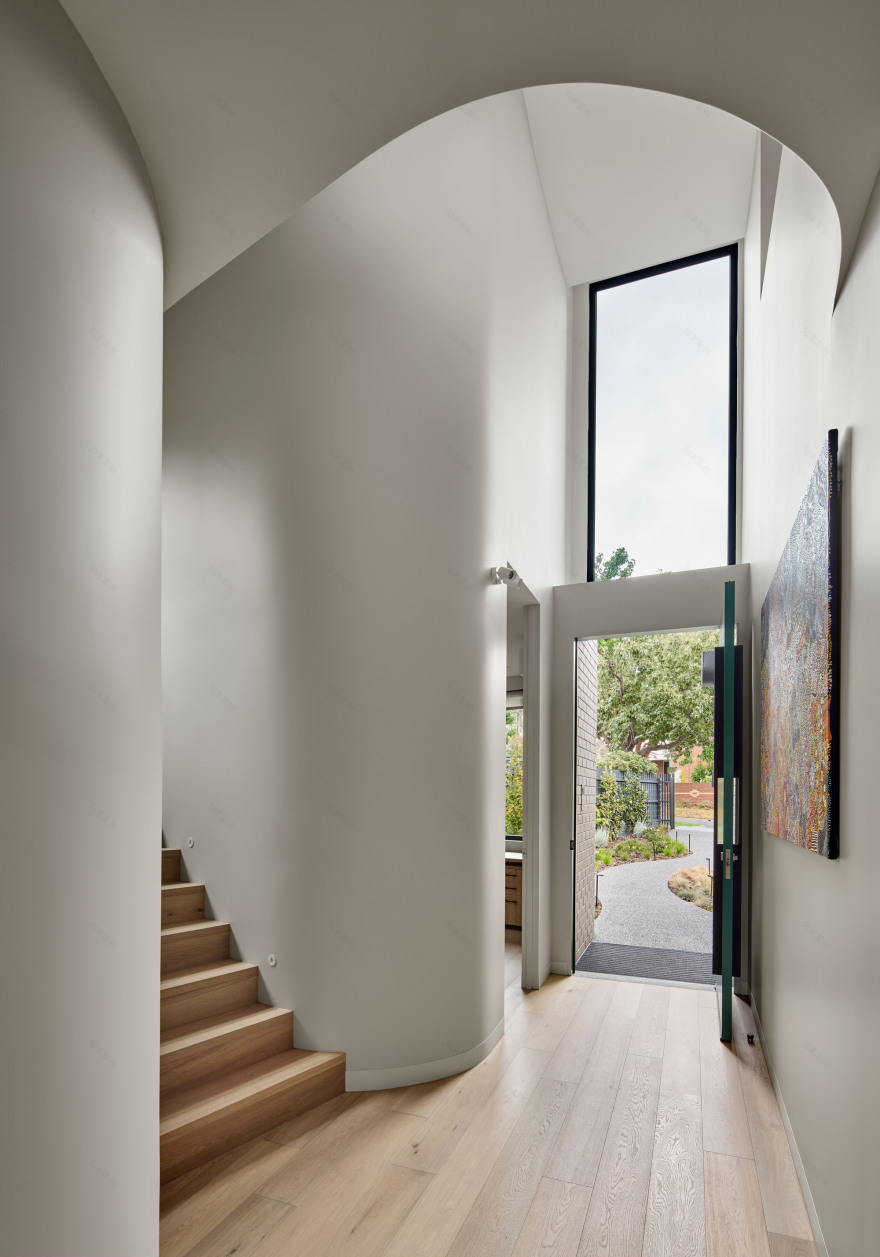
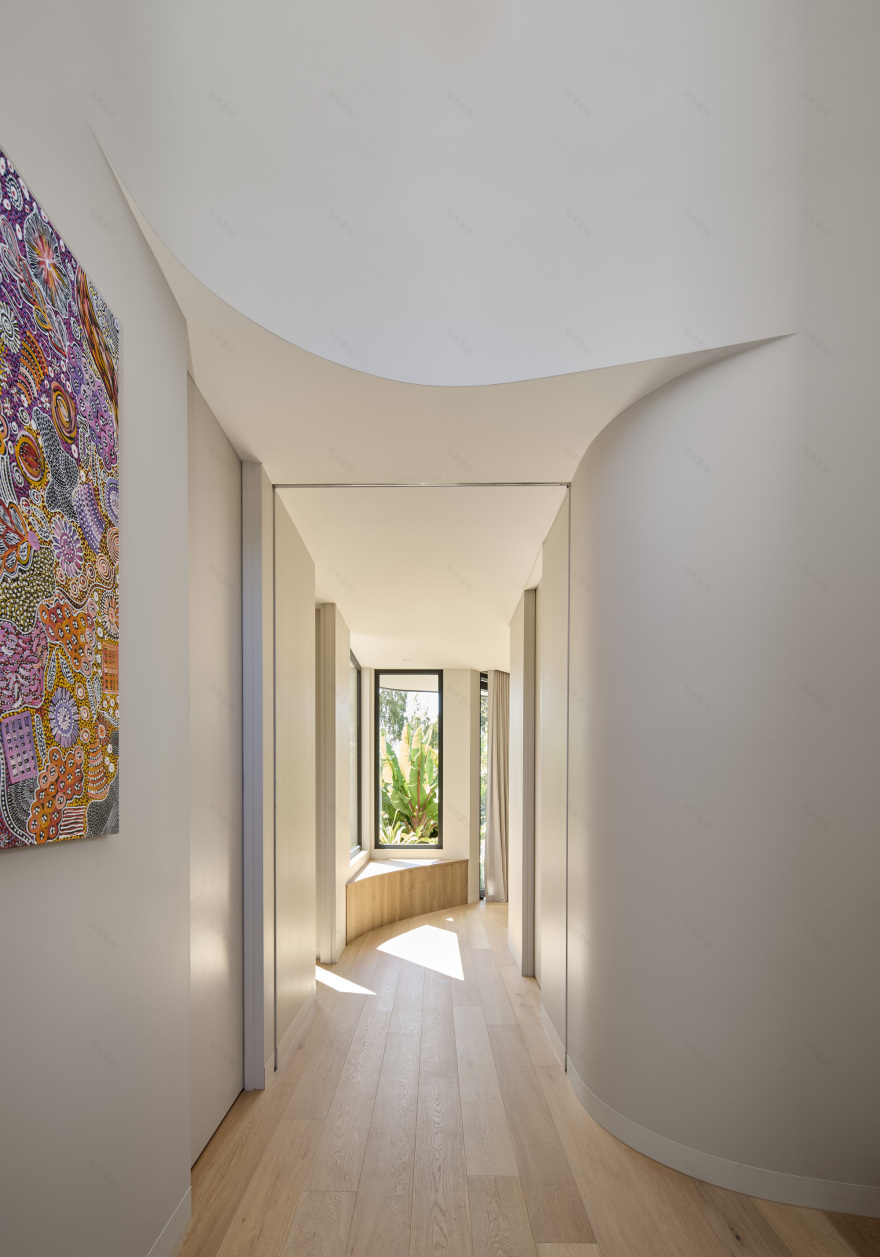
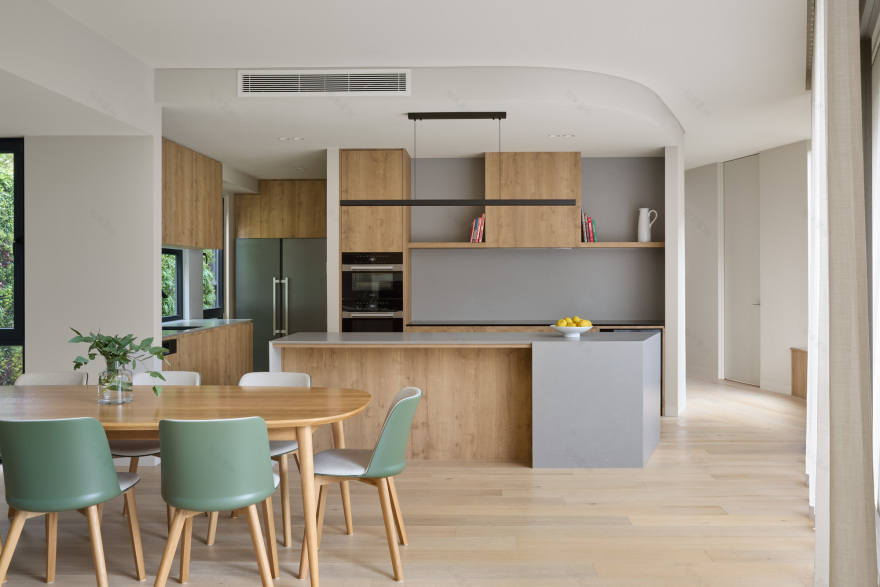
Construction began with the demolition of a semi-detached structure, enabling a fresh start. The key materials—light grey brick, custom orb corrugated steel, and aluminium battens—offer a balance of durability, low maintenance, and expressive form. Internally, the palette is warm and tactile, featuring concrete, stone-look tiles, and timber-look laminates. A sculptural concrete kitchen island and curved ceiling forms echo the exterior's language, promoting fluid movement through the space.

Setbacks included planning restrictions from the original party wall, overshadowing concerns, and neighbourhood character controls. These were resolved through responsive massing, careful orientation, and strategic articulation that respected the streetscape while pushing design boundaries.

Sustainability was integral to the design. Passive solar strategies, natural cross-ventilation, double glazing, and rooftop solar panels contribute to long-term energy efficiency. The result is a home that feels grounded, adaptable, and intuitive.

Ripple is more than a residence—it's a case for progressive urban design. It asks whether "neighbourhood character" must mean conformity, and proposes a future where beauty, functionality, and environmental responsibility coexist within the suburban fabric.

Project gallery


南京喵熊网络科技有限公司 苏ICP备18050492号-4知末 © 2018—2020 . All photos and trademark graphics are copyrighted by their owners.增值电信业务经营许可证(ICP)苏B2-20201444 苏公网安备 32011302321234号
苏公网安备 32011302321234号客服
消息
收藏
下载
最近