

创作上传
VIP
收藏下载
登录 | 注册有礼
查看完整案例

收藏

下载

分享

翻译
Hacienda jaral de Berrio

La Hacienda Jaral de Berrio, localizada en el municipio de San Felipe, Guanajuato, preserva uno de los ejemplos más notables de arquitectura rural virreinal en el centro del país, tanto por la gran extensión de su territorio como por la diversidad de funciones económicas que albergó. Su origen se remonta a los siglos XVII y XVIII, en un contexto donde las haciendas funcionaban como espacios productivos complejos, así integrando actividades agrícolas, ganaderas, mezcaleras y de almacenamiento, con una organización espacial jerárquica y una relación directa con el entorno natural y las rutas comerciales del periodo, especialmente el Camino Real de Tierra Adentro.
-The Jaral de Berrio Hacienda, located in the municipality of San Felipe, Guanajuato, preserves one of the most notable examples of colonial rural architecture in the center of the country, both for its vast territory and the diversity of economic functions it served. Its origins date back to the 17th and 18th centuries, in a context where haciendas functioned as complex productive spaces, integrating agricultural, livestock, mezcal, and storage activities, with a hierarchical spatial organization and a direct relationship with the natural environment and the trade routes of the period, especially the Camino Real de Tierra Adentro.
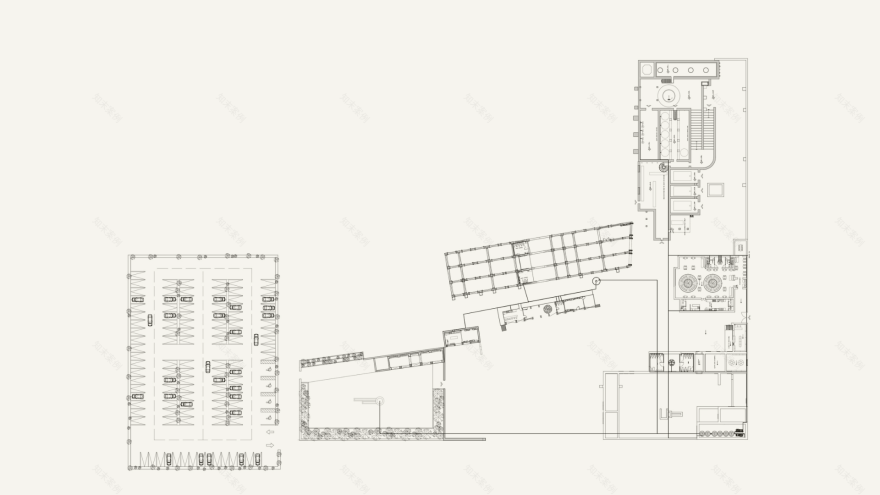
Hoy en día, San Felipe es un municipio con una identidad rural, donde todavía se conservan tradiciones agrícolas y ganaderas. Es conocido por sus paisajes semidesérticos y su arquitectura colonial. Algunos puntos de interés incluyen:
=Hacienda de Jaral de Berrio: Una de las haciendas más grandes e importantes de la época virreinal, famosa por su mezcal.
=El Templo de San Felipe Apóstol: Una iglesia con gran valor histórico.
=Zonas naturales: la Sierra de Lobos, un lugar ideal para el ecoturismo.
Actualmente, la Hacienda de Jaral de Berrio es un atractivo turístico e histórico, visitado por aquellos interesados en el patrimonio virreinal de México. Además, es famosa por la producción de mezcal, ya que la destilería que se estableció en sus terrenos sigue en operación, conservando una tradición de más de 250 años.
A pesar de su estado de abandono, se han hecho esfuerzos por restaurarla y preservar su legado, aunque aún falta mucho por hacer para su conservación completa.

Today, San Felipe is a municipality with a rural identity, where agricultural and livestock traditions are still preserved. It is known for its semi-desert landscapes and colonial architecture. Some points of interest include:
=Hacienda de Jaral de Berrio: One of the largest and most important haciendas from the viceregal era, famous for its mezcal.
=The Temple of San Felipe Apóstol: A church with great historical value.
=Natural areas: The Sierra de Lobos, an ideal place for ecotourism.
Today, Hacienda de Jaral de Berrio is a tourist and historical attraction, visited by those interested in Mexico's viceregal heritage. It is also famous for its mezcal production, as the distillery that was established on its grounds is still in operation, preserving a tradition of more than 250 years. Despite its state of neglect, efforts have been made to restore it and preserve its legacy, although much remains to be done for its complete conservation.
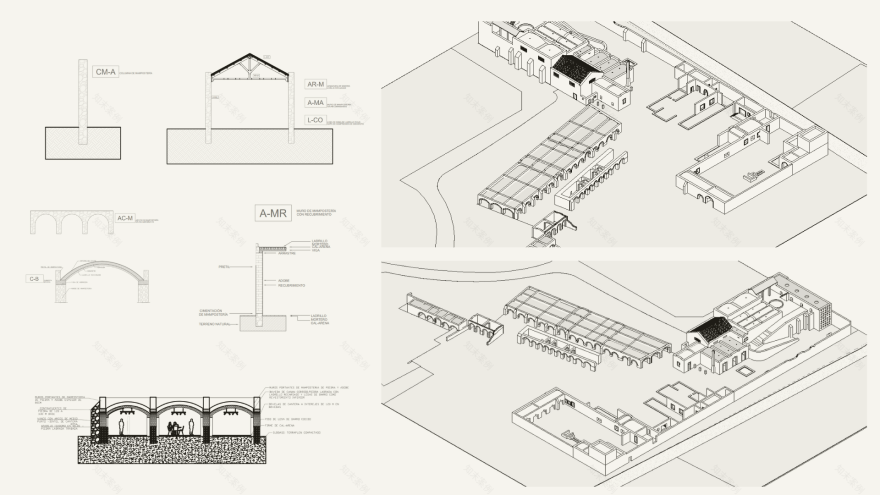
V e r s a t i l i d a d c o n R a í z
En este concepto planteamos que los espacios no deben diseñarse para un uso único o estático, sino como escenarios capaces de adaptarse basándonos en el lugar y de su gente.
No se trata solo de ofrecer flexibilidad física en los espacios, sino de generar una verdadera empatía con el tiempo y los procesos culturales, sociales y naturales que definen al lugar. Este vínculo con el tiempo permite que el espacio se sienta vivo, que evolucione sin perder su conexión con sus raíces y su historia, logrando un equilibrio entre lo contemporáneo y lo tradicional.
En el caso específico de la antigua Hacienda Jaral de Berrio, el concepto de Versatilidad con Raíz toma una relevancia especial. Aquí, el objetivo es respetar y poner en valor el patrimonio histórico, mientras se fomenta la activación cultural del lugar, creando un entorno dinámico que invite a la comunidad a ser parte activa del espacio.
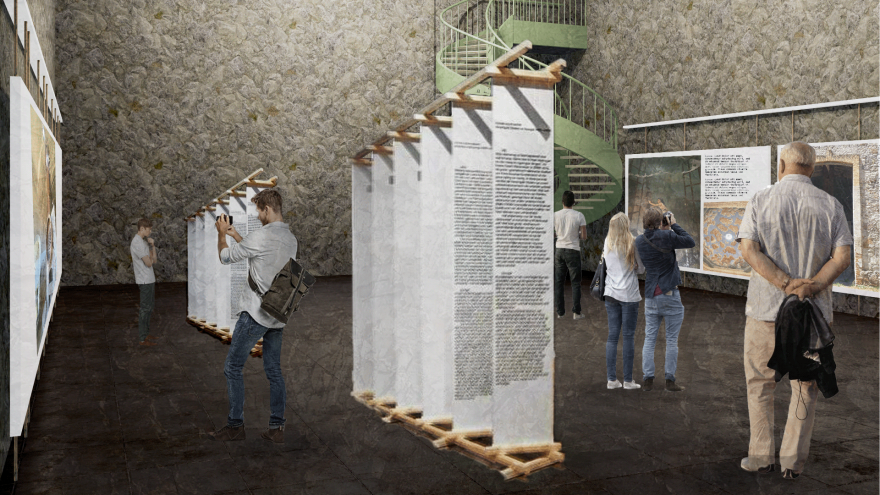
Cada área de la hacienda tiene un enfoque distinto pero complementario: unos se destinan a actividades más turísticas o educativas (como el museo), mientras que otros se adaptan a necesidades productivas o sociales, permitiendo que el lugar sea usado tanto de manera individual como en conjunto, dependiendo de las circunstancias y de los eventos que se estén llevando a cabo.
El diseño de estos espacios busca no solo preservar la memoria histórica y cultural del lugar, sino también hacerla relevante para las generaciones actuales y futuras, promoviendo su uso de manera flexible, pero siempre con una clara conciencia del contexto que le da forma. Esto hace que la arquitectura no solo sea un refugio físico, sino un vehículo para el intercambio cultural y la celebración de la vida en comunidad.

V e r s a t i l i t y with R o o t
In this concept, we propose that spaces should not be designed for a single or static use, but rather as scenarios capable of adapting based on the location and its people.
It's not just about offering physical flexibility in the spaces, but also about generating true empathy with time and the cultural, social, and natural processes that define the place. This connection with time allows the space to feel alive, evolving without losing its connection to its roots and history, achieving a balance between the contemporary and the traditional. In the specific case of the former Hacienda Jaral de Berrio, the concept of Versatility with Roots takes on special relevance.
Here, the goal is to respect and enhance the historical heritage while fostering the cultural activation of the site, creating a dynamic environment that invites the community to be an active part of the space. Each area of the hacienda has a distinct but complementary focus: some are dedicated to more touristic or educational activities (such as the museum), while others adapt to productive or social needs, allowing the space to be used both individually and as a whole, depending on the circumstances and the events taking place.
The design of these spaces seeks not only to preserve the historical and cultural memory of the place, but also to make it relevant for current and future generations, promoting its flexible use, but always with a clear awareness of the context that shapes it. This makes architecture not only a physical refuge, but a vehicle for cultural exchange and the celebration of community life.

Sistema de recolección de agua
Se restaurará el centro de recolección de agua del terreno que está junto a la torre de vigilancia, para darle un nuevo uso de recolección hidráulica de la hacienda y de una presa. El agua de aquí se dirigirá a un espejo de agua en la vestibulación del estacionamiento en dirección al hotel, museo y las zonas de cercanía. El espejo de agua nos sirve primeramente como paisajismo y además para observar el nivel de agua que se tiene. Del espejo el agua se dirige a las cisternas de agua fría y a un sistema de bombeo hidráulico.
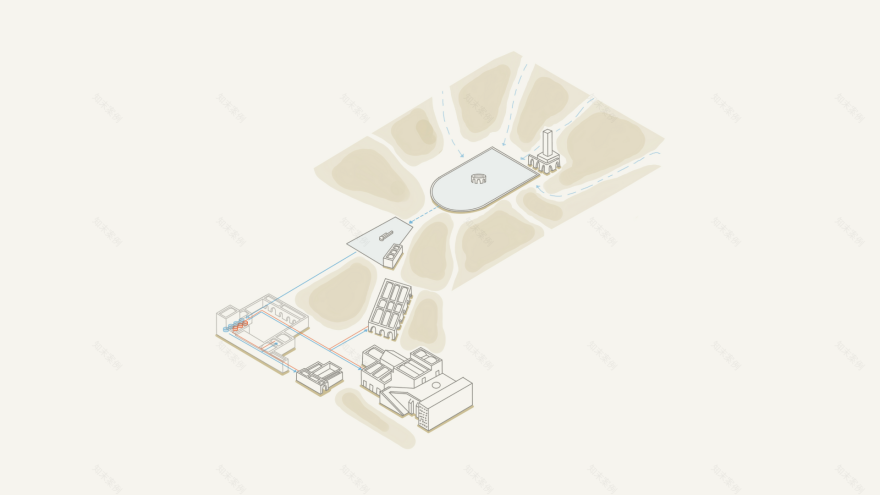
Water Collection System
The water collection center on the land next to the watchtower will be restored to a new use for collecting water from the estate and a dam. The water from here will be directed to a reflecting pool in the parking lot lobby, heading toward the hotel, museum, and surrounding areas. The reflecting pool serves primarily as landscaping and also allows us to monitor the water level. From the pool, the water is directed to cold water cisterns and a hydraulic pumping system.



南京喵熊网络科技有限公司 苏ICP备18050492号-4知末 © 2018—2020 . All photos and trademark graphics are copyrighted by their owners.增值电信业务经营许可证(ICP)苏B2-20201444 苏公网安备 32011302321234号
苏公网安备 32011302321234号客服
消息
收藏
下载
最近